historybriefs
Longest first

All briefs

482 briefs · 5812 min · 1–96 on page 1 of 6
13:33

1931 China floods

June to August 1931

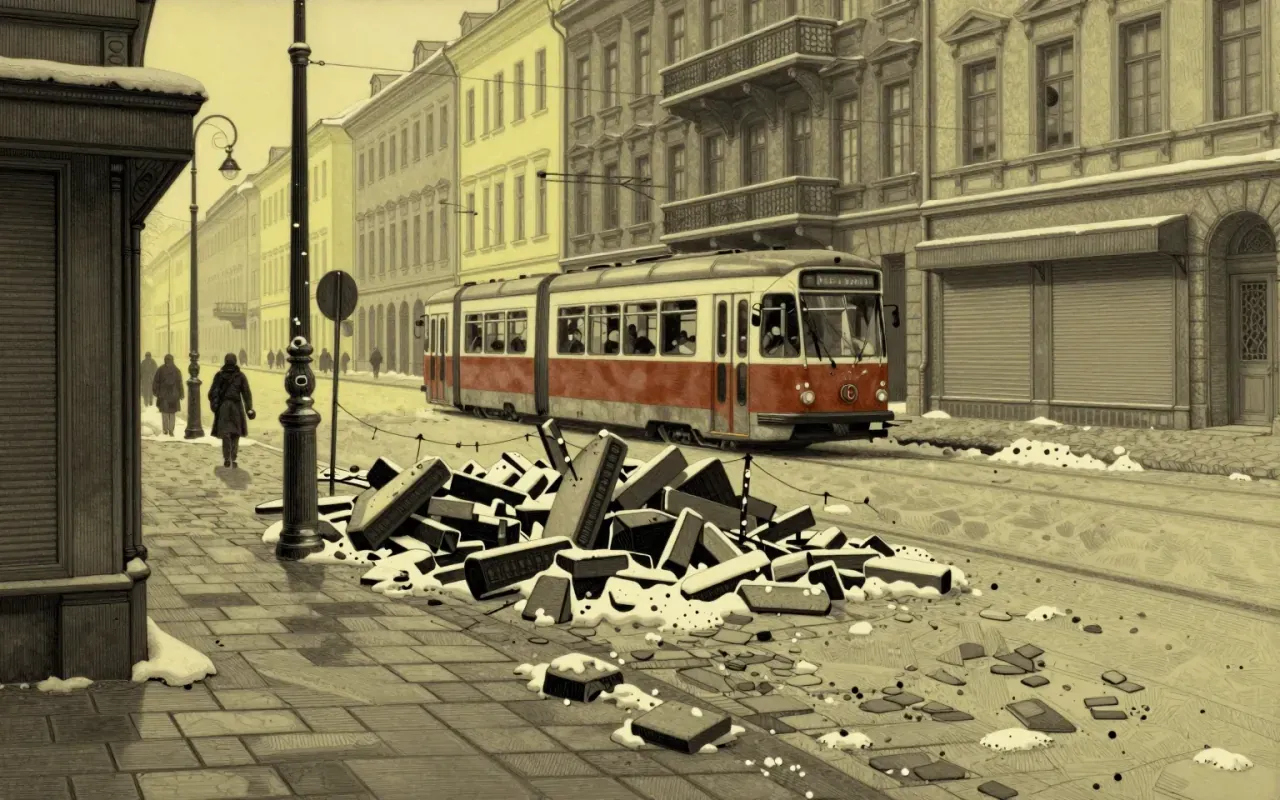
The 1931 China floods were a meteorologically driven, multi-phase disaster spanning June–August 1931 across China — especially Wuhan and Nanjing — culminating in a dike breach at Lake Gaoyou on 25 August. Verified evidence includes hydrological extremes (record water levels, nine cyclones in July, >600 mm rainfall), systematic fatality estimation (University of Nanking survey, official reports), institutional responses (National Flood Relief Commission, League of Nations, Lindbergh aerial survey), and disease outcomes (31,974 cholera deaths in 1932). Disputed claims include total death tolls: Buck’s survey estimated 150,000 drowned — less than a quarter of all fatalities in the first 100 days — while an official report claimed 140,000 drowned and 2 million dead from drowning or starvation. No source reconciles these figures with the verified cholera toll or provides demographic corroboration. The event exposed limits of Kuomintang governance and flood-control infrastructure but did not trigger structural reform.
13:04

Teotihuacan

100 BCE to 250 CE

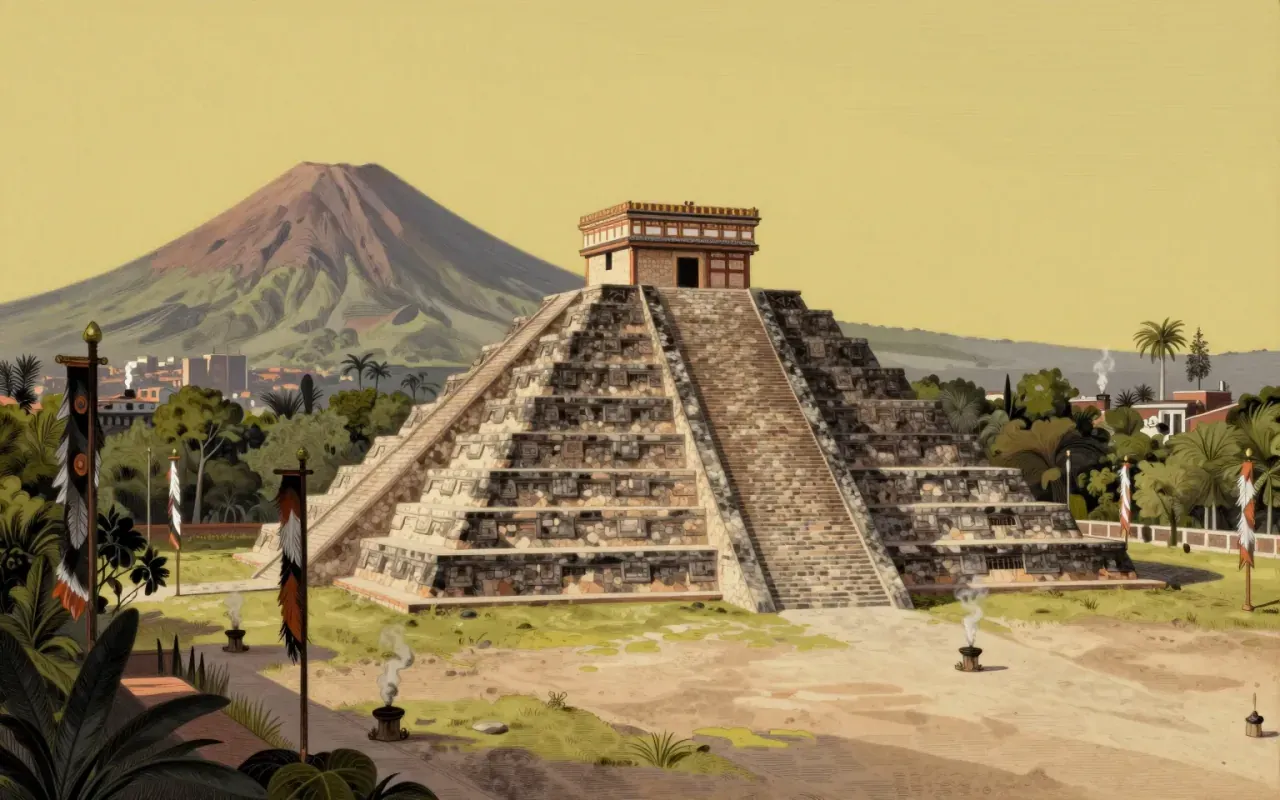
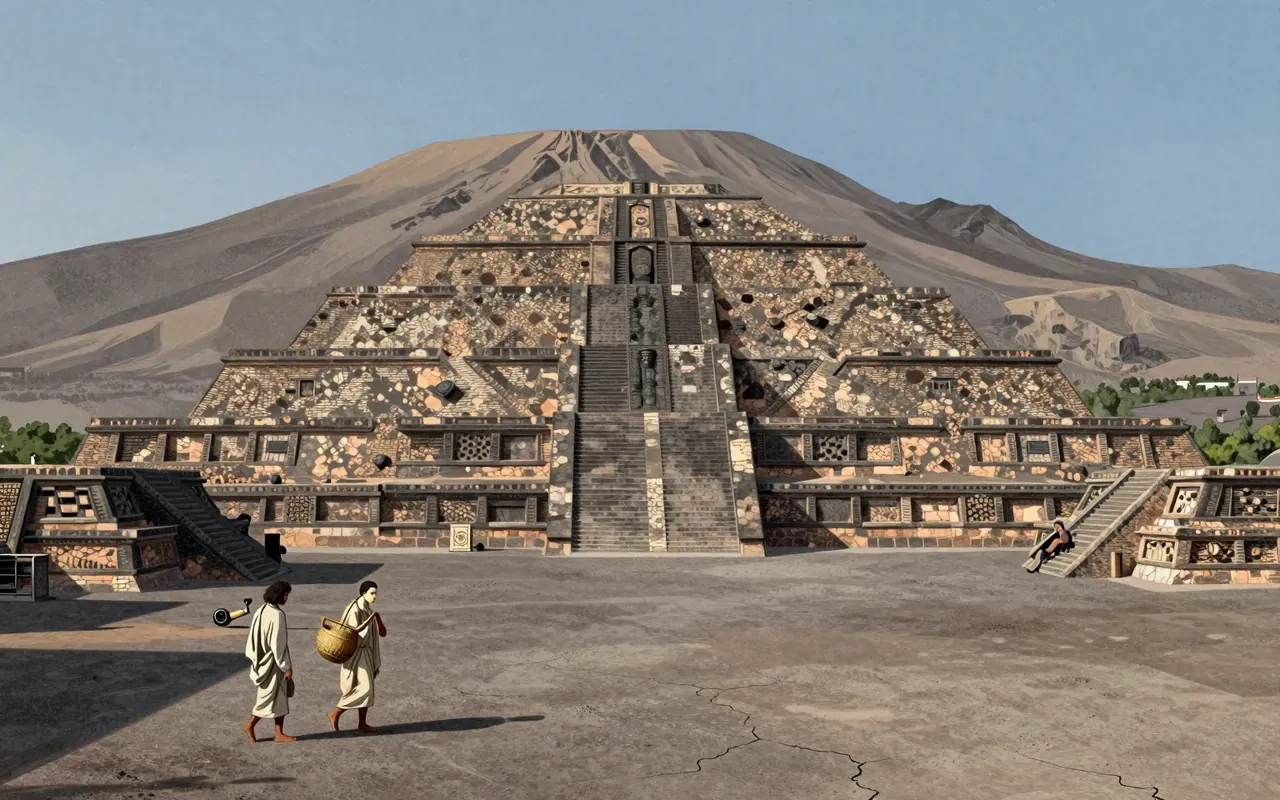
Teotihuacan was the largest city in the Americas before 500 CE. Its monuments were built over 350 years. Its central structures were burned around 550 CE. It housed ~100,000 people — 80–90% of the Valley of Mexico’s population. It ended between the 7th and 8th centuries CE. We know none of its rulers’ names. We do not know why it burned. We do not know what its people called it.

13:00

Adolf Hitler

1889–1945

Adolf Hitler rose from a failed art student and decorated First World War soldier to leader of the Nazi Party by 1921, became German chancellor in January 1933 through a backroom deal among conservative politicians who believed they could control him, and consolidated absolute power within months through the Enabling Act. His government pursued territorial expansion that triggered the Second World War and orchestrated the Holocaust, killing an estimated six million Jews and millions of others, before his suicide in Berlin on 30 April 1945 as Soviet forces closed in on the city.

13:00

Ahmad Baba al-Timbukti

1556–1627

Ahmad Baba became one of Timbuktu's most prominent Islamic jurists before Moroccan forces invading the Songhai empire deported him to Marrakesh in 1594, where he remained until 1608. He continued writing throughout his exile and after his return, authoring more than forty works, including a nuanced treatment of slavery that historians still interpret differently. His career and library form part of the much larger Timbuktu manuscript tradition, whose survival was tested again in 2012 when local families and archivists evacuated the bulk of the collection ahead of an armed conflict.

13:00

Akbar

1542–1605

Akbar ruled the Mughal Empire from 1556 to 1605, expanding its territory from Bengal to Kabul and Kashmir through campaigns that included the four-month siege of Chittorgarh in 1567 and 1568, while building an administrative system of ranked military-civil officers and a revenue system based on a ten-year average of production. He abolished the tax on non-Muslims, married into Rajput noble families on terms that preserved the women's status, and promoted a syncretic court faith drawing on Islam, Hinduism and other traditions, a record known largely through the court chronicle of his minister Abul Fazl, which modern historians read with considerably more scepticism than it was originally intended to invite.

13:00

Al-Azhar University

Founded 1961

Founded by the Fatimid caliphate between 970 and 972 to promote Ismaili Shia teaching in newly conquered Egypt, Al-Azhar was repurposed after Saladin's twelfth-century conquest into a Sunni Shafi'ite institution, a transition that reportedly involved destroying a large part of its original library. Mamluk patronage and Ottoman-era prestige built it into the leading centre of Sunni Islamic learning, and Gamal Abdel Nasser's 1961 reforms added secular faculties, turning a traditional madrasa into a modern university that today oversees a national school network reaching some two million students.

13:00

Al-Biruni

973–1048

Al-Biruni, born in 973 in Khwarazm and dead in 1048 in Ghazni, catalogued 103 of his own works by the age of sixty-five, spanning astronomy, geodesy, pharmacology and history, and produced in around 1030 a study of Indian civilization based on learning Sanskrit and consulting Hindu texts directly. He calculated Earth's radius to within about two percent of its true value using mountain-height trigonometry, and worked much of his career under Mahmud of Ghazni, whose conquest of al-Biruni's home region and subsequent invasions of India brought the scholar to the court that funded his most celebrated research.

13:00

Alaric I

370–410

Alaric led Visigothic forces in an on-again, off-again relationship with the Roman Empire for over a decade, seeking recognised rank, land and provisions before finally sacking Rome in 410 after repeated refusals. What survives of his story comes entirely from Roman and later Gothic writers with their own agendas, leaving his exact origins and true motives genuinely uncertain.

13:00

Alexander the Great

356–323 BC

Alexander III of Macedon inherited his father's throne and army at twenty and, over the following decade, defeated the Achaemenid Persian Empire and pushed as far as northwestern India before turning back and dying at thirty-two. The battles and territory are documented reasonably well; the personal anecdotes that make him vivid, such as the taming of the horse Bucephalas and the meeting with the philosopher Diogenes, come mostly from Plutarch, writing about four centuries after Alexander's death.

13:00

Alexandria

Founded 331 BC

Alexander the Great founded Alexandria in April 331 BC after taking Egypt from Persian control, then departed shortly afterward, leaving his successors, particularly Ptolemy I, to build it into the largest city in the world within a century through institutions including its famous library and the Pharos lighthouse, one of the ancient world's seven wonders. The library's eventual destruction, often attributed to a single dramatic event during Julius Caesar's siege in 47 BC, remains disputed among historians, and the city's long decline followed Portuguese discovery of alternative sea routes to India in the late fifteenth century.

13:00

Angkor Thom

Founded late 12th century

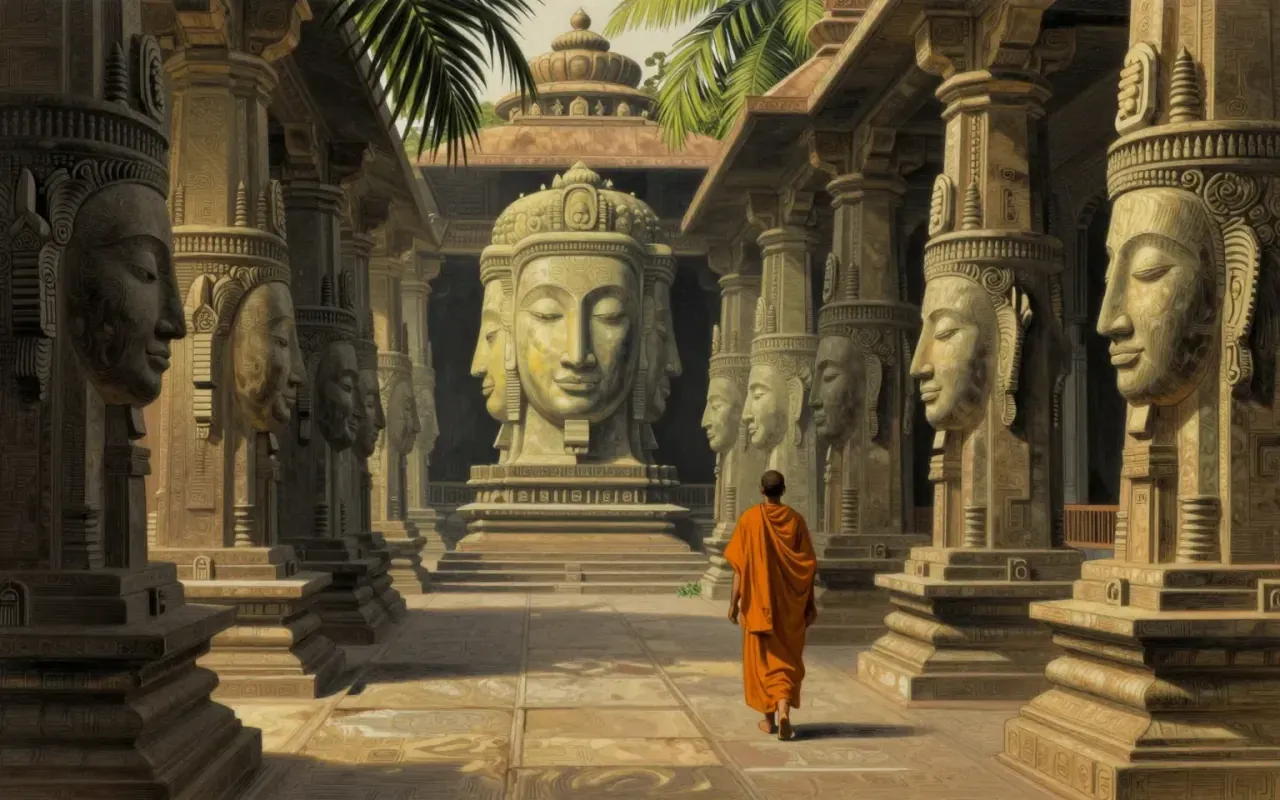
Angkor Thom was the last great capital of the Khmer Empire, laid out by Jayavarman VII in the late twelfth century as a walled square nine kilometres in area, centred on the many-faced towers of the Bayon temple. Building continued until 1295, after which the city's fortunes tracked the empire's decline, ending in abandonment following an Ayutthaya sack that pushed Khmer rule toward Phnom Penh. What survives is known mainly through its own inscriptions and through the French colonial-era survey work that first mapped and restored it.

13:00

Angkor Wat

Founded 802

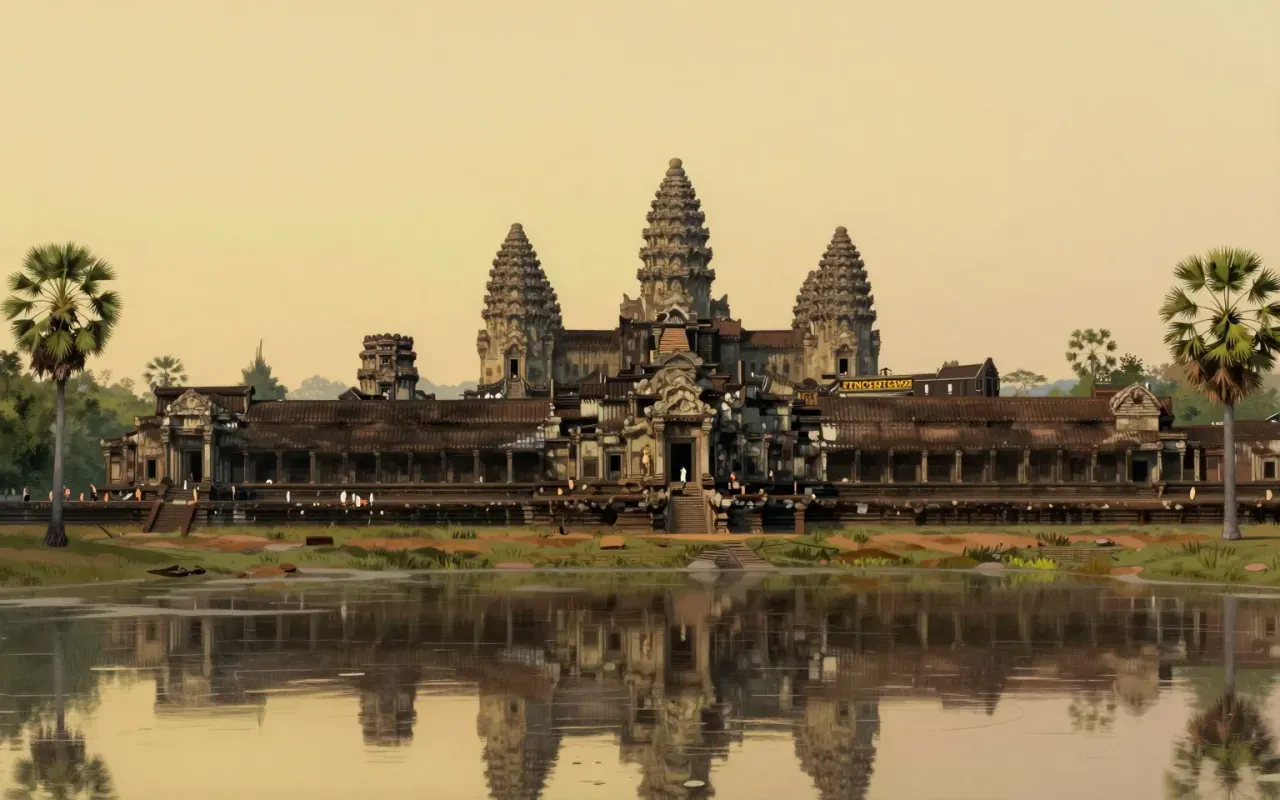
King Suryavarman II commissioned Angkor Wat around 1113, building it as a Hindu temple dedicated to Vishnu, and construction continued until his death around 1150 left some of its bas-relief carving unfinished. Decades later King Jayavarman VII, following his wife's faith, oversaw the temple's gradual conversion toward Buddhist use, and though the site was never fully abandoned, no surviving inscription records the name its builders actually gave it, leaving even that basic fact to scholarly inference.

13:00

Ashoka

304–232 BC

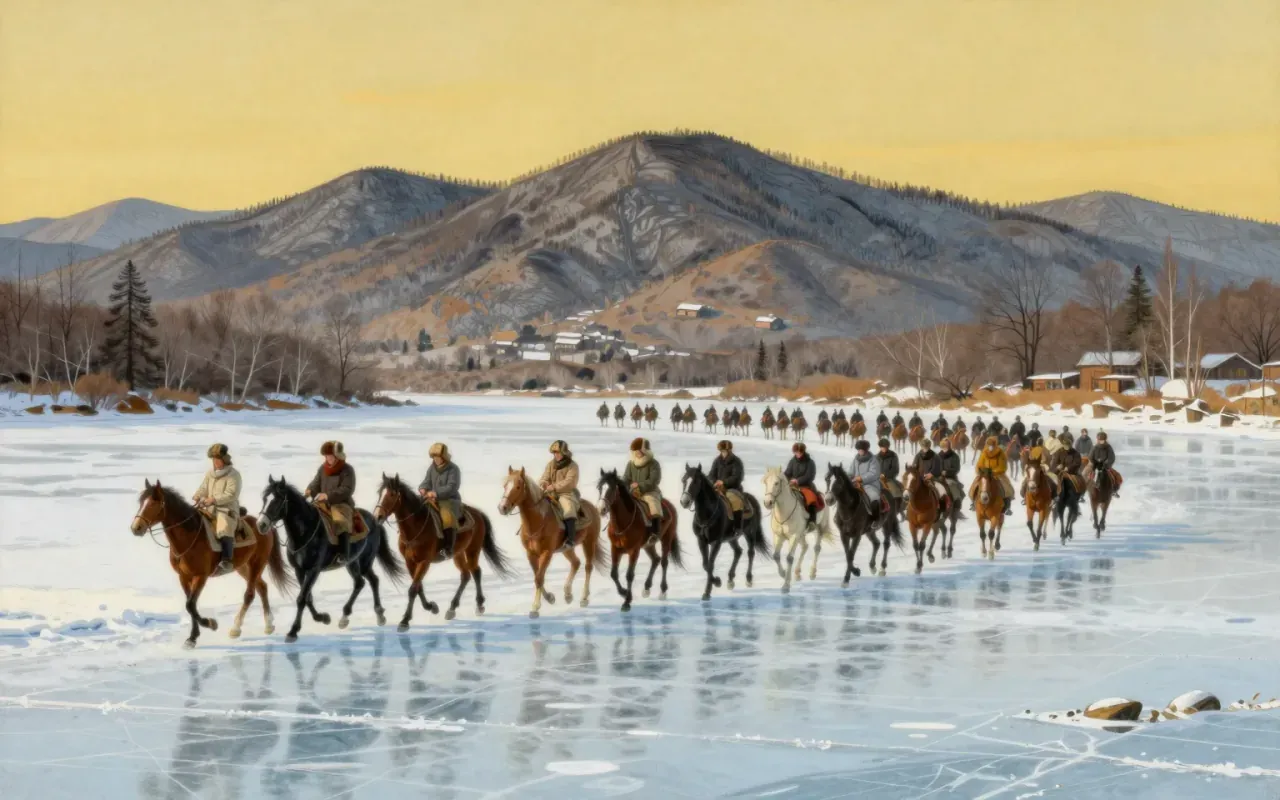
Ashoka took the Mauryan throne in the third century BC and conquered the kingdom of Kalinga at enormous human cost before turning, over subsequent years, toward an ethical code he called dhamma and eventually Buddhism. His own edicts are the only contemporary evidence for his reign; the dramatic stories of fratricide and conversion come from Buddhist chronicles composed centuries afterward, and the two surviving legendary traditions disagree with each other. His empire declined quickly after his death, and he was largely forgotten until nineteenth-century decipherment restored him to history.
13:00

Askia Muhammad I

1443–1538

Askia Muhammad seized the Songhai throne in 1493 by framing a succession dispute as a defence of proper Islamic rule, then built the empire into West Africa's largest state through provincial administrative reform and a lavish pilgrimage to Mecca that reinforced his religious legitimacy. His reign is known chiefly through two Arabic chronicles compiled in Timbuktu generations later by scholars sharing his own religious culture, making his portrayal as an exemplary Muslim ruler somewhat self-reinforcing. Even his family origins and the source of his royal title remain genuinely disputed among historians.

13:00

Atahualpa

1502–1533

Atahualpa won a civil war against his half-brother Huascar in April 1532, only for Francisco Pizarro's expedition to reach Cajamarca days later and capture him in an ambush his own recent overconfidence had helped enable. He paid an enormous ransom in gold and silver, but Spanish forces executed him anyway in July 1533. Surviving chroniclers, some drawing on direct testimony from Inca nobility, disagree on basic facts including his birthplace and mother's identity, and historians differ on whether his ransom offer aimed at genuine freedom or simply survival.

13:00

Augustus

63 BC–14

Born Gaius Octavius, Augustus rose from Julius Caesar's teenage heir to sole ruler of Rome, defeating rivals in successive stages before accepting the title Augustus from the Senate in 27 BC and governing for four more decades. He kept republican forms intact while concentrating power in his own hands, and the fullest accounts of how he managed it come either from his own self-justifying record or from biographers writing a century or more after his death.

13:00

Ruhollah Khomeini

1902–1989

Ruhollah Khomeini, exiled in 1964 for opposing the Shah's modernisation programme, returned to Iran in February 1979 to lead the revolution that established the Islamic Republic, built around his own doctrine of clerical governance. His rule included the 444-day American hostage crisis, the devastating war with Iraq, and documented mass executions of political prisoners, alongside a 1989 fatwa against author Salman Rushdie that extended his authority's reach well beyond Iran's borders.

13:00

Bartolomé de las Casas

1474–1566

Bartolome de las Casas arrived in the Caribbean in 1502 as a colonist who held enslaved Native labourers under the encomienda system, before a 1514 reading of scripture convinced him Spanish treatment of Indigenous peoples was fundamentally unjust. He spent the following decades as a Dominican friar and eventually bishop, writing A Short Account of the Destruction of the Indies and debating Juan Gines de Sepulveda at Valladolid in 1550 and 1551 over whether Indigenous peoples could be justly subjugated, work that helped shape Spain's 1542 New Laws and later fed into the broader Black Legend narrative about Spanish colonial brutality.

13:00

Bartolomeu Dias

1450–1500

Bartolomeu Dias rounded the southern tip of Africa in 1488, proving for the first time that a sea passage to the Indian Ocean existed, a discovery that directly enabled Vasco da Gama's more celebrated voyage to India a decade later. Almost no contemporary record of his voyage survives, since Portugal's maritime archives were destroyed in the 1755 Lisbon earthquake, leaving historians to rely on an account written some sixty years after the fact.

13:00

Benazir Bhutto

1953–2007

Benazir Bhutto became the first woman to lead the government of a Muslim-majority country when she was sworn in as Pakistan's prime minister in December 1988 at thirty-five, following her father's execution and years of imprisonment and exile under military ruler Zia-ul-Haq. She served two terms, in 1988 to 1990 and 1993 to 1996, each ended by presidential dismissal over corruption allegations that later produced a 2003 Swiss conviction, and after a decade of exile she returned to Pakistan in 2007 only to be assassinated that December in Rawalpindi, an attack that killed roughly twenty others and whose exact circumstances remain disputed among competing forensic and investigative accounts.

13:00

Benito Mussolini

1883–1945

Benito Mussolini built his early reputation as a socialist journalist before breaking with the party over the First World War, founding the fascist movement that took power in 1922 through a mostly legal transfer he later mythologised as a revolutionary march on Rome. His alliance with Hitler, sealed through Ethiopia's invasion, the Spanish Civil War, and the Pact of Steel, ended in his own removal by the king he had served, capture by partisans, and summary execution in April 1945.

13:00

Benjamin Franklin

1706–1790

Benjamin Franklin built a career as printer, scientist, and diplomat before becoming the only person to put his signature on the Declaration of Independence, the Treaty of Paris, and the Constitution. His electrical experiments and his years securing French support for the Revolution are well documented; less often mentioned is that he owned enslaved people for decades before turning, late in life, into president of Pennsylvania's abolition society.

13:00

Çatalhöyük

7500–5700 BC

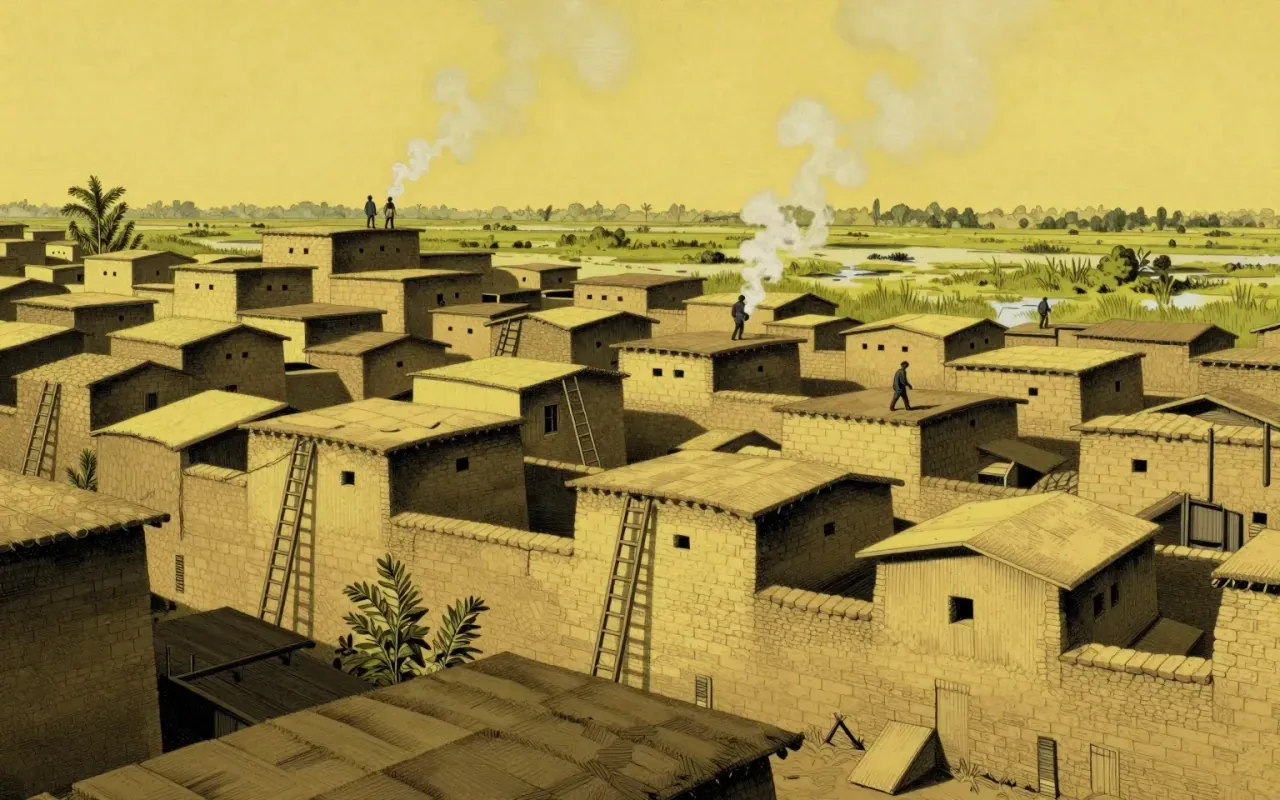
Catalhoyuk was a densely built Neolithic settlement in southern Anatolia occupied from roughly 7500 to 5600 BC, notable for honeycomb-like mudbrick houses entered through their roofs and for eighteen successive layers of rebuilding uncovered by archaeologists. James Mellaart, who discovered the site in 1958, argued its clay figurines pointed to a mother-goddess religion and an egalitarian social structure, but later excavations led by Ian Hodder, examining thousands more figurines and other evidence, found little support for a dominant female deity and some evidence of growing inequality over time.

13:00

Christopher Columbus

1451–1506

Christopher Columbus, a Genoese sailor working for the Spanish crown, crossed the Atlantic four times between 1492 and 1504, reaching the Bahamas, Cuba, Hispaniola and later the South and Central American coasts while insisting throughout that he had reached Asia. His governance of Spanish settlements involved documented brutality toward indigenous populations that led to his removal from office, and modern historians increasingly weigh his navigational achievement against the enslavement and demographic collapse that followed his voyages.

13:00

Cleopatra

69–30 BC

Cleopatra VII ruled Ptolemaic Egypt from 51 to 30 BC, allying in turn with Julius Caesar and Mark Antony and bearing children by both, before Octavian's forces defeated Antony at Actium and she died by suicide as Rome absorbed Egypt. The fullest ancient account, Plutarch's, was written about a century and a half after her death, and much of the negative Roman portrait that shaped later European memory of her originated as wartime propaganda against Antony rather than as neutral reporting.

13:00

Constantine the Great

272–337

Constantine won sole control of the Roman Empire by 324 after nearly two decades of war against rival claimants, founded the new capital of Constantinople, and convened bishops at Nicaea in 325 to settle a dispute over the nature of Christ. Nearly every surviving account of him was written by Christian admirers or later ecclesiastical writers with their own doctrinal stakes, leaving his personal beliefs, and the details of his most famous conversion story, genuinely uncertain.

13:00

Corazon Aquino

1933–2009

Corazon Aquino became the Philippines' first female president after leading the 1986 People Power Revolution that ousted Ferdinand Marcos following her husband's 1983 assassination and Marcos's fraud-marred snap election. Her presidency restored democratic constitutional government and paid down billions in inherited debt, but her family's own Hacienda Luisita underwent a disputed stock-redistribution scheme rather than the land division her Comprehensive Agrarian Reform Law imposed elsewhere, an inconsistency critics cited for years afterward.

13:00

Normandy landings

6 June – 29 August 1944

The Allied invasion of Normandy on 6 June 1944, the opening of Operation Overlord, put roughly 160,000 troops ashore across five beaches on a single day, supported by nearly 5,000 vessels and a 1,200-plane airborne assault, after a monthslong deception campaign, Operation Bodyguard, convinced German commanders the main landing would come at Calais. Allied casualties on the day itself totalled at least 10,000, with 4,414 confirmed dead, and the broader Normandy campaign that followed committed over a million troops before liberating Paris on 25 August 1944.

13:00

David Hume

1711–1776

David Hume argued that reason alone cannot justify our confidence that the future will resemble the past, pushing empiricist philosophy toward a scepticism about causation and personal identity that unsettled many contemporaries, while making his public reputation chiefly as a bestselling historian rather than as a philosopher. A 2014 discovery of correspondence touching on Caribbean slavery, along with a disputed footnote on race in one of his essays, has left his personal record more genuinely contested than his tidy autobiographical account suggests.

13:00

Ellis Island

1892 to 1954

Ellis Island operated as an immigration station from 1892 to 1954, processing roughly twelve million immigrants across two distinct buildings, the first destroyed by a fire in 1897 that also burned all immigration records dating back to 1855. Its function shifted sharply after the Immigration Act of 1924 downgraded it from a primary inspection point to a detention facility, and even its own physical land remained under legal dispute until a 1998 Supreme Court case split jurisdiction between New York and New Jersey.

13:00

Menelik II

1844–1913

Imprisoned as a child after his father's death, Menelik built his own power base in Shewa for decades before declaring himself emperor of Ethiopia in 1889. His 1896 victory over an invading Italian army secured full European recognition of Ethiopian sovereignty at the height of Africa's colonial partition, while his modernisation programme built railways, a national bank and centralised taxation. Historians still dispute whether the mismatched Italian and Amharic versions of an earlier treaty reflect deliberate deception or mutual miscalculation, and his territorial expansion carried real costs for the peoples incorporated under his rule.

13:00

F. W. de Klerk

1936–2021

F.W. de Klerk rose through South Africa's National Party before becoming state president in 1989 and, within months, legalising the ANC and releasing Nelson Mandela, steering negotiations that ended apartheid and led to the 1994 elections. He shared the Nobel Peace Prize with Mandela in 1993, but the Truth and Reconciliation Commission later found his denials of authorising security force violence indefensible, and a 2020 claim minimising apartheid's harms forced a retraction from his own foundation before his death the following year.

13:00

Ferdinand Magellan

1480–1521

Ferdinand Magellan proposed a westward route to the Spice Islands, secured Spanish backing after falling out of favour in his native Portugal, and led an expedition that found a passage through South America and crossed the Pacific before his death in the Philippines in 1521. The voyage's completion, and the fuller credit for its most reliable record, belong respectively to his subordinate Juan Sebastian Elcano and to the crew member Antonio Pigafetta rather than to Magellan alone.

13:00

Francis Bacon

1561–1626

Francis Bacon combined a long career in English law and politics, rising to Lord Chancellor, with an influential argument for building scientific knowledge from careful observation rather than inherited authority, published in 1620 as the Novum Organum. The following year Parliament convicted him on twenty-three counts of corruption, ending his public career, and historians now read both his conviction and several colourful anecdotes about his life with considerable caution.

13:00

Francisco Franco

1892–1975

Francisco Franco rose from Europe's youngest general in 1926 to leader of the Nationalist side in Spain's civil war, winning with substantial German and Italian military aid before ruling as dictator from 1939 until his death in 1975. His regime's repression killed tens of thousands after the war ended, though estimates for that toll, and for the war's own death count, vary so widely between historians that the scale of the uncertainty is itself a documented feature of his legacy rather than a gap waiting to be closed.

13:00

Francisco Pizarro

1478–1541

An illiterate colonist from a poor Spanish family, Francisco Pizarro spent nearly fifteen years building standing within Panama's colonial administration before leading a small, well-timed expedition that captured the Inca emperor Atahualpa in 1532. After collecting an enormous ransom he had Atahualpa executed anyway, founded Lima in 1535, and was assassinated by rival conquistadors in 1541. Historians question how genuine his reluctance to execute Atahualpa actually was, and his most celebrated anecdotes, including the famous line drawn in the sand, rest on chronicle tradition rather than independent verification.

13:00

Frederick the Great

1712–1786

Frederick II of Prussia fought three wars that turned a middling state into a rival of Austria, while writing against tyranny and building a bureaucracy and legal code that outlasted him. His reputation was later annexed by German nationalists and then by the Nazi regime, which is why assessing him now means separating the reign from what was made of it afterward.

13:00

Gamal Abdel Nasser

1918–1970

Gamal Abdel Nasser rose through a secret military faction to help overthrow Egypt's monarchy in 1952, then out-manoeuvred his own revolutionary partner to become sole ruler by 1954, surviving an assassination attempt that year that only strengthened his popular standing. His 1956 nationalisation of the Suez Canal and subsequent political survival against British, French, and Israeli attack made him the era's dominant Arab nationalist figure, a reputation that never fully recovered from Egypt's crushing defeat in the 1967 Six-Day War, and one historians still weigh against an authoritarian domestic record that set a lasting template for military rule in Egypt.

13:00

Genghis Khan

1162–1227

Temüjin, born on the Mongolian steppe around 1162 into a chieftain's family that later fell into poverty after his father's death, spent roughly two decades defeating rival tribes before being proclaimed Genghis Khan in 1206 and going on to conquer territory from northern China to Central Asia before his death in 1227. The fullest early source, the anonymous Secret History of the Mongols, records uncomfortable episodes, including a killing within his own family, that later Persian and Chinese chronicles compiled for his descendants tend to omit or soften.

13:00

George Washington

1732–1799

George Washington's ambush at Jumonville Glen in 1754 helped trigger the French and Indian War, and two decades later he commanded the Continental Army through a war he did not always look likely to win, from a chaotic retreat across New Jersey to the decisive siege at Yorktown. As president he set precedents, including a voluntary two-term limit, that outlasted the law requiring them by more than a century, while his own household at Mount Vernon depended on more than a hundred enslaved people whose freedom he provided for only in his will.

13:00

Geronimo

1829–1909

Geronimo, a Bedonkohe Apache medicine man rather than a hereditary chief, led repeated breakouts from American reservations over decades before surrendering to General Nelson Miles in 1886, then spent the rest of his life as a prisoner of war. His own dictated 1905 autobiography, delivered under his tight personal control, directly contradicts the American military's official account of an unconditional surrender. Even as a prisoner, he became a public celebrity exhibited at expositions and parades, and his name later entered American military and popular culture, most controversially as the code name for the 2011 operation that killed Osama bin Laden.

13:00

Giuseppe Garibaldi

1807–1882

Giuseppe Garibaldi spent fourteen years fighting in South American civil wars before returning to Italy, where he led a volunteer force of roughly a thousand men to conquer Sicily and Naples in 1860 and then handed both to King Victor Emmanuel II rather than pursue the republic he actually believed in. Historians have increasingly complicated the heroic myth built around him, noting that the peasants who supported his cause in Sicily were driven by hatred of local landlords rather than nationalism, and that Garibaldi himself sided with those same landlords once uprisings threatened his campaign's order.

13:00

Golda Meir

1898–1978

Golda Meir rose from a Milwaukee schoolteacher to Israeli labour minister, foreign minister and, from 1969, the country's fourth prime minister at seventy-one, a role in which she oversaw responses to the 1972 Munich Olympics massacre and the surprise Egyptian and Syrian attack that opened the 1973 Yom Kippur War. An official inquiry, the Agranat Commission, cleared her of direct responsibility for Israel's lack of preparedness, crediting her decision to approve full mobilisation despite political risk, but she resigned in April 1974 after her coalition lost seats, and historians generally judge her earlier work overseeing housing and immigration as more successful than her wartime premiership.

13:00

Gorée

1444–1960

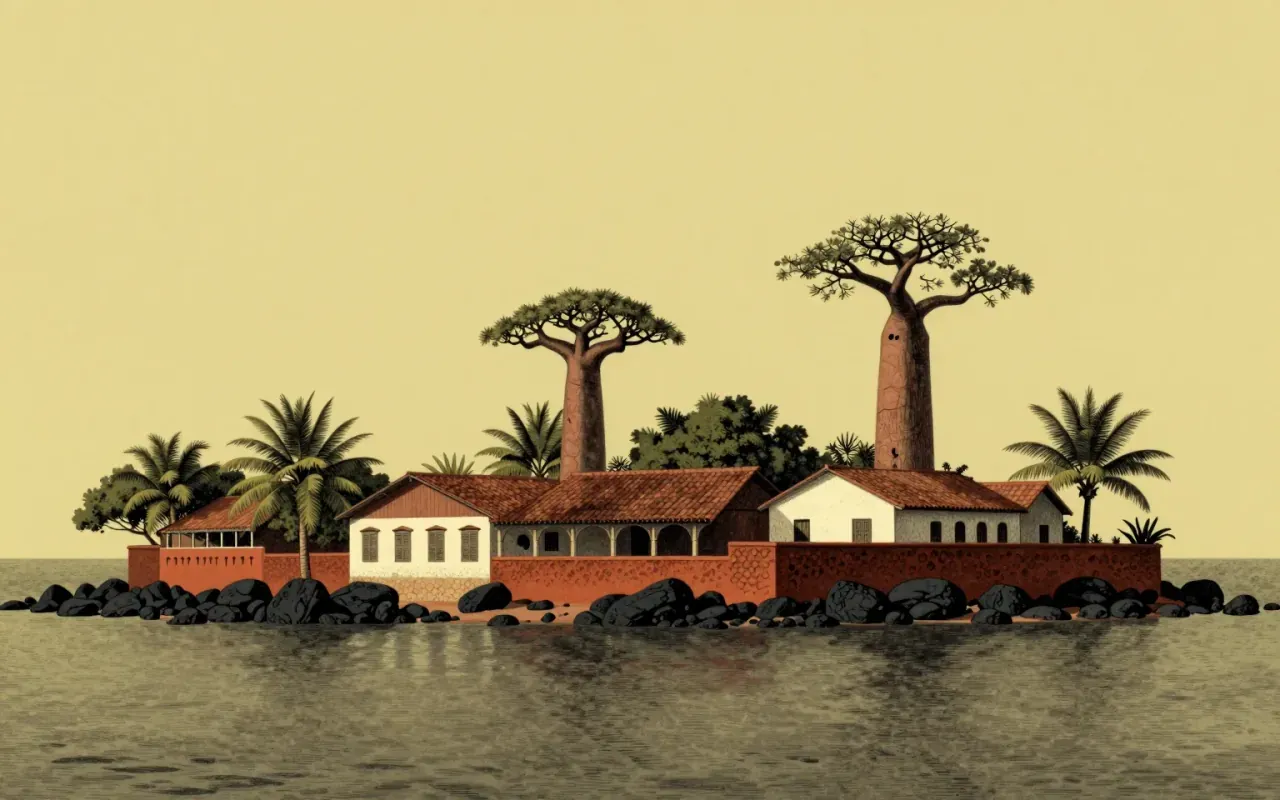
Portuguese traders reached Goree Island off Senegal in 1444, and the island passed through Dutch and then French control before Senegalese independence in 1960, developing a reputation as a major hub of the Atlantic slave trade that UNESCO's own heritage listing still describes as the largest on the African coast. Historical research has since challenged that framing directly, estimating no more than five hundred people were traded through the island annually, a small fraction of regional slave exports, and finding that the famous House of Slaves building itself lacks archaeological evidence of large-scale trans-Atlantic trafficking, complicating a narrative that took shape largely through one influential curator's account from the 1990s onward.

13:00

Hannibal

247–183 BC

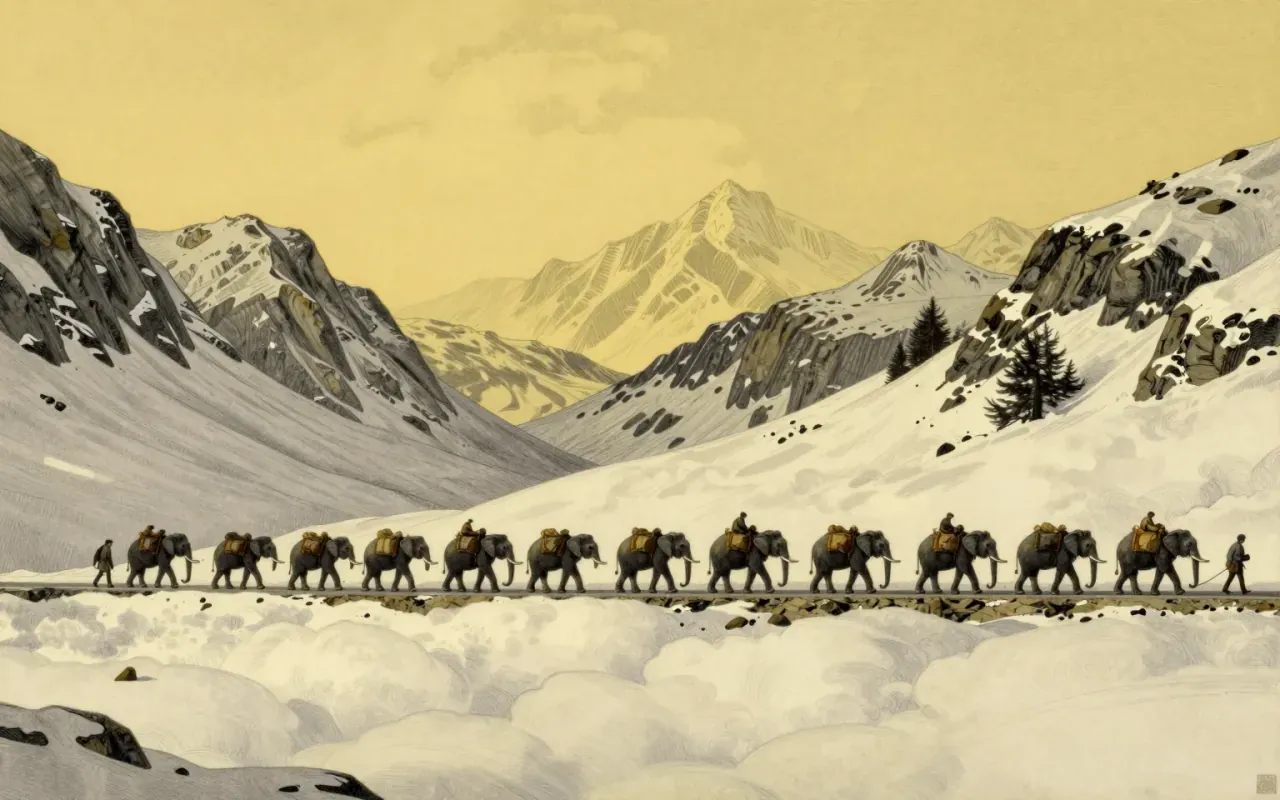
Hannibal led Carthaginian forces across the Alps into Italy in 218 BC and won a string of victories, most famously at Cannae, before spending over a decade occupying southern Italy without ever taking Rome itself. Recalled to Africa, he was defeated at Zama in 202 BC, and everything known about his campaigns and motives comes from Greek and Roman historians rather than any surviving Carthaginian source.

13:00

Harun al-Rashid

766–809

Harun al-Rashid became the fifth Abbasid caliph in 786 and ruled from Raqqa for most of his reign, exchanging gifts with Charlemagne's court and presiding over the beginnings of the Islamic Golden Age. His sudden purge of the powerful Barmakid family around 803 remains unexplained even in contemporary sources, and his decision to split succession between two sons collapsed into civil war within a decade of his death. His court became fixed in popular memory through a legendary story collection with little basis in the documented record.

13:00

Hernán Cortés

1485–1547

After nearly fifteen years working through Spanish colonial administration in the Caribbean, Hernan Cortes defied his own superior to lead an unauthorised expedition to Mexico in 1519, exploiting divisions among Aztec tributary peoples to conquer Tenochtitlan by 1521. His own letters to the Spanish crown, written to justify the illegal campaign, remain the central source for his career, supplemented by a soldier's later memoir and his chaplain's admiring biography. Several of his most flattering claims, including Aztec reverence toward him as a god, have not held up to modern scrutiny, and unresolved accusations, including his first wife's suspicious death, shadow his personal reputation.

13:00

Hiawatha

The famous poem bearing his name has almost nothing to do with him; it borrowed his identity for an unrelated Ojibwe legend, burying the real political story underneath it.
13:00

Hiroshima

6 August 1945

Founded as a castle town in 1589, Hiroshima grew into a regional military and industrial centre before the United States dropped an atomic bomb on it on 6 August 1945. Immediate deaths ran into the tens of thousands, with the toll continuing to climb from injury and radiation for months afterward, and occupation censorship kept much of the detail from the Japanese public for years. The rebuilt city has since made remembrance its civic purpose, formalised as a City of Peace in 1949.

13:00

Husayn ibn Ali

626–680

Grandson of the Prophet Muhammad, Husayn ibn Ali lived quietly under a peace agreement with the Umayyad caliphate for nearly two decades before refusing to submit to the caliph's chosen heir in 680. His march toward promised support in Kufa ended in his death at Karbala, an episode reconstructed almost entirely through a single early historian working within about twenty years of the events. His killing transformed a political dispute over leadership into the founding martyrdom of Shia Islam, still commemorated annually by tens of millions.

13:00

Immanuel Kant

1724–1804

Immanuel Kant spent his entire career at the University of Konigsberg, publishing the Critique of Pure Reason in 1781 to reconcile rationalist and empiricist philosophy before developing his categorical imperative as a foundation for ethics grounded in reason alone. Several familiar details of his biography, including his believed Scottish ancestry and the legend of his clockwork daily walks, have not held up under later scrutiny, and his own religious and racial views remain genuinely disputed by historians.

13:00

Jawaharlal Nehru

1889–1964

Educated in England and imprisoned repeatedly across a quarter century of resistance to British rule, Jawaharlal Nehru became independent India's first prime minister in 1947 and led it for seventeen years. He built a lasting parliamentary democracy, secular constitution and non-aligned foreign policy across a vast, diverse country, while decisions on Kashmir, economic planning and defence readiness against China remain sharply contested. His own prolific writing, combined with colonial records and party archives, makes him unusually well documented for a leader of his era.

13:00

Jayavarman VII

1122–1218

Jayavarman VII took the Khmer throne in 1181 after leading the recovery from a devastating Cham invasion, then built Angkor Thom, the Bayon and a network of hospitals and roads across a thirty-seven-year reign. Almost all surviving evidence for his rule comes from inscriptions and bas-reliefs he commissioned himself, since no independent chronicle or personal account survives. Historians caution against reading his monuments as literal proof of administrative reach, and his Buddhist religious programme did not outlast his own reign.

13:00

Jean-Jacques Rousseau

1712–1778

Jean-Jacques Rousseau argued that civilisation and private property had corrupted a naturally good humanity, and that legitimate government could only rest on the collective general will of the people, publishing The Social Contract and Emile within weeks of each other in 1762 before both were banned and burned. His autobiography, the Confessions, is the main source for his life but is acknowledged even by sympathetic scholars to contain confused chronology and shifting self-justifications, particularly around his decision to give up his own children.

13:00

Jericho

Founded 9600 BC

Long before it was a byword for tumbling walls, Jericho was a spring-fed settlement in the Jordan Valley occupied, on and off, for some eleven thousand years. A century of digging has traced a Neolithic tower and wall from around 8300 BC through Bronze Age destructions to a Byzantine revival, but the excavators disagree about what some of it was for, and the famous conquest story from the Hebrew Bible sits awkwardly beside what the trenches actually show.

13:00

Joan of Arc

1412–1431

A peasant girl from Domremy, Joan of Arc reported religious visions that led her to the French court in 1429, where she helped break the siege of Orleans and see Charles VII crowned before her capture and execution for heresy in 1431. Her trial and a later rehabilitation hearing preserve unusually detailed testimony in her own words, though what her visions actually were remains a question the sources describe without settling.

13:00

Johannes Gutenberg

1400–1468

Johannes Gutenberg developed a practical system of movable-type printing in Mainz around 1440, completing his celebrated 42-line Bible around 1455 before a lawsuit from his financier stripped him of his own workshop the following year. Almost nothing survives from his own hand, so his biography rests largely on legal records and physical analysis of surviving type rather than any personal account of his methods or intentions.

13:00

John Locke

1632–1704

John Locke developed influential arguments for natural rights, government by consent and the mind as a blank slate shaped by experience, publishing his major works in 1689 and 1690 after returning from political exile in the Dutch Republic. His preface claiming the Two Treatises defended the recent Glorious Revolution was later shown by scholars to be misleading about when the book was actually written, and his personal financial ties to slavery sit uneasily against his universal language of rights.

13:00

José de San Martín

1778–1850

José de San Martín spent over two decades as a Spanish officer before returning to Argentina to lead its independence campaign, crossing the Andes into Chile in 1817 and later liberating Peru. After a private meeting with Simón Bolívar at Guayaquil in 1822, he resigned his command and left South American politics for good, a withdrawal historians still argue over the meaning of, since no full account of what the two men said to each other survives.

13:00

Julius Caesar

100–44 BC

Julius Caesar rose through Roman political and military office in the first century BC, conquered Gaul in the 50s BC, and then led an army against the Senate and his former ally Pompey in a civil war that made him dictator of Rome. He was assassinated by a group of senators, including Brutus and Cassius, on the Ides of March in 44 BC. The fullest evidence for his career comes partly from his own self-justifying commentaries and partly from biographers writing more than a century later.

13:00

Kublai Khan

1215–1294

Kublai Khan, a grandson of Genghis Khan, won a civil war against his brother to become Great Khan in 1260, founded the Yuan dynasty in 1271 by moving the Mongol capital to modern Beijing, and completed the conquest of Southern Song China by 1279 to become the first non-Han ruler of all China. He governed through a deliberate blend of Chinese administrative practice and Mongol tradition that satisfied neither group fully, issued some of the earliest widespread paper currency before inflation undermined it, and launched two failed invasions of Japan, in 1274 and 1281, the second involving roughly 4,400 ships and 140,000 troops, that a modern archaeologist has argued failed partly because the fleet was built in a fraction of the time such construction normally required.

13:00

Lech Wałęsa

Born 29 September 1943

Lech Wałęsa led the August 1980 shipyard strike that produced Solidarity, the first independent trade union recognised in a Warsaw Pact state, surviving martial law and imprisonment before receiving the 1983 Nobel Peace Prize and becoming Poland's first freely elected president in 1990. Documents surfacing between 2008 and 2017, including files seized from a deceased interior minister's home, allege he collaborated with Polish security services as an informant in the early 1970s, a claim he denies and that remains genuinely disputed among historians examining the same evidence.

13:00

Leonardo da Vinci

1452–1519

Leonardo da Vinci trained as a painter's apprentice in Florence, worked for patrons including the Duke of Milan and the King of France, and produced a small surviving body of paintings, among them the Mona Lisa and the Last Supper, alongside extensive notebooks covering anatomy, engineering and natural philosophy that he never published in his lifetime. Much of the familiar personal narrative about him comes from Giorgio Vasari's biography, written decades after Leonardo's death in 1519, which modern historians treat as containing apocryphal or unverifiable episodes alongside genuine information.

13:00

Lloyd's of London

Founded 1688

Lloyd's of London began as a coffee house on Tower Street run by Edward Lloyd, where sailors and merchants gathered to arrange marine insurance informally before the participants formed a proper society in 1773. For most of its history, policies were backed by wealthy individuals called Names carrying unlimited personal liability, a system that paid off through disasters like the 1906 San Francisco earthquake and the Titanic but nearly collapsed the market when asbestos liability claims from decades earlier surfaced in the 1990s, bankrupting a meaningful share of the Names underwriting the losses. The market has since restructured around corporate capital with limited liability.

13:00

Lord Byron

1788–1824

Lord Byron became famous overnight with the first cantos of Childe Harold's Pilgrimage, then scandal over his marriage and rumoured relationship with his half-sister drove him from England for good in 1816. He spent his final months and most of his remaining fortune backing the Greek war of independence, dying of fever at Missolonghi in 1824 without seeing a Greek victory his death nonetheless helped bring closer.

13:00

Louis XIV

1638–1715

Louis XIV reigned over France from 1643 to 1715, seventy-two years, the longest of any sovereign monarch on record, building the Palace of Versailles as a mechanism for controlling a nobility that had rebelled against the crown during his childhood, and revoking the Edict of Nantes to strip legal protection from French Protestants. His three major wars, the Franco-Dutch War, the Nine Years' War and the War of the Spanish Succession, extended French influence but left his successor a kingdom deep in debt, a legacy that combines genuine administrative and cultural achievement with the costs of near-constant warfare.

13:00

Machu Picchu

1450–1572

Inca ruler Pachacutec commissioned Machu Picchu as a royal estate following his conquest of the Urubamba region, with traditional dating placing construction around 1450, though 2021 radiocarbon analysis pushed occupation as early as 1420. The site housed a genetically diverse population of roughly 750 support staff before being abandoned around the Spanish conquest, and though the Peruvian farmer Agustin Lizarraga reached the ruins in 1902, American historian Hiram Bingham's 1911 visit and subsequent writing established him as the site's credited discoverer, a framing Bingham himself later hardened despite initially acknowledging Lizarraga.

13:00

Mansa Musa

1280–1337

Mansa Musa ruled the Mali Empire from around 1312 to 1337, a reign later chroniclers regarded as its golden age, and became widely known in the Islamic world after his pilgrimage to Mecca in 1324, during which his gold spending reportedly depressed the metal's value in Cairo for years afterward. He annexed Timbuktu and Gao, recruited scholars including the poet Abu Ishaq al-Sahili, and helped establish Timbuktu's Sankore as a centre of Islamic learning, though the precise scale of his wealth, drawn from a handful of Arabic chroniclers writing after the fact, cannot be independently verified.

13:00

Mao Zedong

1893–1976

From a Hunan peasant household to chairman of the Chinese Communist Party for over three decades, Mao Zedong built his power on a rural strategy Marxist orthodoxy had dismissed, then used control of propaganda and education to shape how his rule would be remembered. His decades in office combined rapid industrialisation and literacy gains with famine and political purges whose full toll remains disputed. Assessments of his legacy still split sharply between accounts of a nation-builder and a mass killer.

13:00

Marcus Aurelius

121–180

Adopted as heir in 138 and made emperor in 161, Marcus Aurelius spent much of his nineteen-year reign fighting wars in the east and along the Danube while a severe epidemic killed millions across the empire. His private notebook, the Meditations, records a Stoic-trained mind working through the burdens of rule, but the actual chronicle of his reign rests on other, less personal sources whose own reliability historians still weigh carefully.

13:00

Klemens von Metternich

1773–1859

Klemens von Metternich rose from a minor German diplomatic family to become Austria's foreign minister and, from 1821, its chancellor, presiding over the Congress of Vienna and then building a continent-wide network of censorship and surveillance meant to hold back liberal and nationalist movements. The 1848 revolutions ended his career in a single day, and historians still argue over whether to remember him as a stabiliser who kept Europe largely at peace for three decades or as a reactionary who left problems to compound rather than resolving them.

13:00

Michael Collins (Irish leader)

1890–1922

Michael Collins escaped execution after the 1916 Easter Rising through what his biographer calls sheer luck, then built an intelligence network so effective during Ireland's War of Independence that it reached deep into the British administration itself. He went on to negotiate the 1921 treaty that created the Irish Free State, telling a British official he might have signed his own death warrant in doing so, a prediction that came true eight months later when anti-treaty forces killed him in an ambush in his native County Cork.

13:00

Michelangelo

1475–1564

Michelangelo trained as a painter before becoming the era's defining sculptor, producing the Pieta, David and the Sistine Chapel ceiling for a series of Medici and papal patrons across nearly seven decades of work. His two earliest biographies were written by admirers, one with his own direct input, and both are now understood to have shaped his public image, including by obscuring the men to whom he addressed much of his surviving love poetry.

13:00

Montesquieu

1689–1755

Montesquieu argued in The Spirit of the Laws, published in 1748, that political liberty required dividing government into separate legislative, executive and judicial powers, drawing his model partly from an extended stay observing England. That model became enormously influential in colonial and revolutionary America, even though scholars now treat his account of English government as an idealised simplification rather than a fully accurate description of how England was actually run.

13:00

Moctezuma II

1466–1520

Moctezuma II expanded the Aztec Empire to its greatest territorial extent, fought some seventy-three military campaigns, and reorganised imperial administration into centrally governed provinces before Spanish forces reached Tenochtitlan in 1519. Spanish and indigenous sources diverge sharply in their portrayal of him, and his death in June 1520 remains disputed between accounts of his own subjects stoning him and testimony that Spanish soldiers killed him directly. His decades of successful rule have been largely overshadowed in popular memory by the empire's collapse the following year, leaving no single settled portrait of the man behind either extreme characterisation.

13:00

Nalanda mahavihara

Founded c. 427

Nalanda, founded around 427 under the Gupta emperor Kumaragupta I, grew into a major Buddhist centre of learning that at its height supported over 1,500 faculty on revenue from a hundred villages, according to the Chinese pilgrim Xuanzang, who studied there for roughly two years from 637 and later left an account mixing careful observation with unverifiable legend. The institution was burned by Muhammad Bakhtiyar Khalji's forces around 1200, though it did not vanish immediately, with reduced scholarly activity continuing for some decades and its traditions carried onward into Tibetan Buddhism through fleeing monks.

13:00

Napoleon

1769–1821

Napoleon Bonaparte rose from a Corsican artillery officer to First Consul of France after the 1799 coup of 18 Brumaire and Emperor from 1804, leading French armies through more than a decade of victories, at Austerlitz, Jena and Friedland among them, before catastrophic defeat in Russia in 1812 and final loss at Waterloo in 1815 ended his rule and sent him into exile on Saint Helena, where he died in 1821. His legal reforms, the Napoleonic Code among them, spread across much of Europe even as his own conquests reinstated slavery in French colonies and rolled back civil liberties at home.

13:00

Nelson Mandela

1918–2013

Nelson Mandela moved from law student and African National Congress organiser to leader of an armed resistance wing, then spent twenty-seven years in prison after the 1964 Rivonia Trial before his 1990 release and his election as South Africa's first Black president in 1994. His single term prioritised reconciliation over retribution, most visibly through the Truth and Reconciliation Commission, and he declined a second term, an unusual choice among leaders who had spent decades fighting for power.

13:00

Nero

37–68

Nero became Roman emperor in AD 54 at sixteen, ruled competently under his advisers' guidance for several years, and then, after having his mother killed and losing his steadying counsellors, presided over a reign remembered for the great fire of Rome in AD 64 and a wave of executions before his suicide in AD 68. Every surviving account of him was written decades or centuries later by hostile senatorial writers, none of whom witnessed his reign firsthand.

13:00

Neville Chamberlain

1869–1940

Neville Chamberlain spent nearly two decades in cabinet before becoming prime minister in 1937 and pursuing the policy of appeasement that produced the 1938 Munich Agreement, an outcome he initially returned home to genuine public acclaim for. His reputation collapsed within two years, cemented by a bestselling wartime pamphlet blaming him for Britain's unpreparedness, and though later historians have argued declassified evidence shows Britain was in fact militarily unready for war in 1938, that reassessment has not restored his standing among British prime ministers.

13:00

Nur Jahan

1577–1645

Nur Jahan, born Mehr-un-Nissa in 1577, became Emperor Jahangir's twentieth and last legal wife in 1611 and, through his dependence on opium and alcohol, accumulated genuine political authority, holding the imperial seal, minting silver rupees in her own name at Patna, and once leading troops on an elephant to rescue her captured husband in 1626. Her power collapsed after Jahangir's death in 1627, when her brother Asaf Khan backed her stepson Shah Jahan in the succession struggle, and she spent her remaining years under a comfortable but constrained house arrest in Lahore until her death in 1645.

13:00

Oda Nobunaga

1534–1582

Oda Nobunaga rose from control of a single Japanese province to command roughly twenty central provinces by the early 1580s, defeating rival clans, destroying fortified religious strongholds, and beginning the unification of Japan that his successors Toyotomi Hideyoshi and Tokugawa Ieyasu would complete after his death in 1582, when a subordinate general's betrayal at Kyoto's Honno-ji temple forced him to take his own life. Long-credited tactical innovations attributed to him, notably a supposed three-stage firing formation at the Battle of Nagashino, are now regarded by historians as later misinterpretation rather than accurate contemporary description.

13:00

Oliver Cromwell

1599–1658

Oliver Cromwell rose from a struggling minor gentry background to command Parliament's cavalry, sign Charles I's death warrant, and rule as Lord Protector until his death in 1658. His brutal 1649 campaign in Ireland, including mass killings at Drogheda and Wexford that he justified explicitly in religious terms, remains the most contested part of a record historians read as genuine religious conviction entangled with ruthless political and military necessity.

13:00

Otto von Bismarck

1815–1898

Otto von Bismarck engineered three wars in six years to unify Germany under Prussian leadership, then spent nearly two decades as chancellor building a European balance-of-power system credited with preventing major war during his tenure while suppressing Catholics and socialists at home. Historians remain split on how much responsibility his diplomatic architecture, however successful while he ran it, deserves for the less stable arrangement that followed his forced resignation in 1890 and eventually produced the war it had been built to avoid.

13:00

University of Oxford

Founded 1096

Oxford has no clean founding date, with teaching documented there as early as 1096, but its rapid growth followed a 1167 decision by Henry II to bar English students from studying in Paris. A deadly town-versus-gown dispute in 1209 drove some scholars to flee and found what became the University of Cambridge, while Oxford itself gained a chancellor by 1214 and a royal charter in 1248. The university sided with the Crown during the English Civil War while the town backed Parliament, endured religious upheaval during the Reformation, and continued reforming into the twentieth century, introducing the doctorate of philosophy only in 1917.

13:00

Pearl Harbor

7 December 1941

The Imperial Japanese Navy's surprise attack on the American naval base at Pearl Harbor on 7 December 1941 brought the United States into the Second World War, a strike American commanders were unprepared for because they had judged a Japanese attack on Wake Island or the Philippines far more likely and had, according to the record, no meaningful air-defence plan for Hawaii itself. Two senior commanders, Admiral Husband Kimmel and Lieutenant General Walter Short, were demoted shortly afterward, and the base has since been merged into what is now Joint Base Pearl Harbor-Hickam.

13:00

Pericles

494–429 BC

Pericles rose to unchallenged leadership of Athens by the 440s BC through repeated use of prosecution and ostracism against rivals, then financed the Parthenon and other monuments with treasury redirected from the Delian League before leading Athens into the Peloponnesian War, dying of plague in 429 BC. Thucydides's admiring portrait, including a famous funeral oration he admitted reconstructing from memory, sits alongside Plato's sharp condemnation and Aristophanes's contemporary mockery. Historians remain divided over his responsibility for the war, the soundness of his defensive strategy, and whether his imperial management of allied states undermined the democratic ideals he is credited with championing.

13:00

Peter the Great

1672–1725

Peter I ruled Russia as tsar from 1682 and as its first emperor from 1721 until his death in 1725, transforming the country through an eighteen-month tour of Western Europe in 1697 and 1698, victory over Sweden in the Great Northern War culminating at Poltava in 1709, and the founding of St Petersburg in 1703 as a new, Western-facing capital. His reforms came paired with severe repression, including the torture and execution of roughly 1,182 rebel Streltsy soldiers after a 1698 uprising, a record that has left historians divided between crediting him as Russia's essential modernizer and condemning the violence his state-building consistently relied on.

13:00

Petra

Founded 800 BC

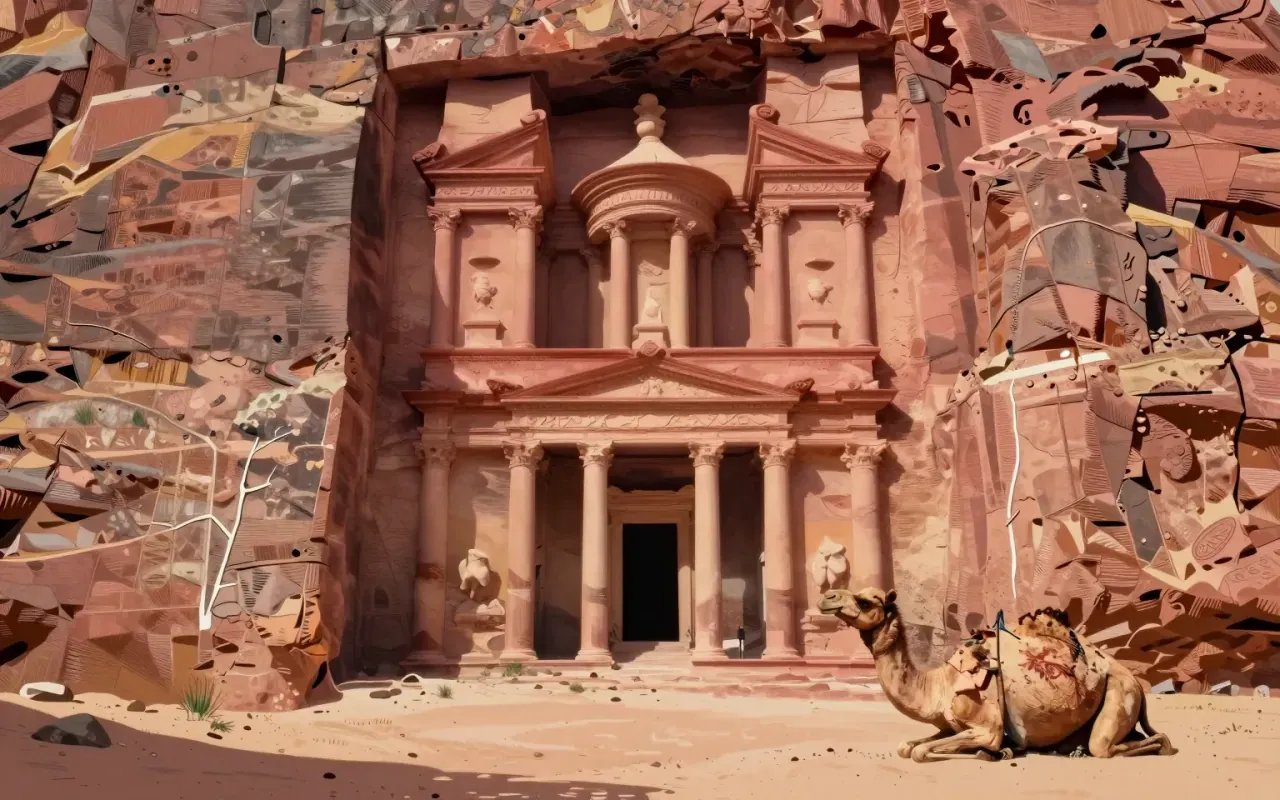
The Nabataeans, an Arab people whose origins scholars no longer trace to Aramean roots, built Petra into a thriving trading city that reached a population of roughly twenty thousand in the century before Rome annexed it in 106. A 1964 discovery of Nabataean inscriptions established the city's original name as Raqmu, and after earthquake damage and the decline of the trade routes it depended on, Petra faded from written record by the seventh century until the Swiss traveller Johann Ludwig Burckhardt, disguised as a local, rediscovered it for European scholarship in 1812.

13:00

Petrarch

1304–1374

Petrarch abandoned law for scholarship and poetry, wrote lifelong verse addressed to a woman he called Laura, and helped launch the humanist recovery of classical texts after finding a cache of Cicero's letters in 1345. He is unusually well documented through his own vast correspondence, but that same abundance means historians read his most flattering self-portraits, including the Laura story itself, with real caution.

13:00

Pompeii

AD 79

Mount Vesuvius erupted over roughly two days, first burying Pompeii under nearly eighteen hours of falling pumice that let many residents flee, then killing those who remained with pyroclastic flows hot enough to be fatal even at a distance of ten kilometres. Pliny the Younger's eyewitness letters, written years afterward, long placed the eruption in August, but a 2022 study using seasonal produce, clothing and coin evidence redated it to late October, correcting a chronology that had stood for centuries.

13:00

Qin Shi Huang

259–210 BC

Qin Shi Huang unified China by 221 BC after conquering the six remaining Warring States, took the newly created title of emperor, and standardised the empire's writing, currency, weights and measures while organising it into centrally administered commanderies rather than hereditary fiefs, reforms whose influence Sinologist Michael Loewe has argued shaped Chinese history until 1911. He also conscripted enormous labour forces for the early Great Wall and his own vast mausoleum, discovered in part through the Terracotta Army unearthed in 1974, and died in 210 BC, probably in his forty-ninth year, while still searching for an elixir of immortality, leaving behind a reputation as a brutal tyrant that historians now trace largely to Sima Qian's history, written roughly a century later for the dynasty that had replaced his own.

13:00

Raphael

1483–1520

Raphael trained under Perugino, absorbed elements of Leonardo's technique, and spent his final twelve years producing major works for two popes in Rome, including the Vatican frescoes, before dying in 1520 at thirty-seven. His workshop, reportedly numbering around fifty assistants, means many later paintings attributed to him were only partly his own work, and much of his biography still rests on a single, decades-later account by Giorgio Vasari.

13:00

René Descartes

1596–1650

Rene Descartes built a systematic method of doubting every belief that could possibly be questioned in order to find one certain foundation, concluding that the fact of his own thinking proved his existence, and used that starting point to argue for a strict division between mind and body. His posthumous editor reshaped his surviving letters for publication, and even the familiar account of his death in Sweden in 1650 has since been questioned by researchers working from the attending physician's own correspondence.

13:00

Richard I of England

1157–1199

Richard I ruled England from 1189 to 1199 but spent most of that decade on crusade, in captivity, or defending his family's continental territories, leading the Third Crusade to within twelve miles of Jerusalem before withdrawing and ordering the execution of roughly 2,700 Muslim prisoners at Acre in 1191. Captured near Vienna on his way home and held for a ransom of 150,000 marks, roughly two to three years of England's crown revenue, he spent his final years at war with Philip II of France, building the innovative fortress of Chateau Gaillard, before dying in 1199 from a crossbow wound whose shooter he forgave on his deathbed, a reputation later historians alternately built up as chivalric ideal and tore down as a neglectful absentee king.

13:00

Rosa Luxemburg

1871–1919

A Polish-German Marxist theorist and one of the first women to earn a doctorate in political economy, Rosa Luxemburg spent her career arguing for revolutionary spontaneity against both reformist socialism and Bolshevik authoritarianism, before co-founding the German Communist Party during the 1918-1919 revolution. Captured after the Spartacist uprising's defeat, she was beaten and shot by Freikorps paramilitaries on 15 January 1919, and how much official sanction lay behind her killing remains unresolved.