A thirteen-year-old king becomes China’s first emperor
Born in February 259 BC and known as Ying Zheng, Qin Shi Huang inherited the Qin throne at thirteen in 246 BC under a regent, took full personal power around 235 BC after suppressing an attempted coup, and completed the conquest of the last of the six rival Warring States by 221 BC. Rather than retain the existing title of king, he created the new title huangdi, or emperor, combining references to legendary rulers of Chinese antiquity, a title that Chinese and neighbouring monarchs would use for the following two thousand years. He died in July or August 210 BC at around forty-nine, during a tour far from the capital, of a cause that remains unknown.
A reputation built mainly by the dynasty that replaced him
Almost everything known about Qin Shi Huang’s reign passes through Sima Qian’s Records of the Grand Historian, composed roughly a century after his death under the succeeding Han dynasty. Later Confucian historians drew on this account to compile a formal list known as the Ten Crimes of Qin, cementing an image of a brutal, paranoid tyrant that dominated Chinese historical memory for two millennia. Because this primary source was produced for a dynasty that had a direct interest in legitimising its own rise by discrediting the one it replaced, modern historians read its harsher claims with considerably more caution than earlier generations did.
Standardised script, standardised coin, an empire built to be governed
Qin Shi Huang’s administrative reforms proved unusually durable regardless of how his personal reputation has been judged. He abolished the old feudal structure in favour of thirty-six, later forty, centrally administered commanderies staffed through merit rather than hereditary appointment, standardised weights, measures, cart-axle widths and currency around the ban liang coin, and unified regional variations in Chinese script into a single official form. Sinologist Michael Loewe has argued that the achievements of his reign exercised a paramount influence over the whole of China’s subsequent history, marking the beginning of an imperial epoch that did not close until 1911, a judgment that credits the institutional template far beyond what his own short-lived dynasty achieved on its own.
Even his birth story carries a later smear
Even the account of his birth carries a documented later distortion: the Records of the Grand Historian claims the merchant Lu Buwei, rather than the Qin king, secretly fathered him, but modern scholars including Derk Bodde argue this detail was likely inserted into the text afterward specifically to defame the emperor, rather than reflecting a claim made during his own lifetime. This example illustrates a broader pattern historians have identified in the sources: specific damaging details, plausible enough to be repeated for centuries, sometimes turn out on closer examination to be later additions serving a particular rhetorical purpose rather than contemporary observation.
Hundreds of thousands of labourers, an unknown number of deaths
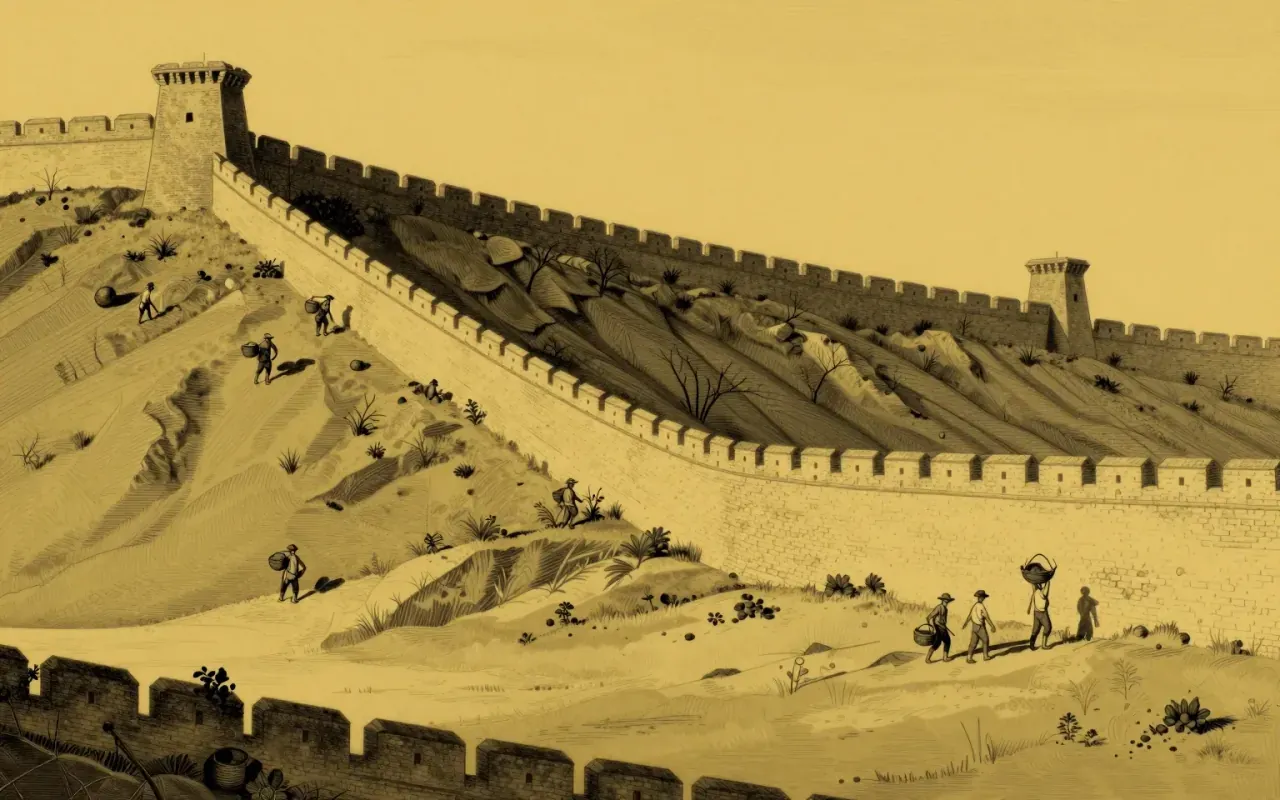
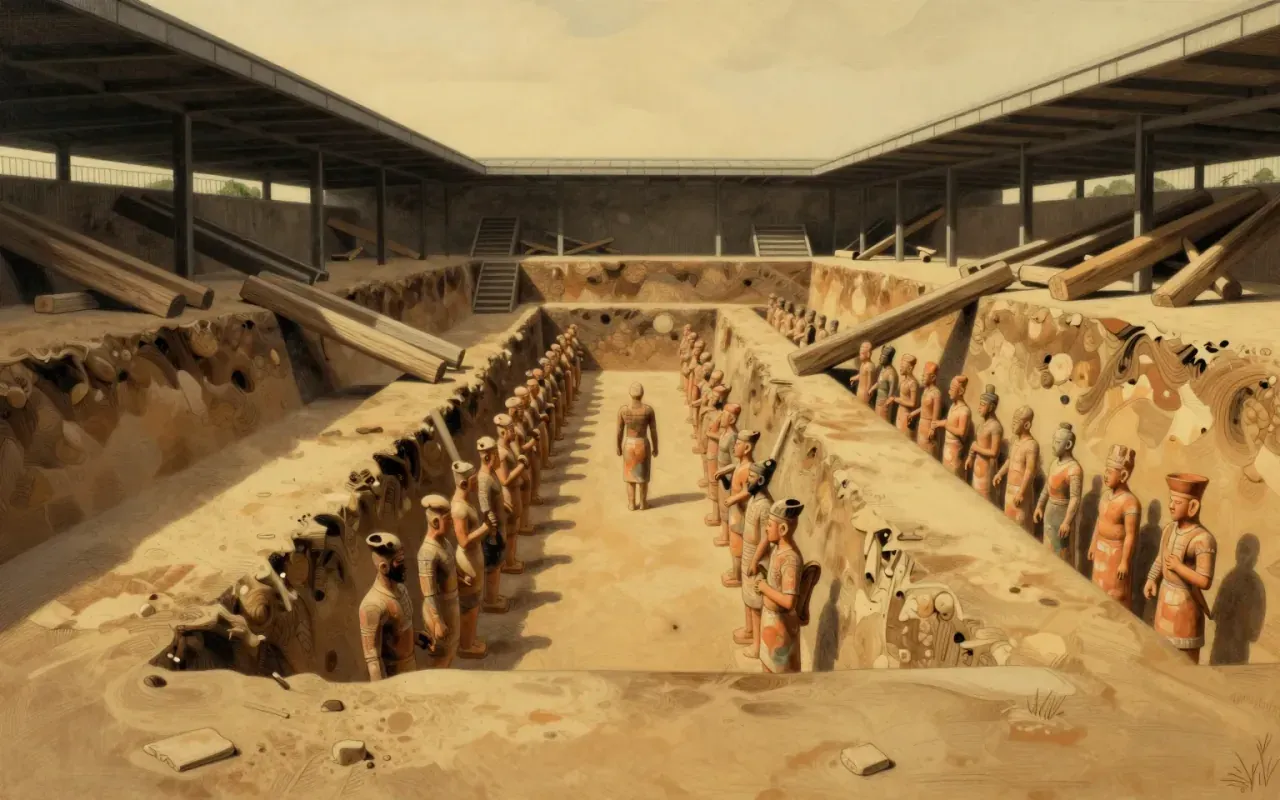
Qin Shi Huang’s construction projects required labour forces on an enormous scale, with walls linking earlier frontier fortifications against northern nomads conscripting hundreds of thousands of workers whose mortality went unrecorded, and his own mausoleum near Xi’an reportedly employing figures ranging from 300,000 to as many as 700,000 men according to Sima Qian, a number the historian John Man notes would have exceeded the population of any contemporary city. That tomb, still largely unopened, is known partly through the Terracotta Army discovered by farmers on 29 March 1974, roughly 6,000 individualised clay soldiers produced through a mix-and-match moulding process, alongside modern mercury readings around the site consistent with ancient descriptions of rivers of mercury built into the tomb’s design.
Worth reading for the historian standing behind the history
Qin Shi Huang’s story is worth reading with constant attention to where its most vivid claims actually come from, since so much of the traditional portrait of tyranny, paranoia and cruelty rests on a single historian writing for the dynasty that had just replaced his own, a century removed from the events he described. Readers already familiar with the standard tyrant narrative gain the most from setting it beside the durable administrative achievements Loewe and others credit him with, and from noticing how at least one specific damaging claim, about his own parentage, has since been identified by scholars as a likely later fabrication rather than a contemporary fact.