Explosive growth after 1050
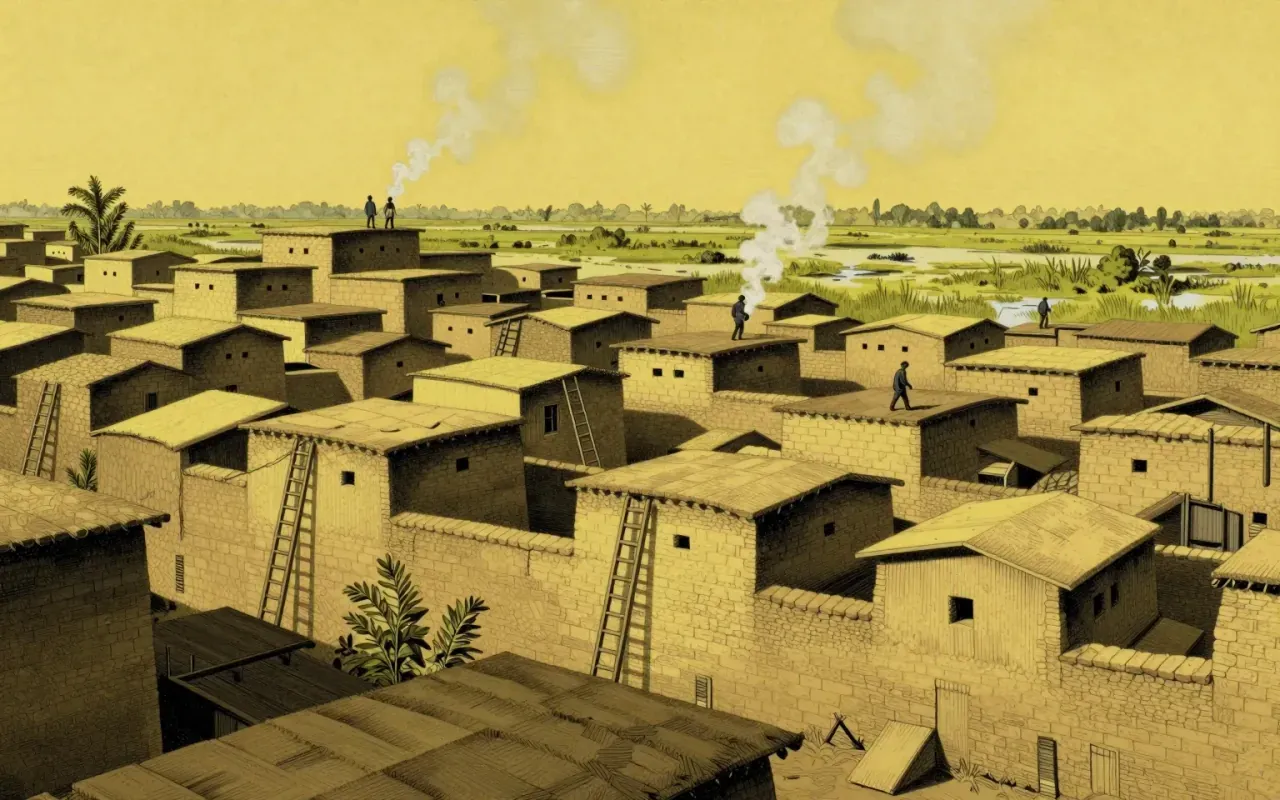
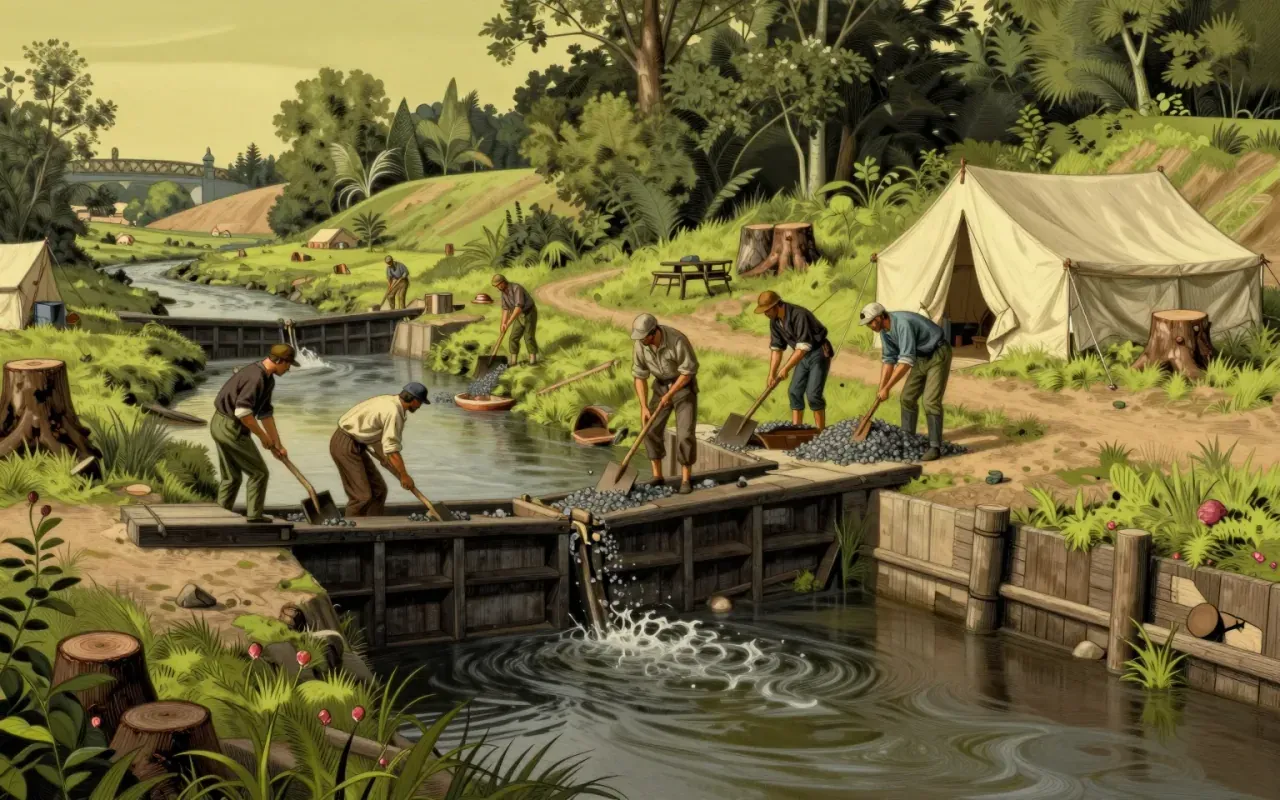
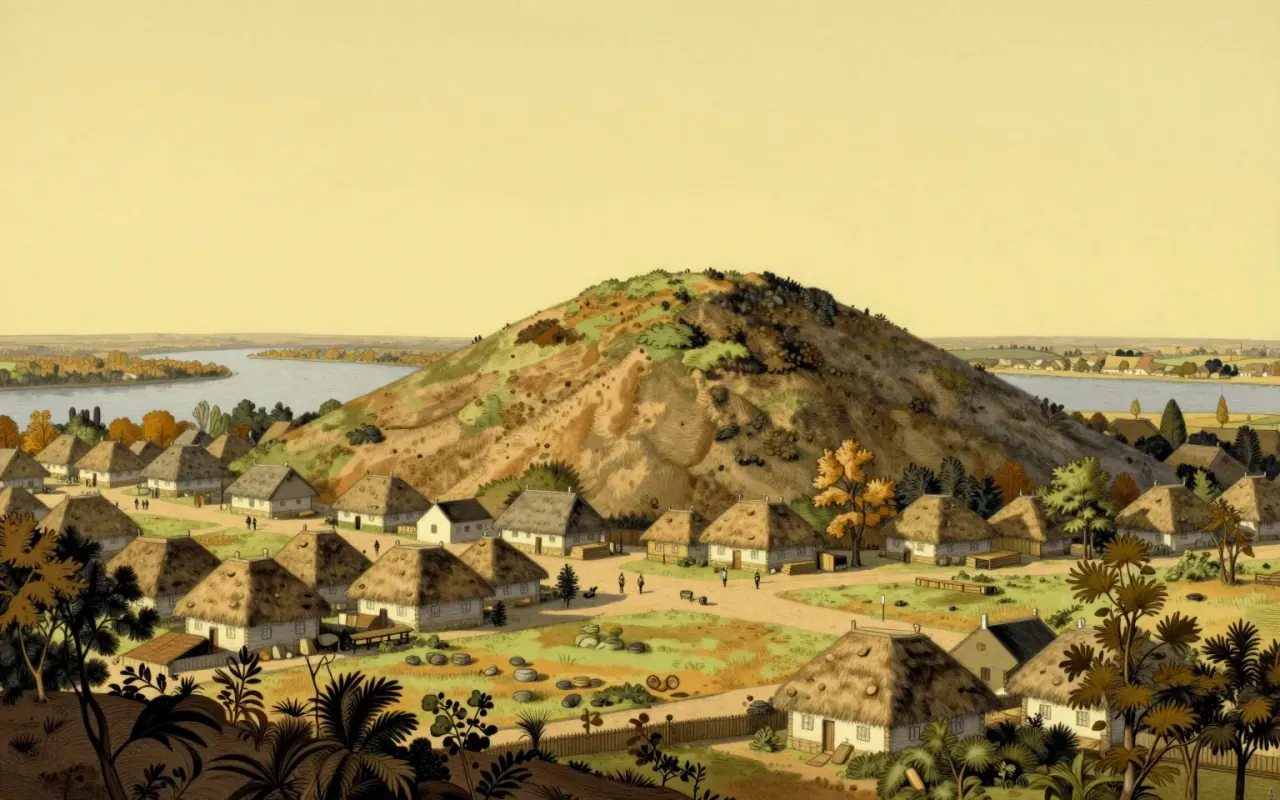
Across the Mississippi River from present-day St Louis, a settlement that had existed modestly since around 600 underwent explosive growth beginning around 1050, when its population jumped within decades from roughly a thousand people to more than ten thousand concentrated in a dense urban core. Builders raised some hundred and twenty earthen mounds across an area of about six square miles, moving an estimated fifty-five million cubic feet of soil by hand using woven baskets, including Monks Mound, which alone rose a hundred feet and covered nearly fourteen acres. The city reached its height between about 1100 and 1200, supporting a population that some estimates put as high as forty thousand, before a sustained decline set in during the following century. By around 1350 the site had been entirely abandoned, and the wider surrounding region remained largely depopulated for roughly two centuries afterward.
A city known only through soil and bone
Cahokia’s inhabitants left no written records beyond scattered symbols on pottery, shell, copper and wood, so almost everything known about the city has been reconstructed entirely from material remains rather than any documentary account. Archaeologists have used excavation of mounds and burials to trace social hierarchy and ritual practice, radiocarbon dating of preserved wood to fix construction timelines, soil and sediment analysis to reconstruct agricultural conditions and flood history, and isotope analysis of skeletal remains to study diet and nutrition. A striking example of this method at work is the discovery of a large circular arrangement of wooden posts, identified only because archaeologist Warren Wittry recognised patterns of soil discoloration marking where the posts, long since decayed, had originally stood. Because no written testimony survives to confirm or challenge these material interpretations, questions about social organisation, religious belief and the precise causes of decline remain more genuinely open than they would for a comparably significant literate civilisation.
Maize, surplus and a mixed population
Cahokia’s sudden growth after 1050 followed the wider adoption of maize agriculture in the region, which could support a far denser population than earlier subsistence patterns, and the resulting surplus likely enabled the kind of centralised religious and political authority capable of organising thousands of labourers to move earth on the scale the mounds required. Researcher Timothy Pauketat and others describe the resulting city as something closer to a planned social and religious project than an organic accumulation of villages, built by a genuinely mixed population drawn from multiple distinct language and cultural groups across the region rather than a single unified ethnic community. That diversity, while plausibly part of what made rapid growth possible by drawing in migrants and resources from a wide area, may also have left the city without the kind of shared cultural identity needed to hold such a large and heterogeneous population together once other pressures began to mount in later generations.
Disputed numbers and causes
Both the city’s peak population and its abandonment remain genuinely contested among specialists. Population estimates for the urban core alone range from about ten to fifteen thousand, while estimates for the entire city at its height span anywhere from six to forty thousand, a gap wide enough to significantly change how Cahokia’s scale compares to other pre-modern cities, and recent excavations locating previously unknown residential areas have pushed some estimates upward still further. On decline, older theories blaming environmental degradation through deforestation and overhunting have been challenged by more recent research finding no clear evidence of human-caused erosion or flooding at the site, while theories linking collapse to nutritional problems from unprocessed maize lack conclusive supporting evidence. Some historians emphasise defensive stockades and burned villages as signs of warfare-driven collapse, others point to social fragmentation among Cahokia’s diverse immigrant population, and most now favour some combination of environmental and social pressures rather than any single decisive cause.
A misattributed, then reclaimed, past
Cahokia’s abandonment coincided with a much wider depopulation across a large stretch of the surrounding Mississippi and Ohio valley region, an area archaeologists refer to as largely vacant for roughly two centuries before population gradually returned. The site was rediscovered by American settlers who initially attributed its mounds to a vanished non-Native civilisation, a myth the archaeologist Cyrus Thomas definitively debunked in 1894 by establishing the mounds as the work of Native American builders. Many surviving Indigenous nations, including the Osage, Ponca, Cherokee and others, recognise Cahokia as ancestral heritage and maintain oral traditions and continued ceremonial practices connected to the site. Ironically, most of the comparable mounds that once stood within the boundaries of St Louis itself were destroyed and used as building fill during that city’s nineteenth-century industrial expansion, even as Cahokia’s own surviving mounds eventually earned UNESCO World Heritage status in 1982.
A corrective to assumptions about scale
Cahokia deserves attention as a genuine corrective to the assumption that large, sophisticated pre-industrial cities in North America were confined to Mexico and points south, since this was, for a time, larger than any city that would exist within the future United States until the 1780s, built entirely without the written record that anchors most comparably significant urban histories elsewhere in the world. Readers should approach every specific number in its story, from total population to precise dates of decline, as a working estimate drawn from careful but inherently incomplete physical evidence rather than a settled fact, since the absence of any indigenous written testimony leaves real and probably permanent gaps in understanding. Anyone interested in pre-Columbian North American history, in what purely archaeological methods can and cannot establish about a vanished society, or in a genuinely undertold chapter of the continent’s urban past will find Cahokia a rewarding and still actively researched subject.