A spring in the Jordan Valley
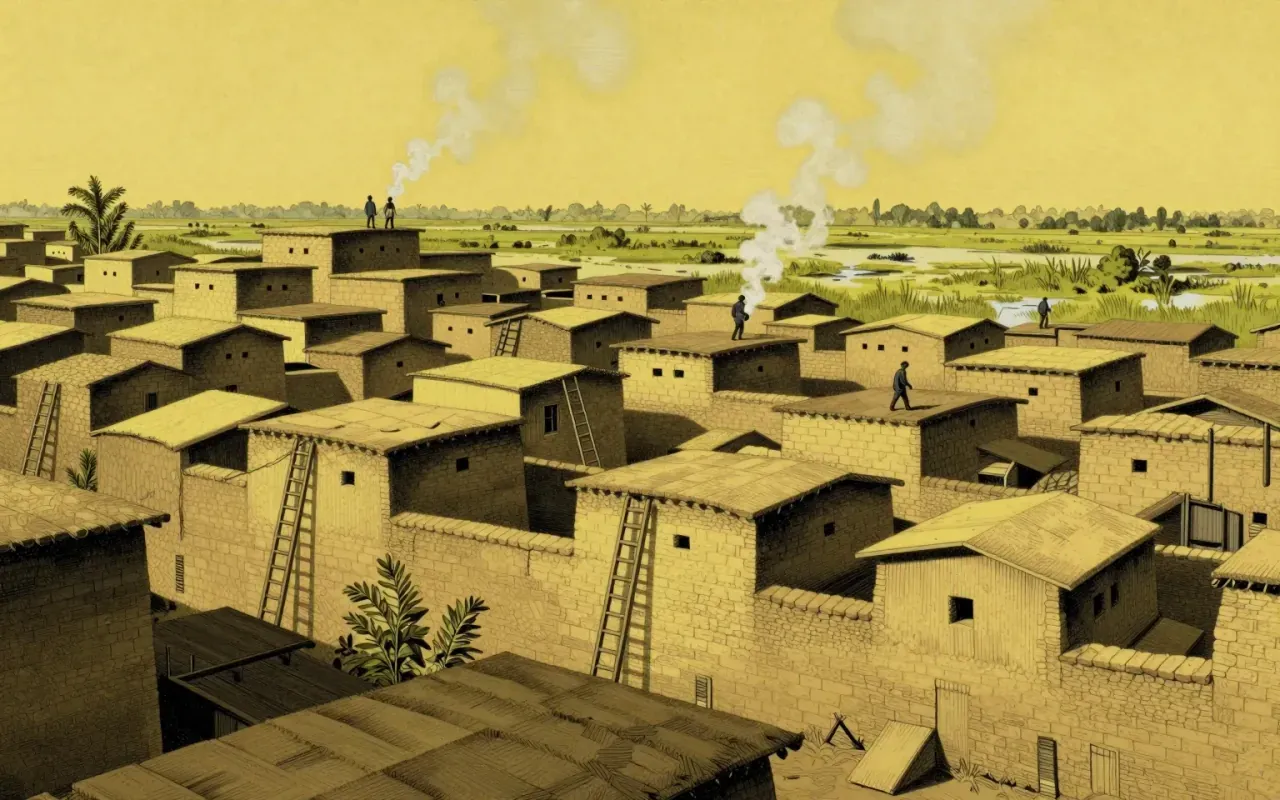
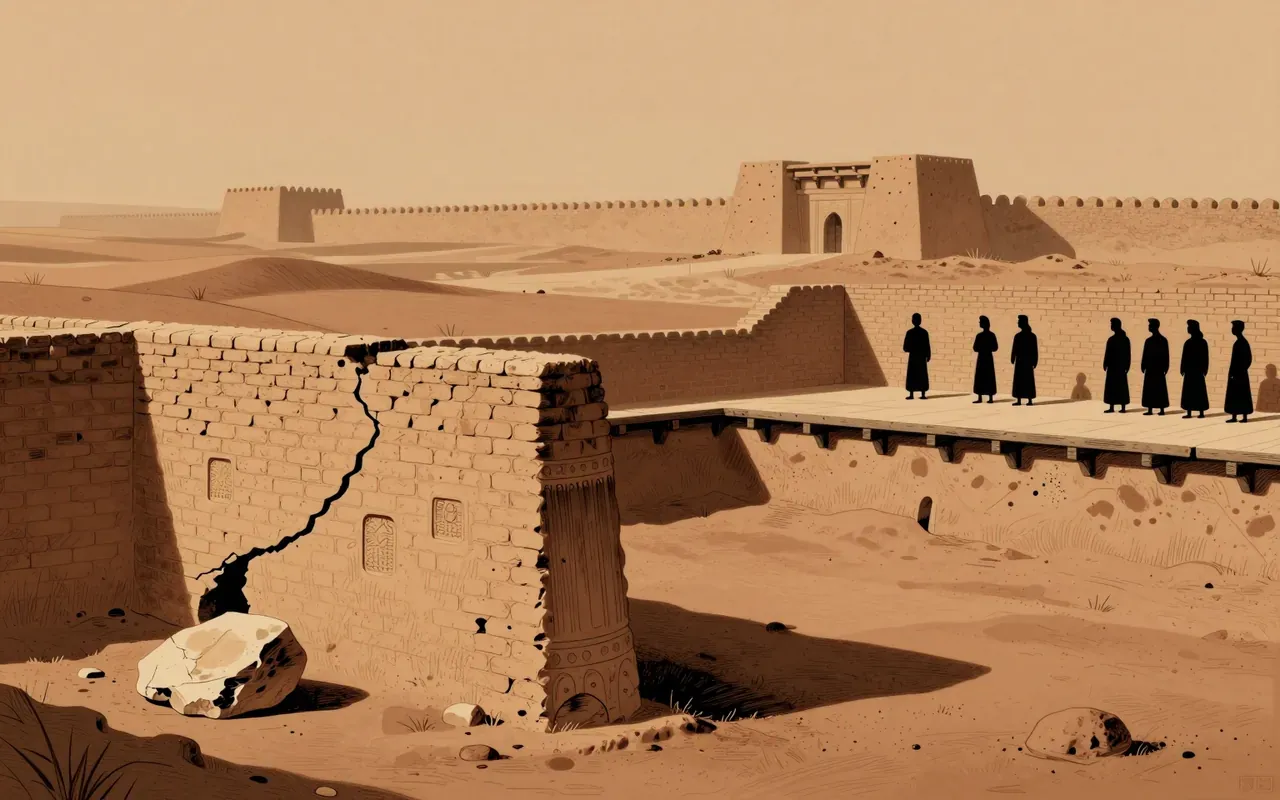
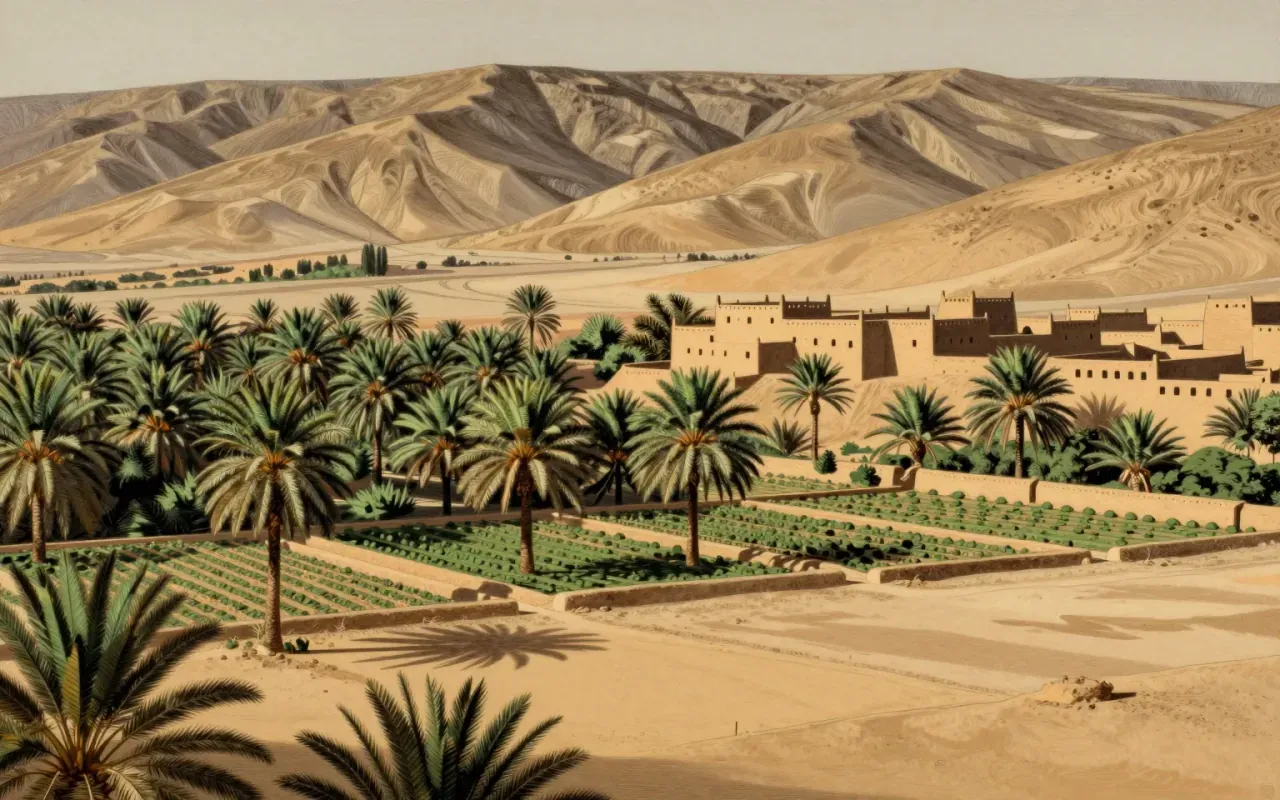
Jericho sits beside a freshwater spring in the Jordan Valley, and the tell there preserves more than twenty successive rounds of settlement stretching back roughly eleven thousand years. The best-known phase belongs to the Pre-Pottery Neolithic A period, when the community built a substantial stone wall, over three and a half metres high, with an attached stone tower more than eight metres tall containing an internal staircase of twenty-two steps. Later phases include a fortified Middle Bronze Age town destroyed in the seventeenth or sixteenth century BC, a smaller Late Bronze Age settlement under Egyptian oversight, a decline following the Jewish revolts against Rome, and a Byzantine-era revival that has left rock-cut tombs with decorated ossuaries. The site was largely abandoned by later antiquity before modern excavation began.
The tower and the wall
What is known about Jericho comes almost entirely from the spade, not from continuous written record. Charles Warren dug there in 1868; Ernst Sellin and Carl Watzinger followed between 1907 and 1911; John Garstang excavated through the 1930s; and Kathleen Kenyon’s stratigraphic work from 1952 to 1958 reset the site’s chronology using methods more careful than her predecessors’. Lorenzo Nigro has led renewed excavation since 1997. Radiocarbon results published in 1981 and 1983 anchored the Neolithic tower to roughly 8300 BC, with use continuing to about 7800 BC. Each excavator’s stratigraphy has been revised by the next, which is the ordinary condition of a tell dug across a century rather than a sign that the record is unreliable.
Four excavators, one trench
The spring made year-round settlement possible in an otherwise arid valley, and that reliable water is the simplest explanation for why people kept returning to the same low mound for millennia. Why the Neolithic community invested in a wall and tower at such an early date is less settled: one reading treats the wall as flood protection for cultivated land, with the tower serving a ceremonial rather than military role, since no comparable threat from other Neolithic communities has been identified nearby. Later Bronze Age fortification and destruction followed the more familiar pattern of walled towns caught between competing regional powers, including Egyptian involvement in the Late Bronze Age town. Byzantine recovery reflects the wider revival of Levantine settlement under Roman and Byzantine rule rather than anything particular to Jericho.
What the tower was for
The tower’s purpose is still argued over, with defence, flood control, and ceremony all proposed and none conclusively established. Population figures for the Neolithic settlement range from as few as two or three hundred to as many as two or three thousand, a spread that reflects how little direct evidence survives for household counts this early. The sharpest disagreement concerns the biblical conquest story in the Book of Joshua, in which the city’s walls are said to have fallen before an Israelite army. Scholarly consensus does not treat this as a historical account of the site as excavated. Nigro has proposed instead that the story preserves a folk memory of real destructions the Canaanite city suffered in the third and second millennia BC, later reshaped by biblical writers into a single dramatic episode.
Joshua’s walls, and the walls in the ground
Jericho’s long excavation record has made it a reference point for how archaeologists think about the transition from mobile foraging to settled village life, and about early defensive architecture before the invention of pottery. The site’s association with the Joshua narrative, regardless of its historicity, has also kept it prominent in a way most Neolithic settlements never become, drawing visitors and funding that a less storied tell would not attract. That combination, of archaeological importance and scriptural fame, has shaped both how the site has been dug and how it has been marketed. Formal recognition followed in 2023, when UNESCO inscribed Jericho as a World Heritage Site, citing its unusually long and well-documented settlement sequence.
An old claim, freshly certified
Jericho rewards attention less for a single dramatic fact than for what a century of careful, contested digging looks like when it is laid out in order. Readers drawn to the idea of the world’s oldest city will get that claim, but also the caveats an honest excavation record attaches to it: revised chronologies, disputed purposes, and a scriptural story that the evidence does not support in the form usually told. That is a more useful thing to know than the tidy version. The site is a good entry point for anyone wanting to see how archaeologists actually build a chronology from stone, ash, and radiocarbon rather than from narrative alone, and how a Bible story and a tell can share a name without sharing a plot.