historybriefs
Saved
Ancient · Empires & states

Samarkand

800 BC

Samarkand wasn’t built for silk or saints — it was wired into empire 2,400 years before Timur.

Worth your time?4.5/5Yes.Study the whole thing.What works, what does not, who it is for ↓
12:27in productionCh. 1 · Upper Paleolithic roots/ 12:27 · ceiling 15 min
4 chapters · 12:27Ceiling 15:00

The brief is written and checked. The video joins this page when it is cut.4 chapters · 1 min read · 12:27 planned

Read the brief

Samarkand at -800 BC is archaeologically verifiable, institutionally attested, and geographically explicable — but its ‘founding’ remains a scholarly estimate, not a recorded event.

Chapters & takeaways4
  1. 0:52
    Upper Paleolithic roots

    Human presence in Samarkand stretches back 40,000 years — not just camps, but sustained activity across multiple sites.

  2. 3:05
    The 700 BC anchor

    Scholars pin Samarkand’s founding to c. 700 BC — but that date reflects institutional consensus, not archaeological certainty.

  3. 5:38
    Capital before conquest

    By the Achaemenid era, Samarkand was already a satrapal capital — proof it had institutional weight before Alexander arrived.

  4. 7:33
    Conquest, not creation

    Alexander’s capture of Markanda in 329 BC confirms Samarkand’s strategic value — but does not mark its origin.

Worth your time?

Yes. Study the whole thing.

4.5/ 5
What works
  • establishes Samarkand as a pre-Alexander political centre
  • grounds human presence in datable excavation
  • separates verified chronology from later mythmaking
What does not
  • claim a death toll
  • state a motive
  • attribute cause beyond geography and empire
  • present contested dating as fact
Study it if
  • readers who need evidence, not evocation
  • scholars testing early Central Asian state formation
  • teachers building timelines from material proof
Skip it if
  • those seeking spiritual or aesthetic resonance
  • readers wanting narrative continuity from Paleolithic to Silk Road
The written brief1 min read

What happened

Samarkand existed as a settled place by 700 BC. It was already the capital of the Sogdian satrapy under the Achaemenid Empire. Human activity in the area dates back 40,000 years.

How we know it

Archaeological excavations in Syob, midtown, Hojamazgil and Sazag’on uncovered Upper Paleolithic artefacts dated to 40,000 years ago. The Institute of Archaeology of Samarkand places the city’s founding around 700 BC — a date within the broader scholarly proposal of 8th–7th century BC foundation. Later historical records confirm its role as capital of Sogdiana under the Achaemenids and its conquest by Alexander in 329 BC as Markanda.

Why it went that way

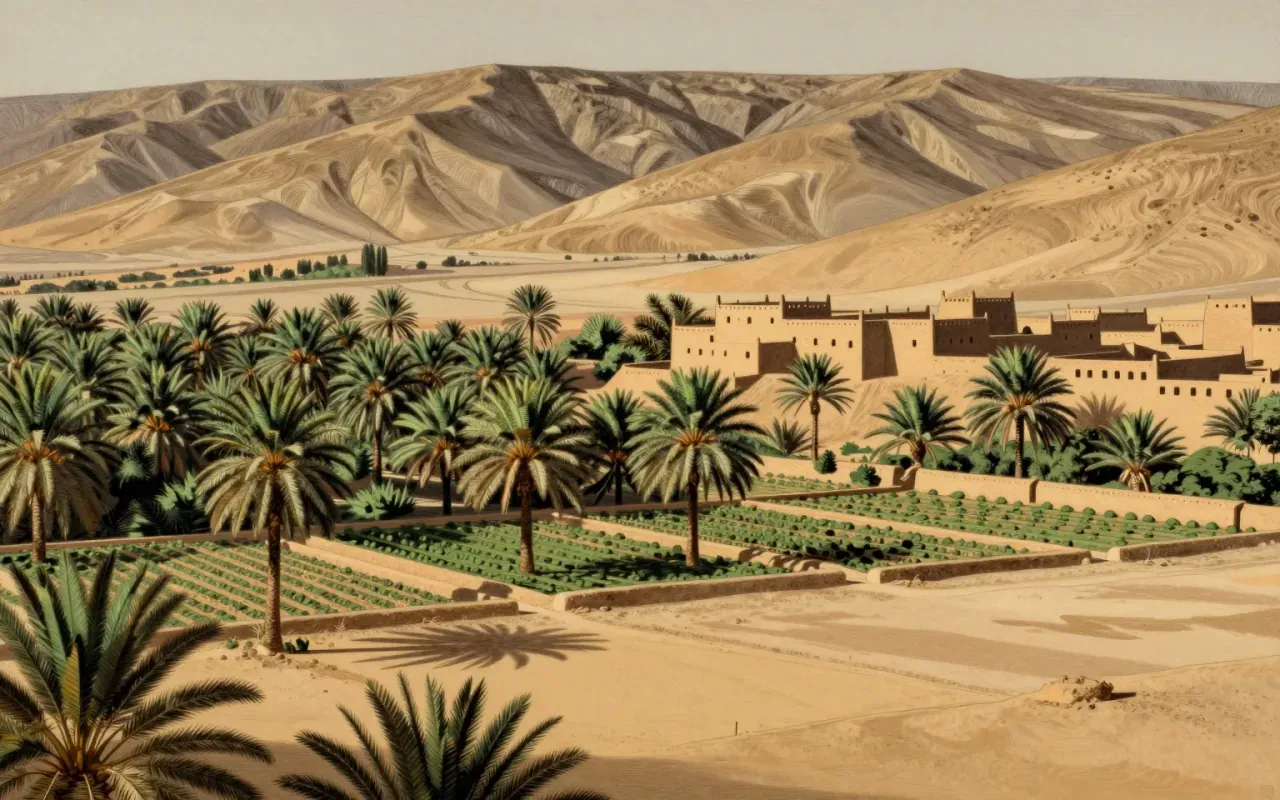
Its location on the Zeravshan River valley gave access to water, arable land, and east-west trade routes — advantages visible in the distribution of Upper Paleolithic sites across the same terrain. No source attributes its rise to climate, warfare, or migration; only geography and imperial absorption are evidenced.

What is still contested

The exact date of Samarkand’s founding remains uncertain. While the Institute of Archaeology proposes c. 700 BC, scholars only broadly agree it fell between the 8th and 7th centuries BC — no source fixes a year, nor confirms whether ‘founding’ means first fortification, first administrative centre, or first continuous settlement.

What it changed

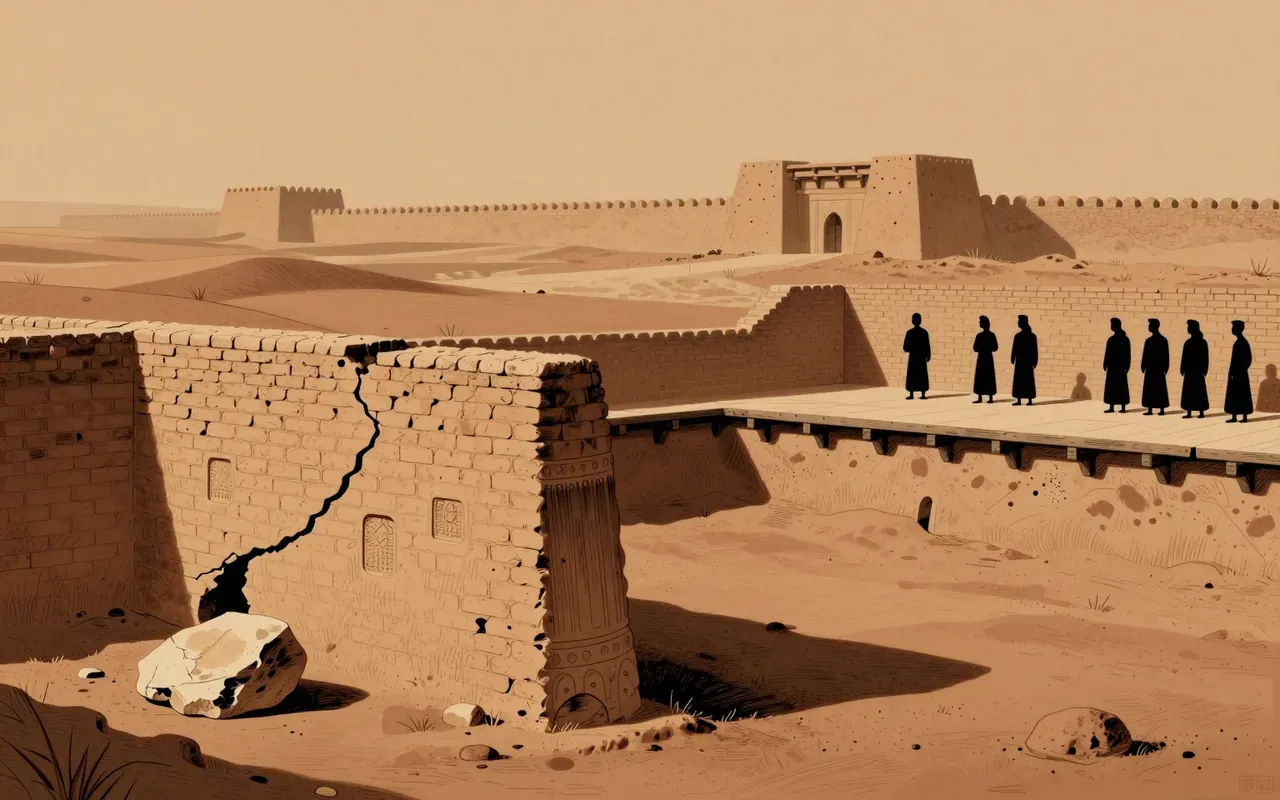
Samarkand’s status as satrapal capital established it as an administrative node in the first transcontinental empire — embedding it in Persian imperial infrastructure, taxation, and communication networks long before Alexander or Islam.

Is it worth your time

Yes. Samarkand at -800 is not a myth or a legend: it is archaeologically anchored, politically documented, and chronologically precise enough to test how early urban power formed in Central Asia — without relying on later imperial narratives.
Same strand · Ancient4 of 31
13:00
Cahokia1050Beginning around 1050, a settlement across the Mississippi from present-day St Louis grew explosively into a city of thousands, its inhabitants moving millions of cubic feet of earth by hand to build over a hundred mounds. Because Cahokians left no written records, everything known about the city comes from excavation, radiocarbon dating and soil analysis rather than testimony, leaving population estimates and the causes of its abandonment by 1350 genuinely disputed among archaeologists. Long misattributed to a vanished non-Native civilisation, the site is now recognised as ancestral heritage by multiple Indigenous nations and holds UNESCO World Heritage status.
13:00
Çatalhöyük7500 BCCatalhoyuk was a densely built Neolithic settlement in southern Anatolia occupied from roughly 7500 to 5600 BC, notable for honeycomb-like mudbrick houses entered through their roofs and for eighteen successive layers of rebuilding uncovered by archaeologists. James Mellaart, who discovered the site in 1958, argued its clay figurines pointed to a mother-goddess religion and an egalitarian social structure, but later excavations led by Ian Hodder, examining thousands more figurines and other evidence, found little support for a dominant female deity and some evidence of growing inequality over time.
13:00
Jericho9600 BCLong before it was a byword for tumbling walls, Jericho was a spring-fed settlement in the Jordan Valley occupied, on and off, for some eleven thousand years. A century of digging has traced a Neolithic tower and wall from around 8300 BC through Bronze Age destructions to a Byzantine revival, but the excavators disagree about what some of it was for, and the famous conquest story from the Hebrew Bible sits awkwardly beside what the trenches actually show.
13:00
Ur3800 BCUr grew from a small Ubaid-period settlement on the Euphrates into a Sumerian city-state, and briefly, under its Third Dynasty, into the largest city in the world. Most of what is known comes from Leonard Woolley's 1920s and 1930s excavation of its Royal Cemetery, a find as rich as it was troubling, since scores of attendants were buried alongside the dead. Woolley's theory of how they died has not survived contact with later forensic evidence, and the city's traditional link to the biblical Abraham runs into a chronological problem of its own.
Up next in History

Atomic bombings of Hiroshima and Nagasaki

1945 · 11:49

The only wartime nuclear attacks were acts of policy, not desperation—and their civilian toll was foreseen, not incidental.

11:49