From marsh village to city-state
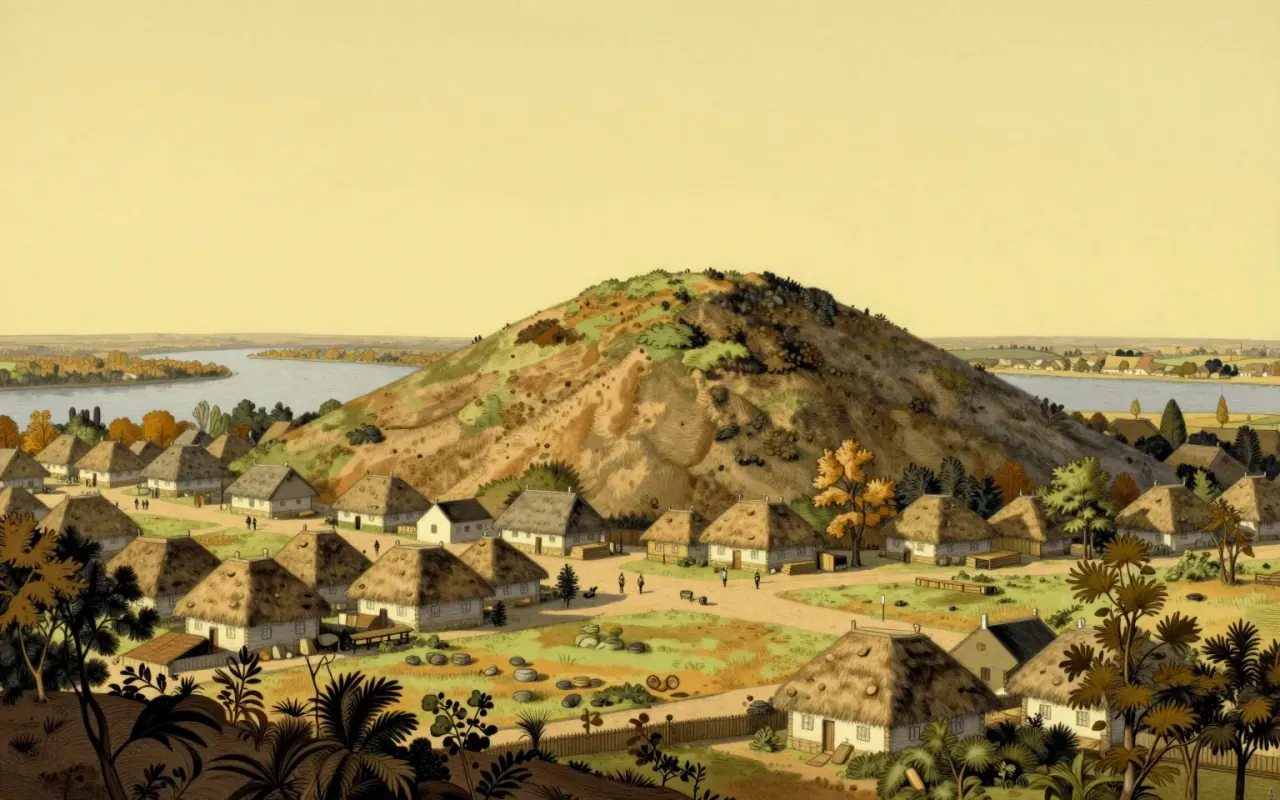
Ur began as a modest settlement of the Ubaid period, around 3800 BC, sited near where the Euphrates then met the Persian Gulf. Its earliest inhabitants lived off fish, birds, tubers, and reeds rather than farming alone, taking advantage of a coastline that has since retreated far to the south as the delta silted up. By the twenty-sixth century BC, Ur appears in the record as a functioning city-state with named rulers, the earliest securely attested being Mesannepada. Wealth from this era is visible in burials of the Early Dynastic period that included imported luxury goods from as far as Iran, Afghanistan, India, and the Levant, evidence of a trading reach well beyond the city’s own agricultural hinterland.
The Third Dynasty’s brief supremacy
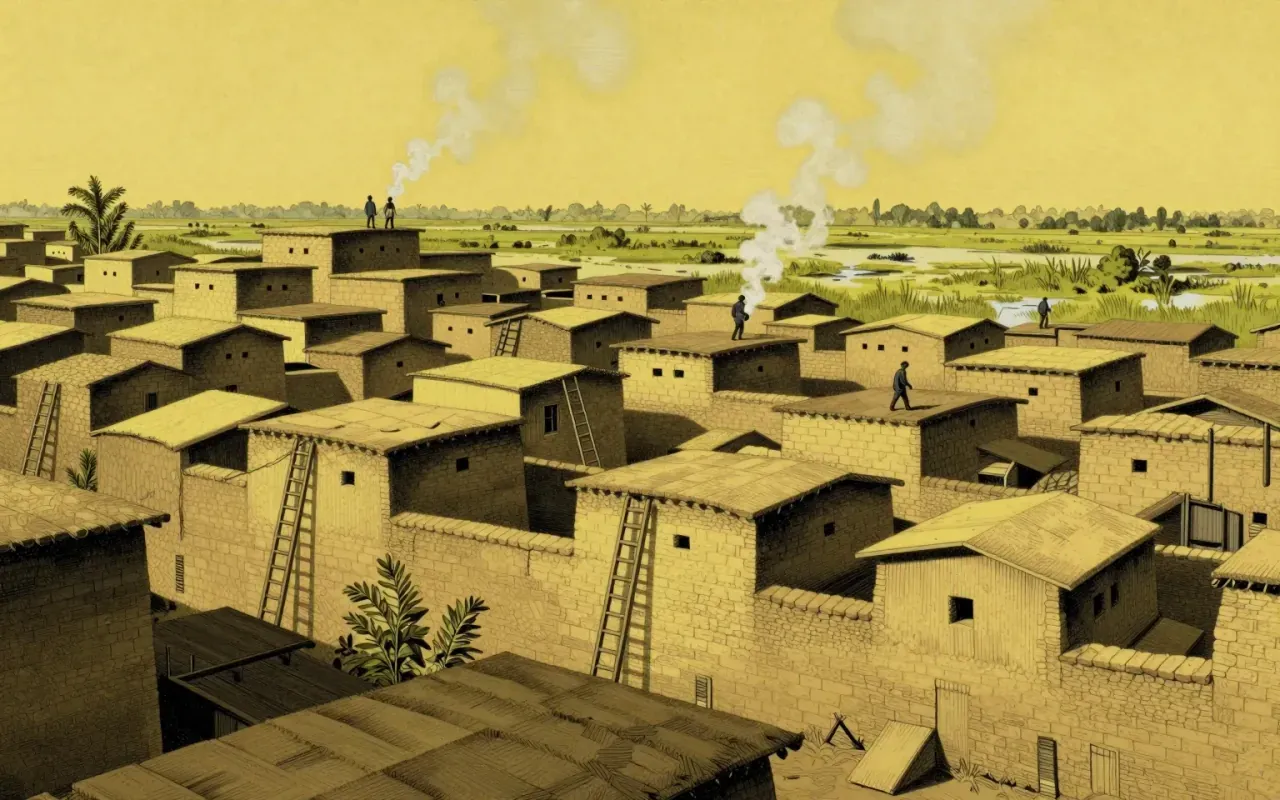
Ur’s high point came under its Third Dynasty, founded by Ur-Nammu around 2112 BC. He built the city’s great ziggurat and issued a law code that predates Hammurabi’s by roughly three centuries. His successor Shulgi ruled for at least forty-two years, built out a highly centralised bureaucracy, and, according to the historical record, arranged for his own deification during his lifetime. Under this dynasty Ur is estimated to have held around sixty-five thousand people and to have been, for roughly half a century around 2000 BC, the largest city then existing. That supremacy did not last: the dynasty collapsed under Ibbi-Sin, its last king, when Elamite forces took the city around 1940 BC.
Woolley opens the Royal Cemetery
Ur’s early prosperity followed from its river and coastal access, which let it move goods that a purely inland settlement could not reach. Its later political weight rested on more deliberate choices: Ur-Nammu’s building programme and legal code, and Shulgi’s long, administratively ambitious reign, converted a wealthy trading city into a bureaucratic state capable of projecting authority across southern Mesopotamia. The eventual collapse under Ibbi-Sin has been attributed to Elamite military pressure rather than internal failure alone, though a state this centralised was also vulnerable once its bureaucracy could no longer hold the periphery together. The city’s final abandonment by the fifth century BC followed a slower, environmental cause: drought, a shifting river channel, and the silting of the Gulf outlet left Ur stranded inland.
The Standard, the queen, and the attendants
The most striking historiographical turn concerns the Royal Cemetery’s retainer burials. Leonard Woolley, who excavated the site between 1922 and 1934 for the British Museum and the University of Pennsylvania, proposed that the attendants found alongside royal dead had died willingly, by poison, as part of a ritual accompanying their rulers. That reading held for decades. CT scans of surviving skulls, conducted long after Woolley’s death, instead showed blunt trauma consistent with a blow from a sharp implement such as the spiked end of a copper axe, undermining the voluntary-poisoning account. The dating of the tombs themselves has also moved: radiocarbon work has since placed the Early Dynastic Ia layer around 2900 BC and Ic around 2679 BC, refining Woolley’s original chronology.
Poison or the axe
Ur’s decline removed a major Mesopotamian power but its physical remains, especially the ziggurat, kept drawing attention from later rulers: the Babylonian king Nabonidus rebuilt the structure in the sixth century BC, centuries after the city’s political importance had faded. Modern rediscovery began with Henry Rawlinson’s identification of the mound at Tell el-Muqayyar as ancient Ur in the 1850s, and Woolley’s later excavation turned the site into one of the most famous in Near Eastern archaeology, supplying museums with objects like the Standard of Ur that shaped public images of Sumerian civilisation. The city’s association with the biblical Ur of the Chaldees has kept it in view for religious as well as archaeological reasons, sustaining visits including one by Pope Francis in 2021.
A city that outlived its river
Ur is worth attention less for a single dramatic date than for how much its interpretation has changed since Woolley first opened the Royal Cemetery: a poisoning story sustained for decades until forensic imaging quietly closed the case a different way. The city also offers a clean example of how urban civilisation looked at genuine scale nearly four thousand years ago, backed by administrative records and building projects rather than legend. The Abraham connection is worth knowing about precisely because it is contested: the Chaldeans who give the biblical Ur its name did not establish themselves in Mesopotamia until centuries after Abraham is traditionally supposed to have lived there, a mismatch the sources do not resolve.