From soldier to philosopher in the Dutch Republic
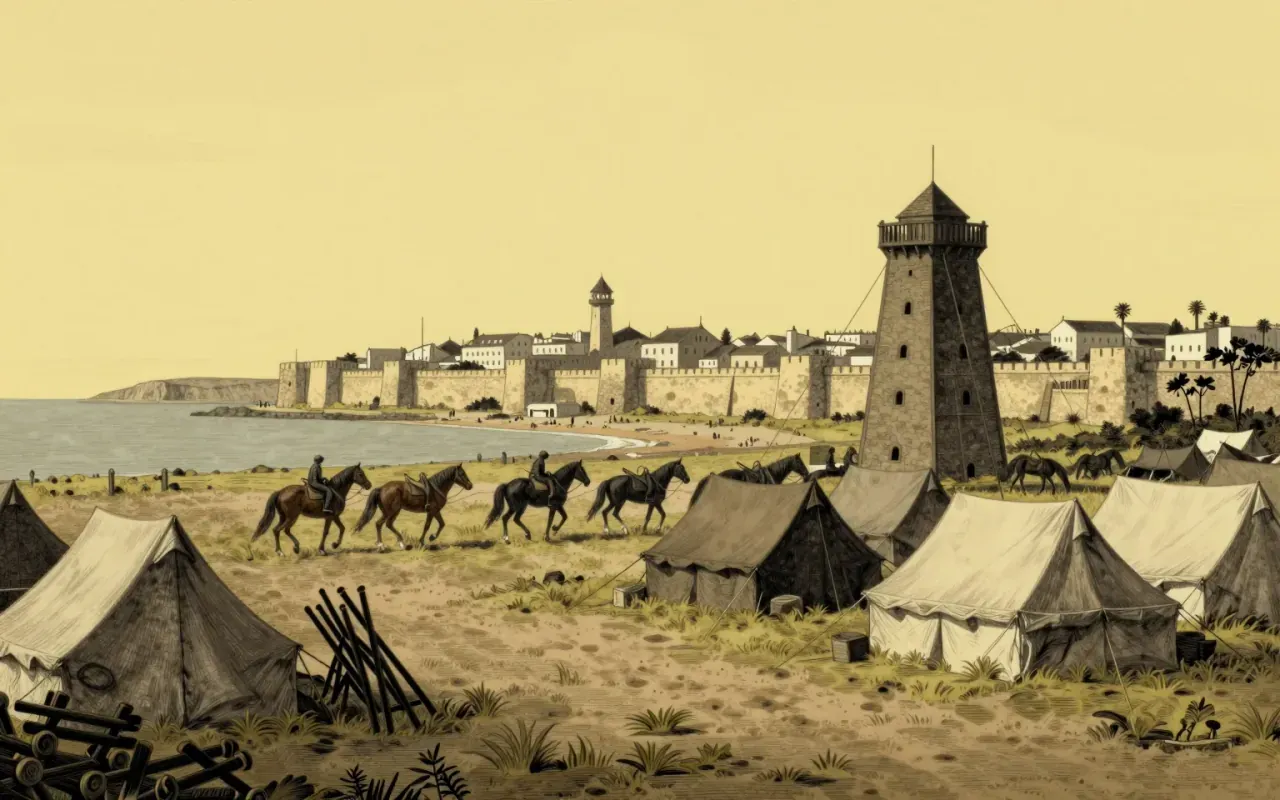
Rene Descartes was born in France in 1596, educated at a Jesuit college and later in law, and spent several years as a young man serving in European armies before a series of vivid dreams in 1619 convinced him he had found a new philosophical method worth pursuing. He settled in the Dutch Republic in 1628 and spent roughly two decades there producing his major works, including the Discourse on the Method in 1637 and the Meditations on First Philosophy in 1641. In 1649 Queen Christina of Sweden invited him to her court to help organise a scientific academy and to tutor her personally, but the arrangement went poorly, and Descartes died in Stockholm in February 1650 after a short illness, only months into his stay.
An editor who tidied the record after death
Much of Descartes’s personal life is known through correspondence, especially an extended exchange with Princess Elisabeth of Bohemia, and through an early biography by Adrien Baillet describing episodes including his formative 1619 dreams. That record has a real complication, though: after Descartes’s death, the scholar Claude Clerselier inherited his papers and edited his letters for publication in a way later historians describe as effectively shaping Descartes into a more saintly figure than the surviving originals fully support, cutting and rearranging material rather than presenting it intact. Even the standard account of his death, pneumonia contracted from early-morning tutoring sessions in a cold Swedish castle, has been challenged by later researchers working from the physician’s own contemporary correspondence, which suggests a more complicated and disputed medical picture.
Doubting everything to find one certain thing
Descartes’s method began from a deliberate act of doubt: he resolved to set aside any belief that could be doubted at all, however unlikely the doubt, in order to see what, if anything, survived as genuinely certain, comparing the process to clearing unstable ground before building something durable on top of it. What survived, he argued, was the fact of his own thinking, since the very act of doubting required a doubter to exist, a conclusion he expressed in the phrase I think, therefore I am. From that single certain starting point he tried to rebuild a foundation for reliable knowledge generally, arguing separately that mind and body were fundamentally distinct kinds of substance, one thinking and immaterial, the other extended and physical, while insisting the two were nonetheless intimately joined in a single living person rather than merely riding alongside one another.
A mind and body joined, but never explained
The exact nature of how an immaterial mind could interact with a physical body became, almost immediately, one of the most persistent problems in his philosophy, and it shaped debate about the relationship between mind and body for generations of philosophers after him without ever being fully resolved. His account of the pineal gland as the physical point of connection between soul and body is now generally regarded as a specific, mistaken guess rather than a lasting contribution, even though the broader dualist framework he proposed remained hugely influential. Historians also debate the real character of his relationship with Queen Christina, since the traditional image of a fruitful intellectual partnership sits awkwardly against evidence that the two quickly developed a mutual lack of interest in each other’s chosen subjects.
Banned in universities, foundational in mathematics
Descartes is widely credited as a founding figure of modern philosophy for his systematic, doubt-based method of establishing knowledge, and his mathematical work connecting algebra and geometry, producing what is now called the Cartesian coordinate system, helped make later developments including calculus possible. His ideas also provoked serious institutional resistance during his own lifetime and afterward: a university in the Dutch Republic formally condemned Cartesian philosophy in 1643, the Catholic Church placed his works on its list of banned books in 1663, and the French king later prohibited university lectures on his philosophy entirely, showing how disruptive his approach was considered even generations after his death. His remains were moved between burial sites in France more than once, and the skull now displayed in a Paris museum is itself suspected by some researchers of being a later forgery.
A method that outlived its author’s own answers
Descartes is worth attention for how directly his central method, doubting everything to find one certain foundation, still shapes how philosophy approaches questions of knowledge and certainty centuries later, even though his specific solution to the mind-body problem is now generally regarded as unsatisfying. Readers interested in the origins of modern philosophical method, and in how a text’s transmission through an overly protective editor can shape later understanding of its author, will find the material genuinely rich to explore. Readers wanting a settled account of his final days, or a fully resolved answer to the mind-body problem he raised, should expect both to remain open questions rather than closed ones.