A king who ruled England mostly from somewhere else
Richard I was crowned at Westminster Abbey on 3 September 1189 after defeating his own father, Henry II, in alliance with Philip II of France, and he ruled until his death on 6 April 1199, yet spent no more than about six months of that decade actually present in England. His reign centred instead on the Third Crusade, launched in 1190 with a force estimated between roughly 8,000 and 17,000 depending on the source, a period of captivity in the Holy Roman Empire, and continuous warfare defending his family’s continental territories in Normandy, Aquitaine and Anjou against Philip II, obligations that structured nearly the entirety of his time as king.
A massacre one chronicler recorded, and English admirers long minimised
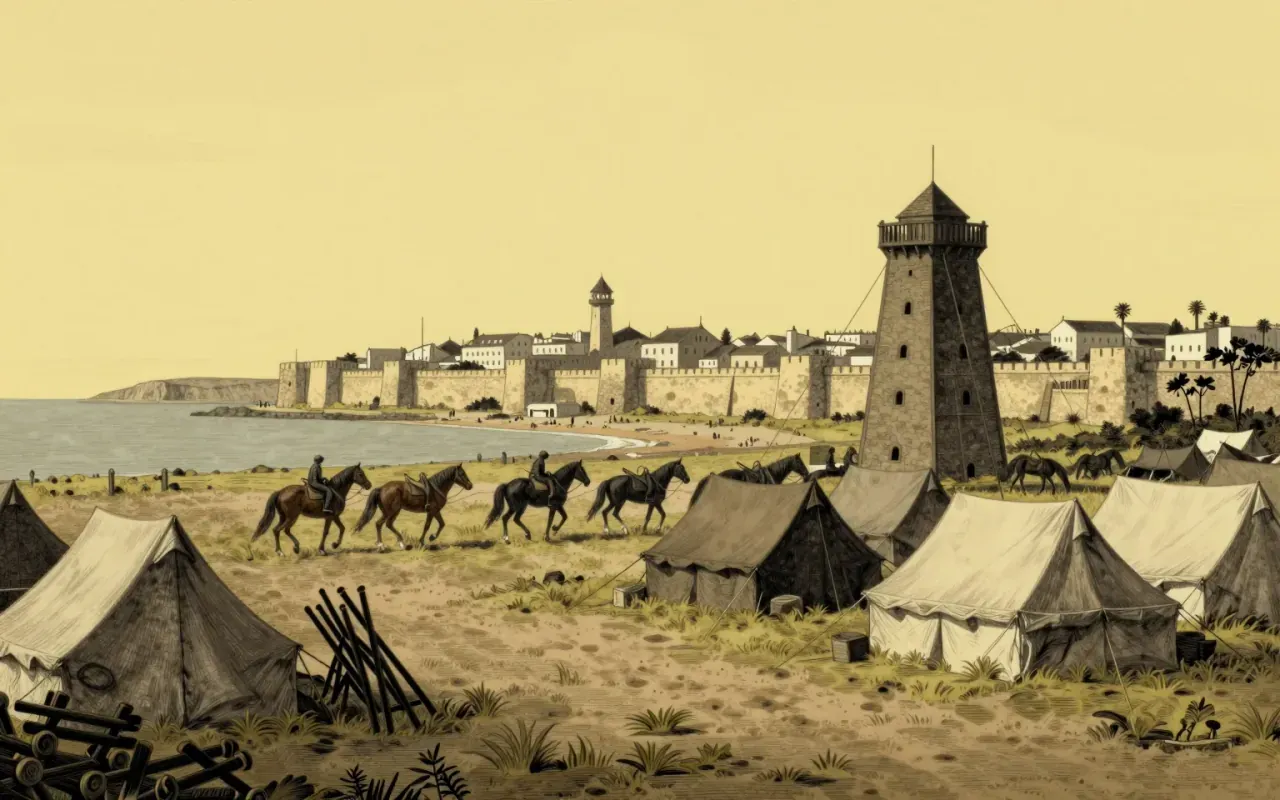
During the crusade, after the surrender of Acre in July 1191, Richard held roughly 2,700 Muslim prisoners as hostages to guarantee Saladin’s compliance with the surrender terms, and when he judged the terms unmet and feared his own forces would be trapped advancing with the prisoners, he ordered them executed. The Muslim historian Baha al-Din, writing as a contemporary, recorded the killing directly while also documenting respect for Richard’s military skill elsewhere in his account, giving historians a source that captures both the atrocity and the era’s complicated regard for Richard as a battlefield opponent rather than treating him as a simple monster or a simple hero.
A continental empire that needed defending as much as a crusade did
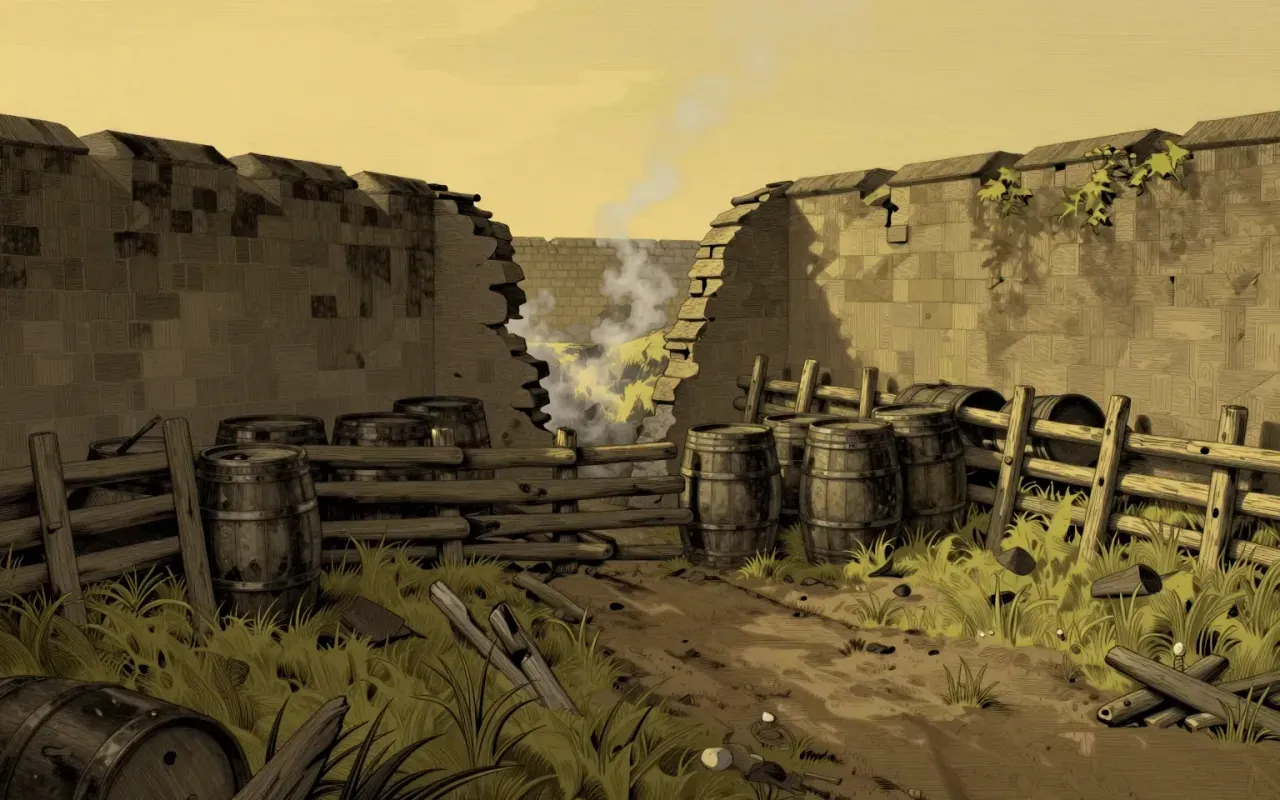
Richard’s continental obligations were not incidental to his kingship but central to it: as Duke of Normandy, Aquitaine and Anjou in addition to King of England, he held territories requiring near-constant military attention, particularly once Philip II began seizing Norman territory during Richard’s absence on crusade and in captivity. His construction of the fortress of Chateau Gaillard at Les Andelys between 1196 and 1198, completed with unusual speed and later called a masterpiece by military historians, reflected the scale of resources and attention he devoted to defending this continental inheritance, a commitment that left correspondingly less time for governing England directly.
Neglectful absentee, or a ruler judged by a standard he never claimed
For roughly four centuries after his death, Richard was regarded by English and French audiences alike as a model of chivalric kingship, but twentieth-century historians developed a more critical, so-called Little England interpretation, characterising him as an absentee ruler who treated England chiefly as a source of tax revenue to fund his continental and crusading ambitions. More recent scholars, notably John Gillingham, have pushed back against this framing as anachronistic, arguing it judges a medieval ruler with genuine cross-Channel responsibilities by a standard of national residency that would not have made sense within the political structure Richard actually inherited and had to manage.
A ransom worth years of a kingdom’s income
Returning from crusade in 1192, Richard was captured near Vienna and eventually held by Holy Roman Emperor Henry VI, who demanded a ransom of 150,000 marks, an amount roughly equivalent to two or three years of the English crown’s annual revenue. Eleanor of Aquitaine organised the payment through extraordinary taxation across England, including a levy of one quarter of the value of property from clergy and laity alike, and Richard was finally released on 4 February 1194, more than a year after his capture, a delay and expense that itself constituted one of the reign’s most significant and costly episodes.
Worth reading for the argument over what an absent king even means
Richard’s reign is worth engaging closely because assessing it fairly depends entirely on what one believes a king with territories on both sides of the English Channel actually owed to each part of his domain, a question that has produced genuinely different verdicts across different eras of scholarship. Readers who know Richard mainly through either the chivalric legend or the harsher absentee-king critique gain the most from holding both alongside the documented atrocity at Acre and the substantial, well-recorded cost of his ransom, since none of these threads alone captures a reign that was shaped as much by continental war and captivity as by anything resembling conventional governance of England itself.