Hitler's earliest written statement calling for the removal of Jews predates his rise to power by fourteen years, and historians now largely agree it grew out of a specific wartime myth rather than any lifelong conviction.
Alaric spent most of his career trying to win a legitimate place inside the Roman military system, and the sack of Rome looks like his last resort after every offer to negotiate one was refused.
He edited a socialist newspaper to a circulation of a hundred thousand before turning against everything it stood for, and the party that expelled him for supporting the war never got the chance to see what he became instead.
A fictitious army group commanded by a general who wasn't actually leading it convinced German high command the real invasion would land at Calais, weeks after it had already landed at Normandy.
Historians cannot agree whether Franco's postwar killings numbered thirty thousand or two hundred thousand, a gap wide enough that the uncertainty itself is one of the clearest facts about how his regime operated.
A referendum on his own presidency reportedly passed almost unanimously, and a historian who studied it concluded the result was likely falsified without being able to say by how much, which sums up how hard Nasser's record is to read straight.
He dictated his own version of events with total control over the sessions, while the general who accepted his surrender gave Congress a directly contradicting account.
The commission that investigated Israel's near-disastrous unpreparedness for the 1973 war cleared Golda Meir of direct responsibility for the failure, yet historians still rate her handling of that single crisis well below the rest of her long career in office.
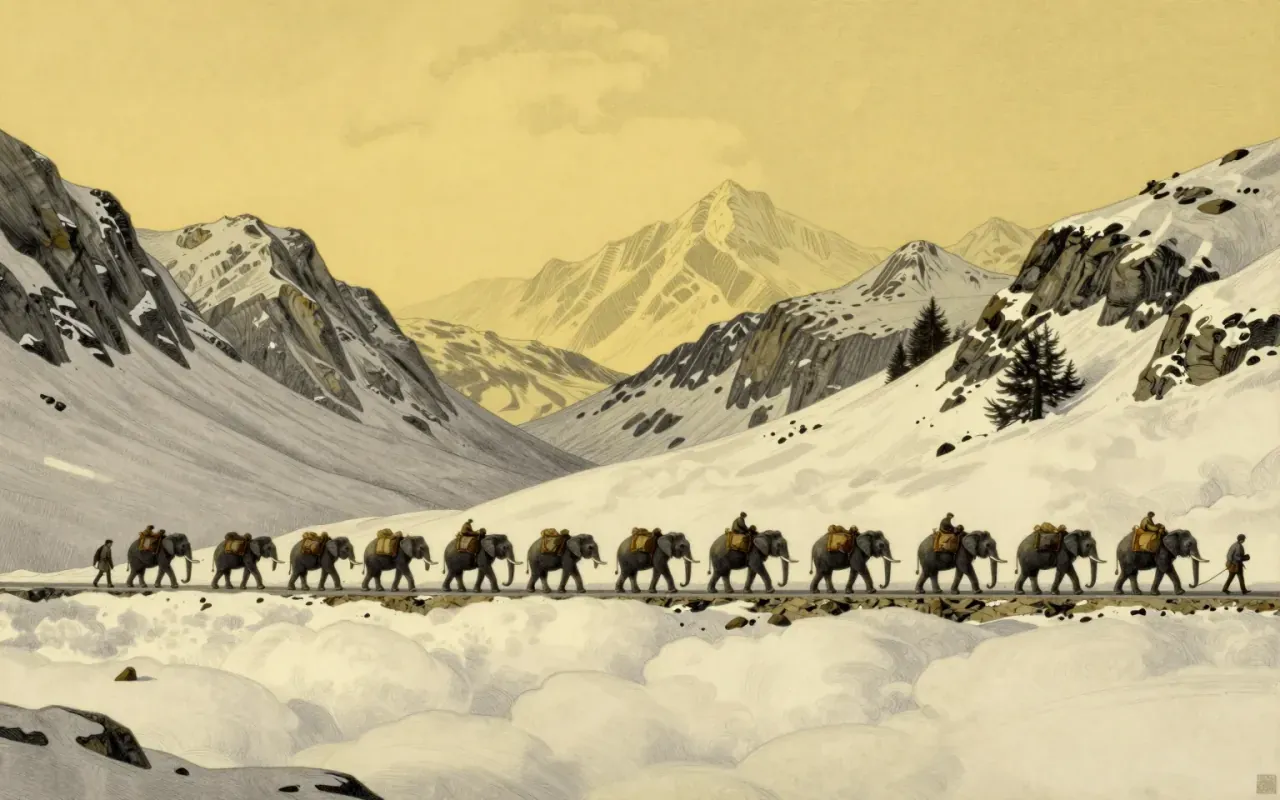
No Carthaginian account of Hannibal survives, so everything known about his reasoning comes filtered through the historians of the enemy he spent fourteen years fighting in Italy.
Joan of Arc's own words survive in unusual detail because two hostile courts, one convicting her and one clearing her decades later, both wrote everything down.
Caesar wrote his own war reports to sell his campaigns back home, and his account of the Gallic Wars is still the main source historians have for what happened in them.
Napoleon's own legal code freed Jews and abolished feudal privilege across Europe while, in the same years, he reinstated slavery in France's colonies, a contradiction his admirers and critics still tend to argue separately rather than together.
He negotiated the deal that made him briefly one of Britain's most popular prime ministers, and a single book published the same year Hitler invaded France was enough to make his name a byword for weakness ever since.
The tactic historians credited to Nobunaga for a century, three-stage volley fire at Nagashino, turns out to be a misreading by twentieth-century army generals rather than anything his own contemporaries described.
Cromwell described the mass killing at Drogheda as righteous divine judgment in his own words, leaving little room for historians to soften what he believed he was doing.
American commanders at Pearl Harbor were so convinced Japan would strike Wake Island or the Philippines instead that the record says there was no meaningful plan at all for defending Hawaii's own airspace.
England's most celebrated medieval king spent perhaps six months of a ten-year reign actually in England, a fact twentieth-century historians turned into a damning verdict before more recent scholars pointed out he had an entire continental duchy to defend as well.
Saddam Hussein ran Iraq for over three decades on a mixture of genuine modernisation and calculated terror, and the two are hard to separate in the record he left behind.
Cuba sent thirty-six thousand troops to Angola on its own initiative and caught Moscow by surprise, a rare instance of a Cold War proxy acting well ahead of its patron.
Austria voted 99.7 percent in favour of joining Nazi Germany a month after the invasion, and historians still argue how much of that number reflected genuine sentiment.
Over five thousand American soldiers were eventually needed to corner a band that never exceeded a few dozen fighters, a mismatch decades of broken agreements helped produce.
An emperor's surrender on a battlefield turned into a revolution back home two days later, which meant France's government changed hands before anyone in Paris had lost a single soldier there.
Two respected Soviet casualty analysts, working from the same war, arrive at figures more than two hundred thousand deaths apart, a gap that says as much about how armies count their dead as about the battle itself.
Nearly sixty thousand British soldiers became casualties on the first morning alone, the worst single day in the army's history, and the ground gained by the time the offensive stopped four months later measured under seven miles.
A German general designed a battle specifically to kill French soldiers rather than to capture ground, a strategy of attrition so explicit it survives in his own recorded planning language.
Only four in every hundred Londoners actually used the Underground as a shelter, which means the famous image of a city sheltering together night after night describes a small minority of the people who lived through it.
More than a hundred thousand civilians died in British camps built to starve out guerrilla fighters, and historians still cannot agree whether that was policy or simple incompetence, which may itself be the more disturbing question.
Bosnia's war produced Europe's only post-war genocide conviction and a tribunal record so extensive that few of its facts are actually in dispute, only their framing.
A Qing general secretly sabotaged the siege his own government had ordered, withholding artillery and shielding foreigners because he judged a simultaneous war against eight nations unwinnable, a quiet act of self-preservation that likely saved the legations from being overrun.
Almost everything known about Rome's conquest of Gaul comes from the conqueror's own dispatches home, and his casualty figures do not survive contact with basic arithmetic.
More Russian soldiers died of disease than were ever killed in battle, and the nurse who became world-famous for treating them mattered less for what she cured than for what she made everyone else finally admit about military hospitals.
Four states built by a permanent minority of settlers, which lasted nearly two centuries only because their Muslim neighbours were often more interested in fighting each other.
Medieval chroniclers could not even agree on what Pope Urban II promised the men who signed up for the First Crusade, and historians still argue how much religion had to do with any of it.
Historians still cannot agree on what to even call this war, and that disagreement over the name reflects a genuine, unresolved argument over what actually caused it.
The river running black with ink is a literary trope recycled across several sieges, and death toll estimates for 1258 still range from two hundred thousand to two million.
Eyewitnesses who watched the same fifty-three day siege could not agree afterward whether the attacking army numbered fifty thousand or three hundred thousand.
No written order from Hitler authorising mass murder has ever been found, which means historians reconstructing exactly when the decision to exterminate Europe's Jews was made are working from bureaucratic traces rather than a single smoking gun.
A telegram edited to sound ruder than it was pushed France into a war it declared and lost within a month, a defeat that finished German unification and started forty-three years of French resentment over two provinces.
Historians still argue over exactly when Hitler decided to murder every Jew in Europe, a question the record calls unresolved even though it agrees an explicit order existed by the war's later years.
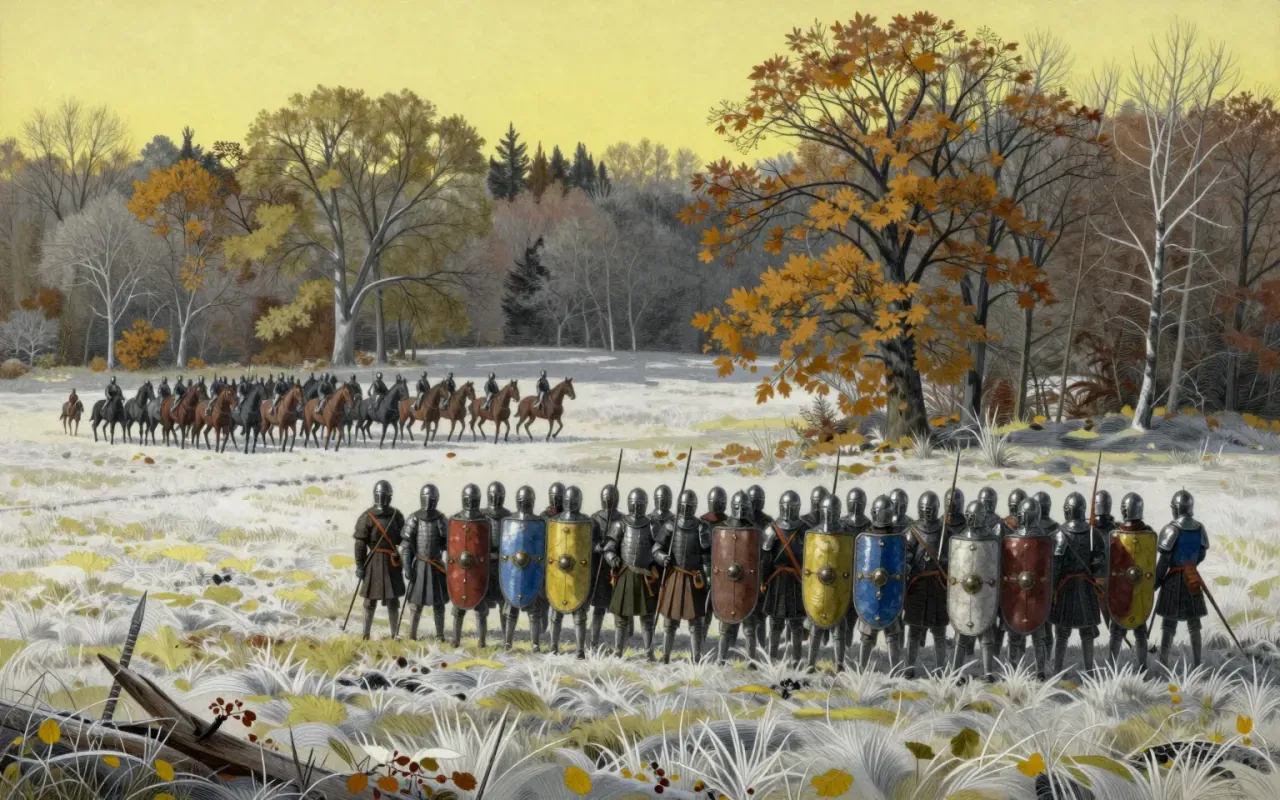
A war named for its length actually ran on and off for a hundred and sixteen years, and its opening dispute was less about the French crown than about who an English king had to bow to as a landlord.
The United States spent nearly twenty years and thousands of lives removing the Taliban from power in 2001, only to watch them retake the country within weeks of its own withdrawal.
Germany staged a fake Polish attack on its own radio station to justify a war it had already secretly agreed to split with the Soviet Union, and the order Hitler gave his forces going in left no doubt the killing was meant to go beyond soldiers.
Hitler compared the Soviet Union to a rotten structure that would collapse the moment Germany kicked the door in, and by the time the door actually held, Germany had lost eight million combatants trying to prove him right.
Both the Soviet Union and the West backed Iraq at once, and the United States kept supporting Saddam even after learning he was using chemical weapons on Iranian troops.
The United States invaded Iraq in 2003 on claims of weapons that were never found, and the power vacuum it left behind produced the Islamic State a decade later.
Fewer than one percent of Scots were Catholic by 1745, which makes the romantic image of a Highland Catholic uprising sit badly against who actually filled the Jacobite ranks.
Britain forcibly relocated a million Malayan villagers, used a herbicide the Americans would later study for Vietnam, and still calls the counterinsurgency that resulted a doctrinal success.
A ten-year guerrilla war Portugal never won on the battlefield ended instead when its own soldiers overthrew the government in Lisbon that kept sending them to fight it.
William's claim to England rested on a promise and an oath that no English source ever mentions, only the accounts written by the side that won and needed a justification.
The same charter that let judges reject a defence comparing Nazi camps to Allied detention centres also barred prosecutors from examining Soviet purges and deportations, a legal boundary drawn to protect the court's own authors as much as to convict its defendants.
Hitler wanted Czechoslovakia's factories more than its territory, and the occupation's relative restraint compared to Poland reflected that economic calculation as much as any racial theory.
Britain went to war in 1839 partly to force China to keep buying a drug its own commissioner had just burned twenty thousand chests of, and historians still argue over whether opium was really the cause or just the convenient pretext for a wider fight over market access.
Thucydides wrote the fullest surviving account of this war while much of it was still happening, and openly admits reconstructing the speeches in it rather than transcribing them.
A war fought over roughly fifty years survives mostly through one Greek writer working decades later, and the numbers he gives for Persian armies remain the most argued-over figures in ancient history.
Carthage came close to winning the first war outright and held Rome off in Italy for fourteen years during the second, yet the only history of any of it survives through the eyes of the winner.
Rhodesia's white minority government fought fifteen years to avoid the majority rule it eventually accepted at a negotiating table it had spent the entire war refusing to sit at.
Japanese crowds rioted over the 1905 peace treaty believing their unbroken run of victories had earned far more than it delivered, unaware how close to exhaustion their own war effort actually stood by the time the fighting stopped.
A guerrilla war fought by Tutsi exiles trying to go home hardened, over four years of stalled peace talks, into the conditions for the genocide that overtook it.
Historians cannot agree on the year the Sengoku period even began, with three separate incidents each argued as the true starting point of a century of Japanese civil war.
Britain's bill for winning a war fought on five continents came due in its American colonies, which makes this war's real ending arguably the Revolution it helped provoke a decade later.
Suleiman the Magnificent brought perhaps a hundred thousand men to Vienna's walls in 1529 and still lost, mostly to mud, lost cannons, and a Habsburg defence that had two weeks to dig in before he arrived.
Fought mostly on Korean soil, this eight-month war was decided almost entirely by the two larger powers contesting it, and the surviving record still shows it.
Six days of fighting, launched on the strength of a false Soviet intelligence report, redrew the map of the Middle East for the following half century.
Trotsky tried to end Russia's war by simply declaring it over without signing anything, a strategy called neither war nor peace that lasted exactly until Germany resumed advancing and proved it did not work.
The ancient histories that describe Qin's conquest of six rival states report casualty figures running past a hundred thousand dead at a single siege, numbers the Wikipedia article itself flags as unsourced and that no independent record survives to confirm.
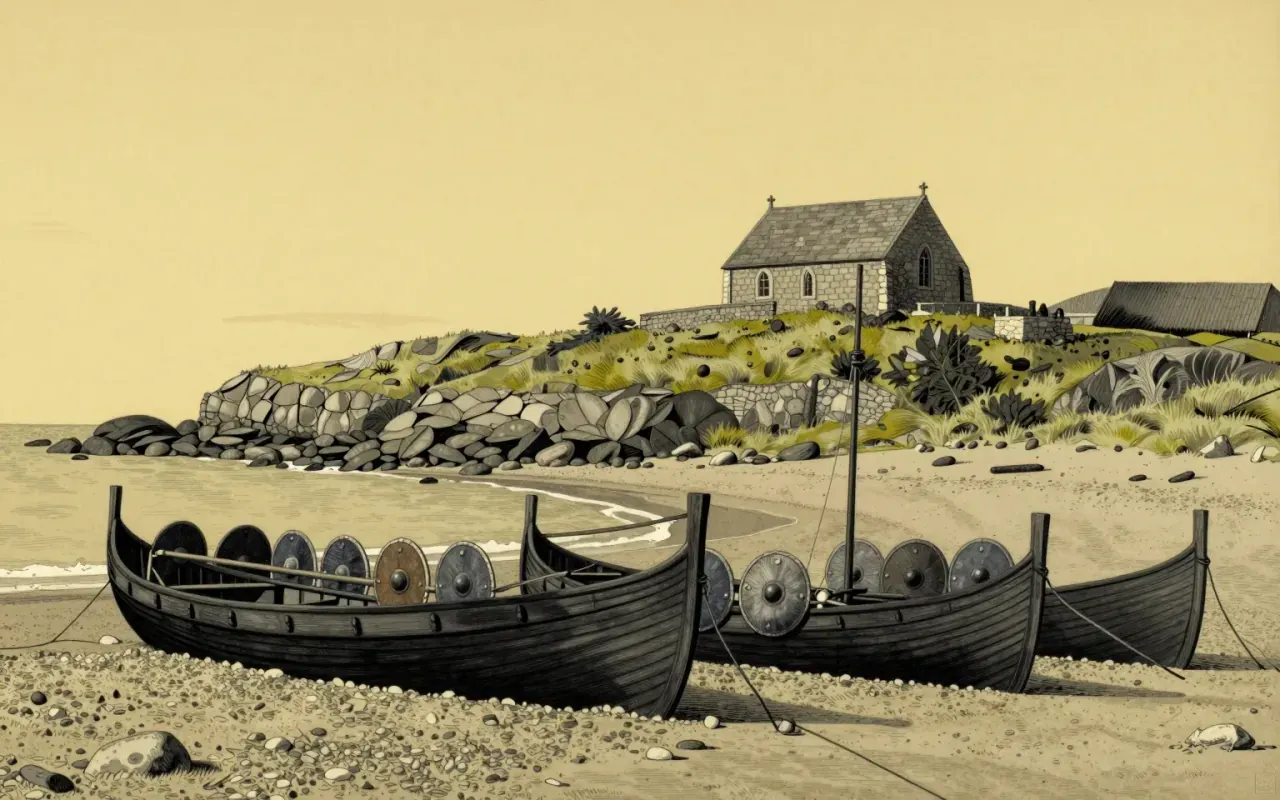
The chronicle that gives us most of what we know about the Viking raids was written by the side that eventually won, which is part of why its numbers for enemy fleets and armies do not entirely agree with each other.
Britain's insistence that Austria hand Silesia to Prussia as the price of peace wrecked the very alliance the subsidies had been meant to strengthen, and set up an even bigger war within a decade.
Louis XIV got the Bourbon king on Spain's throne he had spent the war fighting for, and still ended it financially exhausted while Britain rose without placing its own candidate anywhere near that throne at all.
The colonial administrator's own letters admit the ultimatum was designed to be refused, undercutting the righteous-defence story that dominated popular memory for generations.
Voters who had just won the war under him removed him from office within weeks of victory, a rejection that fits awkwardly beside the near-unanimous later verdict that he was among the greatest prime ministers Britain ever had.
One historian has compared the Sarajevo assassination to a modern terrorist attack, a single event 'charged with historic meaning' rather than proof that war was already unavoidable before the shot was fired.
Historians cannot even agree when World War II began, with credible starting dates ranging from 1931 in Manchuria to 1939 in Poland, a six-year spread for the deadliest conflict in history.
Yitzhak Rabin spent decades as one of Israel's hardest-line military commanders before becoming the prime minister an opponent of peace decided to kill for making it.