Three days that ended eight centuries of safety
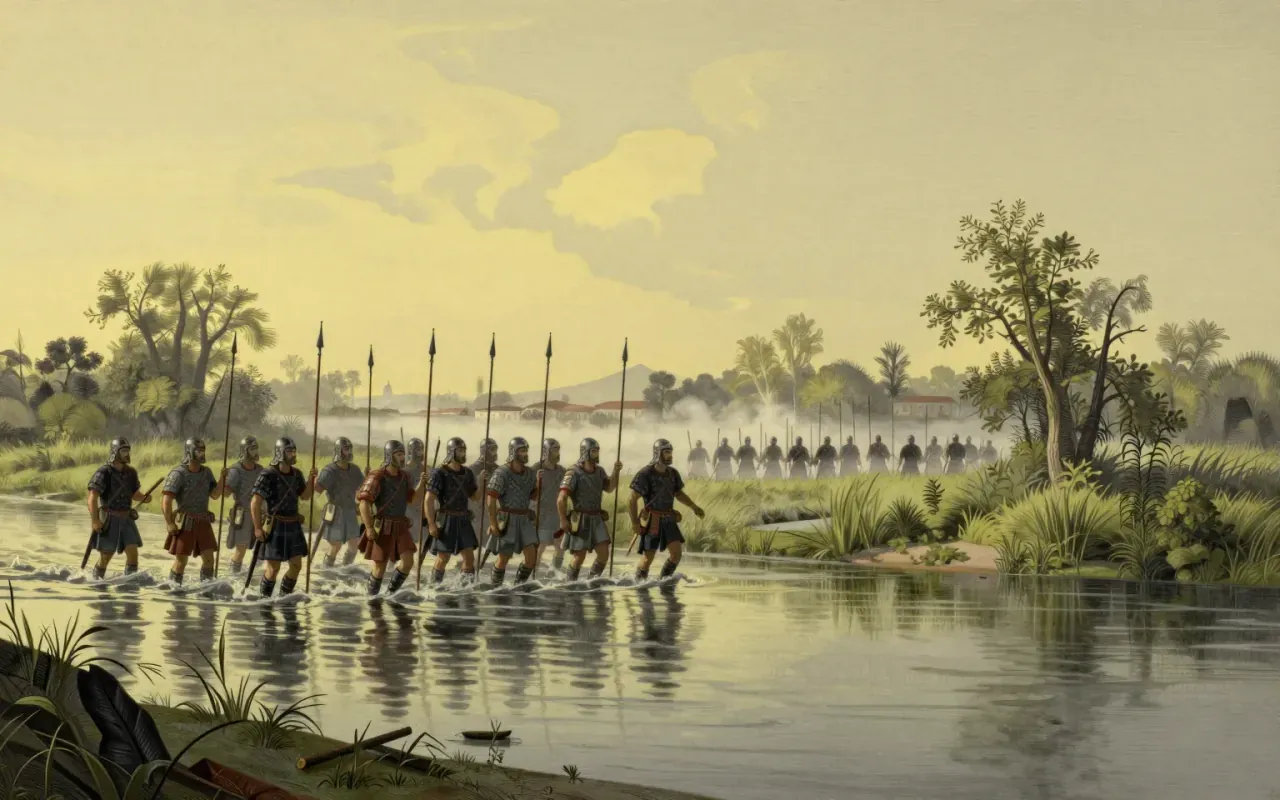
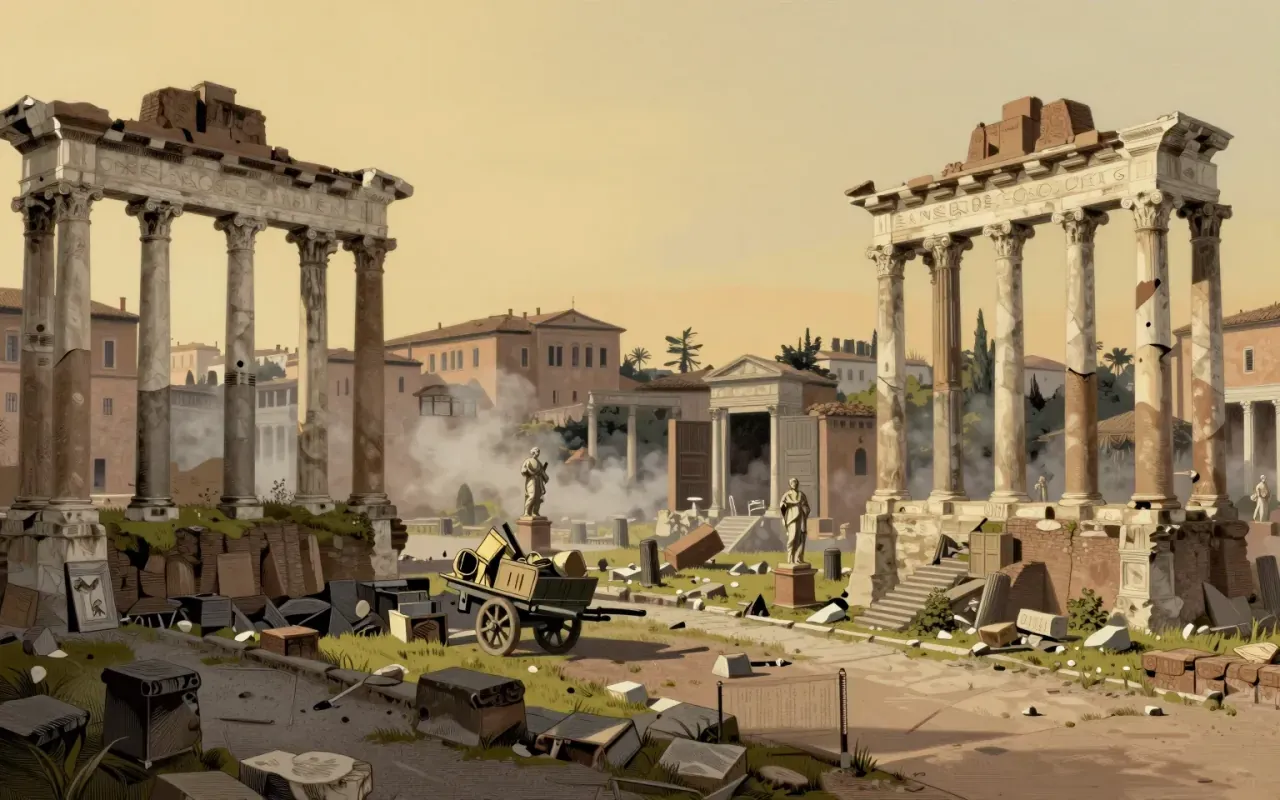
On 24 August 410, Visigothic forces under their king Alaric entered Rome through the Salarian Gate and looted the city for three days, the first time in roughly eight hundred years that a foreign army had taken it. The sack followed years of failed negotiation between Alaric and the western emperor Honorius, and came after the execution in 408 of the Roman general Stilicho, who had previously managed an uneasy peace with the Goths. Alaric’s forces stripped movable wealth, including a large ransom in gold and silver, from across the city and damaged buildings near the old Senate house and the Salarian Gate, including the Gardens of Sallust, though the two major basilicas associated with Peter and Paul were largely spared. By comparison with later sacks of cities in this period, ancient sources describe it as relatively restrained, without a general massacre.
Told by everyone except the Goths
The fullest contemporary reaction comes from Jerome, writing from Bethlehem, whose letters convey the shock the event caused across the Christian world at the idea that the city which had once conquered everywhere could itself be conquered. Orosius, writing a few years afterward, treated the sack within a providential framework, arguing that Rome’s survival despite the attack showed divine mercy rather than divine punishment. Later writers, including Olympiodorus and, much later still, Procopius, added further narrative detail and anecdote, some of it, such as a story about the emperor Honorius and a pet bird, of doubtful reliability. No account comes from the Gothic side, so what is known of Alaric’s own reasoning and intentions is inferred from Roman writers describing an enemy leader rather than recorded directly by him.
A decade of failed negotiation, not a sudden decision
The sack followed a long breakdown in relations between Alaric and the western Roman government rather than any sudden decision to destroy the city. Stilicho’s execution in 408 removed the figure who had negotiated payments to keep Alaric’s forces provisioned, and a subsequent purge of Germanic soldiers serving Rome drove large numbers of them into Alaric’s camp, swelling his army considerably. Alaric besieged Rome on two earlier occasions, in 408 and 409, using each siege chiefly to extract payment and negotiate a formal position within the Roman military structure rather than to destroy the city outright, and historians generally read his repeated, increasingly modest demands, for land, supplies and recognised rank, as evidence he wanted a settled place within the Roman system rather than its collapse. Only after a final round of negotiations was disrupted by an ambush did he move against the city itself.
Plunder, provisions, or standing
Historians differ on how much lasting physical destruction the sack actually caused, since the ancient sources agree the damage was concentrated in specific areas rather than citywide, yet the event’s symbolic weight in both pagan and Christian writing of the time often implies something more total. Numbers given by ancient writers, including a figure for refugees who joined Alaric’s forces, are treated cautiously by modern historians, some of whom argue that an often-cited total actually describes the combined size of his army rather than a count of refugees specifically. Whether Alaric’s aims were primarily about securing food and provisions for his followers, as some historians argue, or about winning formal military standing within the empire, as others emphasise, remains an open question, since the surviving Roman sources were not well placed to explain a Gothic leader’s own priorities.
A shock that produced a book
News of the sack prompted three days of mourning in Constantinople and left a deep mark on how contemporaries understood Rome’s position in the world, since the city, though no longer the empire’s administrative capital, had continued to carry enormous symbolic weight. Pagan critics argued that abandoning the old gods had brought the disaster upon Rome, and it was partly in response to that argument that Augustine began writing The City of God, a work that went on to become foundational for later Christian thought about history and the state. Economically, tax revenue in affected provinces fell substantially in the years that followed, and the wealthy patronage of public building that had characterised Roman civic life in parts of Italy came to a halt in the sack’s aftermath.
A fall built from the inside out
The sack is worth attention less as a single dramatic catastrophe than as a symptom of a Roman state whose internal politics, the execution of its most capable general, its purges of allied troops, its refusal of modest and repeated settlement offers, had already done much of the damage before Alaric’s army ever reached the walls. Readers interested in how a great power’s decline can be driven by its own decisions as much as by outside pressure will find the detail genuinely instructive here. Readers expecting a story of simple barbarian destruction should look again at what actually burned and what, including the city’s major churches, was deliberately spared throughout.