historybriefs
Topic

Ancient Rome

A republic that became an empire, and never stopped arguing about the cost.

18
in history
12:50
average
231 min
in total
30
across the network
Ancient Rome across the network →
All briefs18
10:07

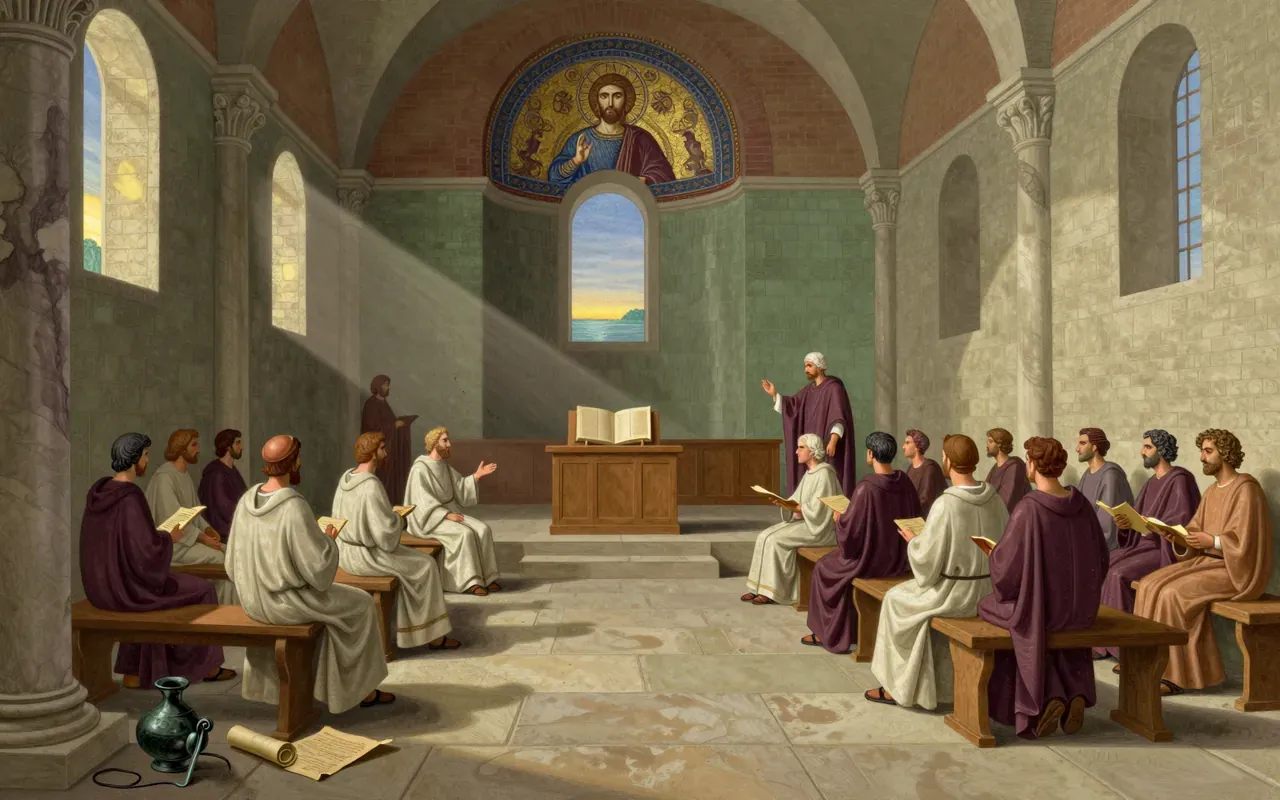
First Council of Nicaea

May–July 325

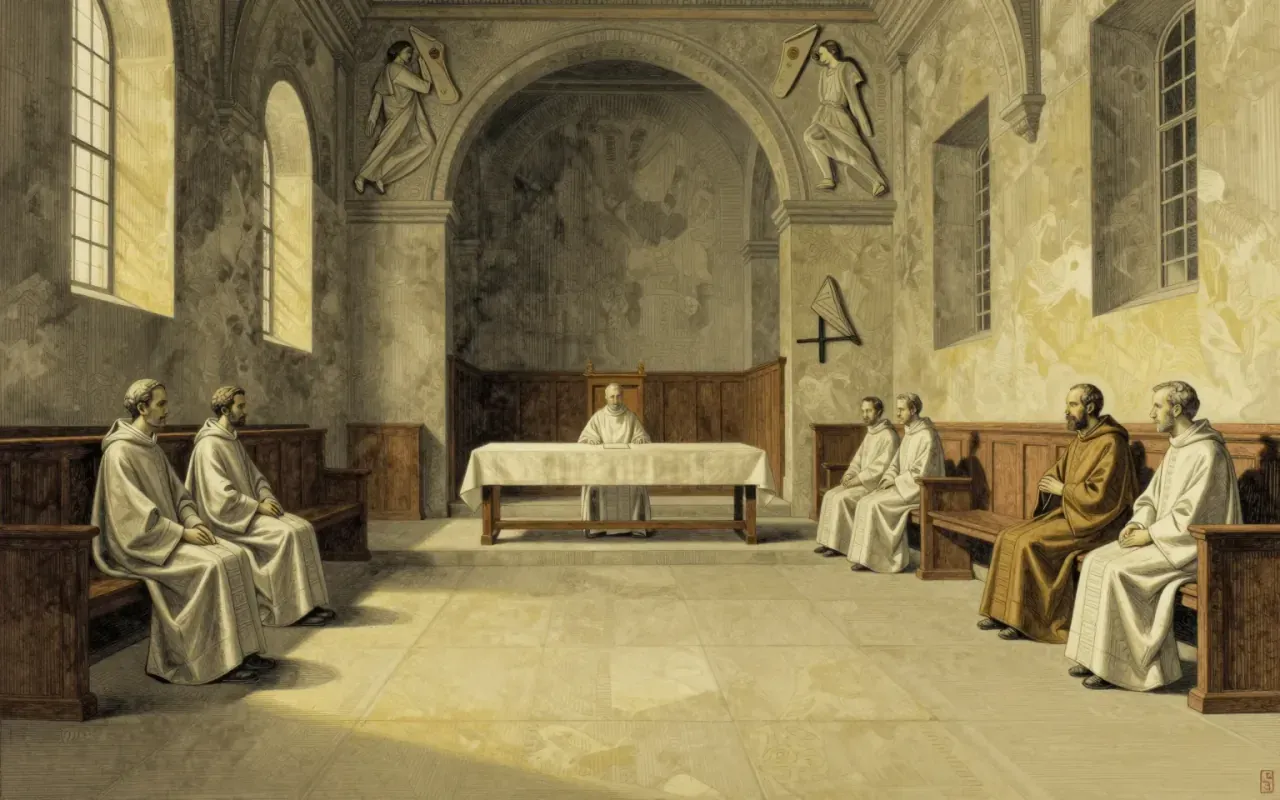
The First Council of Nicaea was the first empire-backed attempt to standardise Christian doctrine by assembly. It succeeded procedurally — nearly all bishops signed — but the record reveals nothing about internal debate, enforcement, or theological nuance. Its legacy is structural, not doctrinal.
13:00

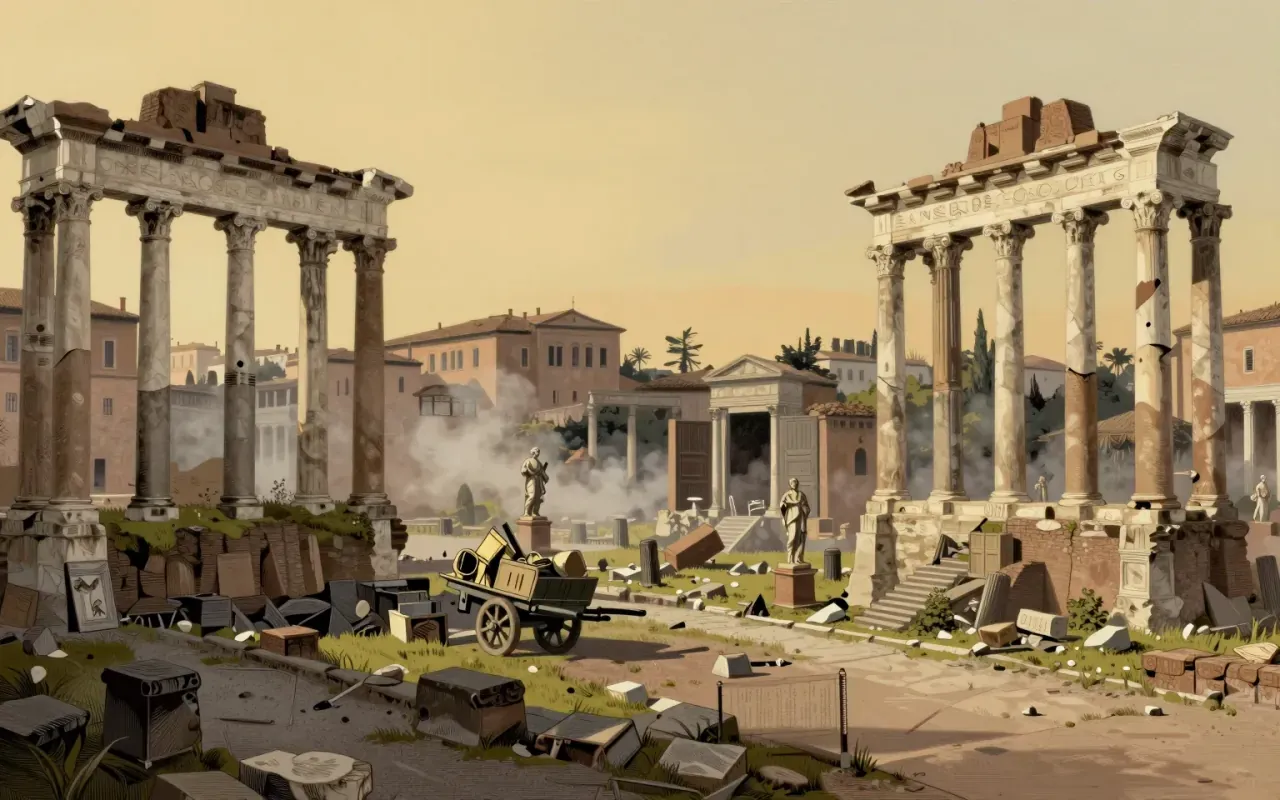
Alaric I

370–410

Alaric led Visigothic forces in an on-again, off-again relationship with the Roman Empire for over a decade, seeking recognised rank, land and provisions before finally sacking Rome in 410 after repeated refusals. What survives of his story comes entirely from Roman and later Gothic writers with their own agendas, leaving his exact origins and true motives genuinely uncertain.

13:00

Augustus

63 BC–14

Born Gaius Octavius, Augustus rose from Julius Caesar's teenage heir to sole ruler of Rome, defeating rivals in successive stages before accepting the title Augustus from the Senate in 27 BC and governing for four more decades. He kept republican forms intact while concentrating power in his own hands, and the fullest accounts of how he managed it come either from his own self-justifying record or from biographers writing a century or more after his death.

13:00

Cleopatra

69–30 BC

Cleopatra VII ruled Ptolemaic Egypt from 51 to 30 BC, allying in turn with Julius Caesar and Mark Antony and bearing children by both, before Octavian's forces defeated Antony at Actium and she died by suicide as Rome absorbed Egypt. The fullest ancient account, Plutarch's, was written about a century and a half after her death, and much of the negative Roman portrait that shaped later European memory of her originated as wartime propaganda against Antony rather than as neutral reporting.

13:00

Constantine the Great

272–337

Constantine won sole control of the Roman Empire by 324 after nearly two decades of war against rival claimants, founded the new capital of Constantinople, and convened bishops at Nicaea in 325 to settle a dispute over the nature of Christ. Nearly every surviving account of him was written by Christian admirers or later ecclesiastical writers with their own doctrinal stakes, leaving his personal beliefs, and the details of his most famous conversion story, genuinely uncertain.

13:00

Hannibal

247–183 BC

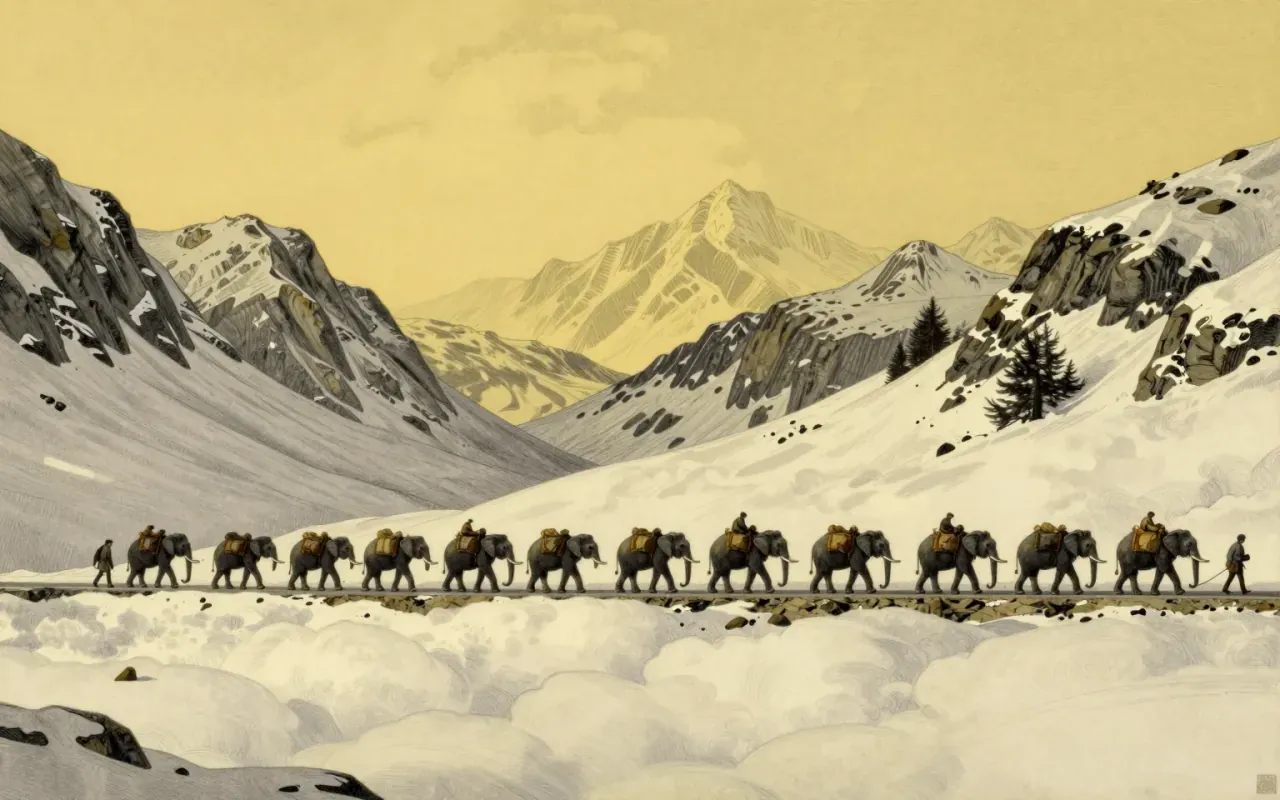
Hannibal led Carthaginian forces across the Alps into Italy in 218 BC and won a string of victories, most famously at Cannae, before spending over a decade occupying southern Italy without ever taking Rome itself. Recalled to Africa, he was defeated at Zama in 202 BC, and everything known about his campaigns and motives comes from Greek and Roman historians rather than any surviving Carthaginian source.

13:00

Julius Caesar

100–44 BC

Julius Caesar rose through Roman political and military office in the first century BC, conquered Gaul in the 50s BC, and then led an army against the Senate and his former ally Pompey in a civil war that made him dictator of Rome. He was assassinated by a group of senators, including Brutus and Cassius, on the Ides of March in 44 BC. The fullest evidence for his career comes partly from his own self-justifying commentaries and partly from biographers writing more than a century later.

13:00

Marcus Aurelius

121–180

Adopted as heir in 138 and made emperor in 161, Marcus Aurelius spent much of his nineteen-year reign fighting wars in the east and along the Danube while a severe epidemic killed millions across the empire. His private notebook, the Meditations, records a Stoic-trained mind working through the burdens of rule, but the actual chronicle of his reign rests on other, less personal sources whose own reliability historians still weigh carefully.

13:00

Nero

37–68

Nero became Roman emperor in AD 54 at sixteen, ruled competently under his advisers' guidance for several years, and then, after having his mother killed and losing his steadying counsellors, presided over a reign remembered for the great fire of Rome in AD 64 and a wave of executions before his suicide in AD 68. Every surviving account of him was written decades or centuries later by hostile senatorial writers, none of whom witnessed his reign firsthand.

13:00

Pompeii

AD 79

Mount Vesuvius erupted over roughly two days, first burying Pompeii under nearly eighteen hours of falling pumice that let many residents flee, then killing those who remained with pyroclastic flows hot enough to be fatal even at a distance of ten kilometres. Pliny the Younger's eyewitness letters, written years afterward, long placed the eruption in August, but a 2022 study using seasonal produce, clothing and coin evidence redated it to late October, correcting a chronology that had stood for centuries.

13:00

Gallic Wars

58–51 BC

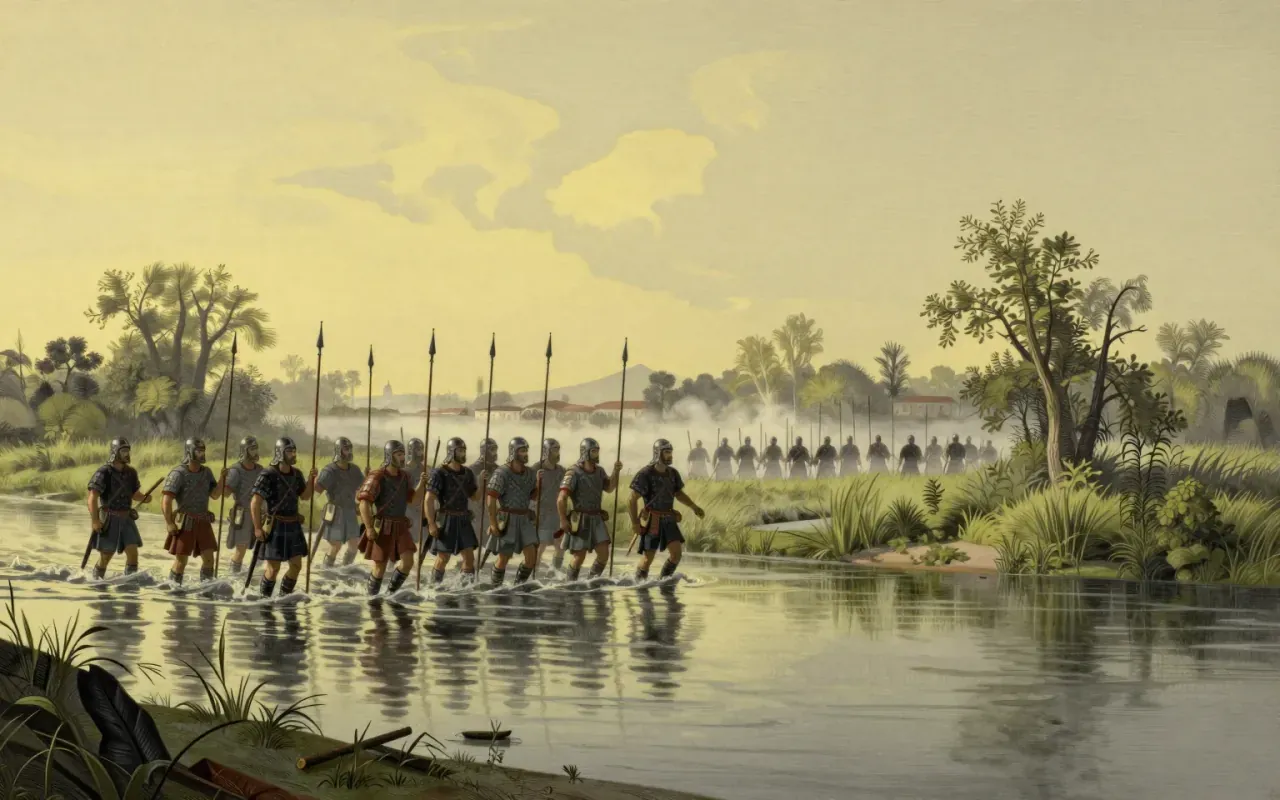
Between 58 and 50 BC, Julius Caesar subdued Gaul in a series of campaigns against Celtic and Germanic peoples, culminating in the defeat of a unified Gallic revolt under Vercingetorix at the siege of Alesia. The war's main record is Caesar's own Commentaries, written and circulated during the fighting to build his political standing at Rome, and its startling casualty figures are now treated by historians as propaganda rather than count.

13:00

Edict of Milan

February 313

In February 313, Constantine and Licinius agreed at Milan to grant Christians legal standing and restore confiscated property, a policy Licinius then circulated to eastern governors that June. Known today only through two later, differing accounts, it granted toleration rather than establishment, a status Christianity would not formally gain for another sixty-seven years.

13:00

Eruption of Mount Vesuvius in 79 AD

24 August 79

In 79 AD, Mount Vesuvius buried Pompeii, Herculaneum and neighbouring towns under ash and superheated volcanic flows over roughly two days, killing an unknown but substantial number of people. The event is known chiefly through two letters Pliny the Younger wrote to Tacitus a quarter-century later, and through the archaeology itself, which has recently pushed the long-accepted August date toward autumn instead.

13:00

Fall of the Western Roman Empire

476

The Western Roman Empire's collapse, conventionally dated to 476 AD when the Germanic commander Odoacer deposed the emperor Romulus Augustulus, followed a century of Gothic and other Germanic incursions, military strain and repeated civil war. Historians propose climatic, epidemiological, economic, political and religious explanations, and disagree sharply about whether to describe the process as a catastrophic fall or a more gradual transformation into successor kingdoms that preserved much of Roman law, language and administration.

13:00

Punic Wars

264–146 BC

Rome and Carthage fought three wars between 264 and 146 BC, moving from a dispute over Sicily through Hannibal's invasion of Italy to the final siege and total destruction of Carthage itself. The whole surviving record comes from Greek and Roman writers, chiefly Polybius and Livy, since no Carthaginian account of any of the three wars has survived.

13:00

Roman expansion in Italy

753 BC – 3rd century BC

Between the traditional founding date of 753 BC and the completion of Roman rule over the Italian peninsula by the third century BC, Rome expanded from a small Latin settlement into the dominant power in Italy through a sequence of wars against the Latins, Samnites and Greek colonies in the south. The literary record for the earliest centuries, chiefly Livy, is now generally regarded by historians as unreliable in its detail and partly legendary, growing steadily more trustworthy from the fourth century BC onward.

13:00

Roman Empire

27 BC–395

The Roman Empire began in 27 BC when the Senate granted Octavian the title Augustus, and grew to its greatest territorial extent under Trajan around 117 AD before a third-century crisis of civil war and invasion forced administrative reform under Diocletian and Constantine. It split into western and eastern halves, of which the western collapsed in 476 while the eastern, Byzantine half continued for another millennium. Historians differ over whether to treat the empire's later centuries as decline, as Edward Gibbon argued, or as gradual transformation.

13:00

Sack of Rome (410)

24 August – 27 August 410

In August 410, Visigothic forces under Alaric looted Rome for three days, the first time a foreign army had taken the city in roughly eight centuries, after years of failed negotiation with the western Roman government. Ancient sources, none of them Gothic, describe the damage as concentrated and the violence relatively restrained by the standards of the age, while historians still debate how far Alaric sought the city's destruction against a secure, legitimate place within the empire he had spent his career fighting.