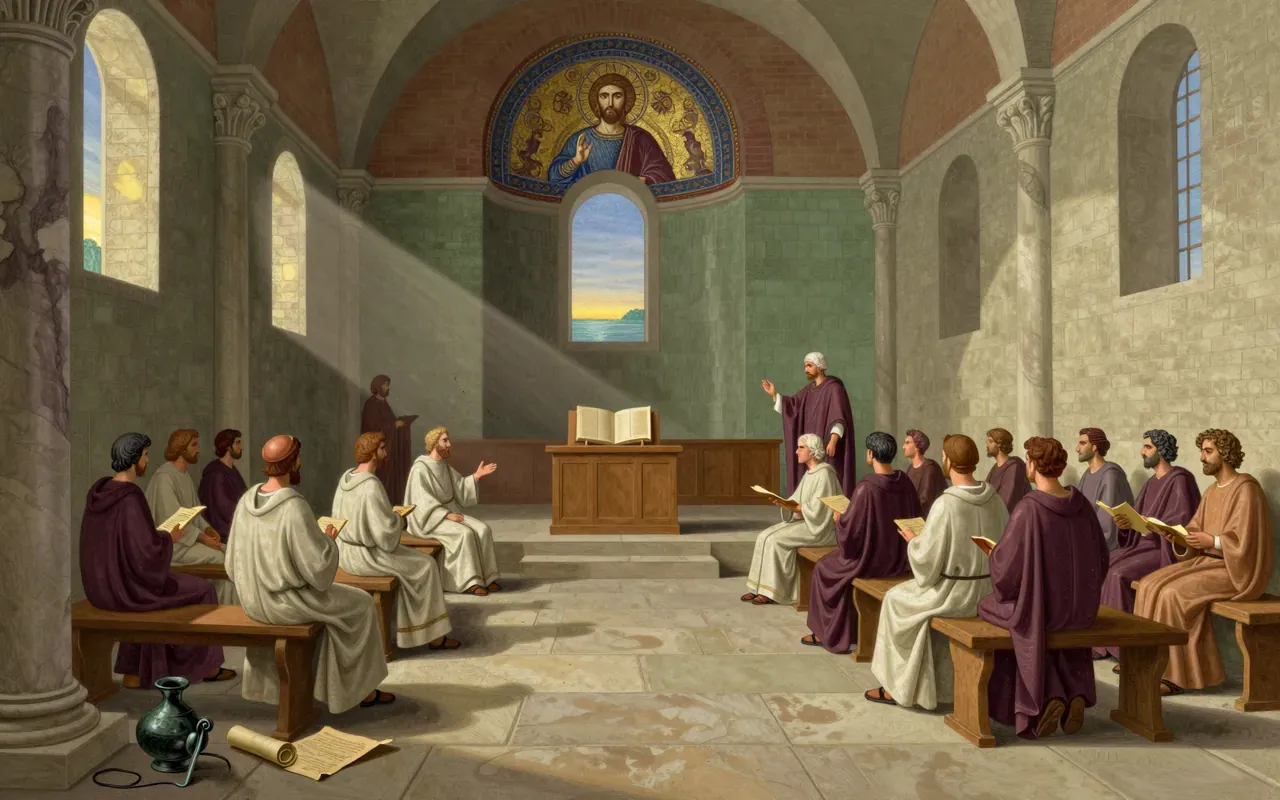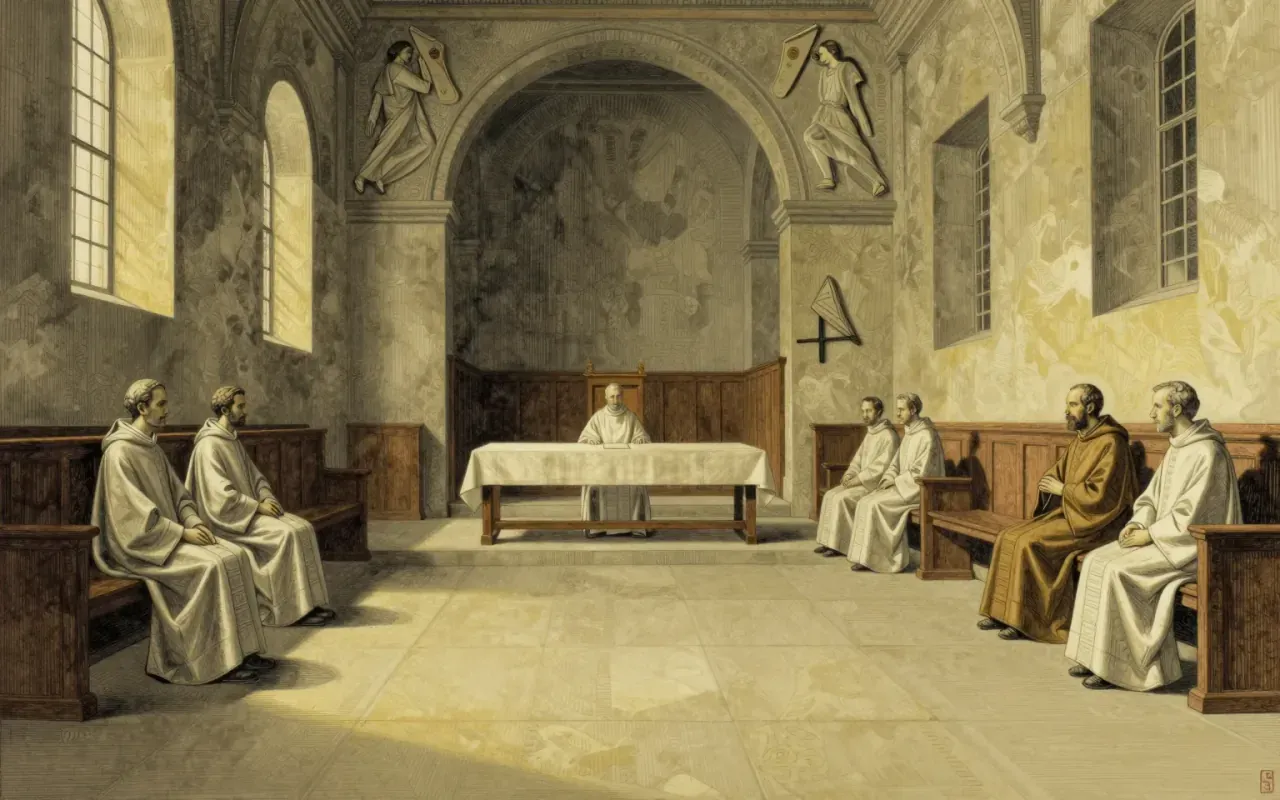
An agreement, then a letter, months apart
In February 313, the western Roman emperor Constantine and his eastern counterpart Licinius met at Milan and agreed a common religious policy, later put into effect through a letter Licinius sent to provincial governors in the east that June. The agreement granted Christians legal standing and freedom to worship openly, extended the same freedom to other religions, and ordered that property confiscated from Christians during earlier persecutions be restored, at the state’s expense where it had since been sold. It followed an earlier, more limited edict of toleration issued in 311 by the emperor Galerius from Serdica, and was aimed in part at Maximinus Daza, the eastern ruler who had resumed persecuting Christians after Galerius’s death. It did not make Christianity the empire’s official religion, a status Christianity would not formally acquire until 380.
Two writers, two versions, no original
No original copy of the agreement survives. What is known of its text comes from two later writers: Lactantius, who preserves a Latin version presented as Licinius’s own letter to his governors, and the Christian historian Eusebius, who gives a Greek translation that omits Licinius’s role almost entirely and presents Constantine alone as the document’s author. Because the surviving text is addressed as a governor’s circular rather than a formally promulgated law, and because it postdates the Milan meeting by several months, historians increasingly describe it as a policy agreement reached between two rulers and communicated afterward, rather than a single edict issued on the spot. The absence of any surviving original, and the discrepancy between Lactantius’s and Eusebius’s versions, means the exact wording Constantine and Licinius actually agreed to at Milan cannot be fully recovered today.
A pagan ruler’s language, a Christian ruler’s cause
The meeting served an immediate political purpose for both men: Licinius was preparing to move against Maximinus Daza, and a unified religious policy across the parts of the empire he and Constantine controlled removed one source of division before that campaign began. The document itself reads as Licinius’s language rather than Constantine’s, framed in terms a still largely pagan ruler could accept, granting toleration to Christians alongside everyone else rather than singling Christianity out for favour. Constantine’s own subsequent conduct went well beyond what the text required, actively favouring Christian institutions and clergy in the years that followed, which is part of why later Christian writers, Eusebius among them, retold the episode as more decisively pro-Christian, and more solely Constantine’s doing, than the surviving letter by itself actually suggests.
Was it ever really an edict
Historians now generally agree that no single formal document called the Edict of Milan was ever issued in that form, since what survives is a governor’s letter rather than a proclaimed imperial edict, though the label has stuck in popular use regardless. Scholars differ on how much weight to give the agreement against Galerius’s earlier 311 edict, which had already ended active persecution without restoring seized property, a step Milan’s provisions went further than achieving. Whether Constantine’s support for Christianity at this stage reflected settled personal belief or a calculated judgement about which deity might best secure the empire’s stability remains debated, though the consistency of his favour toward Christian institutions for the rest of his reign leads most historians toward reading it as sincere rather than purely tactical.
Toleration now, establishment decades later
The years following the agreement became known to later Christian writers as a period of peace for the church, during which Christians could conduct worship openly and Christian communities began recovering confiscated property and building public standing they had previously been denied. It marked a clear turning point in the relationship between the Roman state and Christianity, even though full establishment as the empire’s official religion lay decades away, and Constantine’s own increasingly active patronage of Christian institutions after 313 set a pattern that his successors mostly continued. The episode is often remembered, somewhat imprecisely, as the moment Rome became Christian, when what it actually secured was toleration and restitution rather than establishment as such.
A modest document with an oversized legend
The Edict of Milan is worth understanding chiefly for the gap between its popular reputation and what the surviving text actually says: a governor’s letter granting toleration to Christians and others alike, agreed between two rulers with different personal commitments to the religion it protected. Readers interested in how a modest administrative document can acquire an outsized legend through later retelling, particularly by a historian as invested in Constantine’s Christian image as Eusebius was, will find this a useful case to study. Readers expecting a grand founding charter of Christian Rome should recalibrate, since the actual establishment of Christianity as the state religion happened separately, nearly seventy years later still.