A law nobody expected to matter
Tennessee Governor Austin Peay signed the Butler Act on 21 March 1925, a law prohibiting public school teachers from instructing students in any theory denying the biblical account of divine creation. Its sponsor, state representative John Washington Butler, said he acted after hearing that children were coming home from school telling their parents the Bible was nonsense, reflecting broader tension between religious fundamentalism and scientific modernism in 1920s America. Peay reportedly expected the law to go unenforced, but businessman George Rappleyea, seeking publicity for the struggling town of Dayton, recruited local science teacher John Scopes, then twenty-four, to be charged with violating it, creating a deliberately arranged test case rather than a spontaneously discovered violation.
A town looks for headlines
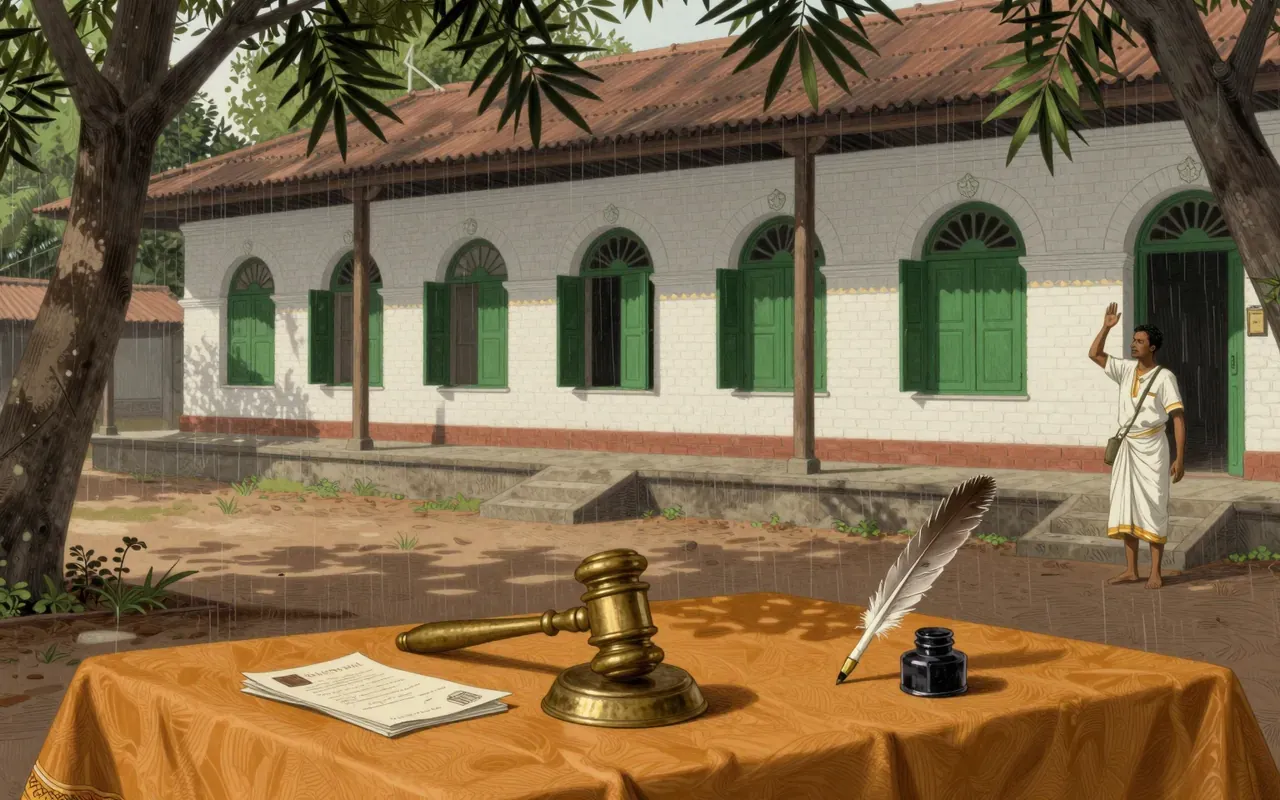
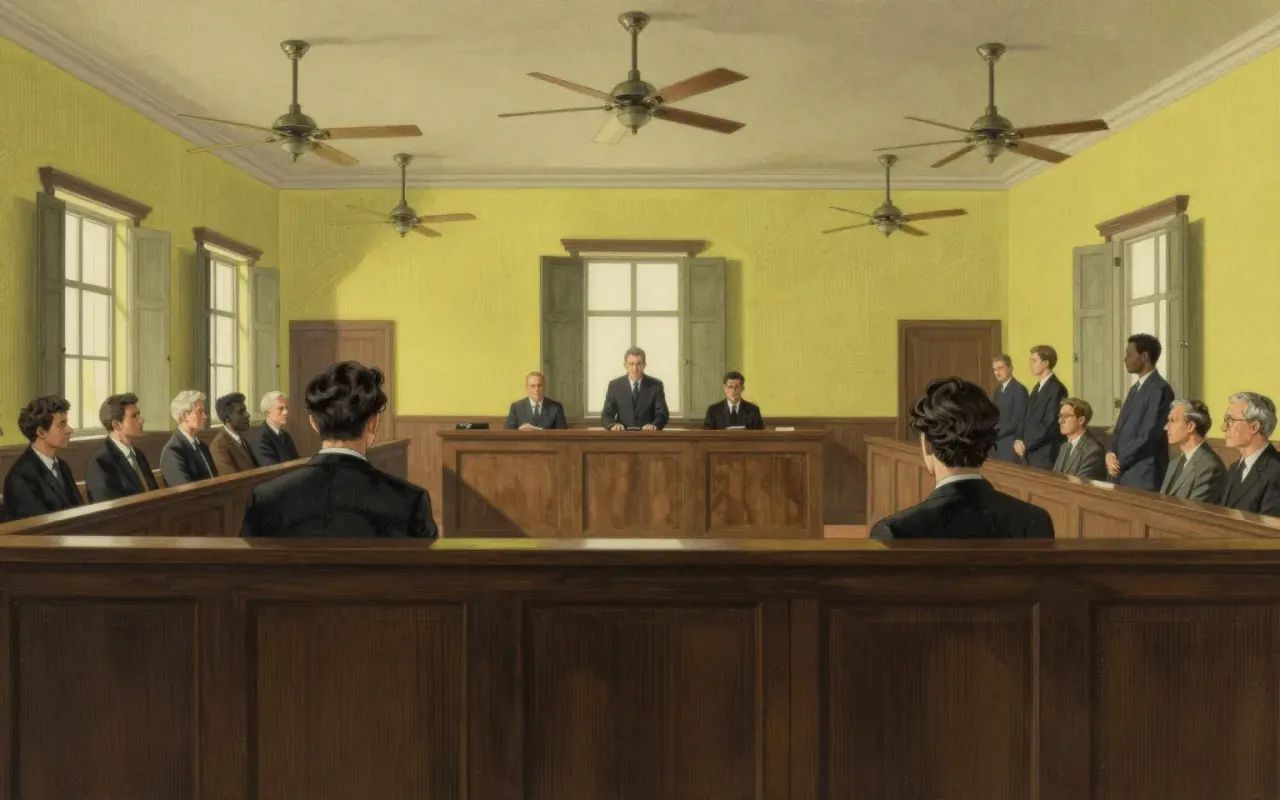
The trial ran from 10 to 21 July 1925 and became a national spectacle, broadcast on radio for the first time in American legal history and covered extensively by journalists including H.L. Mencken of the Baltimore Sun. Clarence Darrow, a prominent defence attorney and self-described agnostic, joined Scopes’s defence team over the American Civil Liberties Union’s initial reservations, while William Jennings Bryan, a three-time presidential candidate, served as special prosecutor, believing evolution poisoned students’ faith in scripture. Judge John Tate Raulston excluded most expert scientific testimony from the proceedings, permitting only written statements for the record, a ruling that shaped the trial’s character toward theatre and away from substantive scientific argument.
Bryan takes the stand as his own witness
In the trial’s most remembered episode, Darrow made the unusual move of calling Bryan himself as a witness on biblical interpretation, questioning him for roughly two hours on points including where Cain found his wife and the chronology of Egyptian history, with Bryan responding at one point that he answered only to prevent Darrow’s side from claiming he was afraid to testify. Judge Raulston ultimately ruled Bryan’s testimony irrelevant and ordered it struck from the record, and Darrow then waived his own closing argument, a strategic move that under Tennessee procedure prevented Bryan from delivering the closing speech he had prepared, denying him a final public moment in the case he would not live to see fully resolved.
Guilty, on a technicality reversed
Scopes was found guilty after the jury deliberated for only nine minutes and was fined one hundred dollars, a verdict the Tennessee Supreme Court overturned the following year on the technical ground that state law reserved fines above fifty dollars for jury determination rather than judicial imposition, sidestepping the broader constitutional questions about free speech and religious establishment that the defence had raised. The law itself remained on Tennessee’s books until 1967, and a related 1968 US Supreme Court decision in Epperson v. Arkansas eventually struck down similar anti-evolution statutes elsewhere as unconstitutional, more than four decades after the original Dayton trial had raised the same underlying issue without resolving it.
A death that outweighed a verdict
Historians dispute how much lasting effect the trial itself had on American education and religious politics. Bryan died just five days after the trial concluded, and historian Randall Balmer argues his death, rather than any courtroom defeat, devastated fundamentalist political organising by removing its most prominent national figure at a critical moment; historian Mark Edwards contests this, arguing many fundamentalists at the time viewed the trial itself as a moral victory regardless of the legal verdict, making Bryan’s death rather than any sense of defeat the actual cause of subsequent political retreat. Separately, scholars including George Gaylord Simpson and Robert Shapiro disagree over whether the trial caused publishers to remove evolution from biology textbooks in subsequent years, or whether that shift reflected the broader anti-evolution movement operating independently of the trial’s specific outcome.
Remembered by a play that wasn’t quite true
The trial is worth revisiting precisely because its cultural memory, shaped heavily by the 1955 play Inherit the Wind and its later film adaptations, diverges substantially from the actual transcript and outcome, a minor fine, quickly overturned on an unrelated technicality, that settled none of the constitutional questions it raised. Reading the real proceedings alongside their fictionalised popular version shows how a deliberately staged publicity case, generated by a struggling town’s chamber of commerce rather than by any organic dispute, became one of the twentieth century’s most enduring symbols of the conflict between religious and scientific authority in American public life.