Built by a Shia caliphate
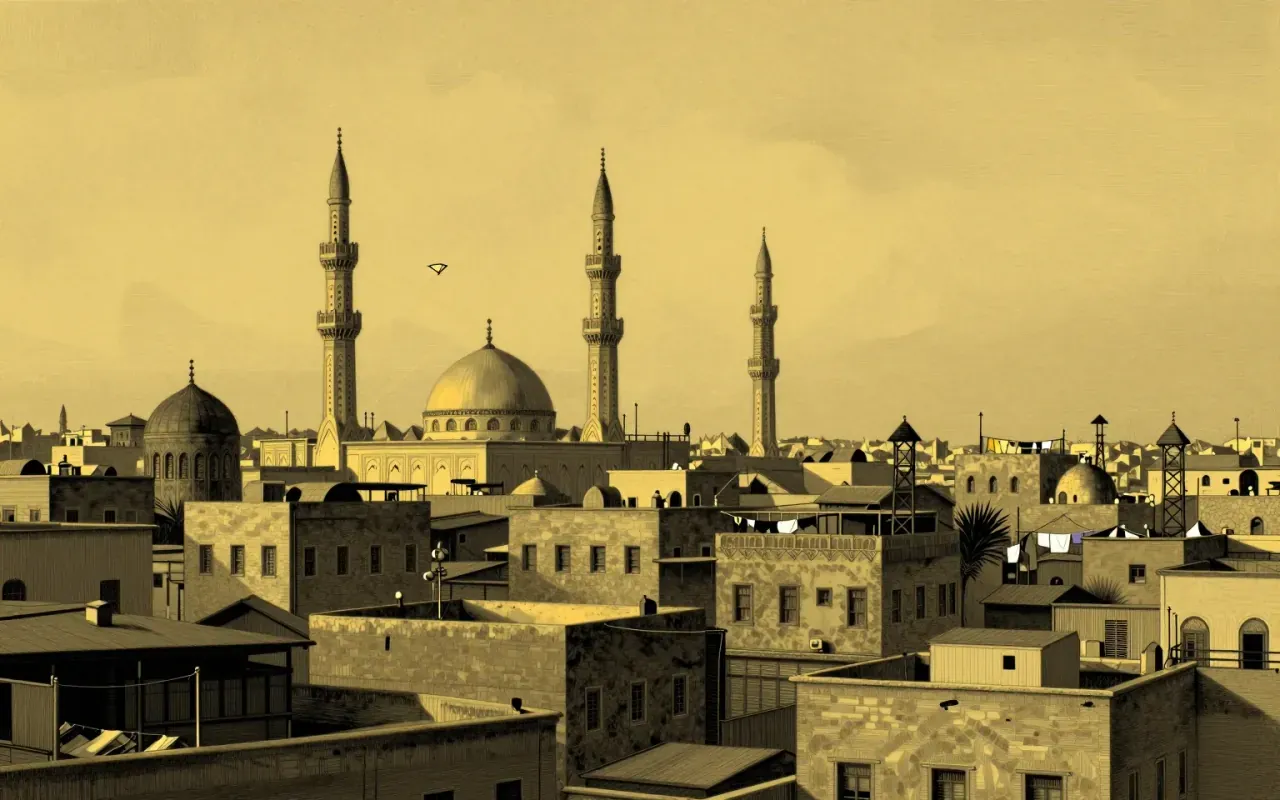
Al-Azhar was commissioned by the Fatimid caliph al-Mu’izz li-Din Allah, with construction beginning in 970 and continuing until 972, shortly after the Fatimid conquest of Egypt had established a new Ismaili Shia caliphate based in the newly founded city of Cairo. The mosque’s name honours Fatimah, the daughter of the Prophet Muhammad, reflecting the Fatimid dynasty’s claim to legitimacy through descent from her line. Its construction was overseen by the Fatimid general Jawhar al-Siqilli on the caliph’s behalf, and the first Friday prayers were held there in the summer of 972, marking the mosque’s transition from building project to functioning religious institution serving the new capital’s population.
A teaching program with thirty-five scholars
Teaching activity at Al-Azhar was formalised relatively soon after its founding. In 988, the vizier Ya’qub ibn Killis established a structured program of study there, backed by dozens of salaried scholars, roughly three dozen by the sources’ account, teaching Islamic jurisprudence and law alongside subjects including logic and astronomy. This deliberate investment in scholarship reflected the Fatimid state’s interest in using Al-Azhar as an instrument for promoting Ismaili Shia doctrine throughout a newly conquered and religiously mixed population, making the mosque from its early years both a place of worship and a state-sponsored centre for religious instruction and doctrinal training aligned with the ruling dynasty’s own beliefs.
Saladin’s purge
That original religious orientation ended abruptly when Saladin, founder of the Sunni Ayyubid dynasty, conquered Egypt in the twelfth century and dismantled Fatimid religious authority. Congregational prayers at Al-Azhar were suspended and student stipends eliminated as part of this transition, and sources describing the episode give widely varying figures, from around 120,000 up to two million volumes, for how many books from the mosque’s Shia-era library were destroyed or dispersed during the purge that followed. Saladin also had a silver band bearing the names of Fatimid caliphs removed from the mihrab, a symbolic as well as material erasure of the dynasty that had built the institution, reoriented afterward toward Shafi’ite Sunni teaching.
Mamluk patronage restores its prayers and its prestige
Al-Azhar’s prayers and prestige were restored gradually rather than immediately. Sultan Baibars reinstated congregational prayers in 1266, nearly a century after Saladin’s conquest, and the Mamluk period that followed brought sustained investment: instructor salaries, student stipends, and formal endowments, alongside new teaching buildings including a college constructed in 1340 and additional madrasas built into the mosque complex in the early fourteenth century. The historian and scholar Ibn Khaldun taught at Al-Azhar beginning in 1383, evidence of the institution’s renewed standing within the wider Islamic scholarly world by the later Mamluk era, a recovery built on patronage rather than any change in the mosque’s underlying religious orientation, which remained firmly Sunni.
The preeminent seat of Sunni learning
Ottoman rule, beginning in the early sixteenth century, consolidated Al-Azhar’s position further, and the institution came to be regarded as the preeminent centre for Islamic learning within the Sunni world during this period, even without the same scale of direct royal patronage the Mamluks had provided. The office of Shaykh Al-Azhar, the institution’s senior religious authority, was established during the Ottoman era, formalising a leadership role for the mosque and its scholars within the broader structure of Sunni religious authority across the empire. This period cemented a reputation that has persisted into the modern era, with Al-Azhar’s rulings and its scholars continuing to carry particular weight across the Sunni Muslim world well beyond Egypt’s own borders.
From madrasa to modern university
The institution’s most significant modern transformation came in 1961, when Egyptian president Gamal Abdel Nasser added secular faculties, including business, medicine, engineering, and pharmacy, alongside a new faculty for women, converting Al-Azhar from a traditional madrasa focused on religious instruction into a modern university offering a much broader curriculum. Administrative separation between the university and the mosque itself followed the 1952 Egyptian Revolution, and today Al-Azhar oversees a national network of schools serving an estimated two million students, alongside its continuing role as a leading voice for a centrist strand of Sunni Islamic thought known as wasatiyya, positioned explicitly against more extremist interpretations of the faith.