historybriefs
Topic

Islam

A faith, a legal tradition and a civilisation, frequently confused for each other.

24
in history
12:57
average
311 min
in total
40
across the network
Islam across the network →
All briefs24
12:35

Baghdad

762 AD

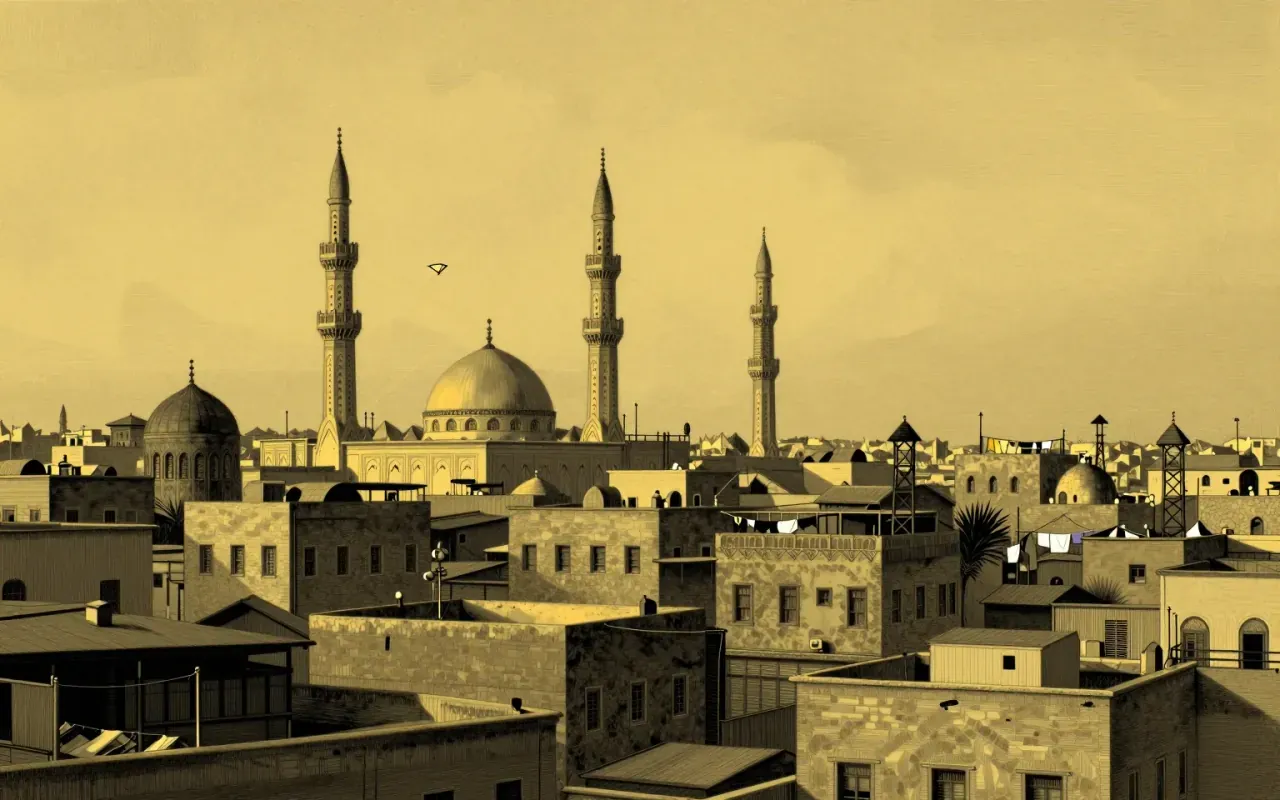
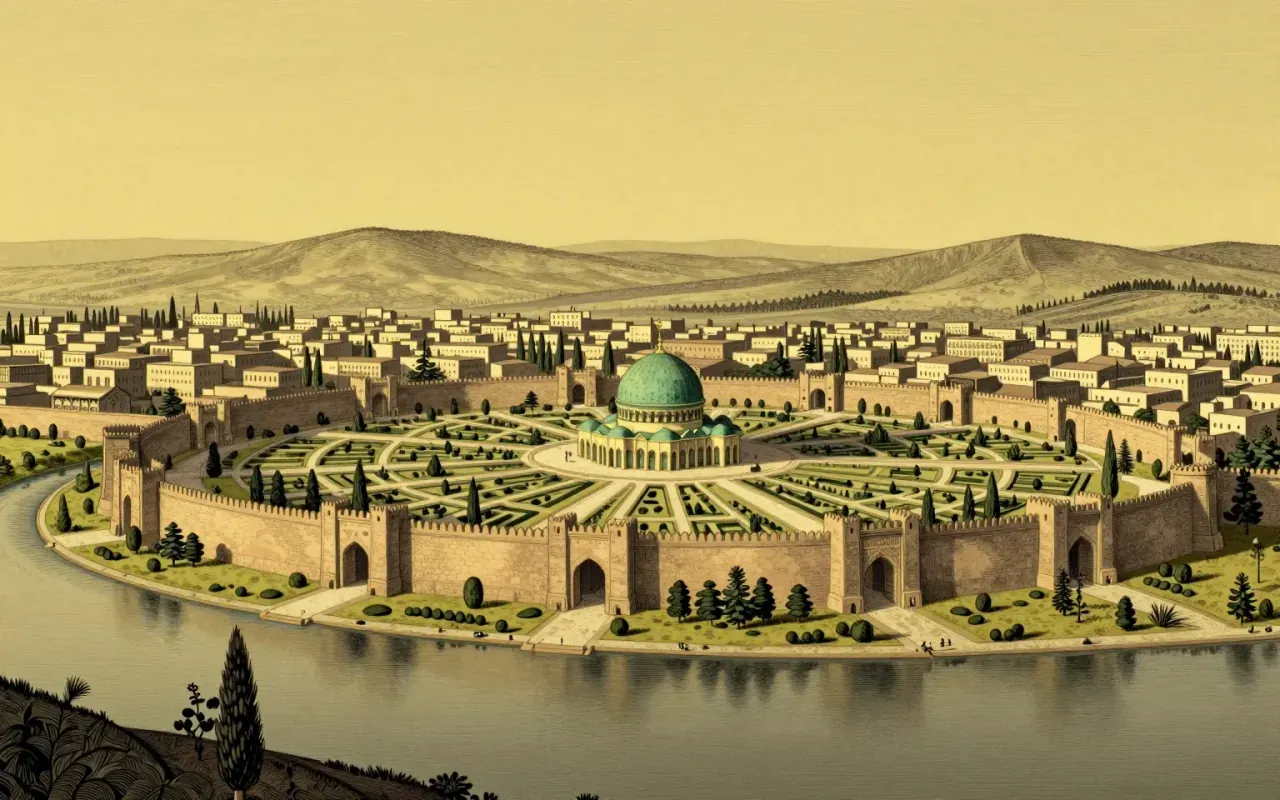
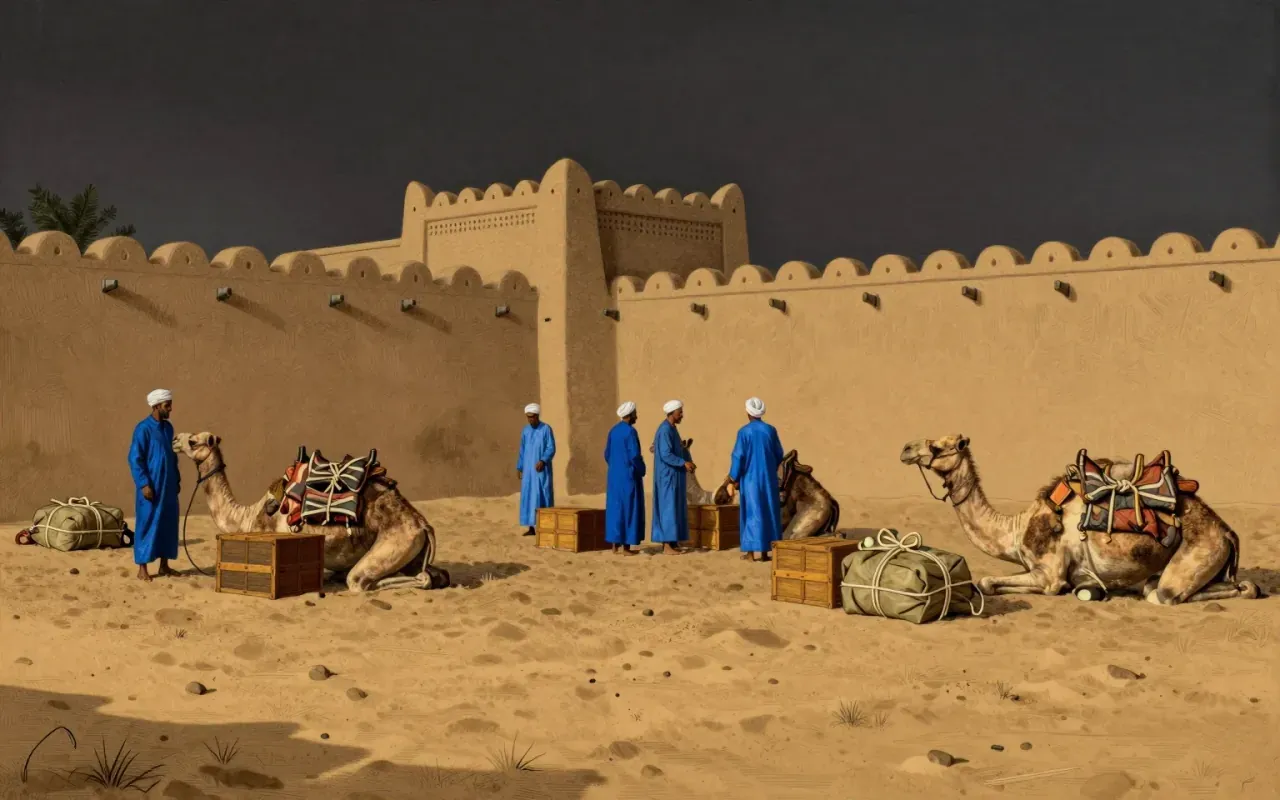
Baghdad’s founding in 762 was a decisive, documented act of imperial design — not evolution, not accident. It created a new kind of capital: planned, symbolic, and engineered for intellectual and administrative dominance. Its scale, longevity and influence are verifiable. Its motives and internal politics are not.
12:02

Spanish Inquisition

1478–1834

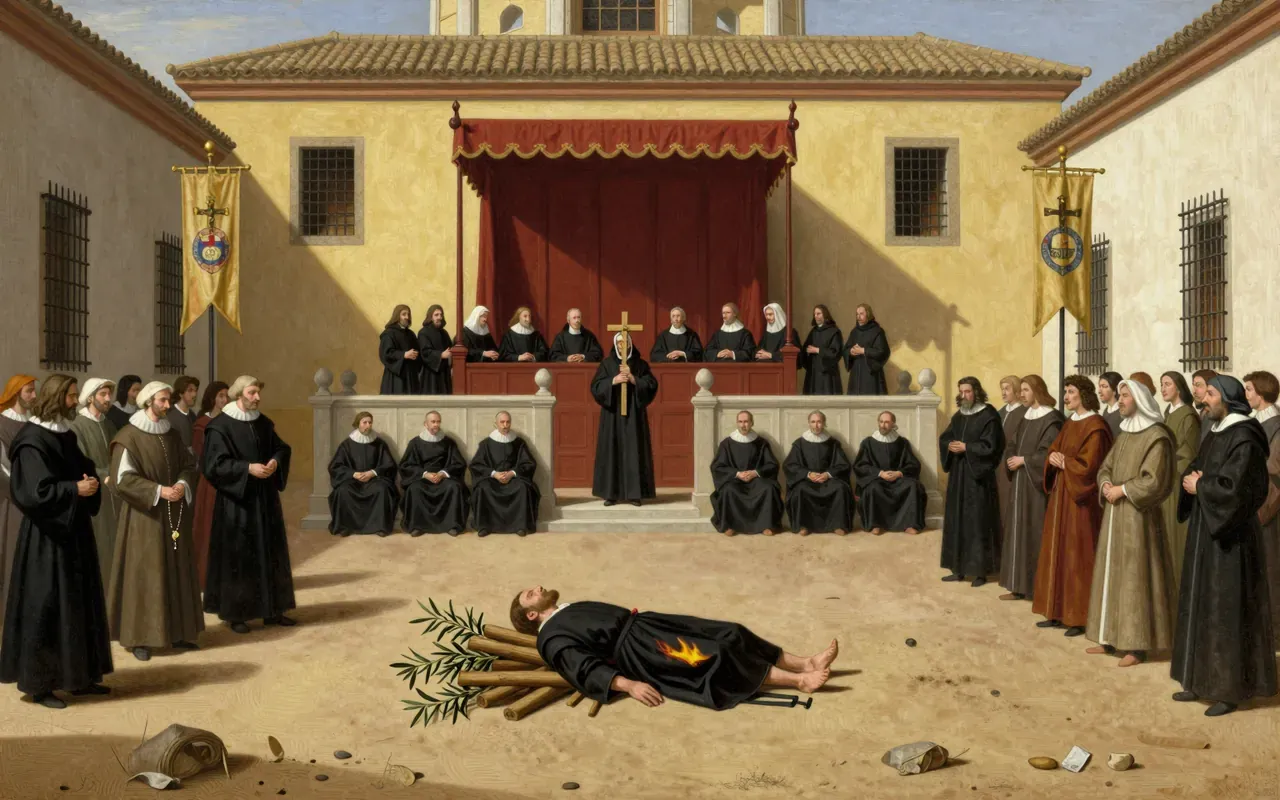
The Spanish Inquisition was a centrally directed, royally staffed, financially incentivised tribunal targeting converted Jews and Muslims. It operated from 1480 to 1834. Its first fifty years saw the highest execution rate—3,000–5,000 people burned—and systematic property confiscation. It replaced Papal oversight with Crown control. It enforced post-1492 and 1502 conversion decrees. It prosecuted ~150,000 people. Its methods included torture, public shaming, and lifelong penalties. Its legacy is administrative, not spiritual.

13:00

Ahmad Baba al-Timbukti

1556–1627

Ahmad Baba became one of Timbuktu's most prominent Islamic jurists before Moroccan forces invading the Songhai empire deported him to Marrakesh in 1594, where he remained until 1608. He continued writing throughout his exile and after his return, authoring more than forty works, including a nuanced treatment of slavery that historians still interpret differently. His career and library form part of the much larger Timbuktu manuscript tradition, whose survival was tested again in 2012 when local families and archivists evacuated the bulk of the collection ahead of an armed conflict.

13:00

Al-Azhar University

Founded 1961

Founded by the Fatimid caliphate between 970 and 972 to promote Ismaili Shia teaching in newly conquered Egypt, Al-Azhar was repurposed after Saladin's twelfth-century conquest into a Sunni Shafi'ite institution, a transition that reportedly involved destroying a large part of its original library. Mamluk patronage and Ottoman-era prestige built it into the leading centre of Sunni Islamic learning, and Gamal Abdel Nasser's 1961 reforms added secular faculties, turning a traditional madrasa into a modern university that today oversees a national school network reaching some two million students.

13:00

Al-Biruni

973–1048

Al-Biruni, born in 973 in Khwarazm and dead in 1048 in Ghazni, catalogued 103 of his own works by the age of sixty-five, spanning astronomy, geodesy, pharmacology and history, and produced in around 1030 a study of Indian civilization based on learning Sanskrit and consulting Hindu texts directly. He calculated Earth's radius to within about two percent of its true value using mountain-height trigonometry, and worked much of his career under Mahmud of Ghazni, whose conquest of al-Biruni's home region and subsequent invasions of India brought the scholar to the court that funded his most celebrated research.

13:00

Askia Muhammad I

1443–1538

Askia Muhammad seized the Songhai throne in 1493 by framing a succession dispute as a defence of proper Islamic rule, then built the empire into West Africa's largest state through provincial administrative reform and a lavish pilgrimage to Mecca that reinforced his religious legitimacy. His reign is known chiefly through two Arabic chronicles compiled in Timbuktu generations later by scholars sharing his own religious culture, making his portrayal as an exemplary Muslim ruler somewhat self-reinforcing. Even his family origins and the source of his royal title remain genuinely disputed among historians.

13:00

Ruhollah Khomeini

1902–1989

Ruhollah Khomeini, exiled in 1964 for opposing the Shah's modernisation programme, returned to Iran in February 1979 to lead the revolution that established the Islamic Republic, built around his own doctrine of clerical governance. His rule included the 444-day American hostage crisis, the devastating war with Iraq, and documented mass executions of political prisoners, alongside a 1989 fatwa against author Salman Rushdie that extended his authority's reach well beyond Iran's borders.

13:00

Harun al-Rashid

766–809

Harun al-Rashid became the fifth Abbasid caliph in 786 and ruled from Raqqa for most of his reign, exchanging gifts with Charlemagne's court and presiding over the beginnings of the Islamic Golden Age. His sudden purge of the powerful Barmakid family around 803 remains unexplained even in contemporary sources, and his decision to split succession between two sons collapsed into civil war within a decade of his death. His court became fixed in popular memory through a legendary story collection with little basis in the documented record.

13:00

Husayn ibn Ali

626–680

Grandson of the Prophet Muhammad, Husayn ibn Ali lived quietly under a peace agreement with the Umayyad caliphate for nearly two decades before refusing to submit to the caliph's chosen heir in 680. His march toward promised support in Kufa ended in his death at Karbala, an episode reconstructed almost entirely through a single early historian working within about twenty years of the events. His killing transformed a political dispute over leadership into the founding martyrdom of Shia Islam, still commemorated annually by tens of millions.

13:00

Mansa Musa

1280–1337

Mansa Musa ruled the Mali Empire from around 1312 to 1337, a reign later chroniclers regarded as its golden age, and became widely known in the Islamic world after his pilgrimage to Mecca in 1324, during which his gold spending reportedly depressed the metal's value in Cairo for years afterward. He annexed Timbuktu and Gao, recruited scholars including the poet Abu Ishaq al-Sahili, and helped establish Timbuktu's Sankore as a centre of Islamic learning, though the precise scale of his wealth, drawn from a handful of Arabic chroniclers writing after the fact, cannot be independently verified.

13:00

September 11 attacks

11 September 2001

On 11 September 2001, al-Qaeda operatives hijacked four airliners and crashed three of them into the World Trade Center and the Pentagon, with the fourth brought down by passengers over Pennsylvania, killing 2,977 people. The 9/11 Commission's 2004 report established the plot's planning in detail, while the wars in Afghanistan and Iraq that followed are estimated by the Costs of War Project to have contributed to over 4.5 million deaths in the decades since.

13:00

Soviet–Afghan War

1979–1989

Soviet forces assassinated Afghan leader Hafizullah Amin and installed a replacement government in December 1979, opening a nine-year war against mujahideen fighters backed by the United States, Pakistan and Saudi Arabia that killed between one and three million Afghan civilians by scholarly consensus. Soviet forces withdrew in February 1989 having failed to secure the country, a defeat historians widely cite as a significant contributing factor to the Soviet Union's own collapse two years later, and the war's foreign fighter networks fed directly into al-Qaeda's later formation.

13:00

Battle of Karbala

10 October 680

In 680, Husayn ibn Ali, grandson of the Prophet Muhammad, was intercepted and killed near Karbala after marching toward Kufa on the promise of support that failed to materialise. The core account descends from a single compiler working within two decades of the battle, preserved through later historians, and shows signs that soldiers from the winning army softened the record out of guilt. The killing transformed a political dispute over leadership into the foundation of a distinct Shia religious identity, still commemorated annually by tens of millions.

13:00

Battle of Tours

10 October 732

In October 732, Frankish infantry under Charles Martel held off an Umayyad raiding force near Tours, and the death of the Umayyad commander during the fighting prompted a withdrawal rather than renewed battle. Modern estimates put both armies far below the inflated figures later chroniclers reported, and the notorious casualty count of hundreds of thousands appears to have been recycled from an earlier battle at Toulouse. Historians remain sharply divided over whether the battle saved European Christendom or has been dramatically overstated as a mostly local, if consequential, Frankish victory.

13:00

Spread of Islam

610–632

Islam took shape in early seventh-century Arabia around the teaching of Muhammad, who reported his first revelation around 610, migrated from Mecca to Medina in 622, and by his death in 632 had brought most of the Arabian Peninsula under Muslim rule. The earliest full biography was written well over a century later, and historians continue to debate how much of it, and of the hadith literature recording his sayings, reflects reliable transmission rather than material composed afterward to support later theological and legal positions.

13:00

Crusades

1095–1291

Beginning with Pope Urban II's call in 1095 and running in various forms into the thirteenth century, the Crusades sent waves of Western European Christians toward the eastern Mediterranean, capturing Jerusalem in 1099 and establishing Crusader states that Muslim forces, first under Saladin and later the Mamluks, gradually reconquered, with the fall of Acre in 1291 ending mainland Crusader rule. Historians disagree over how far religious conviction, economic opportunity and political calculation each drove participation, and over how coherent the term crusade even was to contemporaries.

13:00

Siege of Baghdad

29 January – 10 February 1258

In January and February 1258, the Mongol prince Hulegu Khan besieged and took Baghdad after the Abbasid caliph al-Musta'sim refused full submission, ending five centuries of Abbasid independent rule. Death toll estimates range enormously, from Hulegu's own figure of roughly two hundred thousand to later Muslim accounts running into the millions, compiled well after the event. The famous image of the Tigris running black with ink from discarded books is now traced by historians to a recycled literary trope, and whether 1258 truly marked the end of the Islamic Golden Age remains genuinely disputed.

13:00

House of Wisdom

800–1258

Tradition places the founding of Baghdad's House of Wisdom under the eighth-century Abbasid caliphs, reaching its peak as a centre of translation and original scholarship under al-Ma'mun before its supposed destruction in the 1258 Mongol siege. Modern historians, led by Dimitri Gutas, have challenged whether it existed as the formal academy popularly described, noting that the name barely appears in Abbasid-era sources and that the grand image may have been built up by nineteenth-century Orientalist scholarship. Real translation and original research undoubtedly took place in Baghdad; its precise institutional shape remains genuinely disputed.

13:00

War in Afghanistan (2001–2021)

2001–2021

America's October 2001 invasion, launched after the Taliban refused to surrender al-Qaeda's leadership following the September 11 attacks, toppled the Taliban government within months but settled into a two-decade counterinsurgency that different tallies put at somewhere between 176,000 and over 212,000 deaths. The war ended in August 2021 with a Taliban takeover that returned Afghanistan to the same movement the invasion had removed.

13:00

Islamic Golden Age

800–1258

The Islamic Golden Age, running roughly from the eighth to the thirteenth or fourteenth century under the Abbasid Caliphate and centred on cities including Baghdad, Cairo and Córdoba, produced major advances in mathematics, medicine, astronomy and optics, building on translated Greek, Persian and Sanskrit scholarship. Historians disagree both about what caused the flourishing and about how sharply, or whether, it actually declined after the ninth century, and even the existence of Baghdad's famous House of Wisdom as a formal institution is now disputed.

13:00

Mamluk Sultanate

1250–1517

The Mamluk Sultanate began in 1250 when slave soldiers overthrew the Ayyubid dynasty in Egypt, installing a system of governance in which power passed largely by military promotion rather than inheritance. Mamluk forces stopped the Mongol advance at Ain Jalut in 1260 and cleared the last Crusader strongholds from the Levant by 1291, but the Black Death of 1347 and 1348 hit the sultanate's population and finances hard, and its Burji-era rulers failed to match Ottoman adoption of firearms. Ottoman Sultan Selim I conquered Cairo in January 1517, ending 267 years of Mamluk rule and inheriting the caliphate along with it.

13:00

Umayyad Caliphate

661–750

After Ali's assassination ended years of civil war in 661, the Syrian governor Muawiya secured the caliphate through political patience and a well-organised private army rather than religious authority, then broke precedent by nominating his own son as hereditary successor. Later Umayyad caliphs expanded the empire to its greatest extent before the dynasty was overthrown by the Abbasids in 750. Much of the surviving historical record was compiled under that successor dynasty, giving Muslim historiography clear incentive to emphasise Umayyad injustice over administrative achievement, a bias historians now correct using coins, inscriptions and rarer outside sources.

13:00

Muslim conquest of the Iberian Peninsula

711–726

Beginning in 711, a small Muslim force crossed into Iberia, defeated and killed the Visigothic king Roderic, and within a few years had overrun most of the peninsula, aided by how fragile and contested Visigothic rule already was. No contemporary account survives from either side, and much of the conquest's famous detail, including the story of Count Julian's betrayal, is now regarded by historians as later legend rather than established fact. Muslim rule persisted in some form for nearly eight centuries, ending only with Granada's fall in 1492.

13:00

Timbuktu

Founded early 12th century

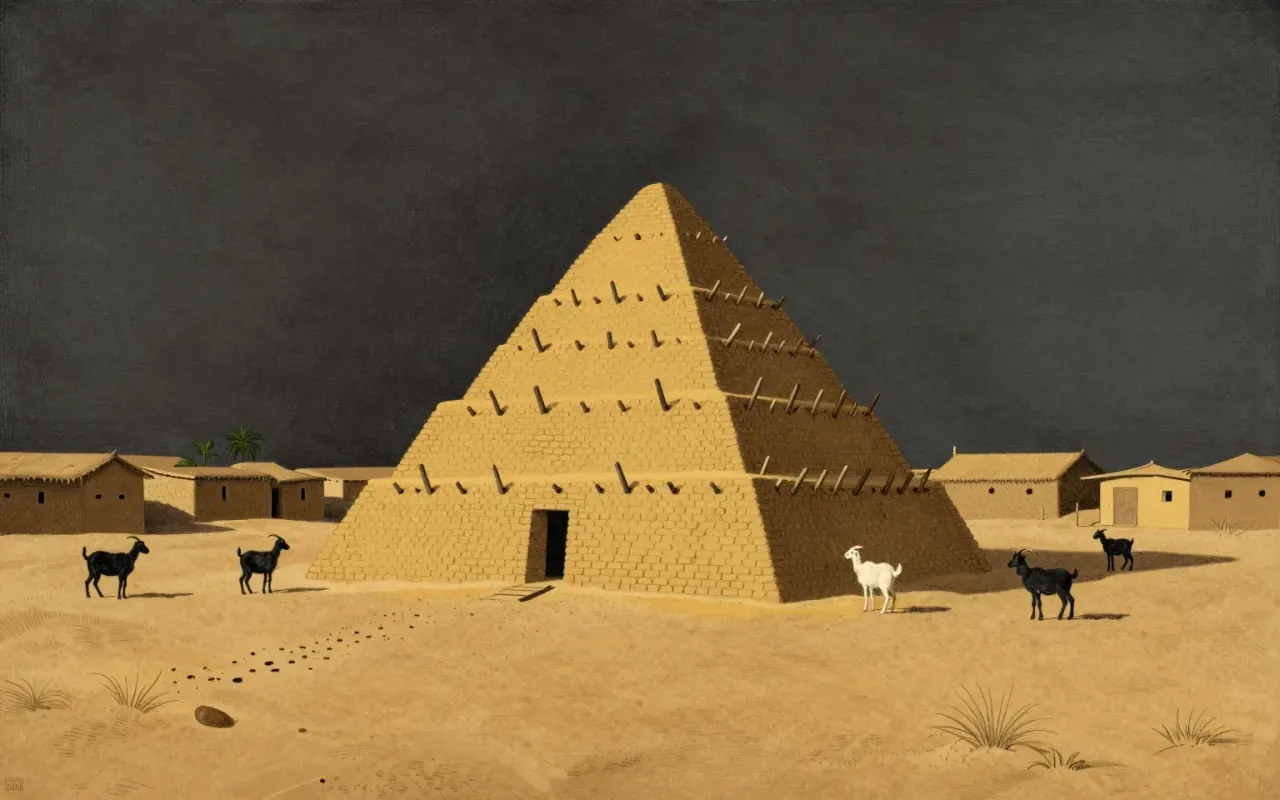
Timbuktu grew from an early twelfth-century settlement into a major trans-Saharan trade and Islamic scholarly centre, its rise accelerated after Mansa Musa's famous visit around 1325, reaching a population of roughly fifty thousand by the 1500s with three madrasas educating some twenty-five thousand students. A Moroccan invasion in 1591 killed or scattered many of its scholars and triggered a long decline, though hundreds of thousands of manuscripts documenting its intellectual life survived, some housed in libraries into the twenty-first century despite recent conflict-related threats.