A refused submission
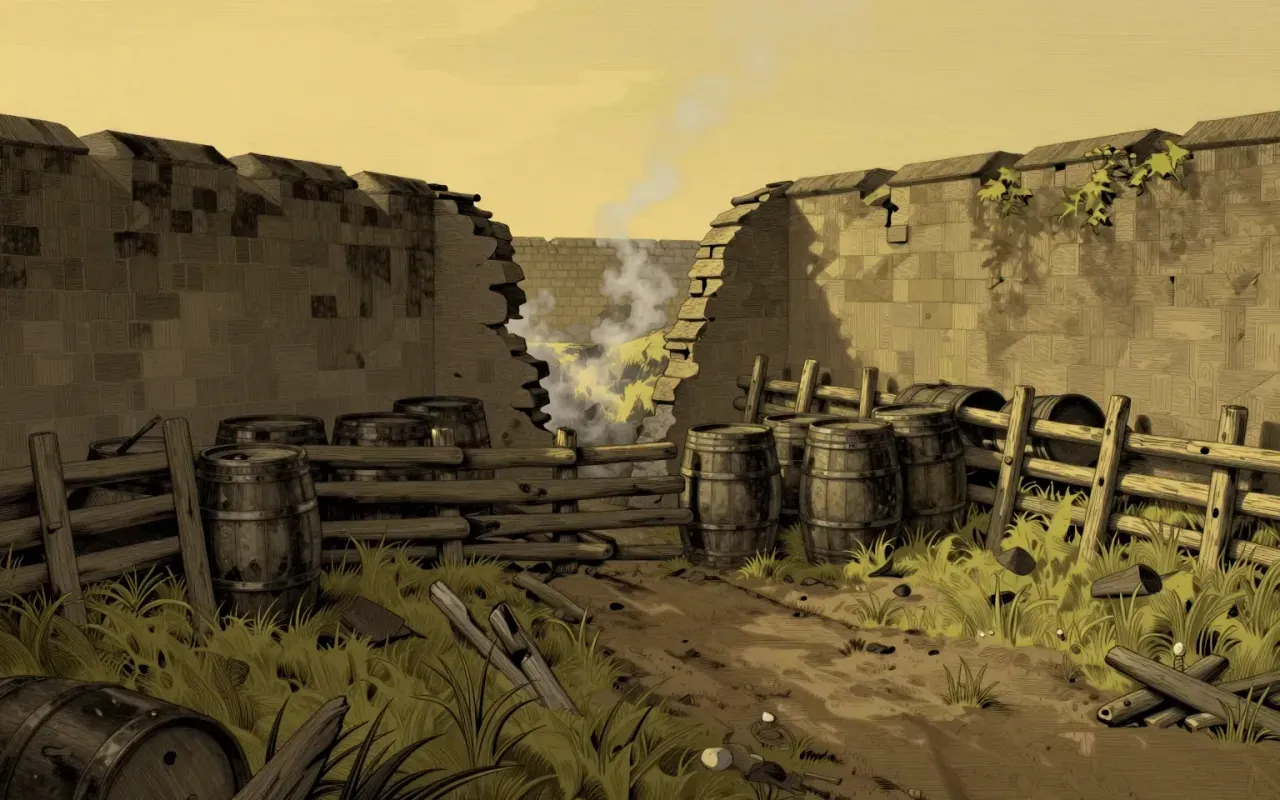
In January 1258, the Mongol prince Hulegu Khan, grandson of Genghis Khan, brought a large army against Baghdad after the Abbasid caliph al-Musta’sim refused to submit or send sufficient tribute. Mongol forces breached defensive dykes north of the city, flooding the caliph’s camp, and reached Baghdad’s eastern suburbs by 22 January. Siege engines opened breaches in the walls within days, and after Abbasid attempts to negotiate or sortie failed, al-Musta’sim surrendered on 10 February, ending the siege after roughly thirteen days of active fighting. Mongol forces then sacked the city over the following week, and the caliph himself was executed around 20 February, reportedly by a method avoiding the direct spilling of royal blood. The Abbasid caliphate, which had governed in some form for roughly five centuries, ended as an independent power with his death, though surviving family members were later installed as symbolic caliphs under Mamluk protection in Cairo.
A death toll without consensus
The siege itself is documented from multiple angles, including near-contemporary Mongol correspondence, such as a later letter from Hulegu describing the campaign, and outside witnesses like the Armenian historian Kirakos Gandzaketsi, along with figures close to the Mongol court such as the astronomer Nasir al-Din al-Tusi. The most striking uncertainty concerns how many people died: Hulegu’s own letters put the figure at roughly two hundred thousand, while later Muslim historians, writing decades or centuries afterward, offered estimates running as high as eight hundred thousand to two million. Modern historians treat these later, larger figures with real caution, partly because they were compiled well after the event to serve narratives of catastrophic loss, and partly because a disease outbreak among survivors in the siege’s aftermath may have inflated death tolls attributed to the fighting itself, making it genuinely impossible to state with confidence how many people actually died as a direct result of the assault.
A weakened caliphate meets a prepared army
Baghdad fell chiefly because the caliph’s own military position had weakened over preceding decades even as Mongol forces arrived exceptionally well prepared, bringing siege engineers, according to some accounts drawn from as far away as China, and an army large enough that estimates of its size still range from roughly one hundred and forty thousand to three hundred thousand men. Al-Musta’sim’s decision to refuse full submission, whether from religious confidence in the caliphate’s inviolability, poor advice, or underestimation of Mongol resolve, removed any chance of the negotiated surrender that had spared some other cities from similarly thorough sacking. Later Sunni writers blamed the caliph’s vizier for secretly encouraging the Mongol advance, though his reappointment to the same position after the siege, rather than execution as a traitor would likely have received under Mongol practice, suggests this accusation may reflect later scapegoating more than established fact.
A recycled image of destruction
Beyond the death toll, historians dispute how much cultural and intellectual devastation the sack actually caused. A frequently repeated story holds that so many books were thrown into the Tigris that its waters ran black with ink, but the historian Michal Biran has traced this image to a literary trope applied to multiple sieges rather than a specifically verified event at Baghdad in 1258. Biran and others also point out that libraries in the city reportedly reopened for teaching within about two years, complicating any picture of total and permanent intellectual collapse. A related and broader disagreement concerns whether 1258 should be treated as the decisive end of the Islamic Golden Age at all, since scholars including Biran argue this framing is overly simple, and that Baghdad’s longer-term decline owed at least as much to later sieges by other conquerors more than a century afterward as to Hulegu’s campaign alone.
An end, and a continuation
The fall of Baghdad ended the Abbasid caliphate as a genuinely independent political power after roughly five centuries, and Hulegu went on to found the Ilkhanate, a Mongol-ruled state centred on Iran that shifted the region’s centre of political gravity toward his new capital at Tabriz for more than a century. Surviving members of the Abbasid family were later given ceremonial status as caliphs under Mamluk protection in Cairo, retaining religious symbolism without any independent political authority of their own. Despite the destruction associated with the siege, Hulegu’s new state went on to patronise scholars including al-Tusi, who established an observatory at Maragheh using manuscripts reportedly rescued from Baghdad beforehand, showing that intellectual patronage under Mongol rule continued rather than ending outright. The event became a lasting symbol of catastrophe in later Muslim historical memory, even as modern historians increasingly treat it as one severe episode within a longer and more gradual process of regional decline.
A catastrophe still being reassessed
The fall of Baghdad is worth studying precisely because its most memorable details, the river running black with ink, death tolls stretching into the millions, a single catastrophic end to a golden age, turn out under scrutiny to be less certain than the popular version suggests, without the underlying event thereby becoming any less serious or consequential. Readers should approach the vivid images this siege is best remembered by as inherited literary tropes worth checking against the more cautious modern scholarship, rather than as settled fact simply because they recur across many later retellings. Anyone interested in how catastrophic historical memory forms, in Mongol imperial history, or in the actual mechanics of medieval siege warfare will find the episode genuinely rewarding. Those wanting a single tidy number for the dead, or a clean verdict on when exactly a golden age ended, will instead find historians actively still arguing.