A revolution that provoked its own rebellion
Afghanistan’s Democratic Republic was established through the April 1978 Saur Revolution, in which the People’s Democratic Party of Afghanistan overthrew President Mohammad Daoud Khan and installed Nur Muhammad Taraki, who pursued land and marriage reforms alongside a policy of de-Islamisation intended to promote socialism in a deeply conservative Muslim society. These reforms proved deeply unpopular, and by spring 1979 rebellion had spread across 24 of Afghanistan’s 28 provinces, while internal party conflict between the hardline Khalq and more moderate Parcham factions further destabilised the government, with Taraki himself killed on the orders of his deputy Hafizullah Amin after a power struggle within the ruling party.
An invasion that began by killing its own ally
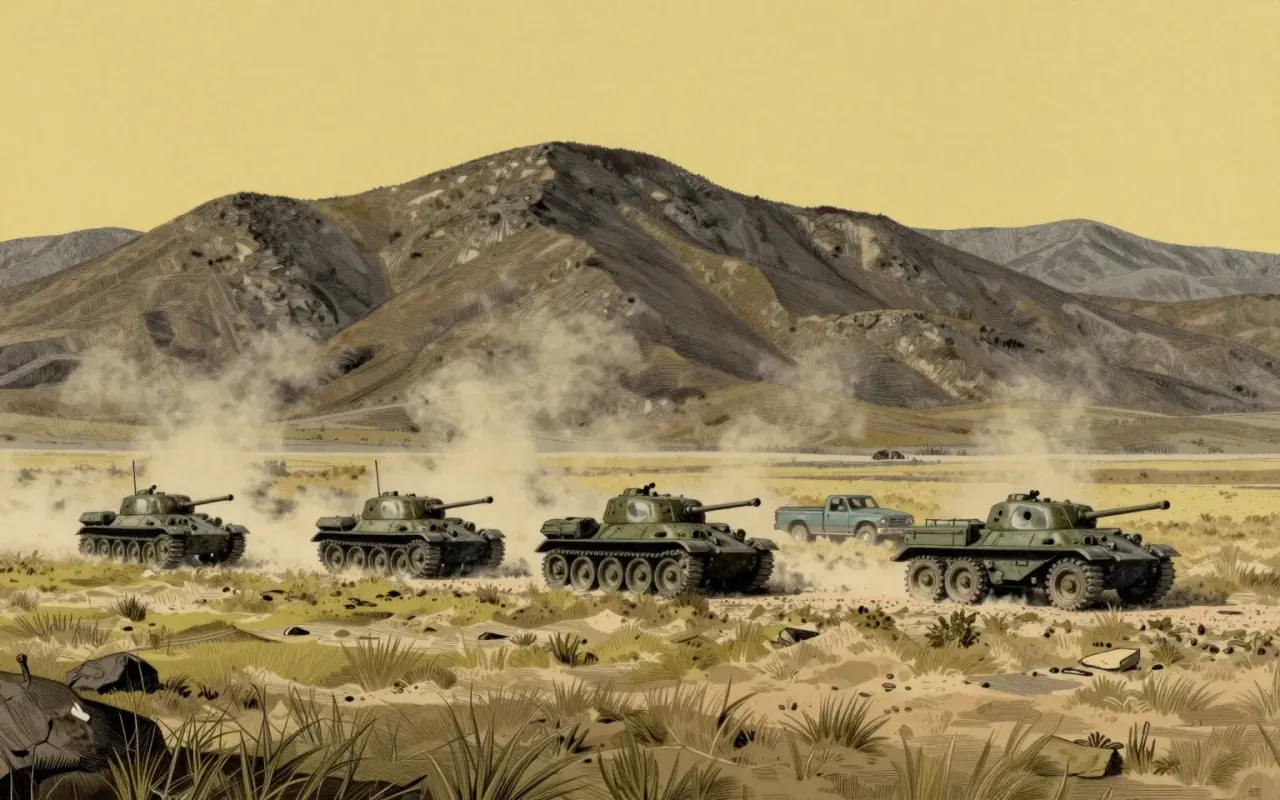
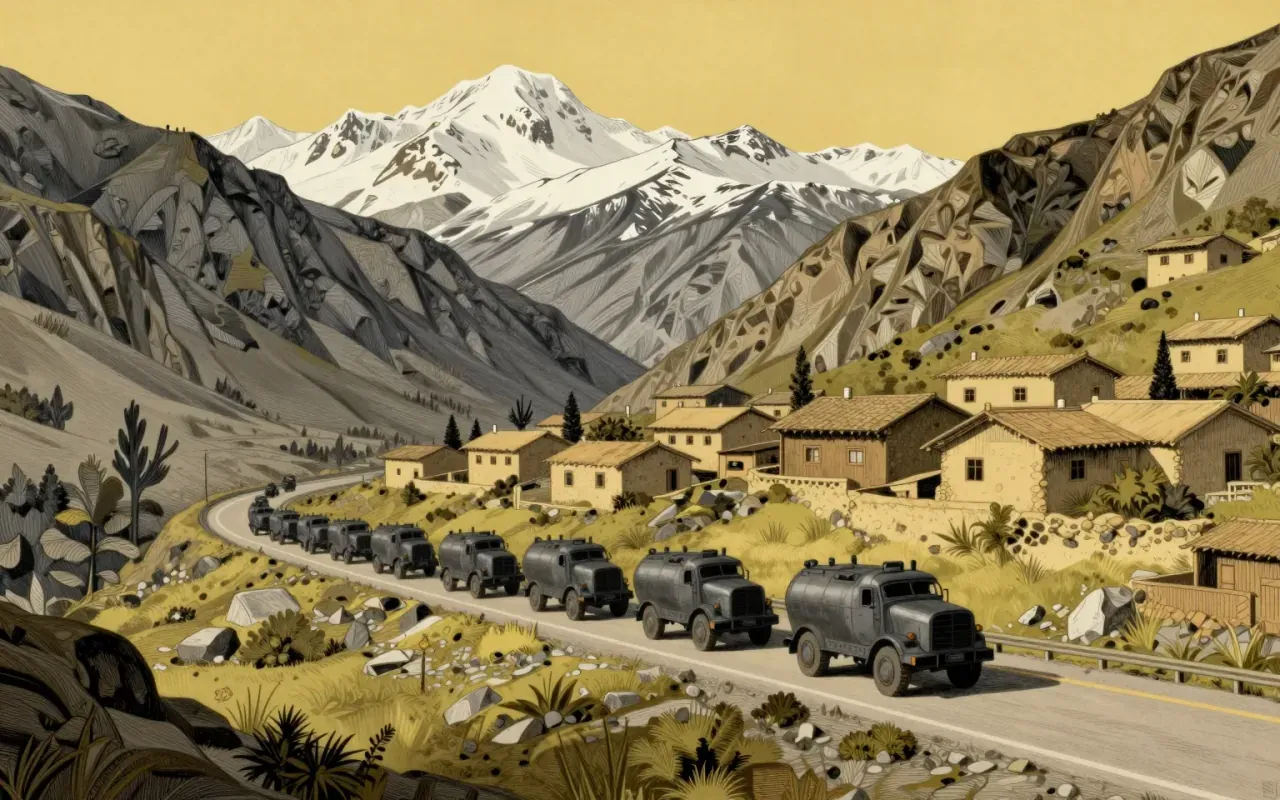
The Soviet Union, alarmed by Amin’s increasingly unpopular and unstable rule and the risk of losing its Afghan client state entirely, launched Operation Storm-333 on 27 December 1979, assassinating Amin and installing Babrak Karmal, leader of the rival Parcham faction, as the new government’s head, an intervention the Soviet Union publicly justified as a legal response to an Afghan government request under the December 1978 friendship treaty, even though the operation began by killing the very leader that treaty was nominally protecting. Soviet troop strength grew to roughly 115,000 to 120,000 at its peak, controlling major cities and roads while mujahideen forces, estimated at 200,000 to 250,000 fighters across diverse factions, controlled an estimated 80 percent of the countryside throughout most of the war.
A civilian toll historians still can’t narrow
American support for the mujahideen, channelled through Pakistan’s Inter-Services Intelligence agency under the CIA’s Operation Cyclone, was joined by funding from Saudi Arabia and other Muslim states, alongside foreign volunteer fighters who became known as Afghan Arabs, a designation historians now recognise as the direct precursor network to al-Qaeda’s later formation. Civilian casualty estimates for the war vary dramatically, ranging from 562,000 up to two million Afghan deaths across different sources, with broader scholarly consensus generally settling on a range of one to three million killed, representing an estimated 6.5 to 11.5 percent of Afghanistan’s prewar population, a scale of civilian death that historians attribute to the war’s prolonged duration and the chaotic conditions that made accurate contemporaneous counting impossible.
Stingers that reportedly changed the sky
Military casualty figures are comparatively more precisely documented: Soviet forces recorded between 14,453 and 26,000 total deaths, including roughly 9,500 killed in direct combat, while Afghan government forces suffered over 58,000 killed, and mujahideen deaths are estimated at 75,000 to 90,000 from a total force of some 150,000 to 180,000 fighters engaged over the war’s duration. American-supplied Stinger missiles, introduced to mujahideen forces from the mid-1980s, are widely credited with shifting the war’s air-superiority dynamics by threatening Soviet helicopter gunships, though the precise extent of their tactical decisiveness remains genuinely debated among military historians examining the war’s later years.
A withdrawal that didn’t end the fighting
Mikhail Gorbachev announced Soviet withdrawal in mid-1987, and the last Soviet forces left Afghanistan on 15 February 1989, ending nearly a decade of occupation that had cost an estimated 15 billion rubles and contributed measurably to broader Soviet economic strain during the same period historians associate with the broader structural pressures leading toward the Soviet Union’s 1991 dissolution. Rather than bringing peace, the withdrawal opened three successive Afghan civil wars running from 1989 through 2001, as competing mujahideen factions, and later the Taliban, fought for control of the country the Soviet departure had left without a stable governing settlement.
A training ground for what came after
The war deserves close attention for how directly its consequences extended well beyond Afghanistan’s own borders and the decade of its active fighting, contributing to the Soviet Union’s own eventual collapse while simultaneously incubating the foreign fighter networks that would later become al-Qaeda. Reading the conflict honestly means accepting genuine uncertainty in its civilian death toll, a range spanning well over a million people that historians have never been able to narrow with confidence, a reminder that even a heavily documented Cold War conflict, fought partly through declassified superpower records, can leave its most basic human cost only approximately known.