A temple built for Vishnu
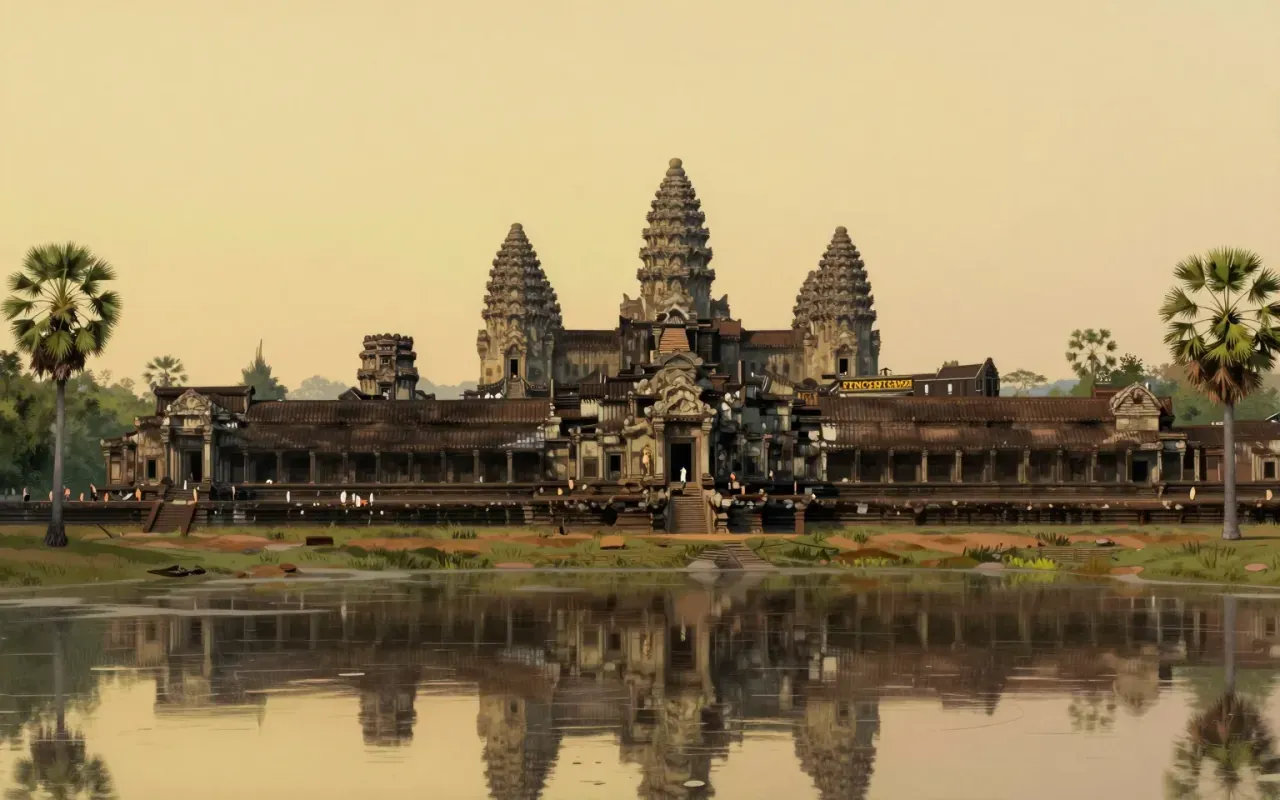
Angkor Wat was constructed between 1113 and 1150 under King Suryavarman II of the Khmer Empire, in the capital city of Yasodharapura, with the scholar Divakarapandita credited with proposing the temple’s construction. It was built originally as a Hindu temple dedicated to the god Vishnu, and work on its extensive carved decoration ceased upon Suryavarman II’s death around 1150, leaving some of the bas-relief work unfinished, a detail that gives historians a direct physical marker of exactly where construction stood at the moment the project lost its royal patron, since work simply stopped rather than being completed by a successor.
Unfinished at the builder’s death
One of the more striking gaps in the historical record concerns the temple’s own original name: no foundation stela or contemporary inscription referring to the temple by name has ever been found, leaving scholars to infer that it may have originally been known as Vrah Vishnuloka or Parama Vishnuloka, meaning the sacred dwelling of Vishnu, based on its religious dedication rather than on any direct textual confirmation. This absence is notable given how much other detail about the temple’s construction and patronage survives, illustrating how even a monument this extensively studied can retain a genuinely unresolved basic fact.
A name nobody has actually found
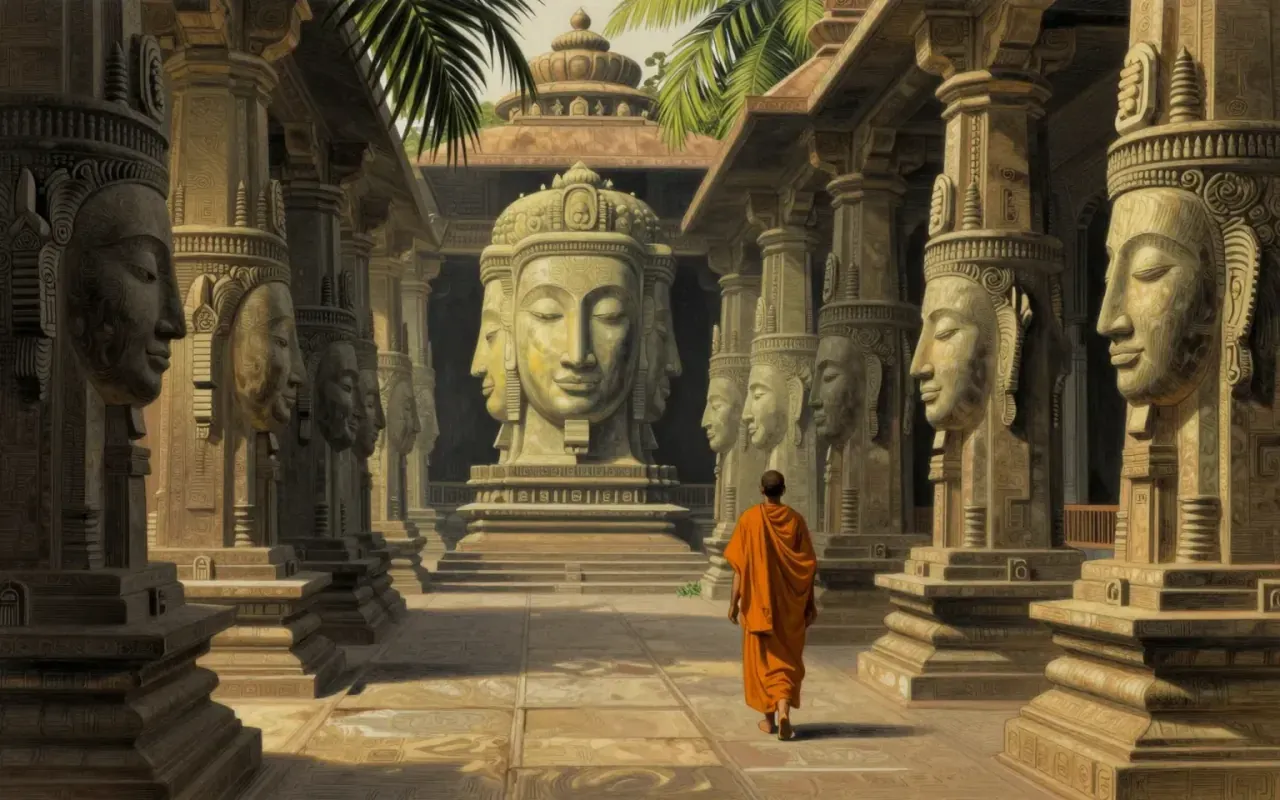
The temple’s religious character shifted substantially within decades of its completion. Following an attack on Angkor around 1178, King Jayavarman VII came to power and, influenced by his wife Indradevi’s Buddhist faith, oversaw a broader turn toward Buddhism across the empire’s religious life. Angkor Wat itself was gradually converted toward Buddhist use as part of this shift, with many of its original Hindu sculptures replaced over time by Buddhist artwork, a transformation that changed the site’s religious function without requiring wholesale destruction or reconstruction of the underlying temple structure itself.
A religious identity that shifted after conquest
This dual religious history, built for Vishnu, later adapted for Buddhist practice, means the temple’s identity is not straightforwardly Hindu or Buddhist but reflects a layered history of religious change that unfolded gradually over centuries rather than through any single decisive conversion event. Scholars examining surviving artwork at the site continue to work out precisely which elements date from the original Hindu construction phase and which were added or altered during the later Buddhist period, a task complicated by the gradual, piecemeal nature of the conversion rather than any wholesale rebuilding.
Hindu carvings replaced rather than removed wholesale
Angkor Wat was never fully abandoned even as the wider Khmer Empire declined, though it fell into relative neglect after the sixteenth century, receiving only limited attention and maintenance for several centuries afterward. Modern restoration efforts began in 1908, and the site has since become a major international tourist destination, drawing an estimated 2.6 million visitors annually by 2018, while also serving as a national symbol prominent enough to appear on Cambodia’s own flag, a rare instance of an ancient monument functioning as contemporary national iconography rather than existing purely as a historical relic set apart from present-day identity.
Never lost, only neglected
This is a rewarding subject specifically because it undermines the common assumption that Angkor Wat has always been the singular Buddhist monument tourists encounter today, revealing instead a temple built for a different god entirely and adapted, gradually and incompletely, to a new religious purpose over subsequent centuries. It rewards attention for that religious layering. It has less to offer on the specific architectural and artistic techniques behind the temple’s construction, which receive comparatively little detailed treatment here compared with its religious and historical trajectory. Readers wanting that closer architectural and artistic detail will need a more specialised study of the temple’s construction than this account provides.