A late succession
Born around 1122 into the Khmer royal family, Jayavarman VII did not take the throne until his mid-fifties, following a Cham invasion in 1177 that sacked the capital Yasodharapura and killed the reigning king. He led Khmer forces to expel the occupiers over four years of fighting, scenes of which survive carved into the walls of the Bayon and Banteay Chmar temples, and was crowned in 1181 once rival factions had been brought under control. His thirty-seven-year reign combined further military campaigns, including the conquest of Champa itself between 1190 and 1191, with an extensive building programme: the temple-city of Angkor Thom, the Bayon at its centre, and further temples including Ta Prohm and Preah Khan. He also established more than a hundred hospitals and rest houses along new roads reaching outward from the capital before his death around 1218 at roughly ninety-five years old.
Evidence carved in stone
Almost nothing about Jayavarman survives outside stone. Temple inscriptions at Preah Khan and Ta Prohm record his building projects, his religious devotion and the vast numbers of people assigned to serve the temples he founded, while carved bas-reliefs at the Bayon and Banteay Chmar depict naval battles, army marches and ordinary camp life with a level of visual detail rare for the period. No royal chronicle or personal memoir from his own court survives, so almost everything known about his reign has to be pieced together from these self-commissioned monuments, which naturally present him in the most favourable possible light as a devout and generous ruler. A contemporary Chinese account of the 1177 Cham invasion offers a rare outside source, though the historian Michael Vickery has questioned how reliable that record actually is for dating and details of the event it describes.
Legitimacy through building
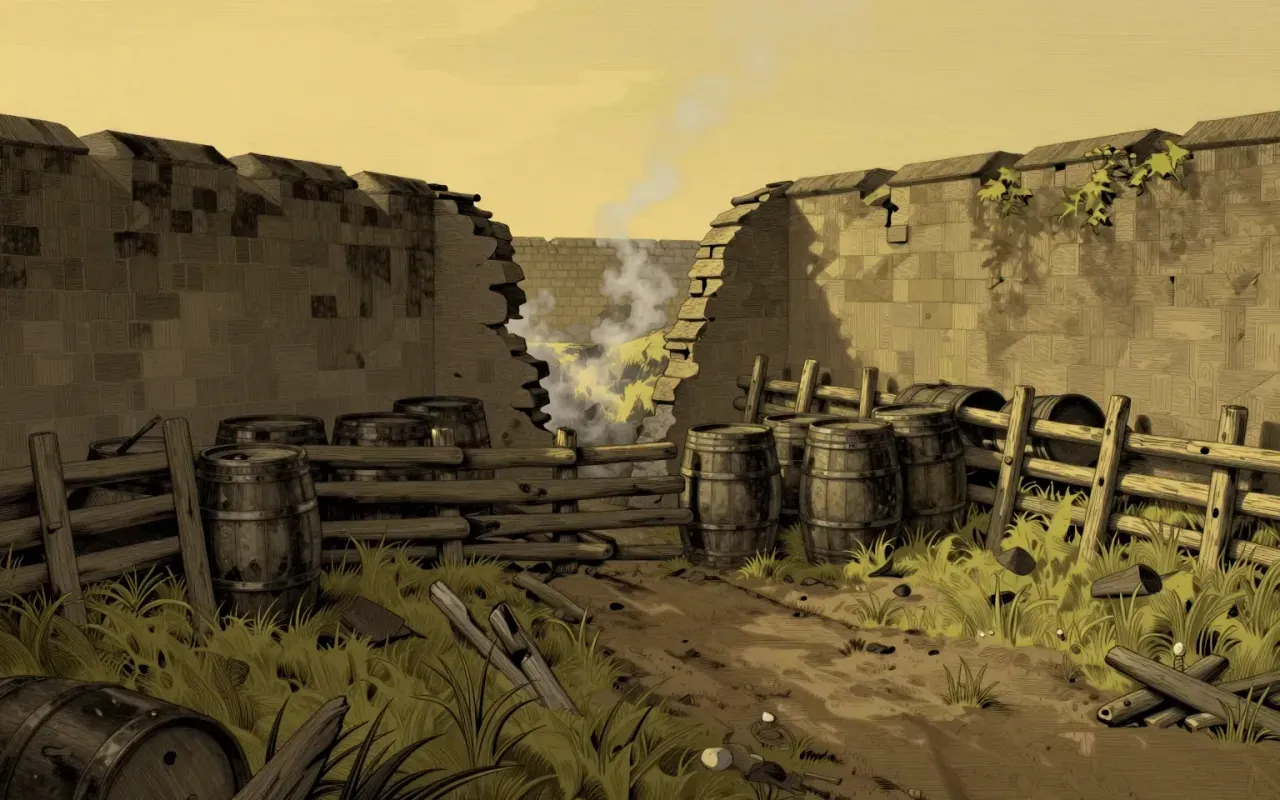
The trauma of the 1177 sack of the capital, in which the reigning king was killed and the Khmer state left leaderless for a period, appears to have shaped both Jayavarman’s military priorities and his subsequent building programme. Having restored order himself rather than inheriting an already stable throne, he had a strong personal interest in visibly demonstrating strength and legitimacy once crowned, which the scale of his construction at Angkor Thom and the surrounding road network plausibly served alongside their stated welfare purposes. His embrace of Mahayana Buddhism, unusual among Khmer kings who had mostly favoured Hindu court religion, gave him a distinct ideological basis for rule centred on compassion and protection of subjects rather than purely on Hindu concepts of divine kingship, a shift that fit naturally with a ruler who had come to power by rescuing the kingdom from disaster rather than through untroubled succession.
Monuments overstate reach
Historians caution against reading Jayavarman’s inscriptions too literally as records of administrative reach. His practice of sending Buddha images to numerous outlying towns is sometimes presented as evidence of direct political control over those places, but scholars including Chris Baker and Pasuk Phongpaichit argue this more plausibly reflects cultural and religious diplomacy than proof of formal rule, since no corroborating administrative records confirm actual governance there. Inscriptions describing new roads with rest houses record routes running east toward Champa and north toward Phimai but conspicuously name no road running west, a gap historians read as evidence that his territorial claims in some directions were weaker than his monuments imply. The reliability of the Chinese account of the 1177 invasion, including its precise dating, also remains disputed rather than settled, leaving even the starting point of his rise to power somewhat less certain than the confident narrative built from his own later inscriptions suggests.
A physical legacy
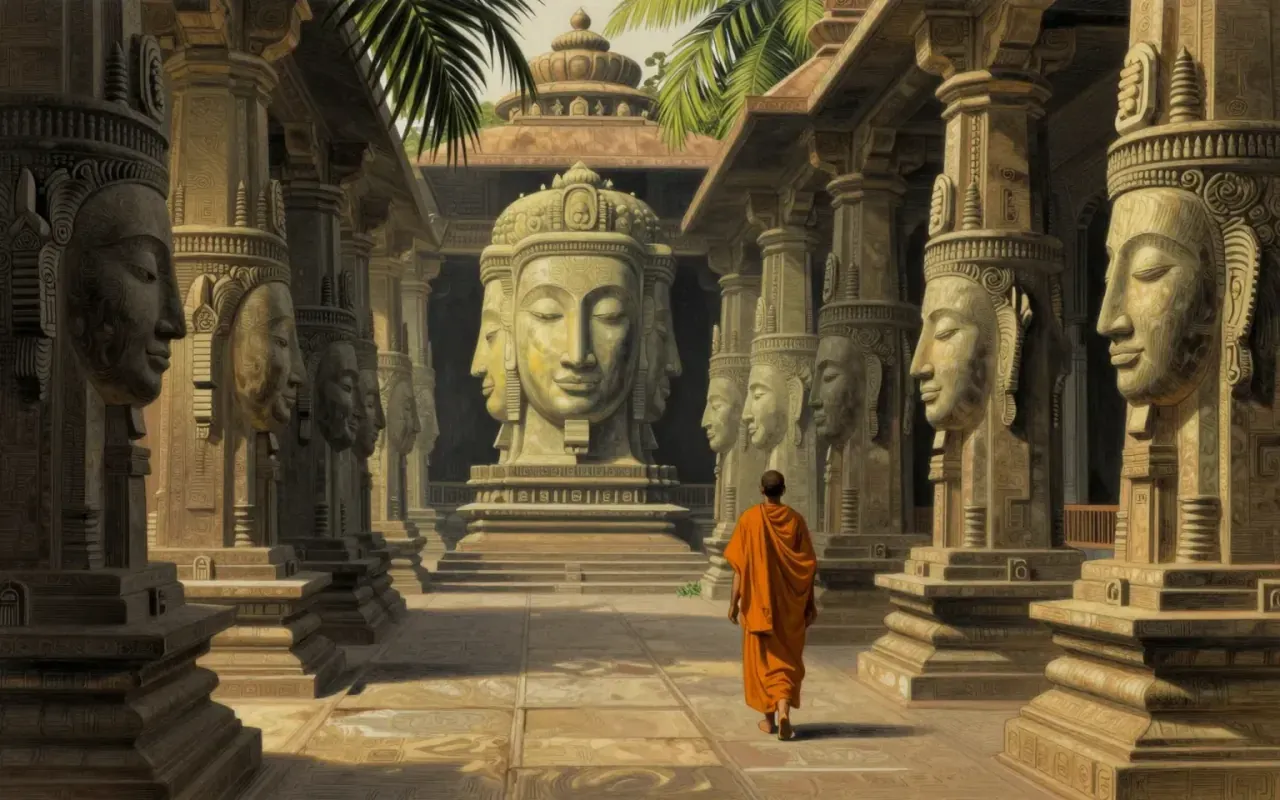
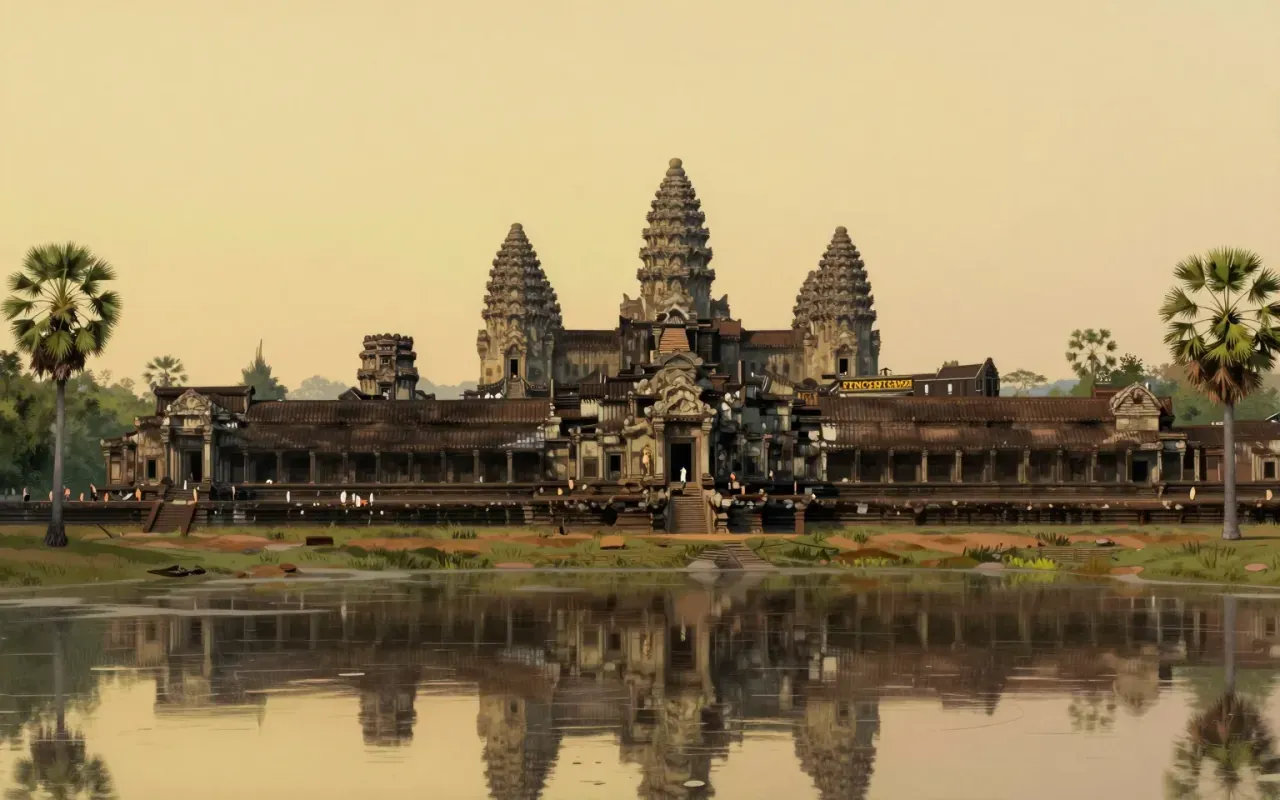
Jayavarman’s reign left the most physically extensive legacy of any Khmer king, since Angkor Thom and the Bayon still stand today as the empire’s most recognisable monuments, alongside Ta Prohm and Preah Khan, each requiring, by later estimate, tens of thousands of people to build and maintain. His welfare programme of hospitals and rest houses represents one of the more unusual documented examples of state-organised public provision from the period. His Buddhist devotion, however, did not outlast him as state religion: his eventual successor Jayavarman VIII favoured Hindu Shaivism and had many Buddhist images on his monuments defaced or altered, a reversal that shows how personally tied his religious programme had been to his own reign rather than embedding itself permanently in Khmer court practice. The empire itself continued for roughly two more centuries before its eventual eclipse and the abandonment of Angkor as a capital.
A religion that did not outlast him
Jayavarman is worth attention as a case of a ruler who left an unusually large physical record but almost no personal one, forcing anyone interested in him to read character and motive out of temple walls rather than letters or chronicles. That constraint makes for a different kind of historical engagement than a well-documented modern figure offers: less about weighing competing eyewitness accounts and more about deciding how much weight to place on self-commissioned monuments built by the very ruler they celebrate. Readers drawn to monumental architecture, to the practical mechanics of pre-modern welfare states, or to Southeast Asian history outside the more familiar narratives of European or East Asian empires will find him a rewarding subject. Those wanting a clear picture of the man himself, rather than the propaganda he left behind in stone, should expect the sources to resist them at every turn.