historybriefs
Topic

Christianity

Two thousand years of a sect that became the West's default setting.

21
in history
12:45
average
268 min
in total
49
across the network
Christianity across the network →
All briefs21
11:44

Keshub Chandra Sen

1783–1844

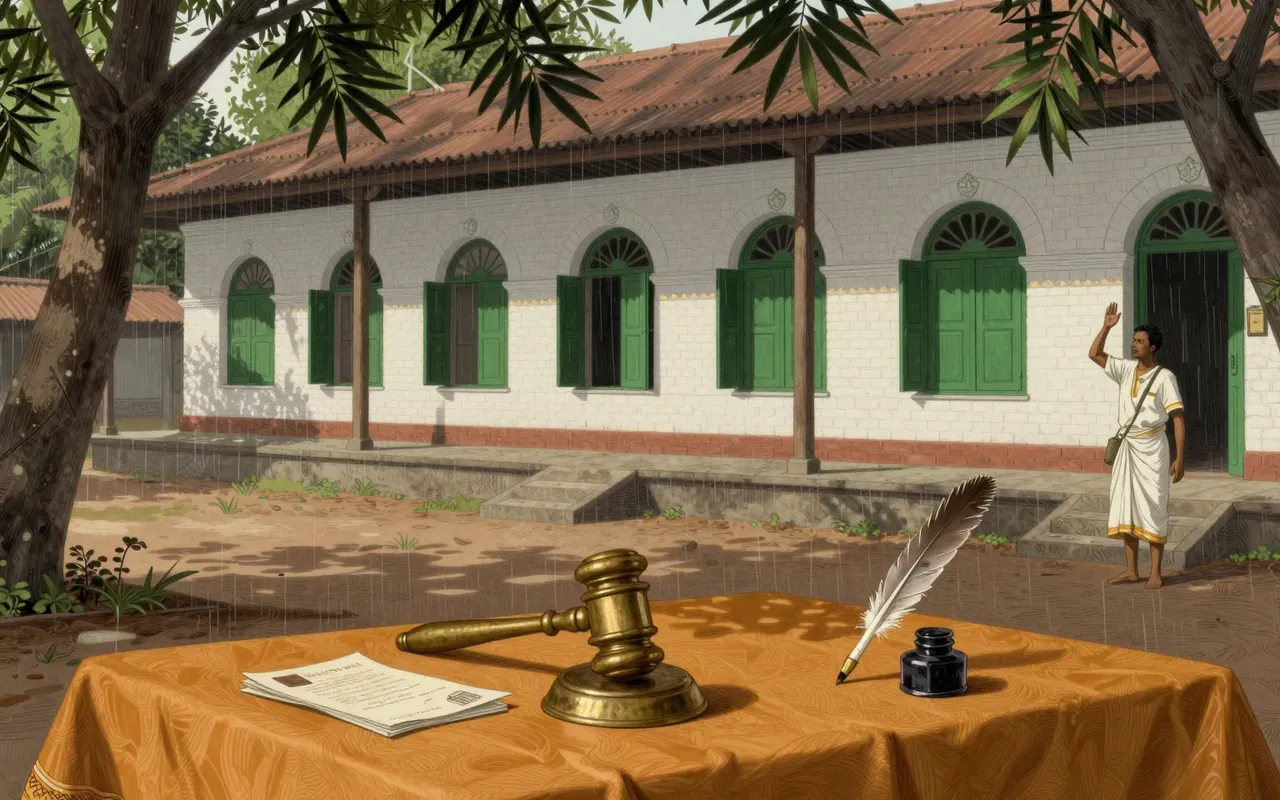
Keshub Chandra Sen was a doctrinal entrepreneur who built institutions and doctrines in rapid succession—school, association, sect, creed—each anchored in a documented act or statement. His work shows no mass following, no legislative effect, and no settled interpretation. What remains is a sequence of deliberate, dated interventions in Bengal’s religious and civic life.
9:52

Albigensian Crusade

1209–1229

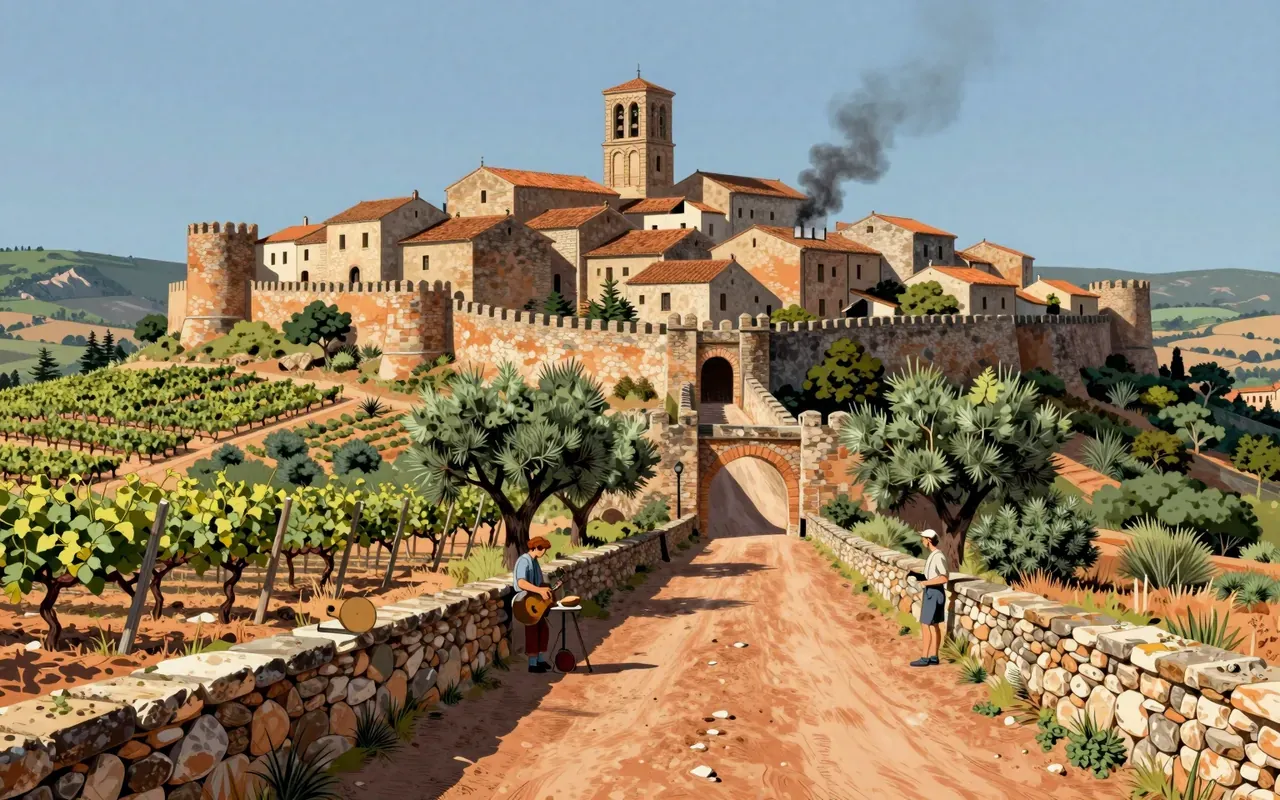
The Albigensian Crusade was a 1209–1229 papally initiated, French royally executed campaign against Catharism in Languedoc. It succeeded militarily in phases, realigned Toulouse with the French crown, diminished regional culture, and aided the institutional rise of the Dominicans and Inquisition. Its record is coherent but narrow: no dissent, no numbers, no motives beyond those stated.

12:02

Spanish Inquisition

1478–1834

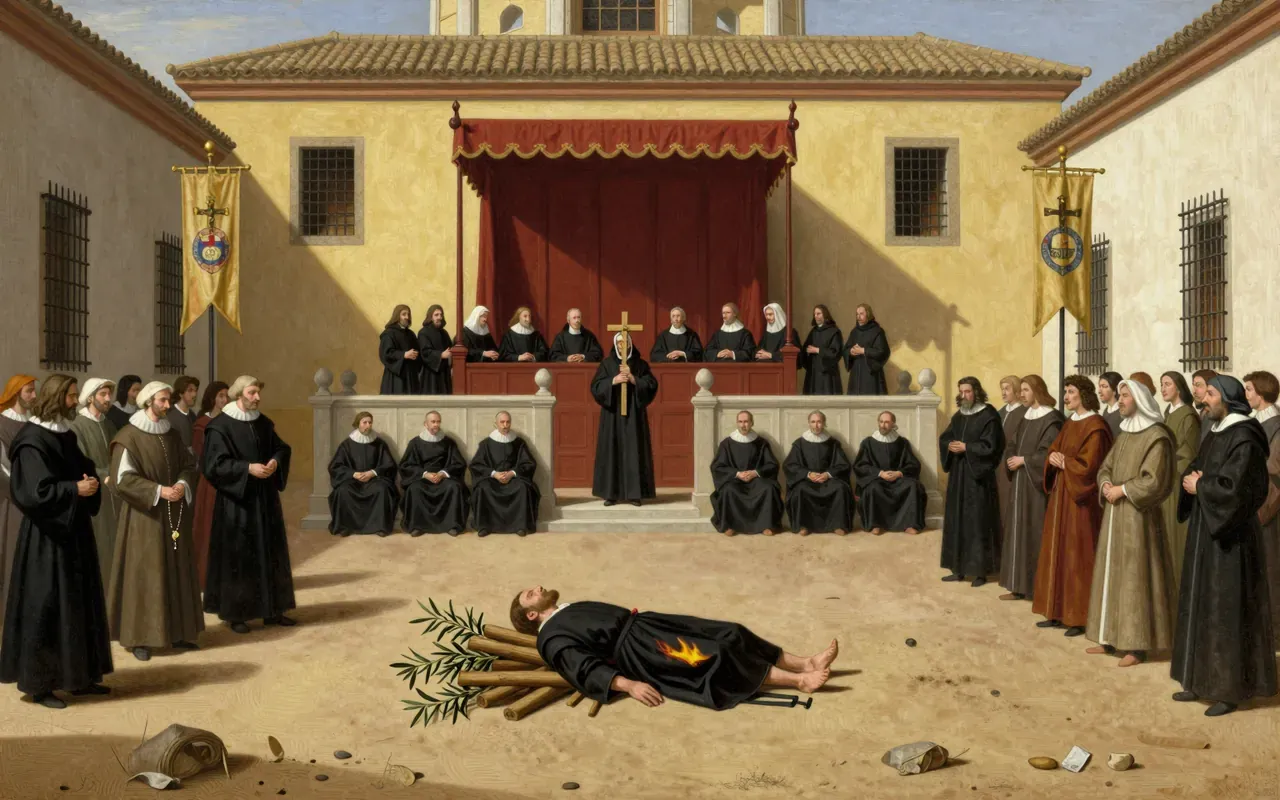
The Spanish Inquisition was a centrally directed, royally staffed, financially incentivised tribunal targeting converted Jews and Muslims. It operated from 1480 to 1834. Its first fifty years saw the highest execution rate—3,000–5,000 people burned—and systematic property confiscation. It replaced Papal oversight with Crown control. It enforced post-1492 and 1502 conversion decrees. It prosecuted ~150,000 people. Its methods included torture, public shaming, and lifelong penalties. Its legacy is administrative, not spiritual.

13:00

Bartolomé de las Casas

1474–1566

Bartolome de las Casas arrived in the Caribbean in 1502 as a colonist who held enslaved Native labourers under the encomienda system, before a 1514 reading of scripture convinced him Spanish treatment of Indigenous peoples was fundamentally unjust. He spent the following decades as a Dominican friar and eventually bishop, writing A Short Account of the Destruction of the Indies and debating Juan Gines de Sepulveda at Valladolid in 1550 and 1551 over whether Indigenous peoples could be justly subjugated, work that helped shape Spain's 1542 New Laws and later fed into the broader Black Legend narrative about Spanish colonial brutality.

13:00

Constantine the Great

272–337

Constantine won sole control of the Roman Empire by 324 after nearly two decades of war against rival claimants, founded the new capital of Constantinople, and convened bishops at Nicaea in 325 to settle a dispute over the nature of Christ. Nearly every surviving account of him was written by Christian admirers or later ecclesiastical writers with their own doctrinal stakes, leaving his personal beliefs, and the details of his most famous conversion story, genuinely uncertain.

13:00

Joan of Arc

1412–1431

A peasant girl from Domremy, Joan of Arc reported religious visions that led her to the French court in 1429, where she helped break the siege of Orleans and see Charles VII crowned before her capture and execution for heresy in 1431. Her trial and a later rehabilitation hearing preserve unusually detailed testimony in her own words, though what her visions actually were remains a question the sources describe without settling.

13:00

Nero

37–68

Nero became Roman emperor in AD 54 at sixteen, ruled competently under his advisers' guidance for several years, and then, after having his mother killed and losing his steadying counsellors, presided over a reign remembered for the great fire of Rome in AD 64 and a wave of executions before his suicide in AD 68. Every surviving account of him was written decades or centuries later by hostile senatorial writers, none of whom witnessed his reign firsthand.

13:00

Richard I of England

1157–1199

Richard I ruled England from 1189 to 1199 but spent most of that decade on crusade, in captivity, or defending his family's continental territories, leading the Third Crusade to within twelve miles of Jerusalem before withdrawing and ordering the execution of roughly 2,700 Muslim prisoners at Acre in 1191. Captured near Vienna on his way home and held for a ransom of 150,000 marks, roughly two to three years of England's crown revenue, he spent his final years at war with Philip II of France, building the innovative fortress of Chateau Gaillard, before dying in 1199 from a crossbow wound whose shooter he forgave on his deathbed, a reputation later historians alternately built up as chivalric ideal and tore down as a neglectful absentee king.

13:00

Crusader states

1098–1291

The First Crusade established four Christian territories in the eastern Mediterranean between 1098 and 1109: Edessa, Antioch, Tripoli and the Kingdom of Jerusalem, which survived until the Mamluks captured the last mainland strongholds in 1291. Their persistence for nearly two centuries owed as much to divisions between Sunni and Shia Muslim powers as to Crusader strength, and historians have long debated whether nineteenth-century comparisons of these states to modern European colonies hold up under scrutiny.

13:00

Crusades

1095–1291

Beginning with Pope Urban II's call in 1095 and running in various forms into the thirteenth century, the Crusades sent waves of Western European Christians toward the eastern Mediterranean, capturing Jerusalem in 1099 and establishing Crusader states that Muslim forces, first under Saladin and later the Mamluks, gradually reconquered, with the fall of Acre in 1291 ending mainland Crusader rule. Historians disagree over how far religious conviction, economic opportunity and political calculation each drove participation, and over how coherent the term crusade even was to contemporaries.

13:00

Edict of Milan

February 313

In February 313, Constantine and Licinius agreed at Milan to grant Christians legal standing and restore confiscated property, a policy Licinius then circulated to eastern governors that June. Known today only through two later, differing accounts, it granted toleration rather than establishment, a status Christianity would not formally gain for another sixty-seven years.

13:00

Edict of Nantes

April 1598 to October 1685

Issued in April 1598 to end decades of the French Wars of Religion, the Edict of Nantes gave French Protestants freedom of worship in specified areas, access to public office, state-funded schools, and control of fortified towns including La Rochelle, while leaving them subject to Catholic tithes and holidays. Henry IV, who had converted to Catholicism himself in 1593 after years fighting as a Protestant leader, signed it to secure a fragile peace, and provincial parlements delayed its registration for years. His grandson Louis XIV revoked it through the Edict of Fontainebleau in October 1685, triggering an exodus of roughly 400,000 Huguenots that religious freedom in France would not formally match again until 1787.

13:00

English Civil War

1642–1651

Fought between 1642 and 1651 as part of a wider conflict across England, Scotland and Ireland, the English Civil War pitted King Charles I against a Parliament unwilling to accept his authority unchecked, ending in Charles's execution and a short-lived republic. Historians remain divided over its basic character, with Whig, Marxist and revisionist interpretations all drawing on the same surviving pamphlets and parliamentary records to reach quite different conclusions about what really caused it.

13:00

Printing press

c. 1440

Around 1440, Johannes Gutenberg combined existing technologies with his own innovations in metal type and ink to create a practical movable-type printing system, completing his famous 42-line Bible around 1455 before the press spread to well over a hundred European cities within decades. Because Gutenberg left no personal account of his methods, most of what is known comes from legal records connected to a financial dispute rather than any direct description of his work.

13:00

Jacobitism

1688–1807

Jacobitism sought to restore the exiled Stuart dynasty to the British throne through several armed risings between 1689 and 1745, ending decisively at the Battle of Culloden after Charles Edward Stuart's final campaign. The movement's popular image as a Highland Catholic cause obscures a more varied reality of Protestant Lowland Episcopalians, English Tory sympathisers, and heavy dependence on French and Spanish sponsorship pursued mainly to distract British military resources.

13:00

Roman Curia

Founded late 11th century

The Roman Curia, the administrative body that runs the Catholic Church's central affairs, is generally traced to Pope Urban II at the end of the eleventh century, though the word curia itself simply meant royal court in medieval Latin. It has been reorganised repeatedly since: by Pius X in the early twentieth century, by Paul VI in the 1960s, by John Paul II in 1988, and most recently by Pope Francis, whose 2022 constitution Praedicate evangelium opened senior leadership roles to laypeople and, within three years, produced the Curia's first female prefect.

13:00

Gutenberg Bible

c. 1455

Gutenberg's Latin Bible, printed in Mainz and reaching its first complete copies around 1454 or 1455, ran to somewhere between about 160 and 185 copies, of which forty-nine survive today with only twenty-five complete. Its production is documented mainly through physical study of surviving copies and a handful of outside references, since no complete written account of how the project was organised or financed has come down to us.

13:00

Reformation

1517–1648

Conventionally dated from Martin Luther's 1517 publication of the Ninety-five Theses challenging the Catholic Church's sale of indulgences, the Reformation split Western Christianity into competing Protestant and Catholic camps over the following century, spreading through the work of Zwingli, Calvin and others and provoking wars of religion estimated to have killed between seven and seventeen million people before ending, in various accounts, at the Peace of Augsburg in 1555 or the close of the Thirty Years' War in 1648. Historians increasingly describe the period in the plural, as overlapping Reformations rather than one unified movement.

13:00

Scopes trial

1925

John Scopes agreed to be prosecuted for teaching evolution under Tennessee's 1925 Butler Act, turning a publicity stunt for the town of Dayton into a national confrontation between defence attorney Clarence Darrow and prosecutor William Jennings Bryan. Scopes was convicted and fined, a verdict later overturned on an unrelated technicality, and while the trial is widely remembered through the largely fictionalised 1955 play Inherit the Wind, historians still dispute how much it actually changed American attitudes toward evolution in schools.

13:00

Sakoku

1639–1854

Between 1633 and 1639, the Tokugawa shogunate issued edicts restricting foreign contact and threatening execution for Japanese who left or returned from abroad, a policy later named sakoku that lasted until Commodore Perry's 1853 arrival forced its end. Revisionist historians since the 1970s have argued the policy, better described by the term kaikin or maritime prohibitions, permitted substantial regulated trade through Nagasaki and three other channels throughout its supposed closure.

13:00

Thomas Aquinas

1225–1274

Thomas Aquinas joined the Dominican order against his family's fierce opposition and spent his career reconciling newly rediscovered Aristotelian philosophy with Christian theology, chiefly in his unfinished Summa Theologiae. Most of what is known about his life comes from testimony gathered decades later for his canonisation, and his sudden 1273 decision to stop writing before his death the following year remains genuinely unexplained.