Augustus and the Principate
The Senate granted Octavian, Julius Caesar’s adopted heir, the title Augustus in 27 BC, an act generally treated as marking the end of the Roman Republic and the start of the Roman Empire, even though republican offices and forms of address were kept in place around what was in practice one-man rule. Augustus’s forty-year reign secured an orderly succession through Tiberius and set the pattern of a single ruler backed by a professional standing army. Territorial expansion continued under his successors and reached its widest extent under Trajan around 117 AD, when Roman territory covered roughly five million square kilometres from northern Britain to the Euphrates in Syria, encompassing, by some estimates, around a fifth of the world’s population at the time.
Two centuries usually called peaceful
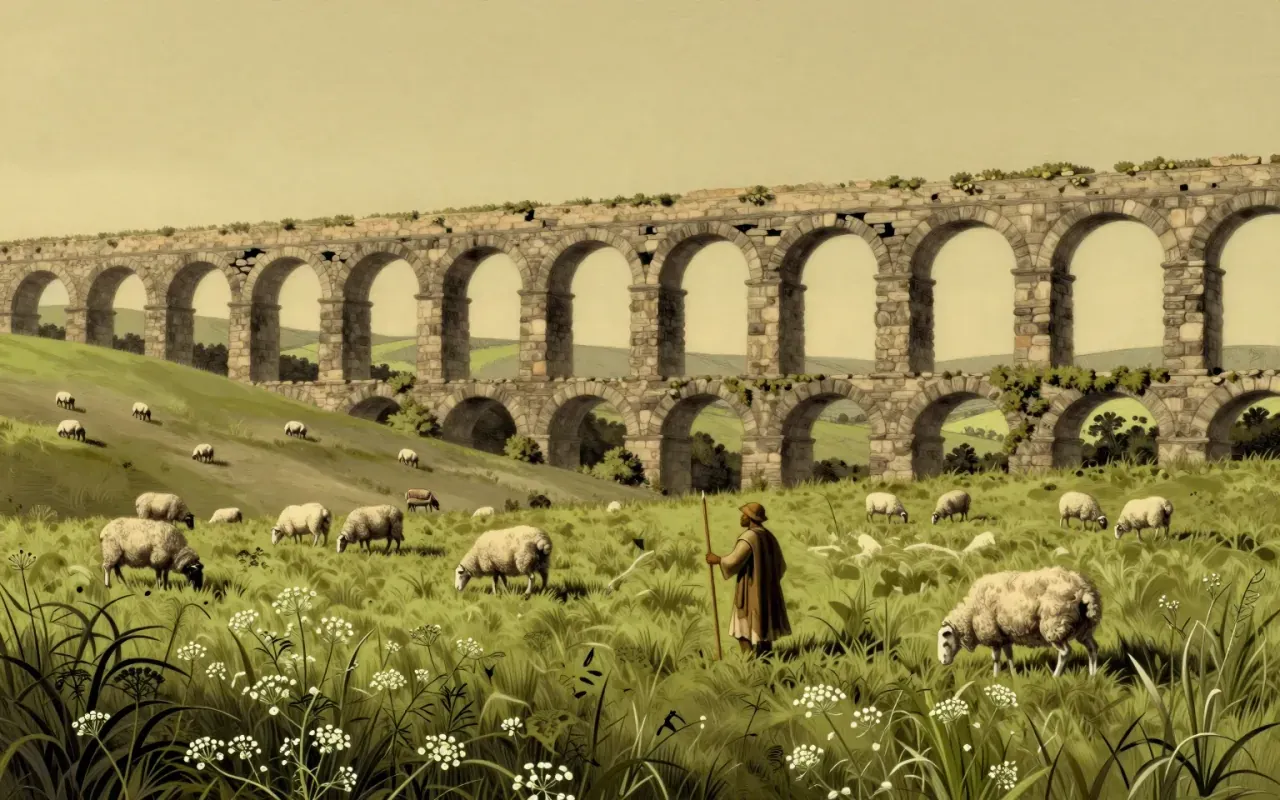
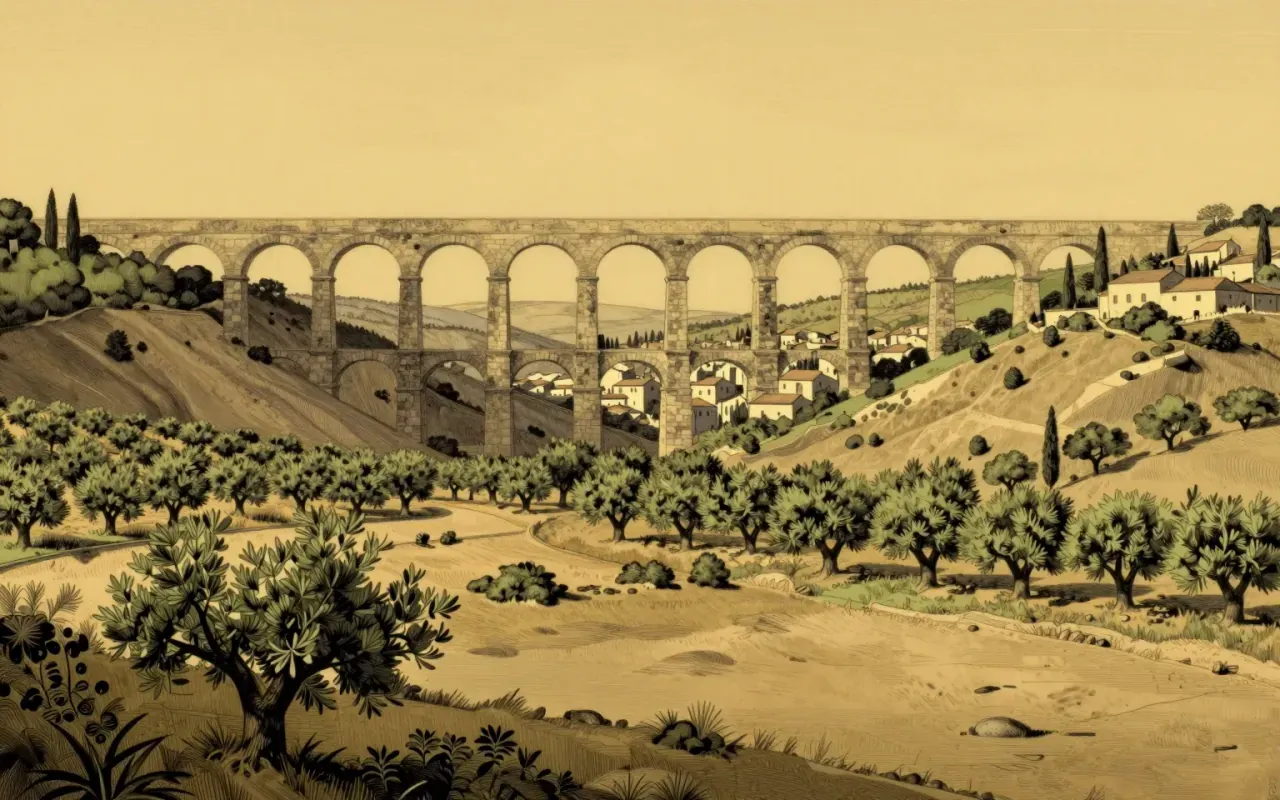
The first two centuries of imperial rule are often described as a period of comparative peace and prosperity, sometimes labelled the Pax Romana, and are associated with the so-called Five Good Emperors, Nerva, Trajan, Hadrian, Antoninus Pius and Marcus Aurelius, who ruled between 96 and 180 AD. This was not a period without warfare at the frontiers, but it lacked the sustained internal civil conflict that had marked the Republic’s final century and would recur in the empire’s third century. Administrative continuity, a stable currency for long stretches, and infrastructure such as roads and aqueducts supported trade and communication across a territory that stretched over three continents, though literary sources concentrate mostly on the emperors and elites rather than on the everyday life of the wider population.
A near-collapse in the third century
From around 235 to 284 AD the empire underwent what historians call the Crisis of the Third Century, a fifty-year stretch of rapid emperor turnover, civil war, plague and invasion that came close to breaking the state apart into competing regional empires. Order was restored through the military and administrative reforms of Aurelian and then Diocletian, who divided authority among four co-rulers in a system known as the tetrarchy. Constantine later reunified sole rule, relocated the capital to the city that would become Constantinople in 330 AD, and extended legal toleration to Christianity, decisions that reshaped the empire’s religious and geographic centre of gravity even as its western territories came under growing external pressure over the following century.
Division into East and West
The empire’s eastern and western halves, administered separately since Diocletian’s reforms, diverged further as the fourth and fifth centuries went on, with the western provinces facing repeated incursions from Germanic peoples pushed westward by the Huns. The Western Roman Empire ended in 476 when the Germanic commander Odoacer deposed the child emperor Romulus Augustulus and did not appoint a successor. The Eastern Empire, centred on the well-defended city of Constantinople, survived this collapse intact and continued for nearly a thousand years longer, eventually becoming known to modern historians as the Byzantine Empire, even though its own inhabitants continued to describe themselves simply as Romans.
Gibbon’s decline versus a later transformation
The eighteenth-century historian Edward Gibbon dated the empire’s decline from as early as the reign of Commodus in 180 AD, attributing collapse to internal decay, barbarian pressure and, controversially, the rise of Christianity as a drain on civic vitality. Modern historians generally reject this framing of steady decline, preferring instead to describe gradual transformation, in which barbarian peoples were as often integrated into Roman structures as opposed to them, and in which Roman law, language and institutions persisted in successor kingdoms well beyond 476. This disagreement is not merely about wording: it reflects different judgements about whether the empire’s end represents a catastrophic loss or a slow reorganisation of political power that preserved much of what came before it.
An empire best read in periods, not as one story
The Roman Empire covers roughly five centuries in the West and closer to fifteen in the East, which makes any single verdict on it almost meaningless without specifying which period is meant, the Augustan settlement, the Antonine peace, the third-century crisis, or the long Byzantine afterlife. Its real interest lies less in any one emperor’s reign than in the historiographical argument over how empires actually end, an argument that runs from Gibbon’s moralised decline to present-day accounts of transformation and continuity. Readers should come to it prepared to hold several centuries and several competing frameworks in mind at once, rather than expecting one clean narrative arc from founding to fall.