An heir chosen in childhood, a reign spent at war
Marcus Aurelius was born in Rome in AD 121 and was adopted as heir by the emperor Antoninus Pius in 138, at the direction of Antoninus’s own predecessor Hadrian. He became emperor on Antoninus’s death in 161, initially ruling jointly with his adoptive brother Lucius Verus, and spent much of his nineteen-year reign at war, first against Parthia in the east and then for over a decade against Germanic tribes along the Danube frontier. A severe epidemic, now known as the Antonine Plague, struck the empire from around 165 and is estimated to have killed several million people across its provinces. Marcus died in 180, probably near Vienna or in Sirmium, and was succeeded by his son Commodus, whose troubled reign is often treated as the point where the empire’s long era of stability began to give way.
A private notebook, a public record from other hands
Much of what is known about Marcus’s reign comes from the Historia Augusta, a collection of imperial biographies whose authorship and reliability have long puzzled historians: it was once thought to be the work of several writers around AD 300, but is now generally attributed to a single author writing closer to 395, and its earlier biographies, including Marcus’s, are considered far more trustworthy than its later ones. The Greek senator Cassius Dio supplies useful detail on the wars but wrote with an aristocrat’s suspicion of imperial expansion. Marcus’s own private notebook, known today as the Meditations, survives separately: written in Greek, apparently during campaigns, for himself rather than for an audience, it offers his frame of mind but almost no dates or names, which is why the narrative of his reign still rests on the other, less personal, sources.
Duty as the answer to every objection
Marcus had been trained from adolescence in Stoic philosophy, and that training shaped how he approached rule once it fell to him: duty, not preference, was what the philosophy demanded, and later biographers describe him as reluctant but resigned to accepting supreme power because refusing it would have been a dereliction of that duty. He appointed officials for their competence in specific crises rather than for status, and he and Lucius Verus personally oversaw relief efforts during a serious flood of the Tiber early in the reign. His Meditations return repeatedly to the idea that a difficult position, even life at court, does not excuse a person from trying to act rightly within it, a theme that fits a reign spent largely managing wars and an epidemic he had not sought and could not have anticipated when he was named heir as a boy.
A biography historians trust more than most
Historians treat much of the Historia Augusta’s detail on Marcus with more confidence than its later biographies, since it likely drew on earlier, now-lost sources for his life specifically, but the exact boundary between reliable material and later invention within the text is still debated rather than settled. Marcus’s decision to leave the succession to his son Commodus, rather than adopting a more capable outsider as his own predecessors had done, has been argued over by both ancient and modern historians, some treating it as an unavoidable consequence of having a surviving son and others as a genuine misjudgement. Persecution of Christians is recorded as having increased during his reign, but no Christian source of the period blames Marcus personally for it, and two prominent Christian writers of the time praised him directly, which complicates any claim that he pursued anti-Christian policy himself.
The last of the good emperors
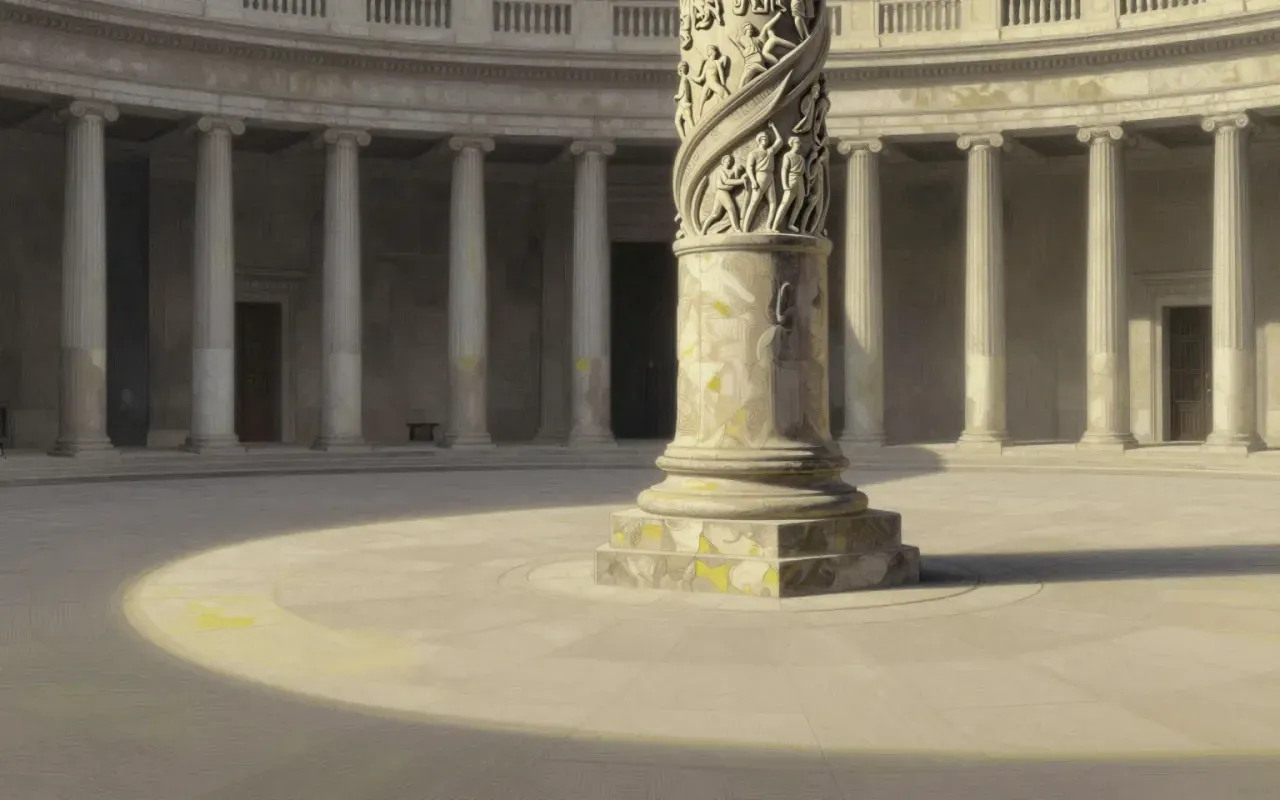
Marcus is generally counted as the last of the so-called Five Good Emperors, and his reign is often treated as the closing chapter of the long span of relative stability historians call the Pax Romana, with the pressures that followed, plague, prolonged frontier war, and a difficult succession, read as an early sign of strains that would deepen in the following century. His bronze equestrian statue, one of the few to survive from Roman antiquity, still stands in Rome, and the column raised to commemorate his campaigns against the Germanic tribes remains there too. The Meditations, unpublished in his own lifetime and preserved almost by accident, became one of the principal texts through which later readers came to understand Stoic philosophy at all.
A voice worth hearing, a history worth checking elsewhere
Marcus rewards attention for the contrast between the intimate, self-doubting voice of the Meditations and the largely military, administrative record left by his biographers, since neither on its own gives a full picture of the man or the reign. Readers drawn to Stoic philosophy, or to how a ruler wrote privately about the burdens of rule, will find real value here worth returning to. Readers hoping the Meditations will double as a reliable history of his reign should be warned it will not, since it carries almost no dates, names or narrative detail, leaving the actual chronicle of his wars and decisions to sources written by other hands entirely.