A surprise strike that ended American neutrality in a single morning
On 7 December 1941, the Imperial Japanese Navy launched a surprise attack on the United States naval base at Pearl Harbor in Hawaii, using aircraft and midget submarines against ships and installations there, an assault that prompted the United States to declare war on Japan the following day and enter the Second World War directly. President Franklin D. Roosevelt’s address to Congress the next morning, describing 7 December as a date which will live in infamy, became one of the most quoted speeches in American political history, framing the attack’s significance for the wartime public even as the fuller intelligence and preparedness failures behind it took longer to become clear.
A speech remembered better than the intelligence record behind it
The most quoted account of the attack’s aftermath centres on Roosevelt’s infamy speech, but the more consequential documentary record concerns American military planning in the weeks before the strike, which the historical account states plainly left no meaningful plan for the air defence of Hawaii, since American commanders believed a Japanese attack, if it came, would more likely target Wake Island or the Philippines and had, by the record’s own description, no clear understanding of air power’s capabilities or proper deployment at the time. This gap in preparedness became one of the central subjects of the official inquiries that followed the attack in the months and years afterward.
Airplanes, midget submarines, and an undefended sky
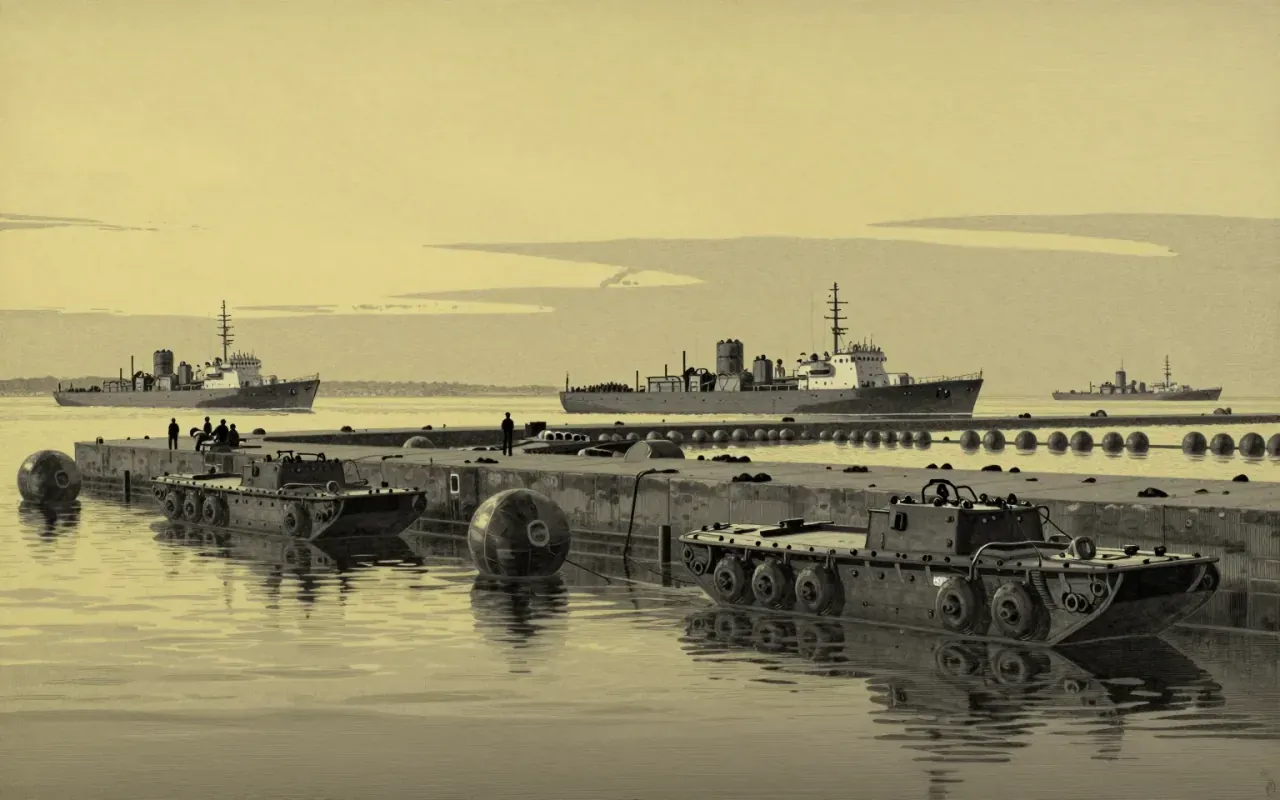
The Japanese assault combined carrier-launched aircraft with midget submarines in a coordinated strike against a base American forces had not organised to defend against exactly this kind of attack, catching ships and personnel unprepared in a way that produced severe losses within a very short period. The available summary record does not itself provide detailed ship-by-ship or unit-by-unit casualty figures, reflecting the broader point that the intelligence and planning failure, rather than the tactical details of the strike, is what the record emphasises most directly as historically significant. The base’s ships and aircraft had been arranged for routine peacetime operation rather than for repelling a coordinated air and undersea assault, compounding the damage the surprise itself inflicted.
Wrong guesses about Wake Island and the Philippines
American commanders’ confidence that Japan would strike elsewhere, Wake Island or the Philippines specifically, rather than Pearl Harbor itself, represents the central documented misjudgement behind the attack’s success, a failure of anticipation rather than of raw military capability, since the base held substantial American naval strength that simply was not positioned or alerted to respond to an attack of this kind. This gap between assumed and actual Japanese intentions is treated as the attack’s core historiographical lesson about intelligence assessment rather than a footnote to the military narrative. It is also the detail most often cited in later discussions of comparable intelligence surprises, since the underlying failure was one of interpretation rather than of missing information altogether.
Two commanders demoted, a base absorbed into a larger installation
In the attack’s immediate aftermath, two senior American commanders, Admiral Husband Kimmel and Lieutenant General Walter Short, were demoted from their full ranks, a direct institutional consequence of the preparedness failure the attack exposed. The base itself has since evolved administratively, merging in 2010 with the neighbouring Hickam Air Force Base to form Joint Base Pearl Harbor-Hickam, which continues to serve as a primary installation for the United States Pacific Fleet. The site today combines an active naval and air base with memorial facilities that draw visitors specifically because of the events of December 1941.
An attack worth reading for the assumptions that failed, not just the strike itself
Pearl Harbor rewards attention less for the mechanics of the strike itself, which the available record treats relatively briefly, than for the specific and clearly documented failure of anticipation that let it succeed: American commanders’ confident wrong guess about where Japan would actually attack. Readers interested in military history will find in the demotions of Kimmel and Short a direct institutional acknowledgement of that failure; readers interested in the history of intelligence assessment will find Pearl Harbor a clear and still-relevant case study in how confident assumptions about an adversary’s likely target can leave even a well-resourced force unprepared for the attack that actually comes.