A castle town on the delta
Hiroshima began as a castle town founded in 1589 by the warlord Mori Terumoto on the delta of the Ota River, taking its name from the Japanese for wide island. Terumoto moved into the newly built Hiroshima Castle in 1593, but his defeat at the Battle of Sekigahara passed control of the city to other hands, and from 1619 until 1871 the Asano clan governed it. That long, comparatively settled period ended with the nineteenth-century abolition of Japan’s domain system, after which Hiroshima became the capital of its own prefecture and began the rapid urban and industrial growth that would define it through the following decades, including harbour development, a new rail connection, and expanding textile and military-supply production.
Building a military and industrial city
Growth accelerated after 1871. Governor Sadaaki Senda oversaw construction of Ujina Harbor in the 1880s, and the San’yo Railway reached the city in 1894, tying it into national trade and troop-movement networks. That year also brought unusual prominence: during the First Sino-Japanese War, Emperor Meiji based his wartime headquarters at Hiroshima Castle. Industrial expansion continued through the Russo-Japanese War of 1904, and by the outbreak of the Second World War the city held major military headquarters, including the Second General Army, the Chugoku Regional Army, and the Army Marine Headquarters at Ujina port. Population peaked at just over 419,000 in 1942 before wartime conditions and eventual evacuation reduced it.
One bomb, one morning
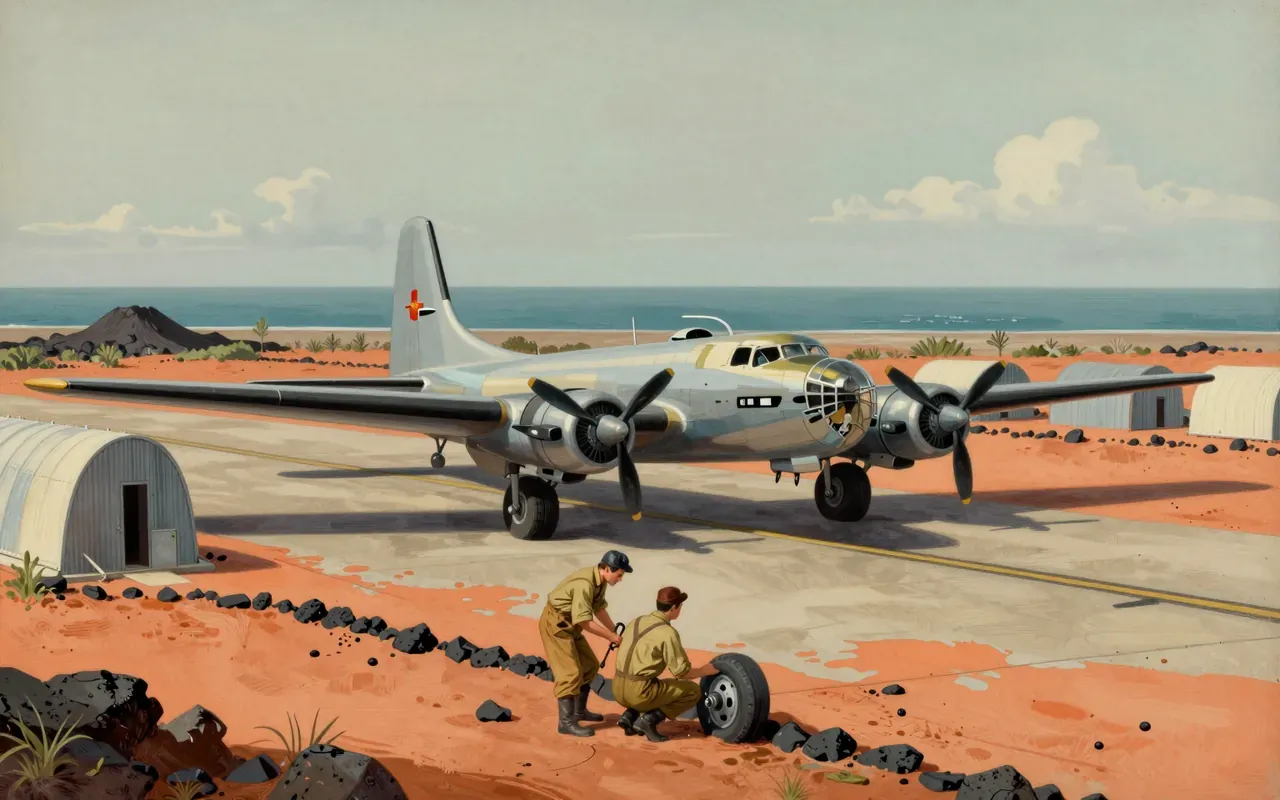
Hiroshima’s military and industrial concentration is the documented reason it drew American attention as a target, alongside the fact that, unusually for a city of its size, it had not previously suffered conventional air raids, which left its infrastructure and population largely intact for assessing bomb effects. On 6 August 1945, a B-29 named Enola Gay, flown by Paul Tibbets, dropped the nuclear weapon known as Little Boy on the city at 8:15 in the morning. The bomb killed at least 70,000 people immediately, including thousands of Korean forced labourers present in the city, and fewer than one in ten of the dead were military personnel. About seventy per cent of Hiroshima’s buildings were destroyed outright, with a further seven per cent severely damaged.
A toll that kept rising
The immediate death toll was only the beginning. Continuing injury and radiation sickness pushed the number of dead higher through the rest of 1945, and the sources cited give a range rather than a single figure: one estimate puts total deaths by year’s end between 90,000 and 140,000, while another source puts the range between 90,000 and 166,000. That spread reflects genuine difficulty in counting deaths that accumulated gradually from radiation exposure rather than occurring in a single event, compounded by wartime disruption to civil records. A further disaster compounded the destruction weeks later, when the Makurazaki Typhoon struck on 17 September 1945, killing more than 3,000 people in Hiroshima Prefecture, about half of the storm’s national death toll.
What the public was allowed to know
What the wider Japanese public could learn about the bombing was shaped as much by postwar policy as by the event itself. Occupation authorities deliberately withheld detailed information about the atomic bombings from Japanese audiences even while promoting press freedom as a general principle, a contradiction the historical record notes without resolving in the occupiers’ favour. John Hersey’s widely read 1946 account of the bombing was itself banned in Japan for a period. This gap between what happened and what could be publicly discussed at the time means much of the detailed understanding of civilian experience reached general audiences only later, once censorship controls eased and survivor testimony could circulate more freely, both within Japan and abroad.
Rebuilding around a peace park
Reconstruction proceeded with direct national support: the Hiroshima Peace Memorial City Construction Law, passed in 1949, funded rebuilding centred on a Peace Memorial Park, with the accompanying museum opening in 1955 and the castle itself rebuilt by 1958. The city’s population had returned to prewar levels by 1955. Also in 1949, at the initiative of mayor Shinzo Hamai, Japan’s parliament formally proclaimed Hiroshima a City of Peace, a designation the city has built its public identity around since. The surviving Industrial Promotion Hall, now known as the A-Bomb Dome, was inscribed as a UNESCO World Heritage Site in 1996, and the city continues to host international visitors and peace-related events, including a 2016 visit from a sitting American president.