A civil war already under way
The genocide is dated from 7 April to 19 July 1994, roughly one hundred days, following the assassination of President Juvénal Habyarimana when his plane was shot down on 6 April. It occurred within the broader Rwandan Civil War, which had begun in October 1990 when the Rwandan Patriotic Front, formed largely by Tutsi exiles based in Uganda, invaded the country. A ceasefire and the Arusha Accords of August 1993 had established a plan for power-sharing between the government and the Front, but a hardline movement within the Hutu political establishment worked against the agreement’s implementation, and Habyarimana’s assassination became the trigger for a killing campaign that extremists carried out with striking speed and organisation.
A peace agreement that extremists rejected
Much of what is documented about the genocide’s organisation comes from investigations and trial records connected to the International Criminal Tribunal for Rwanda, which examined the roles of military officers, financiers and militia leaders in planning and directing the killing. Radio broadcasts from the period, particularly from a station used to direct and encourage violence, survive as direct evidence of how the killing was coordinated in real time. Death toll estimates rely on a combination of Rwandan government census-based accounting, which places the total above a million, and independent demographic and survey research by outside scholars, which generally arrives at figures between 500,000 and 662,000, a substantial and unresolved gap between official and independent accounting.
One assassination, an already-prepared plan
The genocide’s roots lay in ethnic distinctions between Hutu and Tutsi that colonial administration had rigidified into fixed categories, compounded by the unresolved civil war and an economic crisis in the late 1980s triggered by collapsing coffee prices, which intensified competition for power and resources within Rwanda’s government. The Arusha Accords’ power-sharing terms threatened the position of hardliners within the ruling circle, and the militia groups Interahamwe and Impuzamugambi had already conducted killings in the months before Habyarimana’s death, framing the Tutsi population as a threat to Hutu dominance in language that laid the ideological groundwork for what followed once the president was killed.
A death toll still argued over
Historians and demographers continue to work with a range for the total death toll rather than a single agreed figure, and the discrepancy between the Rwandan government’s count and outside scholarly estimates has itself become a subject of methodological debate rather than being resolved. Separately, historians disagree about specific episodes within the preceding civil war, including the exact circumstances of a senior Rwandan Patriotic Front commander’s death in 1990, which one prominent historian described differently in accounts written years apart, illustrating how even well-studied aspects of this period remain open to revision as new testimony surfaces.
Machetes, checkpoints, and a radio station
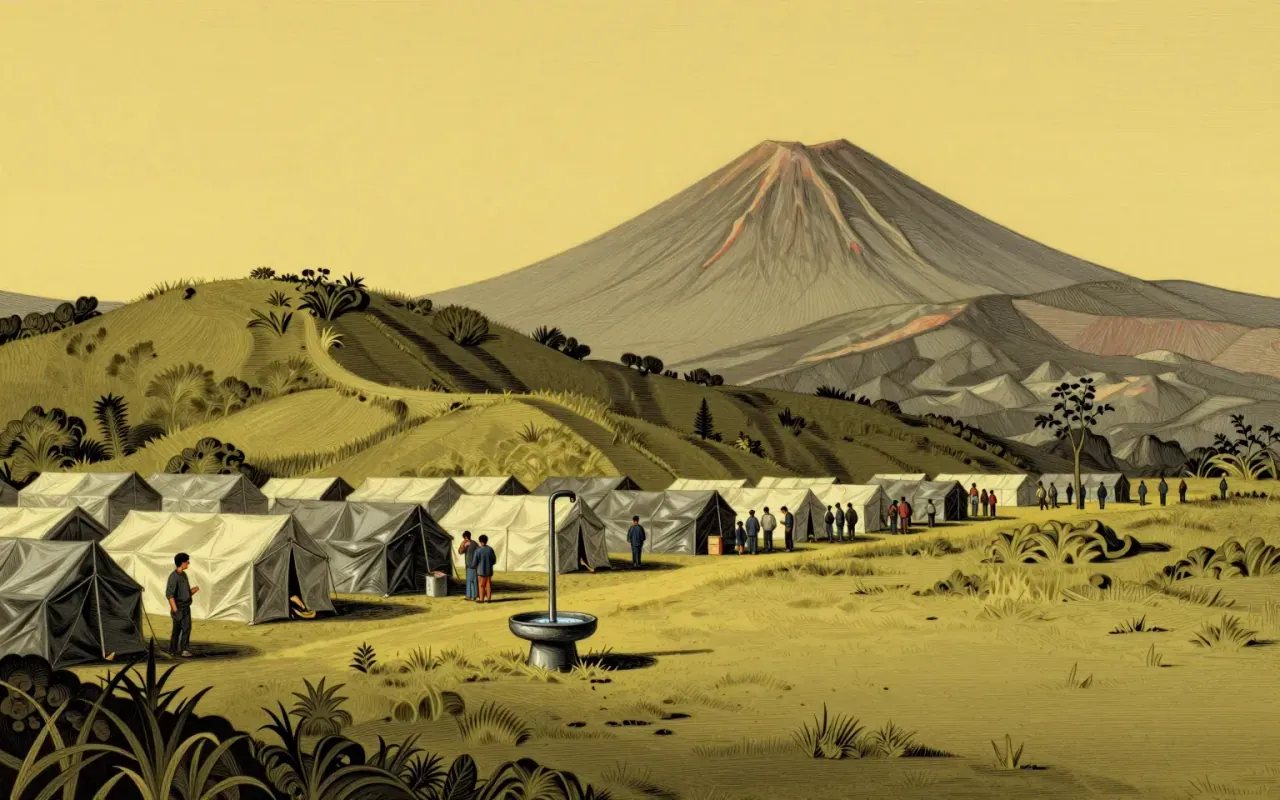
The killing ended only when the Rwandan Patriotic Front achieved full military control of the country by 19 July 1994, after which its leader took charge of a government focused on reconciliation and prosecutions through the international tribunal. The consequences extended beyond Rwanda’s borders: in 1996 the new government launched military operations against refugee camps in neighbouring Zaire that were sheltering many of the genocide’s perpetrators, an intervention that helped trigger the First Congo War, meaning the genocide’s aftermath directly shaped one of the deadliest conflicts in the region’s subsequent history.
An ending that opened a new war
This is essential reading for understanding how quickly a state’s own institutions, its military, its local officials, its broadcast media, can be turned toward organised mass killing once a triggering event and a prepared plan coincide. The material is honest about how much remains disputed, from the precise death toll to specific episodes of the preceding civil war. It gives comparatively less space to the direct testimony of survivors, presenting the genocide mainly through its organisational and military dimensions rather than its human texture. Readers wanting that more personal dimension of the story will need to seek out survivor accounts separately, since this material stays largely at the level of institutions, chains of command and contested statistics.