historybriefs
Topic

The Second World War

The event the modern world still measures itself against.

24
in history
12:47
average
307 min
in total
102
across the network
The Second World War across the network →
All briefs24
11:49

Atomic bombings of Hiroshima and Nagasaki

6 and 9 August 1945

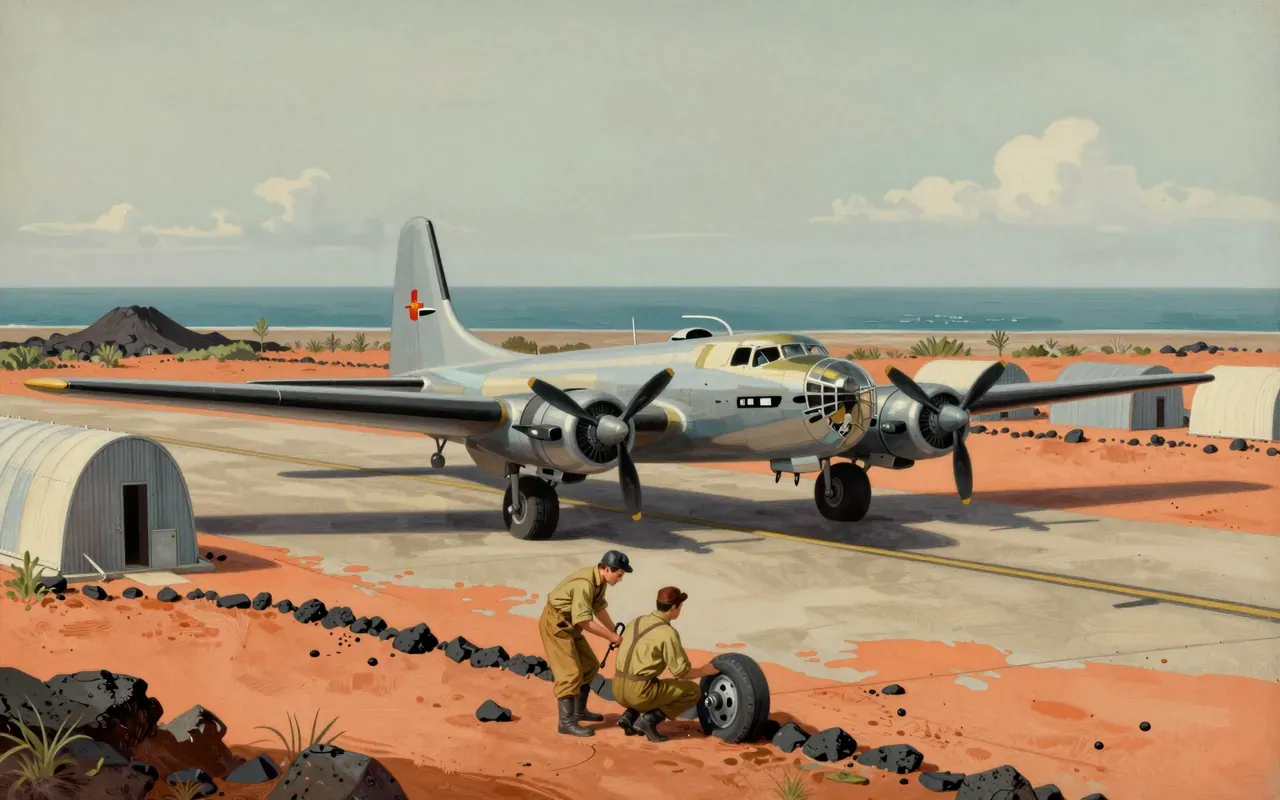
The atomic bombings of Hiroshima and Nagasaki were deliberate, authorised, and executed military operations using newly developed nuclear weapons. Their scale, method, and human impact are well-documented in the source. Their causal relationship to Japan’s surrender is asserted only as ‘precipitation’—not proof of necessity or sufficiency. No claim about motives, alternatives, or internal Japanese decision-making appears in the material.
11:12

Potsdam Conference

17 July to 2 August 1945

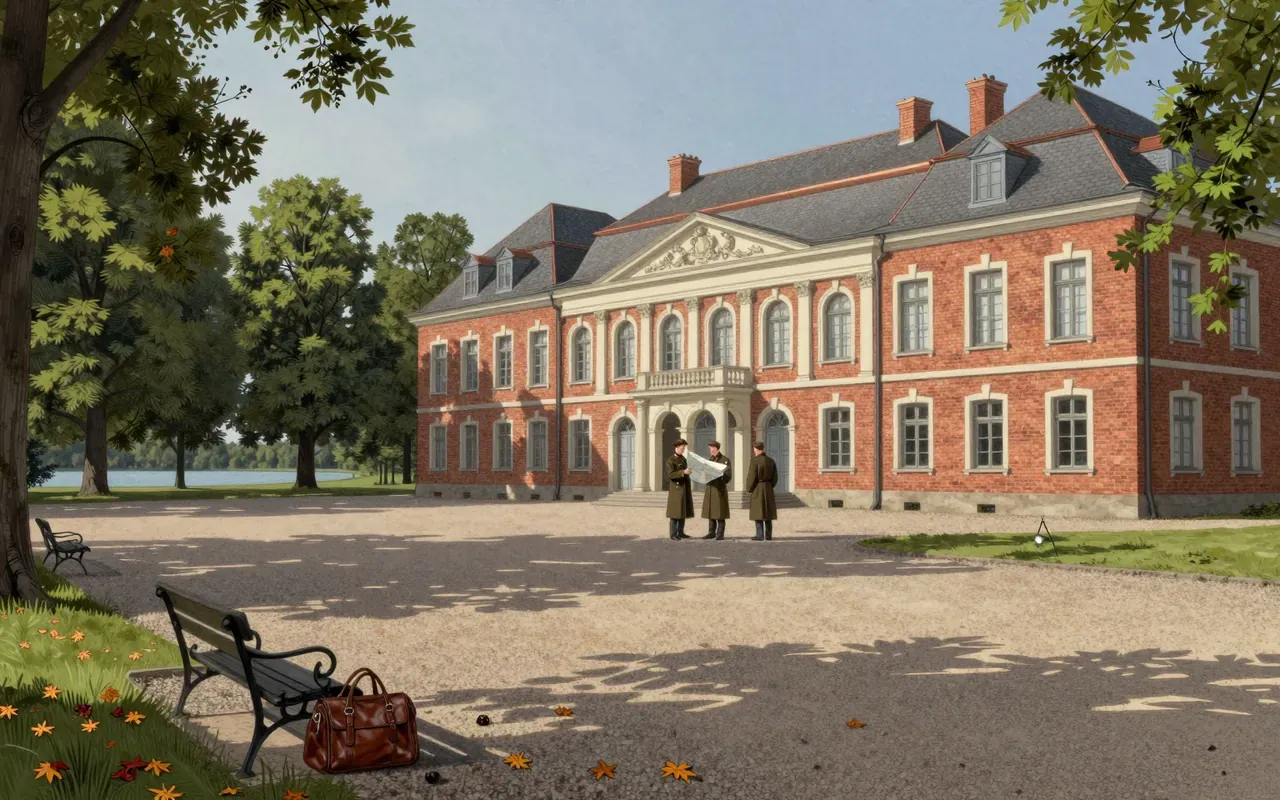
The Potsdam Conference was a tightly bounded, procedurally self-conscious effort to manage postwar Germany — not to end the war (that had happened), nor to build peace (no treaties were signed), nor to reconcile allies (disagreements are unrecorded). Its significance lies in its method: scheduled, interrupted, adaptive, and shadowed by a weapon no one named aloud.

10:47

Yalta Conference

4–11 February 1945

The Yalta Conference was a decisive wartime coordination meeting—not a peace settlement—that formalised Allied control over postwar Germany and pledged democratic self-determination for liberated Europe. Its outcomes were concrete: occupation zones, a French role, and a written declaration. Its limits were structural: no enforcement mechanism, no input from affected nations, and no record of dissent or doubt in the source material.

13:00

Adolf Hitler

1889–1945

Adolf Hitler rose from a failed art student and decorated First World War soldier to leader of the Nazi Party by 1921, became German chancellor in January 1933 through a backroom deal among conservative politicians who believed they could control him, and consolidated absolute power within months through the Enabling Act. His government pursued territorial expansion that triggered the Second World War and orchestrated the Holocaust, killing an estimated six million Jews and millions of others, before his suicide in Berlin on 30 April 1945 as Soviet forces closed in on the city.

13:00

Benito Mussolini

1883–1945

Benito Mussolini built his early reputation as a socialist journalist before breaking with the party over the First World War, founding the fascist movement that took power in 1922 through a mostly legal transfer he later mythologised as a revolutionary march on Rome. His alliance with Hitler, sealed through Ethiopia's invasion, the Spanish Civil War, and the Pact of Steel, ended in his own removal by the king he had served, capture by partisans, and summary execution in April 1945.

13:00

Normandy landings

6 June – 29 August 1944

The Allied invasion of Normandy on 6 June 1944, the opening of Operation Overlord, put roughly 160,000 troops ashore across five beaches on a single day, supported by nearly 5,000 vessels and a 1,200-plane airborne assault, after a monthslong deception campaign, Operation Bodyguard, convinced German commanders the main landing would come at Calais. Allied casualties on the day itself totalled at least 10,000, with 4,414 confirmed dead, and the broader Normandy campaign that followed committed over a million troops before liberating Paris on 25 August 1944.

13:00

Hiroshima

6 August 1945

Founded as a castle town in 1589, Hiroshima grew into a regional military and industrial centre before the United States dropped an atomic bomb on it on 6 August 1945. Immediate deaths ran into the tens of thousands, with the toll continuing to climb from injury and radiation for months afterward, and occupation censorship kept much of the detail from the Japanese public for years. The rebuilt city has since made remembrance its civic purpose, formalised as a City of Peace in 1949.

13:00

Neville Chamberlain

1869–1940

Neville Chamberlain spent nearly two decades in cabinet before becoming prime minister in 1937 and pursuing the policy of appeasement that produced the 1938 Munich Agreement, an outcome he initially returned home to genuine public acclaim for. His reputation collapsed within two years, cemented by a bestselling wartime pamphlet blaming him for Britain's unpreparedness, and though later historians have argued declassified evidence shows Britain was in fact militarily unready for war in 1938, that reassessment has not restored his standing among British prime ministers.

13:00

Pearl Harbor

7 December 1941

The Imperial Japanese Navy's surprise attack on the American naval base at Pearl Harbor on 7 December 1941 brought the United States into the Second World War, a strike American commanders were unprepared for because they had judged a Japanese attack on Wake Island or the Philippines far more likely and had, according to the record, no meaningful air-defence plan for Hawaii itself. Two senior commanders, Admiral Husband Kimmel and Lieutenant General Walter Short, were demoted shortly afterward, and the base has since been merged into what is now Joint Base Pearl Harbor-Hickam.

13:00

Battle of Britain

10 July – 31 October 1940

From July to October 1940 the Royal Air Force and Germany's Luftwaffe fought for control of the skies over southern Britain, a contest Hitler had made a precondition for any invasion. Britain's radar-linked defence system, built under Air Chief Marshal Hugh Dowding, let a numerically stretched Fighter Command meet each wave of attacks; Germany's shift in September to bombing cities came after it failed to destroy that defence outright. The invasion, Operation Sea Lion, was postponed and then abandoned. Dowding himself was removed from command within weeks of the victory, a decision historians still argue over.

13:00

Battle of Stalingrad

1942–1943

The Battle of Stalingrad, fought from July 1942 to February 1943, ended with the surrender of Germany's Sixth Army after Soviet forces encircled it in Operation Uranus that November, a defeat that ended Germany's 1942 summer offensive and shifted the strategic initiative on the Eastern Front permanently toward the Soviet Union. Total deaths across both sides are estimated at somewhere between 1.1 and over 3 million, a range reflecting genuine and substantial disagreement among historians, including between rival Soviet casualty analysts Krivosheev and Pereslegin, over how losses should be classified and counted.

13:00

Bengal famine of 1943

1943–1944

The Bengal famine of 1943 killed somewhere between 800,000 and 3.8 million people, with most historians now converging on a figure near 2.1 million, following a combination of a cyclone that struck in October 1942, the loss of Burmese rice imports after Japan's invasion, wartime demand from Allied troops, and British colonial policies including the confiscation of tens of thousands of boats and the removal of surplus grain from coastal districts judged vulnerable to invasion. More than half the deaths came in 1944 from disease rather than outright starvation. Whether the underlying cause was genuine scarcity or a failure of distribution, and how much responsibility rests with Winston Churchill's wartime government, remain disputed among historians.

13:00

The Blitz

1940–1941

German bombing of London and other British cities ran from September 1940 to May 1941, killing around forty thousand civilians and destroying or damaging two million homes without ever achieving its strategic aim of breaking British war production or morale. The unified Blitz spirit later celebrated in popular memory sits awkwardly against wartime survey data showing most people simply stayed home rather than sheltering together, and showing real anxiety, prejudice, and social friction beneath the surface resilience contemporaries and later histories preferred to emphasise.

13:00

End of World War II in Europe

7 May 1945

Between the last week of April and 8 May 1945, Nazi Germany's government, army and territory disintegrated under simultaneous pressure from the Soviet Union in the east and Britain, the United States and their allies in the west. Hitler killed himself in Berlin, his successor Karl Dönitz oversaw a cascade of surrenders, and the country was carved into occupation zones that hardened, within four years, into two separate states.

13:00

Final Solution

1941–1945

The Final Solution, the Nazi programme to murder Europe's Jewish population, killed around six million people through mobile shooting units operating from mid-1941 and then through gas chambers at dedicated camps from late 1941 onward, formalised administratively at the Wannsee Conference in January 1942. Historians remain divided over whether Hitler issued a single early master plan for total extermination or whether the policy escalated in stages through competing bureaucratic pressures, a debate complicated by the fact that no written order from Hitler himself has ever surfaced.

13:00

History of the United Nations

June 1945

A series of wartime declarations and conferences, from the 1941 Atlantic Charter through Dumbarton Oaks and Yalta, culminated in fifty nations signing the UN Charter at the San Francisco Conference in June 1945, formally establishing the organisation that October. Franklin Roosevelt's vision of great-power cooperation, embedded in the Security Council's veto structure, was designed around wartime Allied unity that had already begun fracturing into Cold War division before the ink on the Charter had properly dried.

13:00

The Holocaust

1933–1945

The Holocaust, the systematic murder of approximately six million Jews by Nazi Germany and its collaborators between 1941 and 1945, proceeded through mass shootings, ghettoization and purpose-built extermination camps including Auschwitz-Birkenau and Treblinka, formalised at the January 1942 Wannsee Conference, alongside the murder of millions of others including Soviet prisoners of war, Roma and Sinti people, and people with disabilities. Historians divide over the intentionalist and functionalist interpretations of when and how the decision for total extermination was actually made, a debate that remains unresolved even as the scale and mechanics of the genocide itself are not in dispute.

13:00

Invasion of Poland

1 September – 6 October 1939

Germany invaded Poland on 1 September 1939 behind the manufactured pretext of a staged attack at Gleiwitz, deploying newly mechanised blitzkrieg tactics that broke Polish resistance within weeks while the Soviet Union invaded from the east on 17 September under the secret terms of the Molotov-Ribbentrop Pact signed a week before the war began. Hitler's own instructions to his forces called for killing Polish people without pity or mercy, language historians treat as establishing genocidal intent from the campaign's very outset rather than something that developed only later in the occupation.

13:00

Operation Barbarossa

22 June – 5 December 1941

Germany launched the largest invasion in history against the Soviet Union on 22 June 1941, deploying nearly four million troops along a front stretching almost three thousand kilometres and capturing vast Soviet territory before the advance stalled outside Moscow that December. What followed became the largest and deadliest land campaign of the Second World War, ultimately killing millions on both sides, and historians still debate how much of the German failure traces to winter and logistics against how much reflects a strategic miscalculation built on racial assumptions about Soviet weakness that Hitler held from the outset.

13:00

Munich Agreement

30 September 1938

Britain, France, Germany, and Italy met in Munich in September 1938 and agreed to hand Germany the Sudetenland, a heavily fortified, industrially significant region of Czechoslovakia, without any Czechoslovak representative present at the actual negotiations. Neville Chamberlain returned home declaring peace for our time, a claim contemporary polling suggests most of the British public initially welcomed, before Hitler occupied the rest of Czechoslovakia within six months and turned the agreement into the standard historical example of appeasement's failure.

13:00

Nuremberg trials

1945–1946

Twenty-two senior Nazi leaders stood trial before judges from the four Allied powers between November 1945 and October 1946, charged under a newly created legal framework that made individuals, not just states, criminally responsible for aggression and atrocity, resulting in eleven death sentences and three acquittals. The trials established lasting precedents for international law even as critics have long pointed out their selective scope, a charter narrow enough that Soviet purges and deportations never came under the same scrutiny applied to the defendants in the dock.

13:00

Occupation of Czechoslovakia (1938–1945)

14 March – 16 March 1939

Germany annexed the Sudetenland after the 1938 Munich Agreement, then seized the remainder of Czech lands in March 1939, establishing the Protectorate of Bohemia and Moravia while Slovakia declared a nominally independent, German-aligned state. The occupation killed an estimated 294,000 to 320,000 people, mostly Jews, exploited Czechoslovakia's advanced industrial base for German rearmament, and ended only with the Prague Uprising and Soviet arrival in May 1945.

13:00

Winston Churchill

1874–1965

Winston Churchill spent the 1930s as a marginalised backbencher warning about German rearmament before becoming prime minister in May 1940 and leading Britain through the war largely alone against Hitler until the Soviet Union and the United States joined. British voters rejected him at the ballot box within months of victory in 1945, and his record now carries alongside its wartime achievement a harder scrutiny of his imperialism, his recorded comments on race, and his government's response to the 1943 Bengal famine, questions historians increasingly weigh against his standing as a defender of liberal democracy.

13:00

World War II

1939–1945

World War II is most commonly dated from Germany's invasion of Poland on 1 September 1939 to Japan's formal surrender on 2 September 1945, though historians propose earlier starting points including Japan's 1931 invasion of Manchuria and Italy's 1935 invasion of Ethiopia, reflecting genuine disagreement over which aggression should count as the war's true beginning. The conflict killed an estimated sixty to seventy-five million people, a majority of them civilians, across European, Pacific and Mediterranean theatres, and ended with the collapse of the League of Nations system, the founding of the United Nations, and the emergence of the United States and Soviet Union as rival superpowers.