Years spent being ignored
Churchill built an early reputation as a soldier and war correspondent before entering Parliament in 1900, then held a series of senior cabinet posts under different parties, including a stretch as First Lord of the Admiralty during the First World War that ended in the disastrous Gallipoli campaign and cost him his position. Out of government through most of the 1930s, in what he and later historians called his wilderness years, Churchill spent that period as a marginalised backbencher warning consistently about German rearmament and criticising the appeasement policy dominant among his own party’s leadership, a position that left him politically isolated until the outbreak of war in 1939 restored him to office.
Speeches and decisions on the record
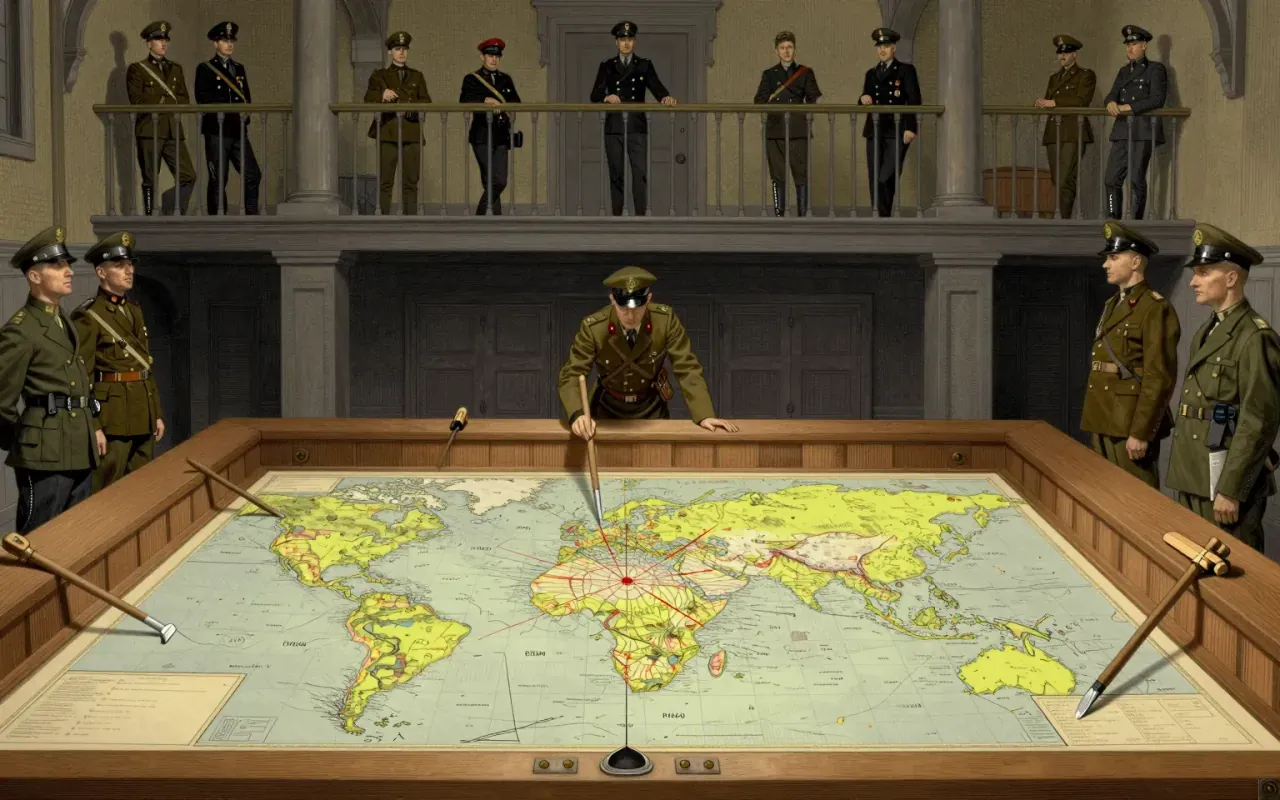
Churchill became prime minister on 10 May 1940, the same day Germany invaded Western Europe, and his wartime conduct is documented across an unusually rich record of speeches, decisions, and international conferences: the Dunkirk evacuation that May, the Battle of Britain and the Blitz that followed, the Atlantic Charter agreed with Roosevelt in August 1941, and a string of Allied summits at Casablanca, Tehran, Yalta, and Potsdam through to the war’s end. His rhetoric, including his declaration that Britain would defend its island whatever the cost, survives in enough detail that historians can trace almost the entire arc of his wartime leadership through his own recorded words rather than through later reconstruction.
A leader forged by earlier failure
The caution Churchill sometimes showed alongside his more famous boldness owed something to the earlier failure at Gallipoli, a campaign whose catastrophic casualties and political fallout had already taught him, decades before 1940, how quickly a bold strategic gamble could turn into a personal and national disaster. That earlier lesson coexisted uneasily with the aggressive wartime decisions he did make, including authorising controversial area bombing campaigns against German cities, a policy historians remain divided over much as they divide over the earlier Dardanelles gamble, both cases where Churchill’s willingness to accept large risks for a decisive outcome produced consequences that are still argued over rather than settled.
A famine’s disputed responsibility
Among the most contested episodes of his wartime premiership is the 1943 Bengal famine, during which historians continue to debate how much responsibility Churchill’s government bears for a death toll that ran into the millions, whether through diverted shipping and grain policy decisions made under wartime pressure, or through a more general indifference to colonial suffering that critics argue was consistent with his broader imperial attitudes. This dispute sits alongside a wider historiographical reassessment of Churchill’s recorded comments on race and his lifelong commitment to preserving the British Empire, subjects earlier, more celebratory accounts of his career tended to treat as marginal rather than central to his legacy.
Victory, then a lost election
Despite presiding over a war Britain and its allies won in Europe by May 1945, Churchill lost the general election that July to Clement Attlee’s Labour Party, a result that surprised many contemporaries given his wartime standing but reflected a British electorate more focused on postwar domestic reconstruction than on continuity with its wartime leadership. He returned to government for a second term as prime minister from 1951 to 1955, during which he focused heavily on the Anglo-American relationship and on managing Britain’s retreat from empire following Indian independence, before retiring from active leadership in 1955 and remaining a member of Parliament until 1964.
A legacy reassessed, not discarded
Churchill died in January 1965 at ninety, having already secured a Nobel Prize in Literature for his war memoirs and a state funeral that reflected his standing as one of the central figures of the twentieth century. The modern historical consensus still generally ranks him among Britain’s greatest prime ministers and a crucial wartime defender of liberal democracy against fascism, but that assessment increasingly sits alongside rather than replaces a franker reckoning with his imperialism and his recorded racial views, a combination that makes him a genuinely instructive case in how a single historical figure can hold both achievement and serious harm without either cancelling the other out.