An assassination, a month of ultimatums, and four years of war
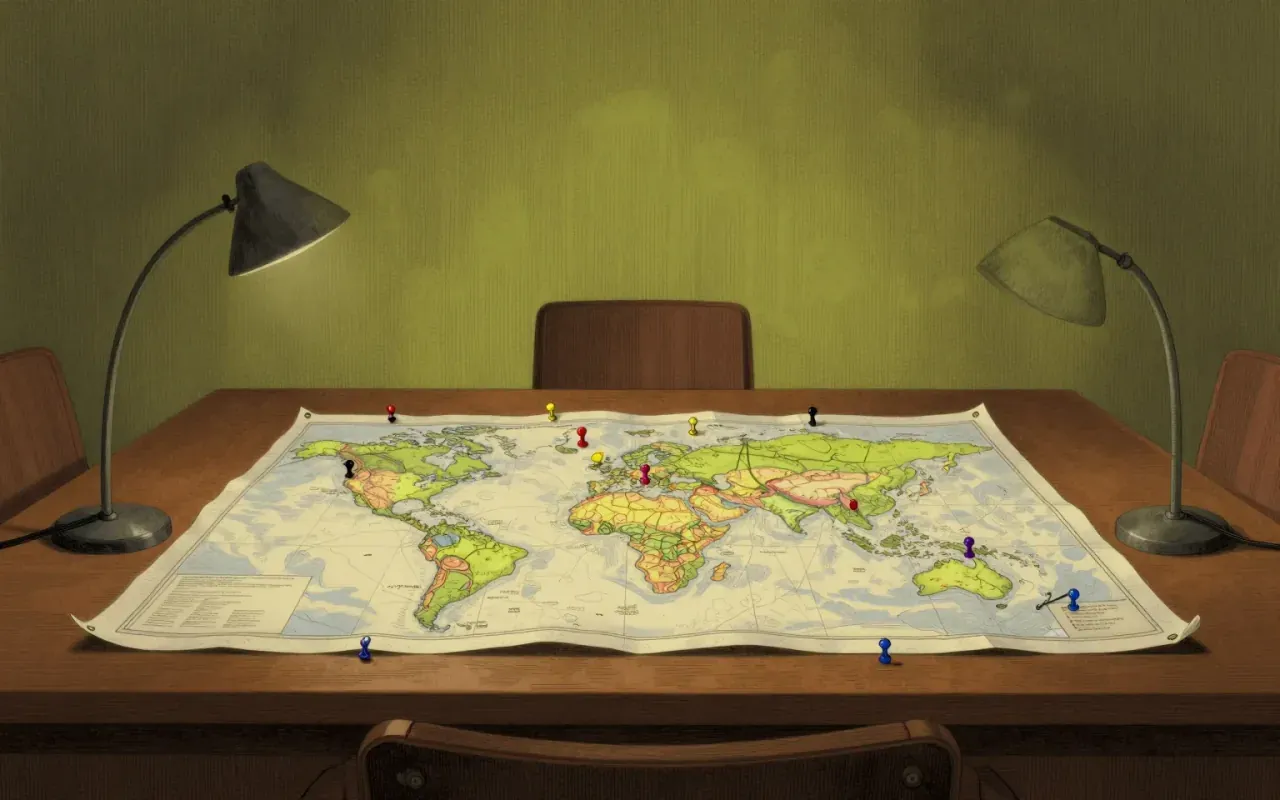
The assassination of Archduke Franz Ferdinand in Sarajevo on 28 June 1914 set off a month-long diplomatic crisis: Austria-Hungary issued Serbia an ultimatum on 23 July, declared war five days later, and the system of alliances built up over the preceding decades pulled in Russia, Germany, France and Britain within a week, followed later by the Ottoman Empire, Italy and, in April 1917, the United States. The war ran until the armistice of 11 November 1918, four years and roughly three and a half months of fighting across the Western Front’s trench lines, a more mobile Eastern Front, and several further theatres in the Balkans, the Middle East, Africa and the Pacific.
A range of fifteen to twenty-two million, not a settled number
Total deaths, combining military and civilian losses, war crimes and genocides committed during the conflict, including Ottoman actions against Armenian, Kurdish and Assyrian populations, are estimated at between fifteen and twenty-two million, a range rather than a precise figure that reflects genuine uncertainty in the underlying record rather than simple rounding. This total also incorporates deaths from the 1918 influenza pandemic, whose spread the war’s troop movements and crowded conditions accelerated, further complicating any attempt to attribute mortality cleanly to combat alone. National archives themselves vary in how thoroughly they recorded missing versus killed personnel, which is part of why historians have never converged on a single narrower figure within that broader range.
Trenches in the west, movement in the east
The Western Front solidified within months into a nearly continuous line of fortified trenches running from the English Channel to Switzerland, the site of costly and largely inconclusive battles including Verdun and the Somme in 1916, before the German spring offensive of March 1918 and the Allied Hundred Days Offensive that August finally broke the stalemate. The Eastern Front saw more mobile fighting between Germany, Austria-Hungary and Russia, without either side achieving a decisive advantage before Russia’s withdrawal following the October Revolution and the 1918 Treaty of Brest-Litovsk, while further campaigns unfolded in the Balkans, at Gallipoli, in Mesopotamia and Palestine, and across Africa and parts of Asia.
Was Serbia responsible, or was war already coming regardless
Historians continue to debate how much responsibility Serbia bore for the plot against Franz Ferdinand, since Austrian officials suspected Serbian intelligence involvement but, by the record’s own account, had no solid proof, and separately debate whether Austria’s ultimatum to Serbia was deliberately drafted to be unacceptable. The historian Christopher Clark has described the assassination itself as functioning like a modern terrorist attack, an event charged with historic meaning that provided occasion rather than sole cause for a war that alliance commitments and military planning had already made likely, a framing that shifts emphasis away from assigning blame to any single actor and toward the structural conditions that turned one assassination into a continental war.
Four empires collapse, and a peace that satisfied no one
The war’s end brought the collapse of the German, Austro-Hungarian, Ottoman and Russian empires and a peace process, centred on the Paris Peace Conference and the Treaty of Versailles, that created new states including Poland, Czechoslovakia and Yugoslavia while imposing territorial losses, disarmament and reparations on Germany. The League of Nations, established to maintain the resulting peace, proved unable to manage the instability of the following two decades, and the settlement is widely described as satisfying none of the parties involved, neither pacifying nor durably weakening Germany, a combination historians directly connect to the political conditions that enabled the Second World War.
A war whose causes are still argued as carefully as its battles
World War I rewards attention for how carefully historians have had to separate proximate trigger from underlying structural cause, since an assassination that could plausibly have remained a regional crisis instead escalated, through alliance commitments, arms competition and Balkan instability built up over preceding decades, into a war whose death toll cannot even be stated with real precision. Readers interested in military history will find genuinely varied fronts, from static Western trenches to mobile Eastern campaigns; readers interested in the causes-of-war debate will find in the Serbia-responsibility question and the Clark thesis a genuinely live historiographical argument rather than a settled textbook account.