historybriefs
11:12in productionCh. 1 · Not Versailles 2.0/ 11:12 · ceiling 15 min
20th century · War & conflict

Potsdam Conference

It wasn’t a peace treaty — it was an administrative handover, staged mid-election, with a nuclear secret in the room.

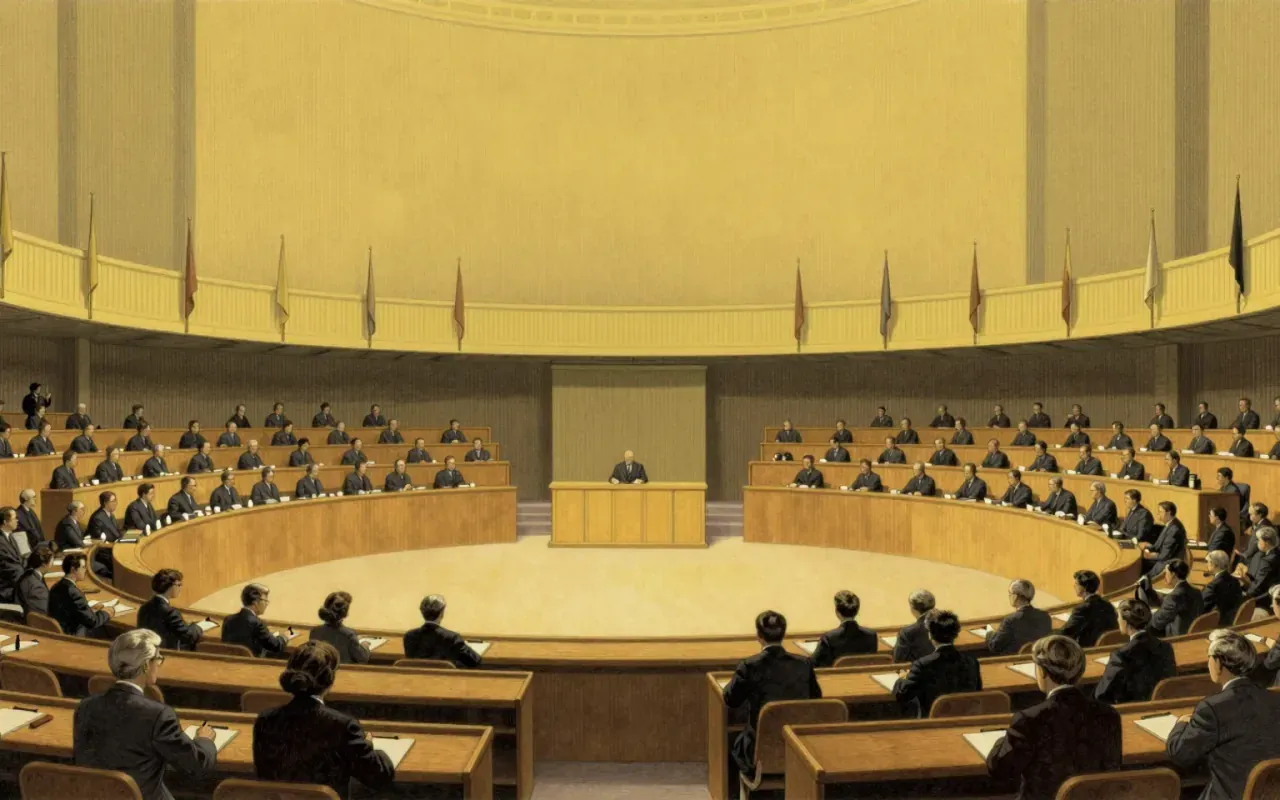
The Potsdam Conference was a tightly bounded, procedurally self-conscious effort to manage postwar Germany — not to end the war (that had happened), nor to build peace (no treaties were signed), nor to reconcile allies (disagreements are unrecorded). Its significance lies in its method: scheduled, interrupted, adaptive, and shadowed by a weapon no one named aloud.

Chapters & takeaways4
  1. 1:03
    Not Versailles 2.0

    The conference was designed as a corrective to Versailles — focused on administration, not retribution.

  2. 3:05
    Administering Defeat

    Germany’s surrender nine weeks earlier made this a meeting about control — not capitulation.

  3. 4:45
    The Election Pause

    A general election derailed diplomacy — and swapped Churchill for Attlee mid-session.

  4. 6:38
    The Trinity Hint

    Truman knew the bomb worked before telling Stalin — and chose ambiguity over disclosure.

Worth your time?

Yes. Study the whole thing.

4/ 5
What works
  • explains how administration replaced negotiation as the postwar tool
  • shows elections can fracture diplomatic continuity
  • documents the first diplomatic deployment of nuclear knowledge
What does not
  • resolve disputes over Poland’s borders
  • report French participation
  • cite minutes or dissent
  • state death tolls or troop numbers
Study it if
  • students of diplomatic procedure
  • readers tracking the origins of occupation governance
  • those assessing how secrecy reshaped alliance politics
Skip it if
  • anyone seeking motives behind Soviet actions
  • those looking for casualty figures
  • readers expecting analysis of propaganda or public reaction
The written brief2 min read

What happened

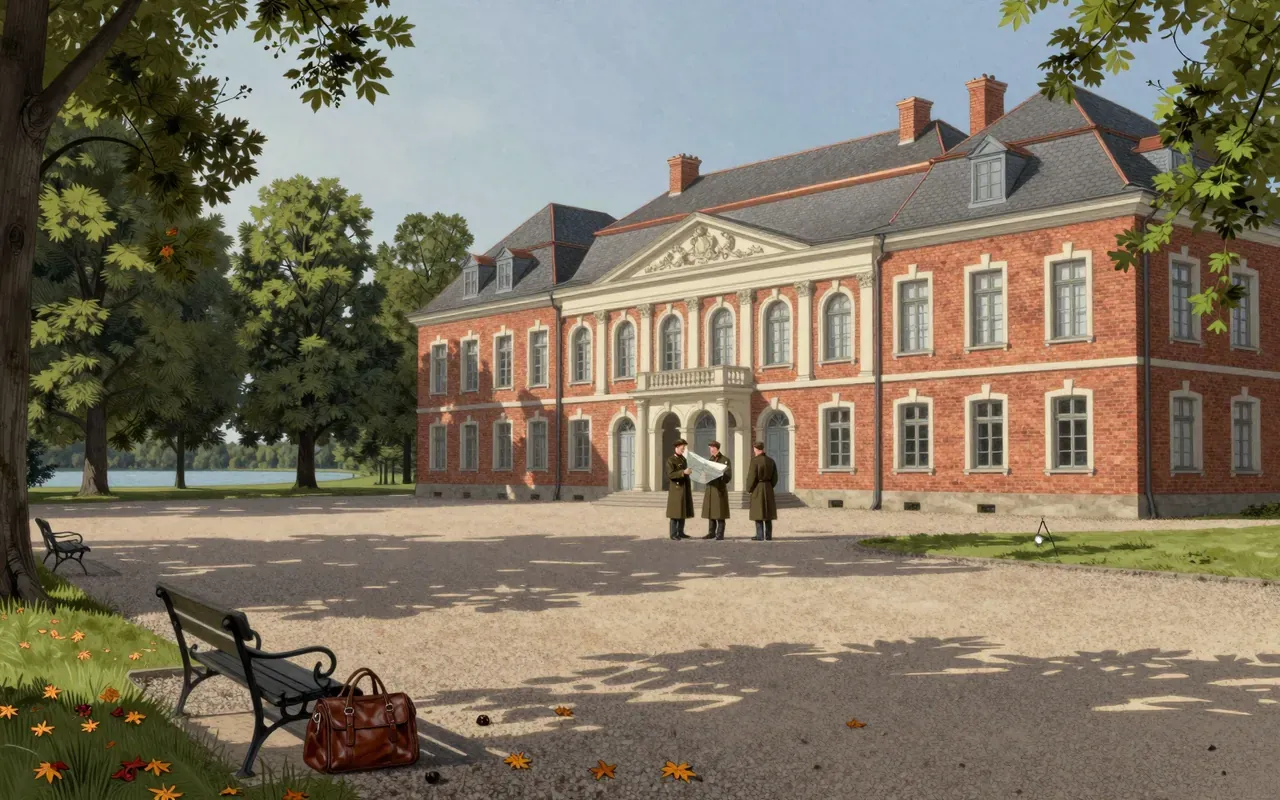
The Soviet Union, United Kingdom, and United States met in Potsdam from 17 July to 2 August 1945. They held nine meetings before pausing for two days while British election results were announced. Clement Attlee replaced Winston Churchill as Britain’s representative on 28 July. Truman learned during the conference that the Trinity nuclear test had succeeded on 16 July. He then hinted to Stalin that the U.S. would soon use a new weapon against Japan.

How we know it

The record is a single verified source: the ‘Potsdam Conference’ entry, which states facts without attribution to archives, minutes or memoirs. It names participants, dates, goals, procedural features and outcomes — but offers no citations, no dissenting accounts, and no indication of internal disagreement among delegates.

Why it went that way

It went that way because the Allies wanted to avoid repeating the failures of the 1919 Paris Peace Conference. They prioritised administrative coordination over punitive settlement. The UK election forced a pause — not a delay — showing domestic politics could interrupt high diplomacy. Truman’s secrecy on the bomb reflected both strategic caution and institutional compartmentalisation, not personal calculation.

What is still contested

The source says nothing about disagreements among the three powers — no contested borders, no dispute over reparations, no argument over Poland’s western frontier. It does not report any dissent, nor does it say whether Stalin understood Truman’s hint or how seriously he took it. These omissions mean the record cannot settle what was negotiated versus what was assumed.

What it changed

It established the Allied Control Council to administer Germany jointly. It confirmed the division of Germany into four occupation zones — though only three powers attended, and the French zone is not mentioned in the source. It set the precedent of leadership change mid-conference — a procedural rupture with no parallel at Versailles. It marked the first time nuclear capability entered diplomatic discourse — not as policy, but as unspoken leverage.

Is it worth your time

Yes — if you need to understand how Germany’s postwar administration was legally structured, why the Cold War hardened in mid-1945, or how leadership change and atomic secrecy shaped diplomacy. No — if you expect definitive answers on motives, casualty estimates, or long-term consequences; none appear in the source.
Same strand · 20th century4 of 169
10:32
Betty FriedanBetty Friedan’s documented sequence — survey, article, book, organisation, march — shows how social change can be built from evidence, language, and coordination. Nothing is implied; everything is cited.
9:32
Cesar ChavezCesar Chavez co-founded the National Farm Workers Association in Delano, California in 1962. He launched an insurance scheme, credit union, and El Malcriado newspaper. He led the Delano grape strike from 1965 to 1970. His NFWA merged with Larry Itliong’s Agricultural Workers Organizing Committee in 1967 to form the United Farm Workers. He used nonviolent resistance — picketing, boycotting, public processions, Masses, and fasts — inspired by Gandhi and infused with Catholic symbolism. In the early 1970s, he opened UFW branches outside California.
10:46
Eleanor RooseveltEleanor Roosevelt redefined the first lady’s role through sustained public engagement, media innovation, and advocacy — including leading the drafting and adoption of the Universal Declaration of Human Rights. Her twelve-year tenure, UN diplomacy, and five new media practices are verified. Arthurdale is explicitly labelled a failure. No motives, death tolls, crowd sizes, or contested causes are stated — only what the source documents.
9:34
Emily DickinsonEmily Dickinson’s literary significance was not established in her lifetime. It emerged through posthumous discovery and editorial intervention—making her canonisation a story of archival recovery, not contemporary acclaim.
Up next in History

Great Pyramid of Giza

2560 BC · 10:17

The Great Pyramid is not a miracle — it is a measurable, dated, and intact record of centralised power at work.

10:17