historybriefs
11:46in productionCh. 1 · Not an accident — a test/ 11:46 · ceiling 15 min
Contemporary · Science & technology

Chernobyl disaster

1986

Chernobyl was not a failure of vigilance — it was a failure of design made visible by procedure.

The Chernobyl disaster was a cascade of physical failures triggered by a safety test conducted under unstable conditions — not human error alone, but design flaws made manifest. The Soviet state responded with delay, staging and silence until external detection compelled admission. The record establishes sequence, scale and official action — nothing more.

Chapters & takeaways4
  1. 1:16
    Not an accident — a test

    The explosion was not random: it happened during a specific, planned safety test.

  2. 2:54
    Procedure met flaw

    Operators followed procedure, but the reactor’s design turned routine shutdown into catastrophe.

  3. 6:54
    From rupture to fallout

    Explosions, meltdown and fire were sequential physical outcomes — not abstract risks.

  4. 7:51
    Secrecy before evacuation

    Evacuation was delayed, staged and scaled only after external detection forced action.

Worth your time?

Yes. Study the whole thing.

4.5/ 5
What works
  • shows causation without speculation
  • names every location, date and number it cites
  • separates verified sequence from contested consequence
  • exposes the gap between procedure and design
What does not
  • state death toll
  • attribute motive to individuals
  • quantify contamination
  • name dissenting engineers
Study it if
  • readers assessing how institutions handle technical risk
  • readers tracking the evidentiary limits of official accounts
  • readers comparing procedural failure with systemic failure
Skip it if
  • readers seeking moral judgment
  • readers needing epidemiological data
  • readers expecting geopolitical analysis
The written brief1 min read

What happened

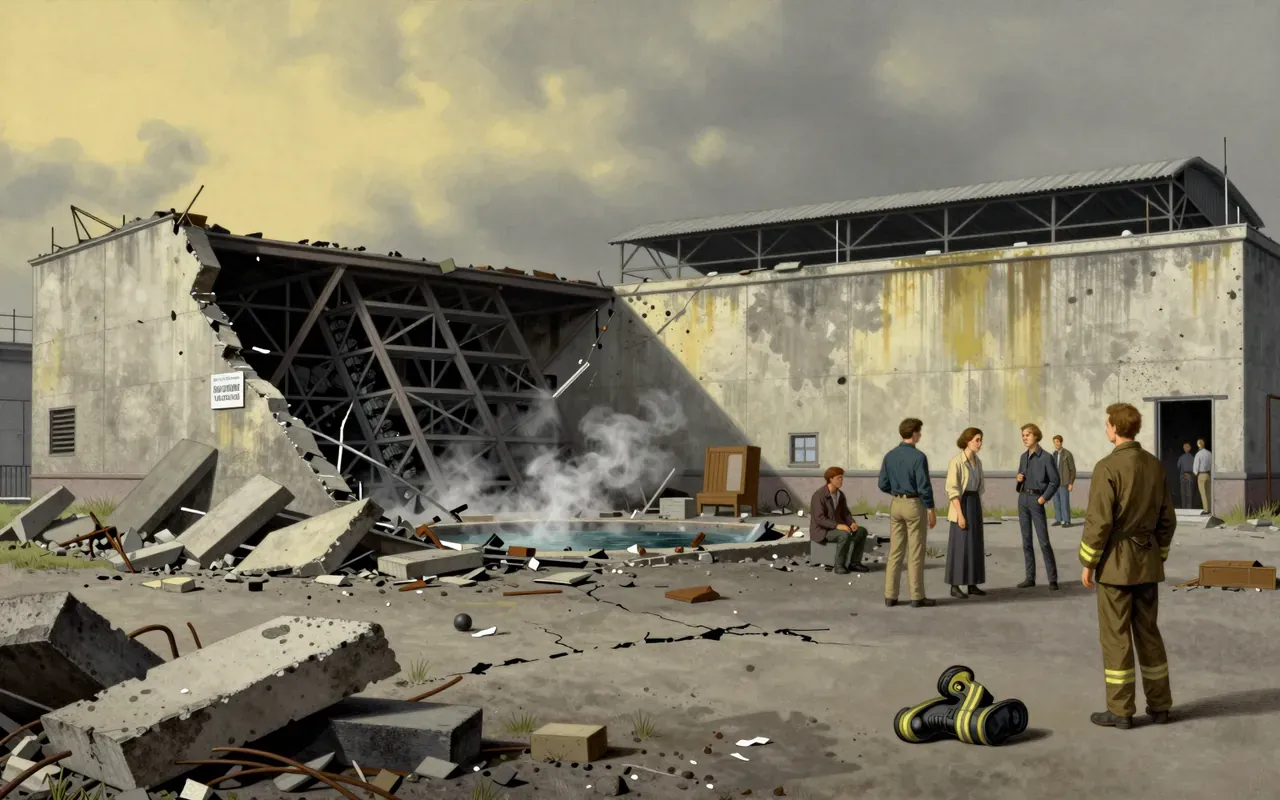
Reactor 4 at the Chernobyl Nuclear Power Plant exploded on 26 April 1986 near Pripyat, Ukraine. The explosion followed a safety test to simulate reactor cooling during a blackout. Operators ran the test after an accidental power drop. Shutting down the reactor under those conditions triggered a power surge. Reactor components ruptured. Coolant was lost. Steam explosions and core meltdown destroyed the reactor building. A reactor core fire then spread radioactive contaminants across the Soviet Union and Europe.

How we know it

The record comes from a single verified source describing the event’s sequence, timing, scale and official response. It names reactor 4, Pripyat, Ukraine, and 26 April 1986. It specifies the test’s purpose, the power drop, design flaws, component rupture, coolant loss, steam explosions, meltdown, fire, contamination spread, and staged evacuations. No other sources or corroborating documents are cited.

Why it went that way

A flawed safety test was conducted under unstable conditions. An unplanned power drop preceded the test. Shutting down the reactor in that state exposed pervasive design flaws. Those flaws caused a power surge, which led directly to mechanical failure, loss of coolant, explosions, meltdown and fire.

What is still contested

The source does not state casualty figures, long-term health effects, economic cost, political motives behind the test, operator culpability beyond procedural error, or whether alternative safety protocols existed. It does not say who designed the reactor, who approved the test, or whether dissenting engineers were overruled.

What it changed

The Soviet government evacuated ~49,000 people from a 10 km zone 36 hours post-accident, then ~68,000 more when expanding to 30 km. It did not publicly acknowledge the accident until two days later — only after radiation detection in Sweden forced disclosure.

Is it worth your time

Yes. It shows how technical procedure, institutional secrecy and flawed design interacted in real time — not as hindsight narrative, but as a chain of documented cause and effect.
Same strand · Contemporary4 of 39
Up next in History

Code of Hammurabi

1752 BC · 11:52

It wasn’t law in action — it was law as theatre, carved in stone to declare power, not administer justice.

11:52