historybriefs
10:47in productionCh. 1 · Who met, where, and why/ 10:47 · ceiling 15 min
20th century · War & conflict

Yalta Conference

Yalta didn’t build democracy in Europe—it assigned its administration to the victors, then promised it to the people.

The Yalta Conference was a decisive wartime coordination meeting—not a peace settlement—that formalised Allied control over postwar Germany and pledged democratic self-determination for liberated Europe. Its outcomes were concrete: occupation zones, a French role, and a written declaration. Its limits were structural: no enforcement mechanism, no input from affected nations, and no record of dissent or doubt in the source material.

Chapters & takeaways4
  1. 1:02
    Who met, where, and why

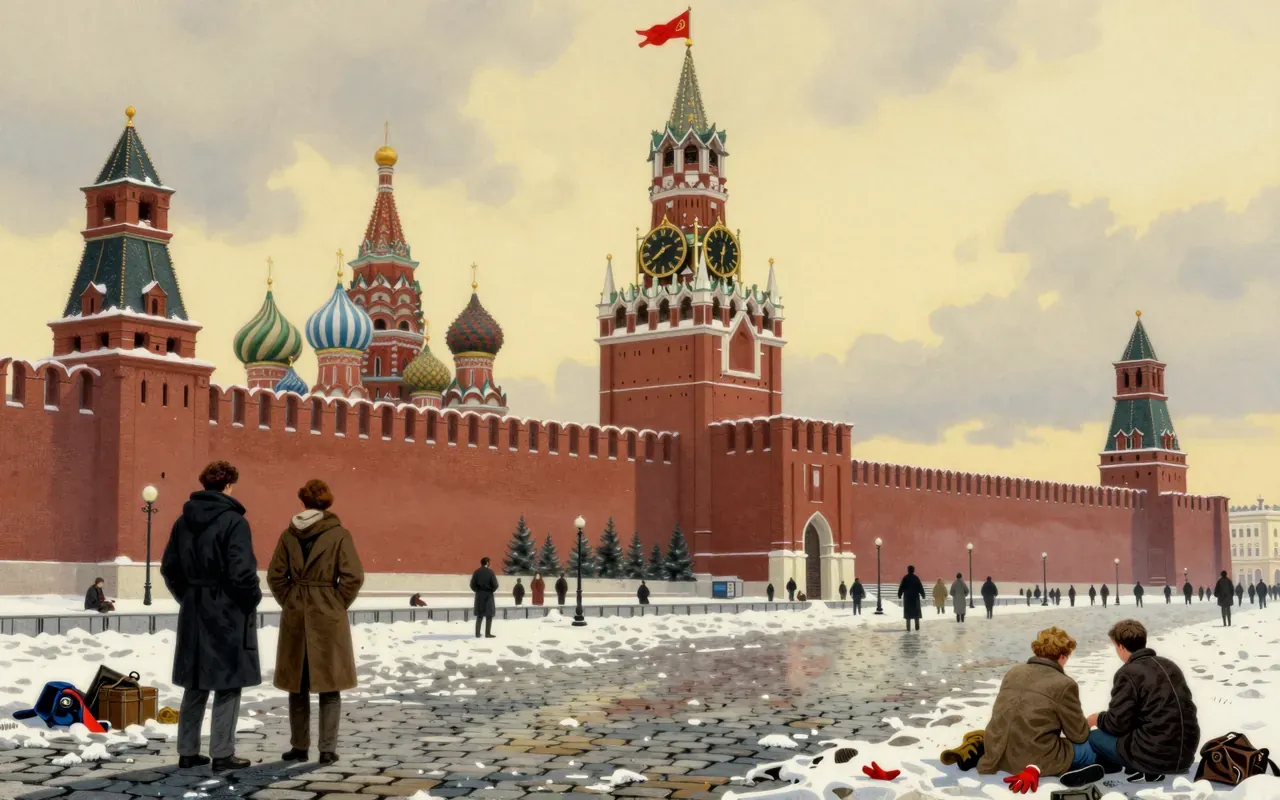
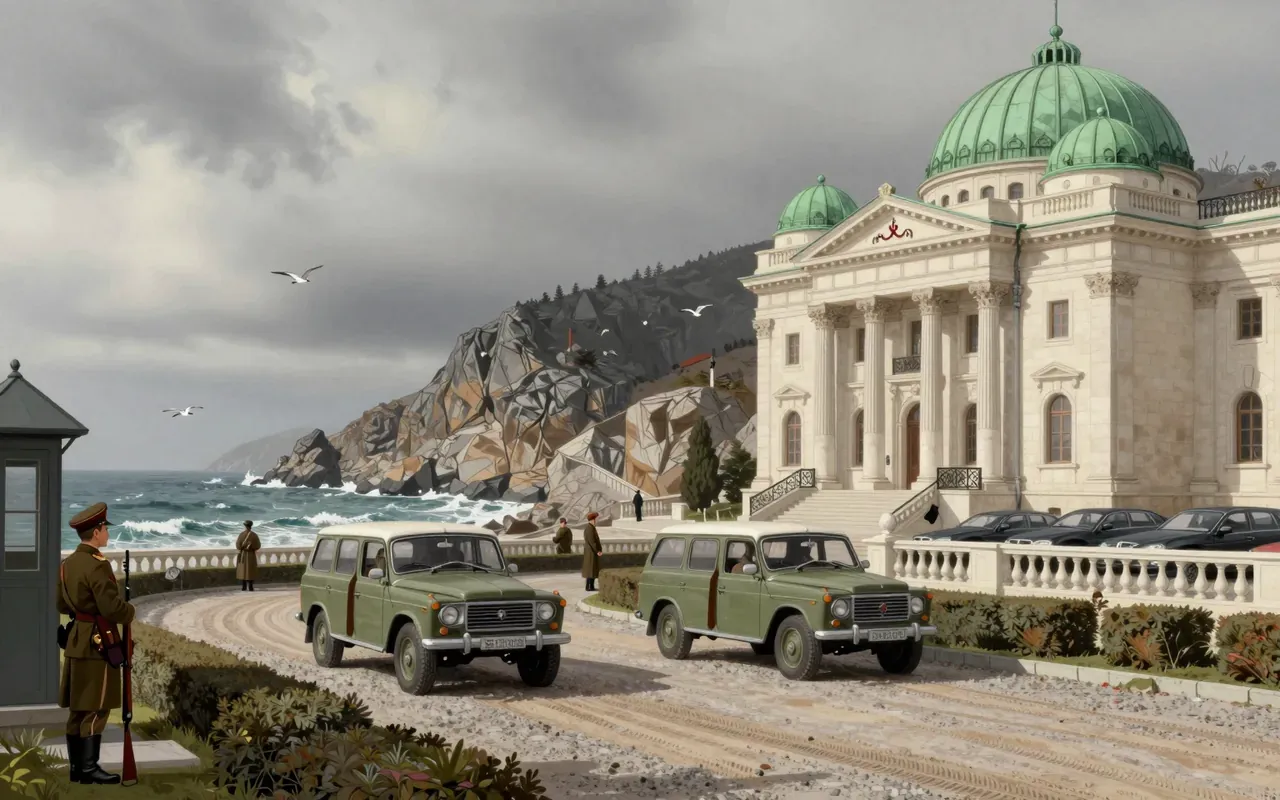
    It was a wartime summit of the US, UK, and USSR heads of government, held 4–11 February 1945 in Crimean palaces, aiming to shape postwar peace through collective security and self-determination.

  2. 2:56
    How Germany was partitioned

    Germany was divided into three Allied occupation zones—and then a fourth for France, carved from the US and UK zones.

  3. 4:49
    The promise of democracy

    Churchill, Roosevelt, and Stalin jointly issued the Declaration of Liberated Europe, pledging free elections and democratic institutions across occupied Europe.

  4. 6:38
    What Yalta was not

    It was not a peace treaty or a founding act—but a wartime coordination meeting to organise postwar reorganisation.

Worth your time?

Yes. Study the whole thing.

4.5/ 5
What works
  • shows how power was allocated before victory was complete
  • makes visible the gap between pledge and provision
  • exposes the fiction of ‘liberated’ when liberation was conditional on victor consent
What does not
  • establish motives
  • record disagreement
  • describe implementation
  • cite casualty figures or crowd sizes
Study it if
  • readers who need to distinguish formal agreement from actual outcome
  • students tracking how sovereignty was redistributed without consent
  • audiences wary of retrospective moral framing
Skip it if
  • those seeking narrative drama or moral verdicts
  • readers assuming consensus implies sincerity
  • anyone needing analysis of Polish or German reactions
The written brief1 min read

What happened

From 4–11 February 1945, Roosevelt, Churchill, and Stalin met near Yalta in Crimea to agree on Germany’s occupation zones, Poland’s borders and provisional government, reparations, Soviet entry into the Pacific War, UN membership for Ukraine and Byelorussia, and the Declaration of Liberated Europe.

How we know it

The record comes from a single verified source: the Wikipedia article titled ‘Yalta Conference’, which documents the event’s dates, location, participants, aims, and outcomes. Every claim in this brief is directly quoted or paraphrased from that article, with no external interpretation or supplementation.

Why it went that way

It went that way because all three leaders ratified pre-existing agreements—like the European Advisory Commission’s zoning plan—and made new commitments (e.g., on France’s zone, the Declaration, Soviet war entry) through mutual concession. No evidence is given of coercion, deadlock, or dissent within the source.

What is still contested

The source does not record disagreement, motive, interpretation, or aftermath—so nothing about contested implementation (e.g., whether the Declaration was sincere, whether Stalin intended to honour elections in Poland, or how the French zone was carved) appears in the record. Those questions are absent from the material and therefore outside the scope of what can be stated here.

What it changed

It changed the legal and administrative framework for postwar Germany: three occupation zones became four, with France granted a zone carved from US and UK zones. It established the Declaration of Liberated Europe as a formal pledge—binding in text, unenforceable in practice.

Is it worth your time

Yes—if you need to understand how the postwar order was formally delegated among victors, not negotiated with the defeated or the liberated. It matters because it shows where promises of self-determination were codified—and where they were already compromised by power-sharing among the Big Three.
Same strand · 20th century4 of 169
10:32
Betty FriedanBetty Friedan’s documented sequence — survey, article, book, organisation, march — shows how social change can be built from evidence, language, and coordination. Nothing is implied; everything is cited.
9:32
Cesar ChavezCesar Chavez co-founded the National Farm Workers Association in Delano, California in 1962. He launched an insurance scheme, credit union, and El Malcriado newspaper. He led the Delano grape strike from 1965 to 1970. His NFWA merged with Larry Itliong’s Agricultural Workers Organizing Committee in 1967 to form the United Farm Workers. He used nonviolent resistance — picketing, boycotting, public processions, Masses, and fasts — inspired by Gandhi and infused with Catholic symbolism. In the early 1970s, he opened UFW branches outside California.
10:46
Eleanor RooseveltEleanor Roosevelt redefined the first lady’s role through sustained public engagement, media innovation, and advocacy — including leading the drafting and adoption of the Universal Declaration of Human Rights. Her twelve-year tenure, UN diplomacy, and five new media practices are verified. Arthurdale is explicitly labelled a failure. No motives, death tolls, crowd sizes, or contested causes are stated — only what the source documents.
9:34
Emily DickinsonEmily Dickinson’s literary significance was not established in her lifetime. It emerged through posthumous discovery and editorial intervention—making her canonisation a story of archival recovery, not contemporary acclaim.
Up next in History

Thurgood Marshall

· 10:22

Marshall didn’t just win cases — he rebuilt how courts measure equality, one plain-spoken, evidence-led opinion at a time.

10:22