From struggling gentry to Lord Protector
Oliver Cromwell was born in 1599 to a gentry family of modest means in Huntingdon and spent much of the 1630s in reduced financial circumstances before an uncle’s inheritance restored his standing. He entered Parliament and, once civil war broke out in 1642, rose rapidly through the Parliamentarian military ranks despite having no prior professional soldiering experience, commanding cavalry decisively at Marston Moor in 1644 and Naseby in 1645. He was the third of fifty-nine commissioners to sign Charles I’s death warrant in January 1649, led a brutal nine-month military campaign in Ireland the following year, and was appointed Lord Protector, effectively head of state, in December 1653, ruling until his death in 1658 at fifty-nine.
A record read through his own religious language
Cromwell’s own extensive surviving correspondence, filled increasingly over time with biblical language and religious reflection on specific passages of scripture, gives historians an unusually direct window into how he understood his own actions, framing military victories as signs of divine approval and defeats as evidence God intended a different course. Parliamentary records, military dispatches and trial documents supplement this personal record, though, as with many figures from this period, later historians working from the same material have arrived at sharply different overall assessments of his character and motives, ranging from later descriptions of him as a military dictator to defenders who present him as a genuine champion of liberty.
Drogheda and Wexford, justified in his own words
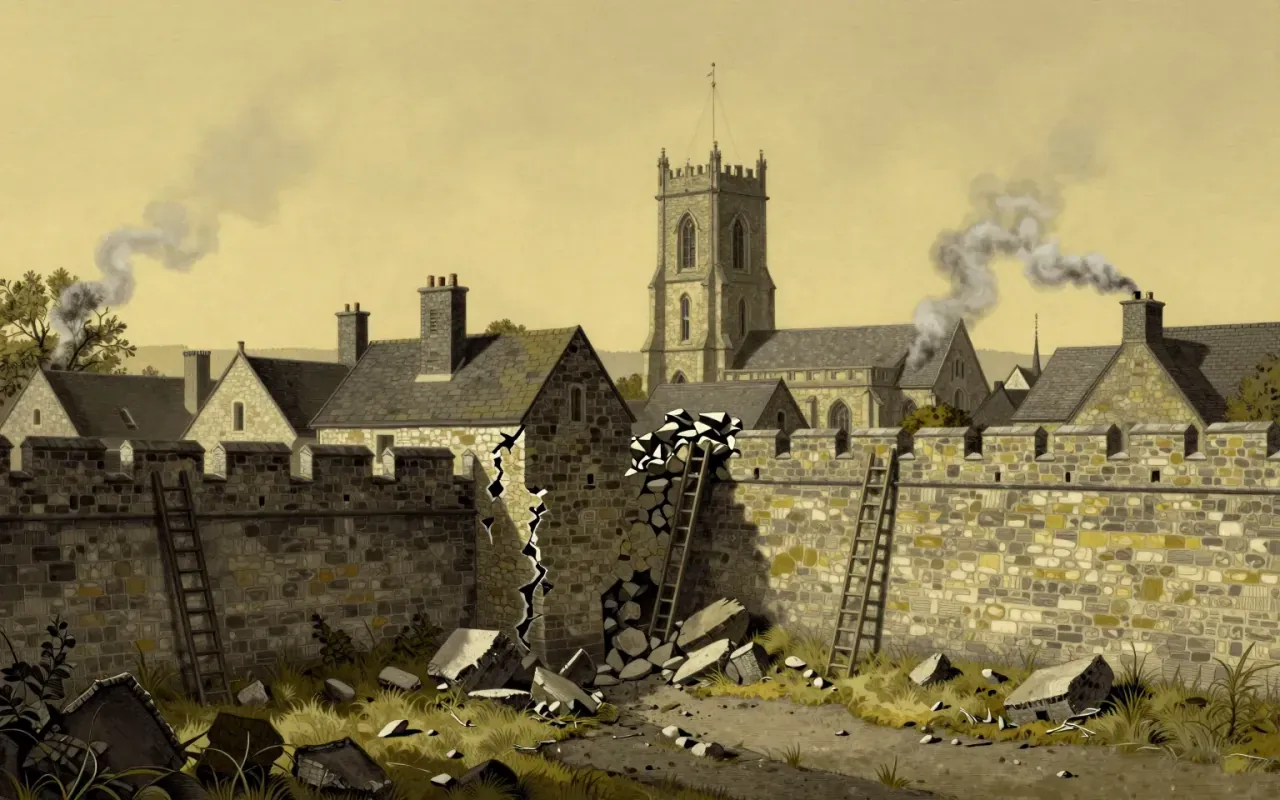
Cromwell’s campaign in Ireland in 1649 and 1650 remains the most contested part of his record: after landing near Dublin, his forces stormed the town of Drogheda and killed close to thirty-five hundred people, including armed defenders and, by most accounts, some civilians and captured priests, and a similar assault on Wexford weeks later killed roughly two thousand Irish soldiers along with a substantial number of civilians. Cromwell himself justified the Drogheda killings explicitly in religious terms, describing them as righteous divine judgement against people he held responsible for earlier massacres of Protestant settlers, and argued the severity would ultimately reduce further bloodshed by discouraging continued resistance elsewhere in the country.
Continuity with a brutal era, not an isolated atrocity
Historians increasingly read Cromwell’s brutality in Ireland as continuous with existing patterns of seventeenth-century religious warfare rather than as an unprecedented atrocity invented specifically for the occasion, pointing to Parliament’s plans for reconquering Ireland dating back to 1641 and to earlier massacres of Protestant settlers that had already hardened attitudes on the Parliamentarian side well before Cromwell’s arrival. His decision to sign Charles I’s death warrant is generally read by historians as the product of a genuine, difficult process of religious and political reasoning rather than a casual or predetermined step, since even sympathetic officers reportedly required considerable persuasion before agreeing to the execution at all. Whether his later assumption of near-absolute power as Lord Protector reflected calculated ambition or a reluctant response to Parliament’s own repeated internal divisions remains a genuinely disputed question among historians.
A precedent that outlasted his own regime
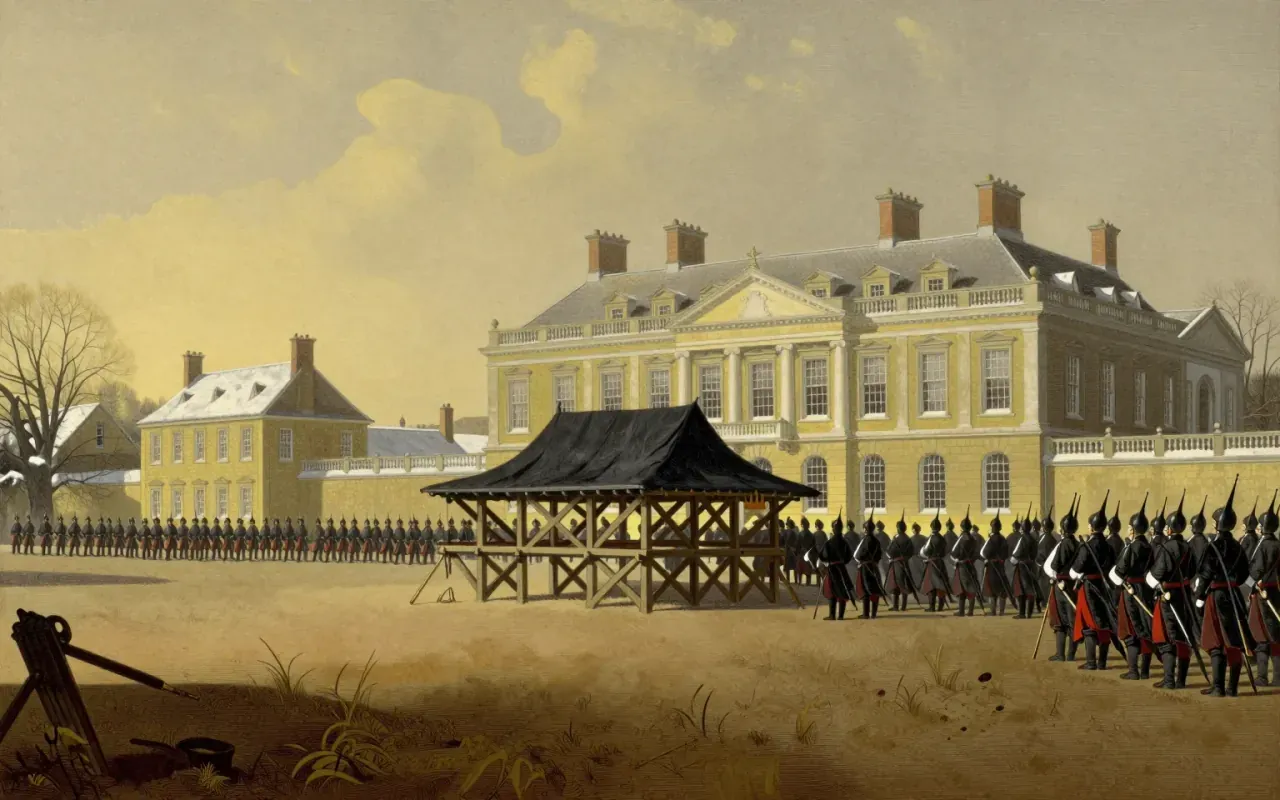
Cromwell’s success in defeating and executing a reigning monarch demonstrated, for the first time in English history, that Parliament could remove a king by force and establish an alternative form of government entirely, a precedent that shaped English constitutional development for the rest of the century even after the monarchy itself was restored. His New Model Army pioneered a more meritocratic approach to military command, famously preferring, in his own words, a plain soldier who understood what he was fighting for over one who simply held the right social rank. His posthumous reputation proved durably controversial: his body was disinterred and symbolically executed after the Restoration, and a statue eventually erected outside Parliament in 1895 was still funded largely through private rather than official money, reflecting lingering discomfort with commemorating him publicly.
A record that resists a simple verdict
Cromwell is worth attention for how difficult his record makes any simple verdict: a genuinely devout man who read his own military victories as direct signs of divine will, and also the commander responsible for civilian deaths at Drogheda and Wexford that remain a live source of grievance in Ireland centuries later. Readers interested in how religious conviction and political calculation can intertwine in a single historical figure will find the material genuinely substantial to work through. Readers wanting either an uncomplicated hero of English liberty or a simple tyrant should expect the fuller record, including his own justifications in his own words, to resist either label.