A border closed overnight
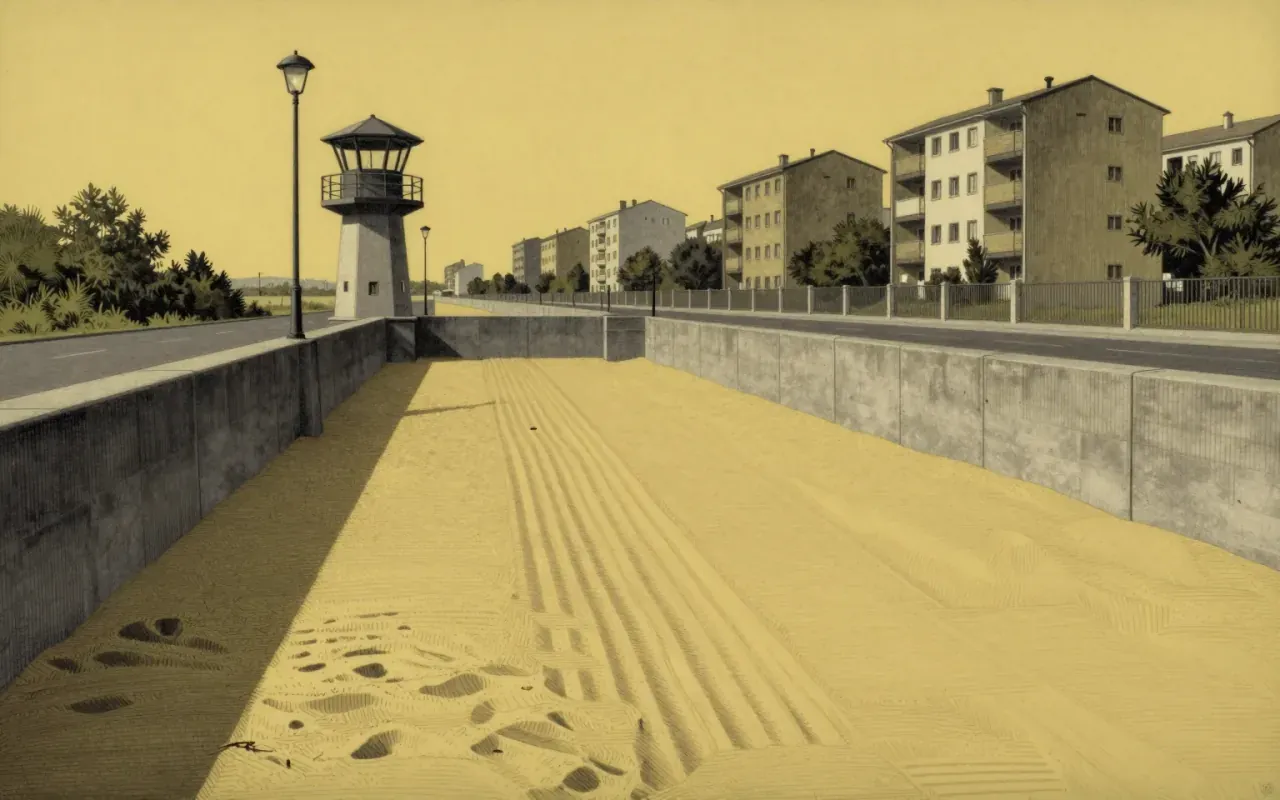
East Germany’s government, under Walter Ulbricht, closed the border between East and West Berlin overnight on 13 August 1961, an operation authorised the previous day and executed before most Berliners on either side were aware it was happening. The wall stood for just over twenty-eight years, until it was opened on 9 November 1989, though its full physical demolition was not completed until 1994. In between, it functioned as the most visible fixed point of the Iron Curtain dividing Cold War Europe, a barrier that separated families and, for East Germany’s government, solved a demographic crisis that had been steadily undermining the state.
The exodus it was built to stop
The wall’s death toll is documented only as a range rather than a fixed figure, with estimates of those killed by East German authorities while attempting to cross put at between 136 and more than 200 people in and around Berlin. This uncertainty reflects the East German state’s own reluctance to publish transparent records of border deaths, meaning later researchers have had to reconstruct the toll from a combination of West German reporting at the time, post-reunification access to East German files, and testimony gathered after 1989. Figures for the roughly 100,000 escape attempts and the more than 5,000 that succeeded rest on a similarly mixed evidentiary base.
A death toll without an official count
The wall existed because East Germany was losing its population at a rate that threatened its survival as a functioning state. By 1960, an estimated 3.5 million people, about a fifth of the population, had left for the West, and those leaving were disproportionately young and educated, draining the workforce East Germany needed to sustain itself economically and administratively. Soviet leader Nikita Khrushchev’s own pressure over Berlin’s status contributed to the decision, and President Kennedy’s failure to firmly oppose a border closure at the 1961 Vienna summit is generally read as removing whatever restraint might otherwise have discouraged East Germany from acting.
Over 100,000 tried, over 5,000 succeeded
How the wall eventually fell is, if anything, better documented in its precise sequence than how it went up. On the evening of 9 November 1989, East German spokesman Günter Schabowski, working from a note handed to him shortly before a press conference and apparently not fully briefed on its content, announced new travel regulations and, when pressed by journalists on timing, said they took effect immediately. Crowds gathered at checkpoints on the strength of this statement, and Harald Jäger, the officer commanding the Bornholmer Strasse crossing, unable to reach clear instructions from his superiors, eventually ordered the gates opened around 22:45 rather than risk a confrontation with the growing crowd.
A press conference that opened the gates
There is some dispute over the exact sequence at other crossings that night, with accounts suggesting a border commander at Waltersdorf-Rudow may have opened his checkpoint independently a couple of hours earlier than the more famous events at Bornholmer Strasse, a detail that complicates the tidy narrative of one decisive moment. What is not in dispute is the pace of what followed: official demolition of the wall began the following June, and German reunification was formalised on 3 October 1990, just 339 days after the wall opened, an unusually fast resolution for a division that had structured European politics for nearly three decades.
From barrier to monument
The Berlin Wall rewards attention on both ends of its history: the deliberate, carefully planned operation that built it in a single night, and the almost accidental bureaucratic confusion that brought it down. It is a strong illustration of how a state’s tightly managed information can misfire in ways its own officials do not anticipate. It says comparatively little about the texture of everyday life for the Berliners who lived alongside the wall for twenty-eight years, which is treated here mostly as backdrop to the political and diplomatic history. Readers wanting that closer, ground-level view of divided family life and daily routine under constant surveillance will need to supplement this account with more personal testimony.