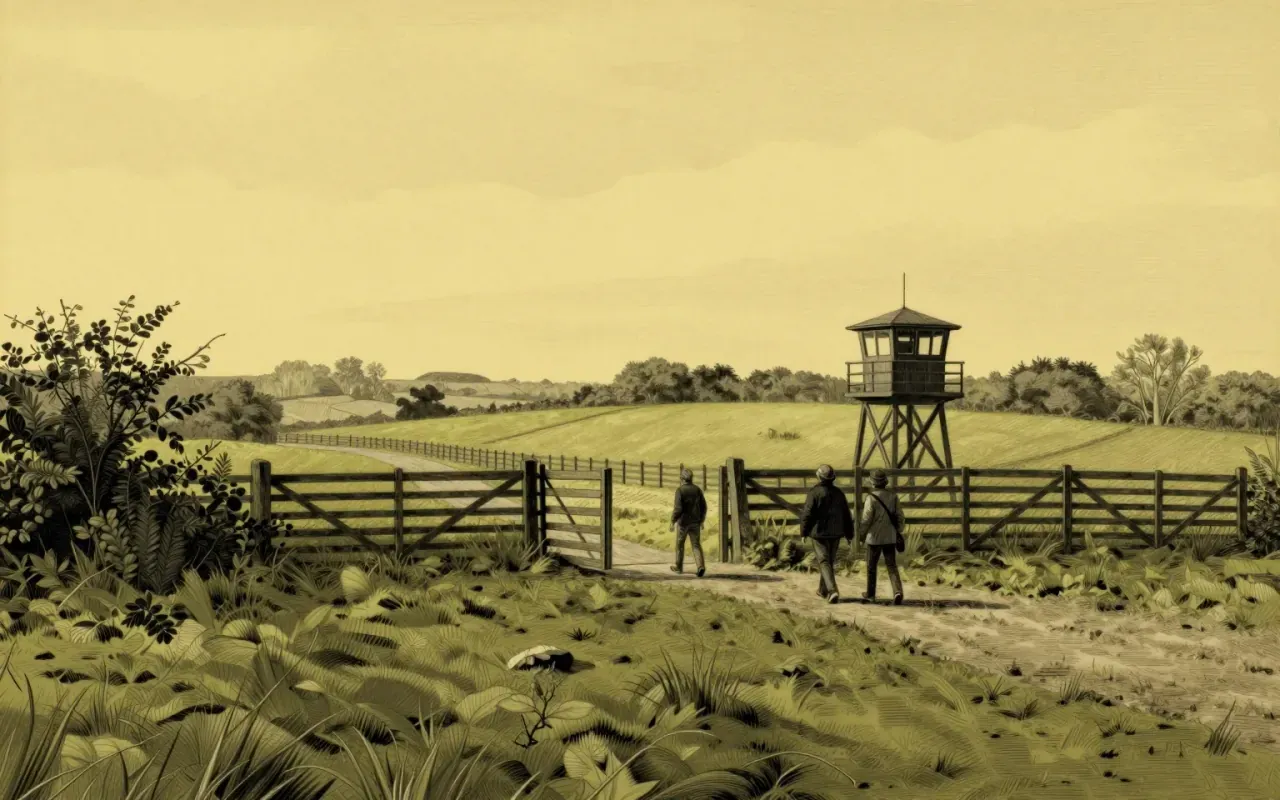
A fence removed, a wall soon to follow
The opening that made reunification possible came from outside Germany itself: Hungary’s removal of its border fence with Austria on 2 May 1989 created the first significant breach in the Iron Curtain, and the Pan-European Picnic that August, an event at that same border, triggered a mass exodus of East Germans that accelerated pressure on the East German government considerably faster than its leadership anticipated. This pressure culminated in the fall of the Berlin Wall on 9 November 1989, an event that West German Chancellor Helmut Kohl moved to capitalise on with unusual speed, announcing a ten-point programme for reunification on 28 November, just weeks after the Wall’s collapse, a pace that surprised many observers who had expected a considerably slower and more cautious process given the decades of division involved.
A ten-point plan announced within weeks
Reunification required resolving a question that had shaped European security architecture for over four decades: whether a reunified Germany could remain a NATO member, an issue negotiated through the Two Plus Four process bringing together both German states and the four wartime Allied occupying powers, the United States, Britain, France and the Soviet Union. Mikhail Gorbachev’s policies of glasnost and perestroika, alongside the Soviet Union’s abandonment of the Brezhnev Doctrine that had previously justified military intervention to preserve Eastern European communist governments, made Soviet acceptance of the outcome possible, and the resulting Treaty on the Final Settlement with Respect to Germany, signed 12 September 1990, confirmed Germany’s full sovereignty, its existing borders including the Oder-Neisse line with Poland, and its continued NATO membership.
Four powers still had a say
The domestic legal process moved through several rapid formal steps: East Germany held its first free elections on 18 March 1990, a treaty establishing monetary, economic and social union followed on 18 May, and East Germany’s parliament, the Volkskammer, voted on 23 August to accede to the Federal Republic under Article 23 of the West German Basic Law, a provision allowing territorial accession rather than the alternative route under Article 146, which would have required drafting an entirely new joint constitution. This choice compressed what might otherwise have been a lengthy constitutional process into roughly six months, but it also meant, legally, that East Germany voted to dissolve itself and join West Germany rather than the two states merging as equal partners into a genuinely new entity.
A vote to dissolve, not to merge
This legal structure underlies a persistent terminological dispute among historians and politicians. Scholar Ned Richardson-Little has observed that terminology for the event varies meaningfully across the political spectrum, and German politician Matthias Platzeck applied the term Anschluss, evoking forcible annexation, to the process in 2010, a characterisation reflecting genuine disagreement about the power dynamics involved even though Gorbachev himself, responding to a similar 2015 Russian characterisation, dismissed the annexation framing as nonsense. The underlying legal reality, that the Federal Republic retained its continuous existence and simply expanded its territory and constitution over the former East German state rather than both states jointly forming something new, gives the annexation critique real documentary grounding even where its rhetorical framing remains contested.
Reunification, or annexation by another name
The Deutsche Mark replaced the East German mark on 1 July 1990, ahead of the formal political unification that followed on 3 October, and West Germany extended substantial subsidies to support East German state budgets and social security systems as its economy, which proved considerably weaker than prewar assumptions had suggested, was integrated into the wider Federal Republic. Soviet troops remained in the former East Germany until their complete withdrawal in 1994, and the persistent economic disparities between the former East and West German regions, along with ongoing debate over whether the costs of reunification were justified or mismanaged, continued to shape German domestic politics for decades after the formal political process itself concluded within that single compressed year.
A currency swap that outran the economics
German reunification is worth studying closely for the gap between its remembered simplicity, one country becoming whole again, and the considerably more legally and politically complicated process actually documented in the record, including a specific constitutional mechanism chosen deliberately for its speed over its symbolic equality between the two states. Reading the Two Plus Four negotiations alongside the domestic accession process shows how thoroughly the event depended on external great-power agreement as much as internal German political will, and taking the annexation critique seriously, even without adopting it wholesale, offers a more complete account of what actually happened when one state dissolved into another within the span of a single year.