historybriefs
Topic

Germany

A nation assembled late, undone twice, and rebuilt on the memory of both.

32
in history
12:48
average
410 min
in total
66
across the network
Germany across the network →
All briefs32
9:34

Fall of the Berlin Wall

9 November 1989

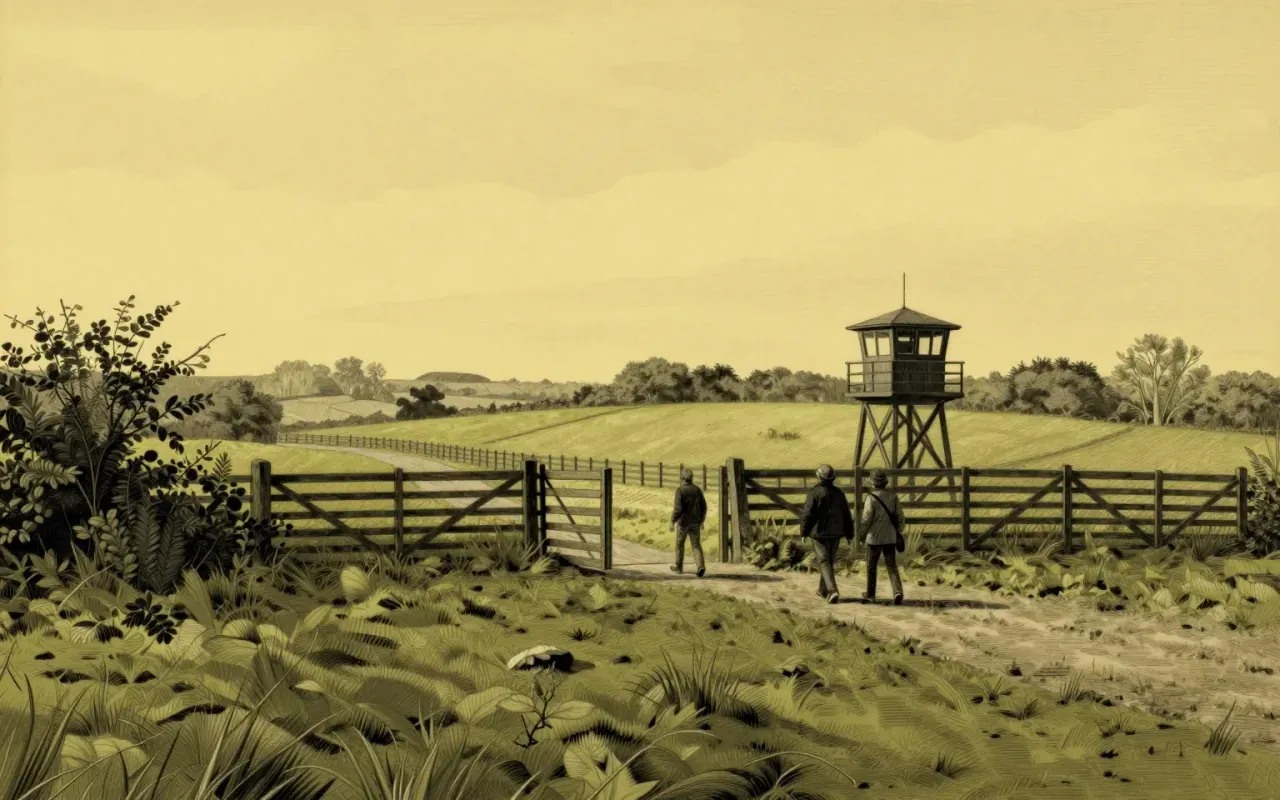
The Berlin Wall fell on 9 November 1989 when East Berlin transit restrictions collapsed. Harald Jäger opened the Bornholmer Straße crossing without orders. Crowds poured through. Mauerspechte began chipping away at the Wall that same night. Official dismantling began on 13 June 1990. This event helped trigger the fall of the inner German border, the Malta Summit’s Cold War declaration in early December 1989, and German reunification on 3 October 1990. It was one event in a series that started communism’s fall across Central and Eastern Europe. The source gives two times for Jäger’s decision but no reason for it. It names no other actors, documents no policy change, and does not specify how the Wall’s fall caused wider political change.
10:14

Night of the Long Knives

30 June to 2 July 1934

The Night of the Long Knives was not a spontaneous outburst. It was a calculated, multi-day purge ordered by Hitler and executed by Nazi security organs to eliminate rivals and win over the army — then legally ratified by Germany’s own courts and cabinet. It established that legality could be weaponised, not just suspended.

13:00

Adolf Hitler

1889–1945

Adolf Hitler rose from a failed art student and decorated First World War soldier to leader of the Nazi Party by 1921, became German chancellor in January 1933 through a backroom deal among conservative politicians who believed they could control him, and consolidated absolute power within months through the Enabling Act. His government pursued territorial expansion that triggered the Second World War and orchestrated the Holocaust, killing an estimated six million Jews and millions of others, before his suicide in Berlin on 30 April 1945 as Soviet forces closed in on the city.

13:00

Immanuel Kant

1724–1804

Immanuel Kant spent his entire career at the University of Konigsberg, publishing the Critique of Pure Reason in 1781 to reconcile rationalist and empiricist philosophy before developing his categorical imperative as a foundation for ethics grounded in reason alone. Several familiar details of his biography, including his believed Scottish ancestry and the legend of his clockwork daily walks, have not held up under later scrutiny, and his own religious and racial views remain genuinely disputed by historians.

13:00

Neville Chamberlain

1869–1940

Neville Chamberlain spent nearly two decades in cabinet before becoming prime minister in 1937 and pursuing the policy of appeasement that produced the 1938 Munich Agreement, an outcome he initially returned home to genuine public acclaim for. His reputation collapsed within two years, cemented by a bestselling wartime pamphlet blaming him for Britain's unpreparedness, and though later historians have argued declassified evidence shows Britain was in fact militarily unready for war in 1938, that reassessment has not restored his standing among British prime ministers.

13:00

Otto von Bismarck

1815–1898

Otto von Bismarck engineered three wars in six years to unify Germany under Prussian leadership, then spent nearly two decades as chancellor building a European balance-of-power system credited with preventing major war during his tenure while suppressing Catholics and socialists at home. Historians remain split on how much responsibility his diplomatic architecture, however successful while he ran it, deserves for the less stable arrangement that followed his forced resignation in 1890 and eventually produced the war it had been built to avoid.

13:00

Anschluss

13 March 1938

Adolf Hitler annexed Austria in March 1938 after coercing Chancellor Kurt Schuschnigg's resignation and sending German troops in under the pretext of a forged invitation, ending Austrian independence and folding it into the Reich as Ostmark. A plebiscite the following month reported 99.7 percent approval, but arrests, disenfranchisement of political opponents and Jews, and intense propaganda surrounding the vote have left historians divided over how genuine that figure actually was.

13:00

Armistice of 11 November 1918

11 November 1918

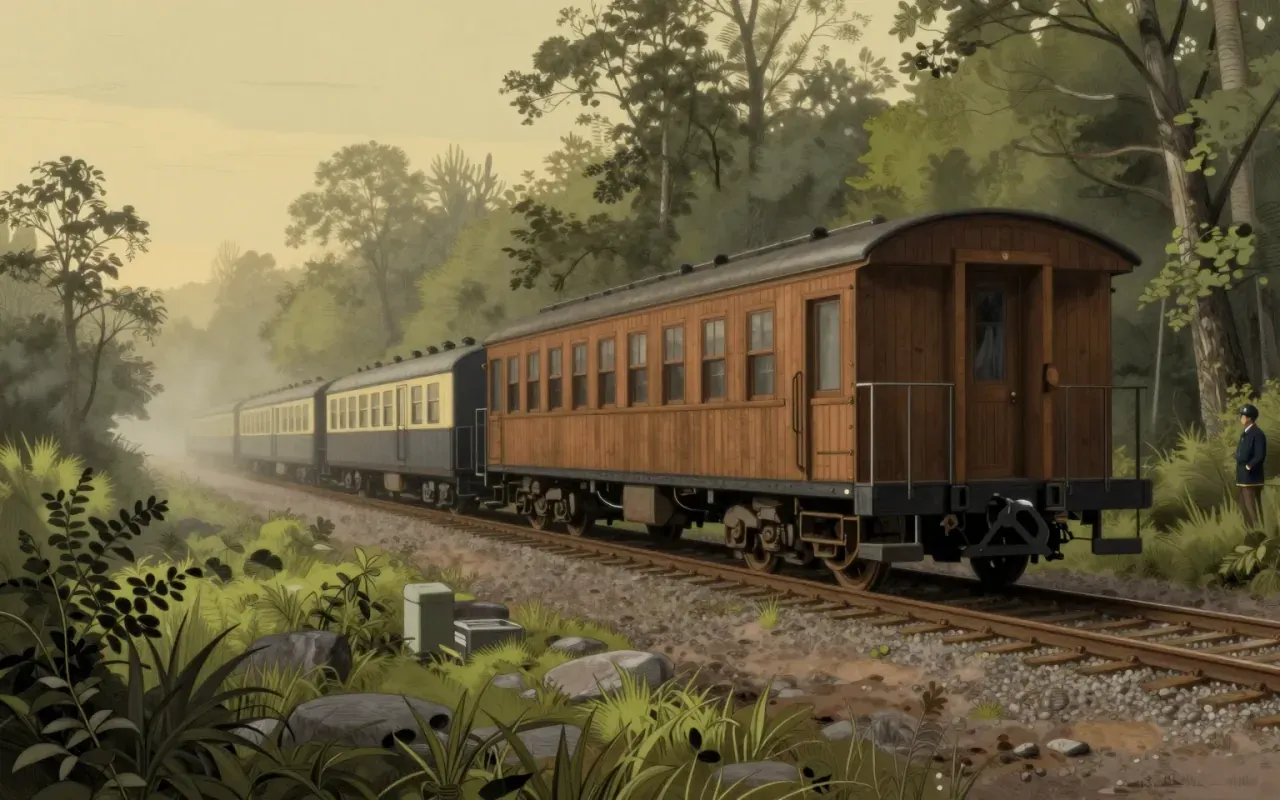
German negotiators, given seventy-two hours and almost no leverage, signed the armistice ending the First World War in a railway carriage near Compiègne at five in the morning on 11 November 1918, with the ceasefire set to take effect six hours later, at the eleventh hour of the eleventh day of the eleventh month. Fighting continued through that gap and killed nearly eleven thousand men on the war's final day, and the armistice itself was only a pause, not a formal peace, one German generals later exploited by claiming their army had never actually been defeated in the field.

13:00

Battle of Sedan

1 September – 2 September 1870

German forces trapped Napoleon III's Army of Châlons at Sedan on 1 and 2 September 1870, taking over a hundred thousand French prisoners and forcing the emperor's own surrender, a defeat so total it collapsed the Second French Empire within two days once news reached Paris. The war Bismarck had manoeuvred France into continued for five more months under a new republican government, but Sedan itself was decisive enough that Germans marked its anniversary as a national holiday for close to fifty years afterward.

13:00

Battle of Verdun

21 February – 18 December 1916

German commander Erich von Falkenhayn planned the assault on Verdun in February 1916 explicitly to bleed French reserves through attrition rather than to win territory outright, opening ten months of fighting that killed or wounded over seven hundred thousand men on both sides. Philippe Pétain's defence, built on rotating units and a supply road that kept ammunition and reinforcements flowing, made him France's most celebrated general of the war, a reputation that makes his later collaboration with Nazi Germany one of the starkest reversals in twentieth-century political memory.

13:00

Beer Hall Putsch

8 November – 9 November 1923

Hitler's attempt to seize power in Munich on 8 and 9 November 1923 collapsed within hours once a police cordon met his marching supporters with gunfire, killing sixteen Nazis and four police officers before Hitler was arrested two days later. His trial gave him national publicity he had not had before, his sentence amounted to comfortable fortress confinement rather than harsh imprisonment, and the nine months he actually served produced Mein Kampf and a deliberate strategic shift from armed putsch to the legal route that brought him to power a decade later.

13:00

Berlin Blockade

1948–1949

On 24 June 1948, the Soviet Union cut all rail, road and canal access to the Western-controlled sectors of Berlin, an enclave inside its own occupation zone, after Western powers introduced a new currency in their zones of Germany. The United States, Britain and their allies responded with the Berlin Airlift, flying over 2.3 million tons of supplies across 278,000 flights until the blockade was lifted on 12 May 1949, an operation that cost 101 lives in accidents and left West Berlin permanently tied to Western support.

13:00

Berlin Wall

1961–1989

East Germany closed its border with West Berlin overnight on 13 August 1961, building the wall in response to the departure of roughly 3.5 million citizens, disproportionately young and educated, since the country's founding. The wall stood until it was opened on 9 November 1989, a moment triggered less by policy than by a confused press conference, and its full demolition took until 1994. Estimates of how many died attempting to cross range from 136 to over 200.

13:00

The Blitz

1940–1941

German bombing of London and other British cities ran from September 1940 to May 1941, killing around forty thousand civilians and destroying or damaging two million homes without ever achieving its strategic aim of breaking British war production or morale. The unified Blitz spirit later celebrated in popular memory sits awkwardly against wartime survey data showing most people simply stayed home rather than sheltering together, and showing real anxiety, prejudice, and social friction beneath the surface resilience contemporaries and later histories preferred to emphasise.

13:00

European Union

Founded 1993

European integration began institutionally in 1948 and took concrete shape with the 1950 Schuman Declaration, which led six countries to form the European Coal and Steel Community in 1952 on the premise that shared control of war-making industries would prevent renewed conflict. Successive treaties and enlargements built the European Economic Community, then the European Union itself in 1993, expanding eventually to twenty-seven members, a scale of integration that has produced its own recurring tensions over sovereignty, migration and, in 2020, the departure of the United Kingdom.

13:00

End of World War II in Europe

7 May 1945

Between the last week of April and 8 May 1945, Nazi Germany's government, army and territory disintegrated under simultaneous pressure from the Soviet Union in the east and Britain, the United States and their allies in the west. Hitler killed himself in Berlin, his successor Karl Dönitz oversaw a cascade of surrenders, and the country was carved into occupation zones that hardened, within four years, into two separate states.

13:00

Final Solution

1941–1945

The Final Solution, the Nazi programme to murder Europe's Jewish population, killed around six million people through mobile shooting units operating from mid-1941 and then through gas chambers at dedicated camps from late 1941 onward, formalised administratively at the Wannsee Conference in January 1942. Historians remain divided over whether Hitler issued a single early master plan for total extermination or whether the policy escalated in stages through competing bureaucratic pressures, a debate complicated by the fact that no written order from Hitler himself has ever surfaced.

13:00

Franco-Prussian War

1870–1871

Bismarck's editing of the Ems Dispatch in July 1870 turned a diplomatic exchange over a Spanish succession dispute into a war France declared and then lost within weeks, its main army captured at Sedan and Metz before a four-month siege forced Paris to surrender. The German Empire was proclaimed at Versailles as the war ended, and the Treaty of Frankfurt's transfer of Alsace and part of Lorraine to Germany left a grievance in French politics that outlasted everyone who fought the war itself.

13:00

Hanseatic League

1358–1862

The Hanseatic League grew out of merchant guilds in northern German towns, loosely bound by shared trading privileges rather than any central government, with Lübeck as its de facto leader from the mid-fourteenth century. At its height after the 1370 Treaty of Stralsund it could blockade cities and win wars, running trading posts from Novgorod to London. Dutch and English competition, the closure of its Russian outpost, and the shift of trade toward the Atlantic wore it down over three centuries, and its last formal assembly met in Lübeck in 1669, with no single act ever declaring it ended.

13:00

Hindenburg disaster

6 May 1937

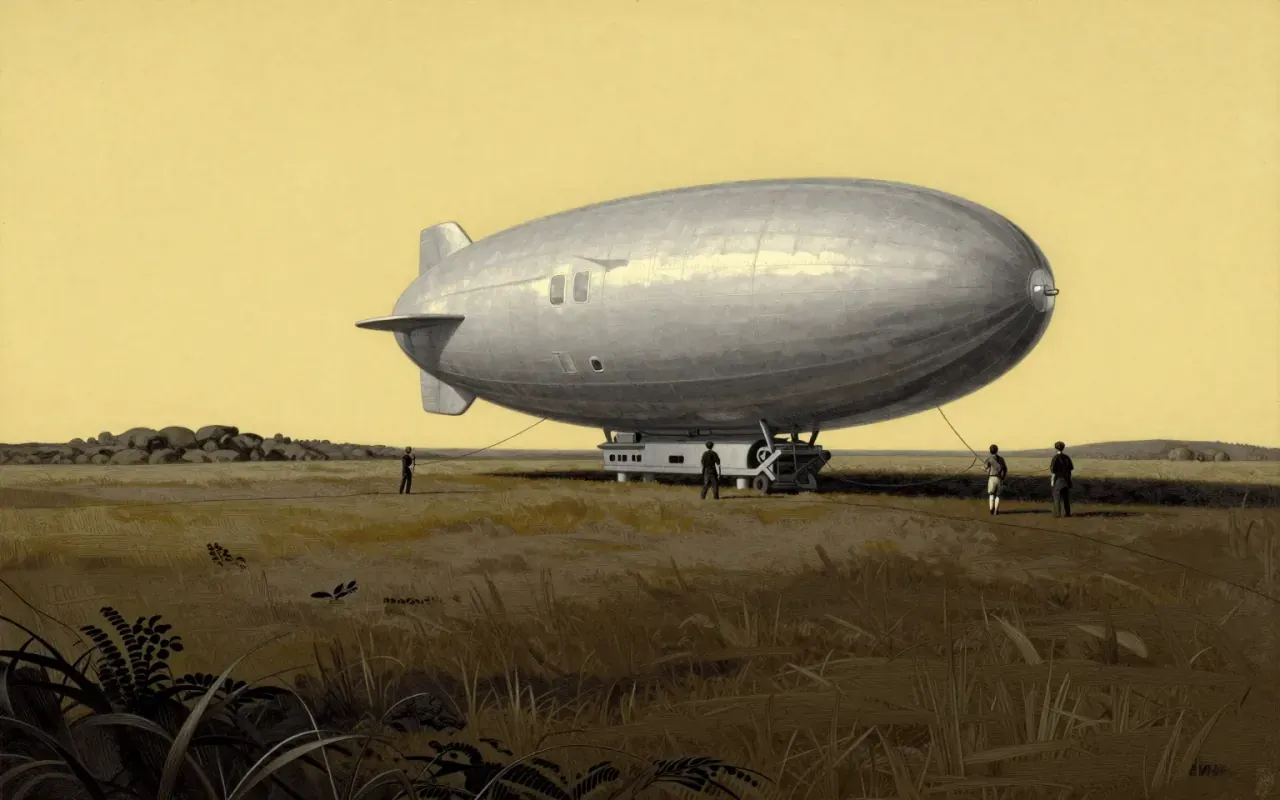
The German passenger airship Hindenburg caught fire while landing at Lakehurst, New Jersey, on 6 May 1937, killing 36 people in under a minute despite the Zeppelin Company's previously spotless safety record across 1.6 million kilometres of flight. German and American investigations reached different emphases on the ignition cause, static electricity remains the most widely accepted explanation, and the extensive newsreel and radio coverage of the disaster effectively ended commercial passenger airship travel within months.

13:00

Invasion of Poland

1 September – 6 October 1939

Germany invaded Poland on 1 September 1939 behind the manufactured pretext of a staged attack at Gleiwitz, deploying newly mechanised blitzkrieg tactics that broke Polish resistance within weeks while the Soviet Union invaded from the east on 17 September under the secret terms of the Molotov-Ribbentrop Pact signed a week before the war began. Hitler's own instructions to his forces called for killing Polish people without pity or mercy, language historians treat as establishing genocidal intent from the campaign's very outset rather than something that developed only later in the occupation.

13:00

Operation Barbarossa

22 June – 5 December 1941

Germany launched the largest invasion in history against the Soviet Union on 22 June 1941, deploying nearly four million troops along a front stretching almost three thousand kilometres and capturing vast Soviet territory before the advance stalled outside Moscow that December. What followed became the largest and deadliest land campaign of the Second World War, ultimately killing millions on both sides, and historians still debate how much of the German failure traces to winter and logistics against how much reflects a strategic miscalculation built on racial assumptions about Soviet weakness that Hitler held from the outset.

13:00

Munich Agreement

30 September 1938

Britain, France, Germany, and Italy met in Munich in September 1938 and agreed to hand Germany the Sudetenland, a heavily fortified, industrially significant region of Czechoslovakia, without any Czechoslovak representative present at the actual negotiations. Neville Chamberlain returned home declaring peace for our time, a claim contemporary polling suggests most of the British public initially welcomed, before Hitler occupied the rest of Czechoslovakia within six months and turned the agreement into the standard historical example of appeasement's failure.

13:00

Nuremberg trials

1945–1946

Twenty-two senior Nazi leaders stood trial before judges from the four Allied powers between November 1945 and October 1946, charged under a newly created legal framework that made individuals, not just states, criminally responsible for aggression and atrocity, resulting in eleven death sentences and three acquittals. The trials established lasting precedents for international law even as critics have long pointed out their selective scope, a charter narrow enough that Soviet purges and deportations never came under the same scrutiny applied to the defendants in the dock.

13:00

Occupation of Czechoslovakia (1938–1945)

14 March – 16 March 1939

Germany annexed the Sudetenland after the 1938 Munich Agreement, then seized the remainder of Czech lands in March 1939, establishing the Protectorate of Bohemia and Moravia while Slovakia declared a nominally independent, German-aligned state. The occupation killed an estimated 294,000 to 320,000 people, mostly Jews, exploited Czechoslovakia's advanced industrial base for German rearmament, and ended only with the Prague Uprising and Soviet arrival in May 1945.

13:00

Reformation

1517–1648

Conventionally dated from Martin Luther's 1517 publication of the Ninety-five Theses challenging the Catholic Church's sale of indulgences, the Reformation split Western Christianity into competing Protestant and Catholic camps over the following century, spreading through the work of Zwingli, Calvin and others and provoking wars of religion estimated to have killed between seven and seventeen million people before ending, in various accounts, at the Peace of Augsburg in 1555 or the close of the Thirty Years' War in 1648. Historians increasingly describe the period in the plural, as overlapping Reformations rather than one unified movement.

13:00

German reunification

1989–1990

East Germany's parliament voted in August 1990 to dissolve itself and accede to the Federal Republic under Article 23 of the West German constitution, completing formal reunification on 3 October after the Two Plus Four Treaty secured Allied agreement to full German sovereignty and NATO membership. The process, compressed into roughly six months once East Germany's first free elections opened the way, is remembered by most as reunification, though some analysts and politicians have described it in the more contested language of annexation given how completely West Germany's institutions simply absorbed the East.

13:00

Treaty of Rome

25 March 1957

Signed on 25 March 1957 on Capitoline Hill in Rome and effective from 1 January 1958, the Treaty of Rome established the European Economic Community among Belgium, France, Italy, Luxembourg, the Netherlands and West Germany, alongside a companion treaty founding the European Atomic Energy Community. Built on the 1955 Spaak Report and negotiations at Val Duchesse, it created a customs union intended to foster economic integration, and its institutions were later merged with those of the earlier Coal and Steel Community before evolving, through the Maastricht and Lisbon treaties, into the European Union.

13:00

Treaty of Versailles

1920

Negotiated by the Allied powers, chiefly the United States, France, Britain and Italy, at the Paris Peace Conference of 1919 and signed by Germany on 28 June 1919, the Treaty of Versailles required Germany to cede territory, disarm, accept sole responsibility for the war under its Article 231, and pay reparations, while establishing the League of Nations. Historians remain divided over whether the treaty was excessively punitive or insufficiently so, and the record explicitly connects German resentment of its terms to the rise of the Nazi Party and, eventually, the Second World War.

13:00

Peace of Westphalia

24 October 1648

After five years of fragmented negotiations across two cities, the treaties of Münster and Osnabrück ended the Thirty Years' War in October 1648, reorganising the Holy Roman Empire's religious and territorial arrangements and granting Calvinism formal recognition for the first time. The peace did not end all European fighting, and the widely cited idea of Westphalian sovereignty as a founding principle of international law is now regarded by most historians as a myth constructed centuries after the treaties themselves were signed.

13:00

Unification of Germany

1866–1871

German unification proceeded through a combination of economic integration under the Prussian-led customs union, or Zollverein, established in 1818, and three wars orchestrated chiefly by Otto von Bismarck against Denmark, Austria and France between 1864 and 1871, culminating in the proclamation of the German Empire in January 1871. Historians continue to debate whether Bismarck pursued unification as a deliberate long-term goal or arrived at it opportunistically through a series of separate decisions aimed more narrowly at expanding Prussian power.

13:00

War of the Austrian Succession

1740–1748

The War of the Austrian Succession began in 1740 when Prussia invaded Silesia within days of Maria Theresa's contested inheritance of the Habsburg lands, drawing in most of Europe's major powers across theatres on four continents. The 1748 peace confirmed Maria Theresa's succession but cost her Silesia permanently, a settlement so resented in Vienna that it triggered a full realignment of European alliances and directly set up the Seven Years' War less than a decade later.