Seventy-two hours, little leverage
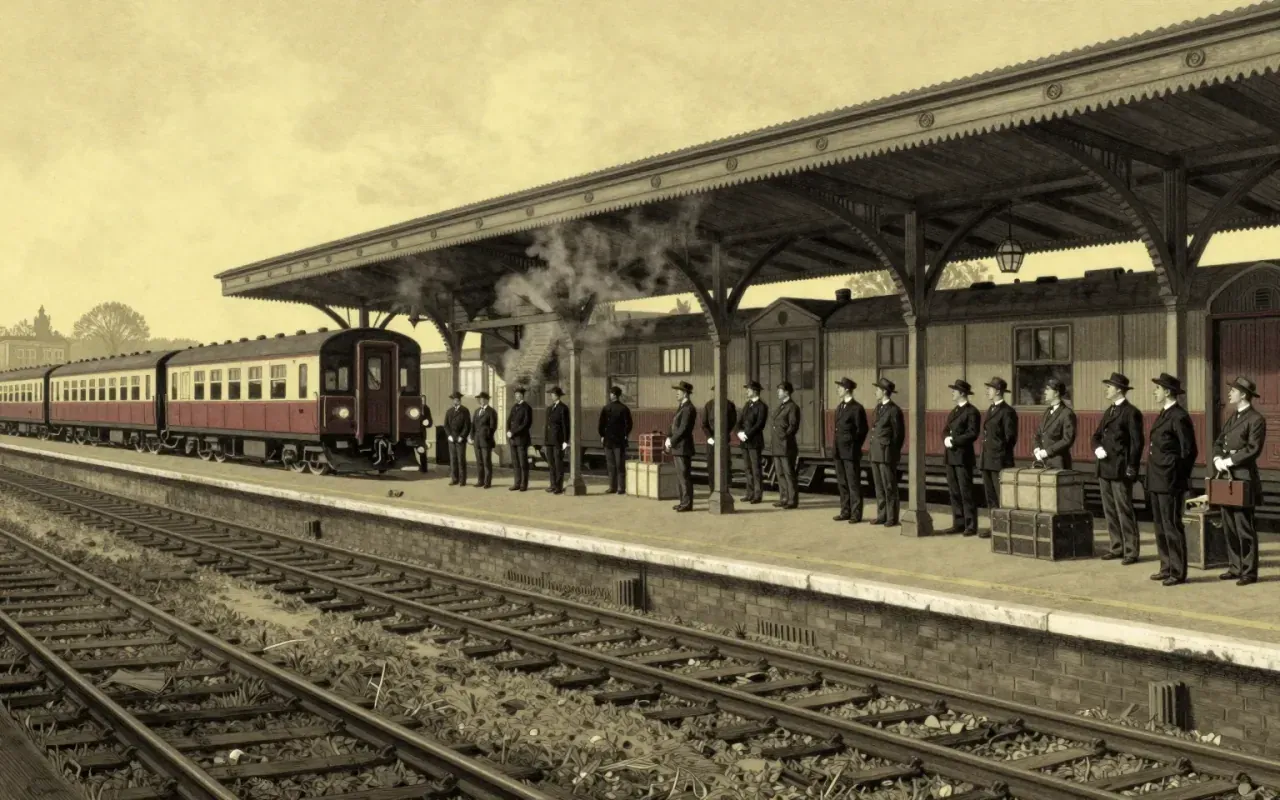
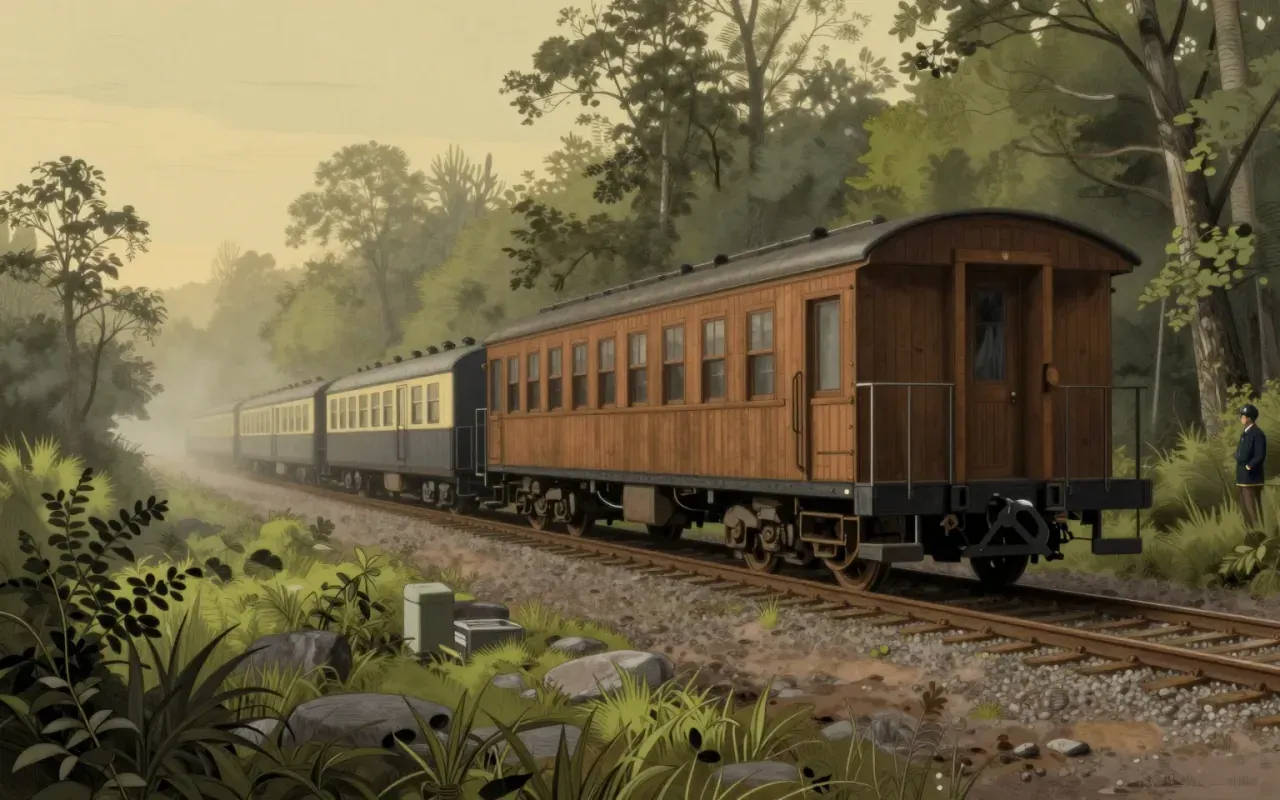
A German delegation led by the civilian politician Matthias Erzberger crossed into Allied lines on 8 November 1918 and was brought to Marshal Ferdinand Foch’s private train in the Compiègne forest, where they were presented with Allied terms and given seventy-two hours to respond. With Germany’s military position collapsing and almost no room to negotiate, the delegation secured only minor adjustments, including a reduction in an initially unworkable submarine surrender quota, before Germany’s own new civilian leader, Friedrich Ebert, instructed them to sign. The armistice was agreed at five in the morning on 11 November but was not scheduled to take effect until eleven that same morning, a six-hour gap during which fighting continued.
The clauses that survive on paper
The armistice’s thirty-four clauses survive in full and specify exactly what Germany had to surrender: five thousand artillery pieces, twenty-five thousand machine guns, seventeen hundred aircraft, five thousand locomotives, and a hundred and fifty thousand railway carriages, alongside a fifteen-day withdrawal from occupied French, Belgian, and Luxembourgish territory and Alsace-Lorraine, and a further evacuation of German territory west of the Rhine within thirty-one days. Germany was also required to surrender all submarines, intern its listed surface fleet, release Allied prisoners without any reciprocal exchange, and formally renounce its earlier treaties with Russia and Romania, terms recorded with enough specificity that historians can state exactly what changed hands rather than describing the surrender only in general terms.
A ceasefire delayed by six hours
The delay between signing and the ceasefire actually taking effect produced one of the war’s more haunting statistics: fighting continued through those six hours, and the final day of combat alone produced nearly eleven thousand casualties, including over twenty-seven hundred deaths, losses incurred after the war’s outcome had already been settled on paper. The eleventh-hour timing was chosen for its symbolic resonance, giving rise to the enduring phrase describing the armistice as taking effect at the eleventh hour of the eleventh day of the eleventh month, a memorable formulation that has somewhat obscured how much fighting, and dying, still happened in the hours leading up to that exact moment.
A pause mistaken for an ending
The armistice was, strictly speaking, only a ceasefire pending a formal peace settlement rather than a surrender or a peace treaty itself, a distinction that mattered enormously in practice: the actual Treaty of Versailles was not signed until June 1919 and did not take effect until January 1920, and the armistice itself had to be extended three separate times in the interval to keep the ceasefire legally in force. That extended, provisional character left considerable room for competing interpretations of what exactly had been agreed and what it meant, room that German nationalist politicians and former military leaders exploited in the years immediately following.
A myth built from an undefeated retreat
Field Marshal Paul von Hindenburg and General Erich Ludendorff, among the war’s most senior German commanders, subsequently argued that the German army had never actually been defeated on the battlefield, pointing to the fact that its front line still stood roughly seven hundred kilometres from Berlin and that its retreat had proceeded in good order rather than as a rout. Hindenburg told a parliamentary inquiry in 1919 that the army had been stabbed in the back, attributing the collapse to internal sabotage by socialists, Jews, and Bolsheviks rather than to military defeat, a claim historians treat as demonstrably false given Germany’s actual strategic position by November 1918, but one that proved politically potent regardless.
Eleven thousand casualties nobody needed
That stab-in-the-back narrative went on to destabilise the Weimar Republic that succeeded the German Empire, since it recast a negotiated end to a lost war as an act of internal betrayal rather than military necessity, feeding directly into the political resentments the following two decades of German extremism drew on. The armistice is worth studying closely for this reason as much as for its own terms: a ceasefire whose precise, well-documented details, right down to the surrendered rail stock and the six-hour delay before it took hold, sit alongside a mythologised aftermath that reshaped German politics far more than the actual document ever specified.