A record built over years, gone in seconds
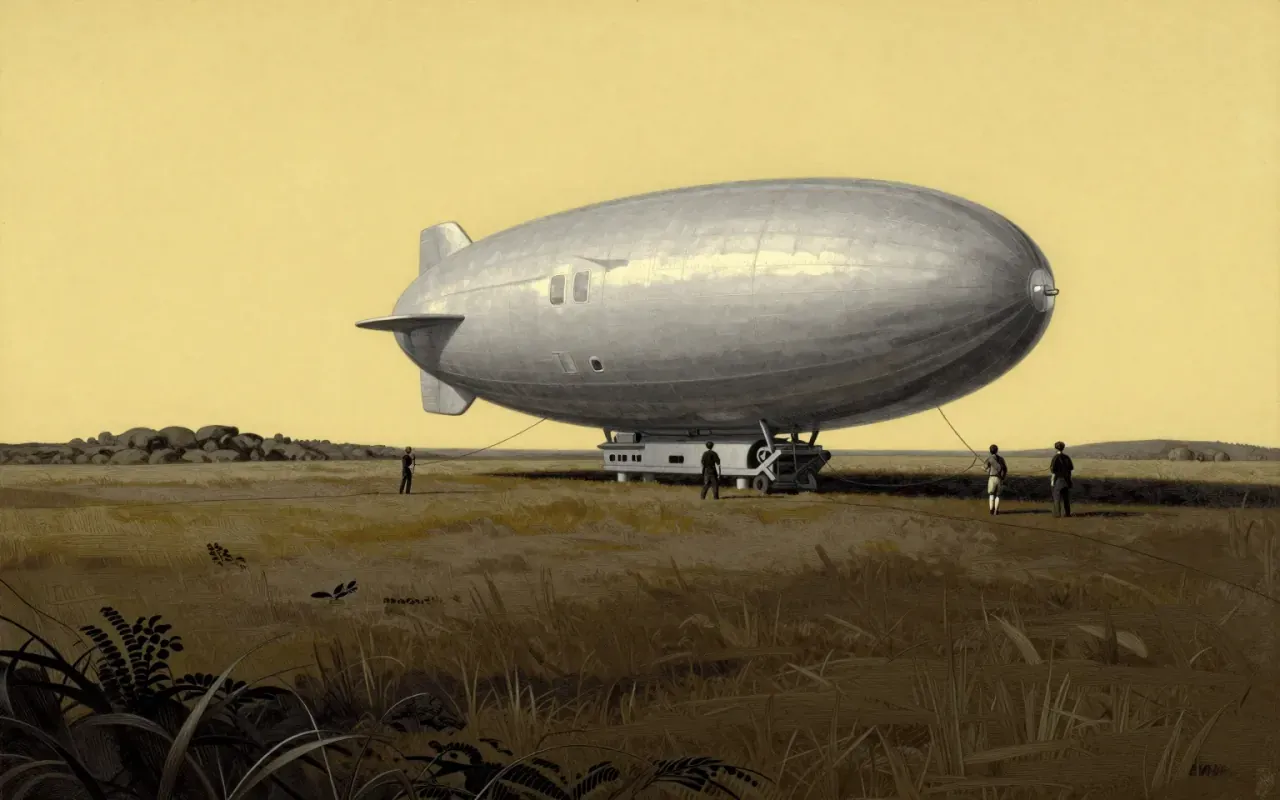
The LZ 129 Hindenburg, a German rigid airship built by Luftschiffbau Zeppelin and measuring 245 metres in length, had completed 63 flights over fourteen months of commercial transatlantic service by May 1937, including seventeen round trips across the Atlantic in 1936 alone, carrying thousands of passengers without any prior injury. On 6 May, having departed Frankfurt three days earlier, the airship circled Naval Air Station Lakehurst in New Jersey to wait out afternoon thunderstorms before Captain Max Pruss received clearance to land around 6:22pm. Mooring lines were dropped at 7:21pm, and around four minutes later, at approximately 7:25pm, witnesses on the ground observed flames near the upper tail fin, and the entire structure was consumed within roughly thirty-seven seconds, with some analyses suggesting the most destructive phase lasted as little as sixteen.
Thirty-seven seconds
The disaster’s documentation is unusually rich for an event of its era, since four separate newsreel crews from Pathé News, Movietone News, Hearst’s News of the Day and Paramount News were filming the landing, alongside photographers including Sam Shere, whose image of the burning airship became iconic, and radio reporter Herbert Morrison, whose live account for a Chicago station survived only because an audio engineer had proposed testing a delayed-recording setup that day. Of the 97 people aboard, 36 died, including 13 of 36 passengers and 22 of 61 crew, along with one ground crewman; most fatalities resulted from burns or falls rather than the fire itself, with most crew deaths occurring in the bow section, which remained suspended in flames longer than other parts of the structure.
Two investigations, two emphases
German and American investigators, led respectively by Hugo Eckener and Colonel South Trimble Jr., both concluded that hydrogen ignited by static electricity was the most probable cause, but their emphasis diverged in ways that have never been fully reconciled. Eckener’s theory held that the airship’s fabric skin, electrically isolated from its duralumin frame by non-conductive cords, accumulated a static charge that discharged as a spark once the frame was grounded by mooring lines but the skin was not, though this explanation required two independently improbable conditions to occur simultaneously. The American board gave more serious consideration to a structural failure theory, in which a ruptured gas cell in the stern produced a spark through mechanical damage, a possibility multiple witnesses’ reports of fluttering fabric and cracking sounds before the fire appeared seemed to support.
A theory that implicated the Nazi regime
A more contested theory emerged decades later from retired NASA scientist Addison Bain, who argued in 1996 that the airship’s fabric doping compound, containing iron oxide and aluminium, was flammable enough on its own to have caused the disaster, and that German wartime investigators had reached a similar conclusion but suppressed it to avoid embarrassing the Nazi government under which the airship had operated as a propaganda tool. Critics of Bain’s theory note that the doping compound’s ignition temperature exceeds what a static spark would produce, and that fabric on the tail fins, which should have been equally combustible, remained unconsumed in photographs, inconsistencies that have kept the incendiary-paint theory a minority view rather than a settled replacement for the static electricity explanation.
A broadcaster’s accidental masterpiece
Sabotage was seriously considered by American commander Charles Rosendahl and Captain Pruss at the time, and a 1962 book named rigger Erich Spehl as a suspect based on circumstantial evidence, though the FBI’s own investigation, including scrutiny of a passenger acrobat named Joseph Späh, found no connecting evidence, and most historians have since dismissed the sabotage theory for lack of physical support. A lightning theory and an engine-backfire theory were also proposed and separately discounted, the latter because Hugo Eckener calculated exhaust temperatures fell well short of hydrogen’s ignition point, leaving the field of plausible explanations narrowed but not resolved to a single confirmed cause even after repeated twenty-first-century photographic re-analysis of the surviving footage.
An industry that never recovered
The Hindenburg disaster is worth attention less for any single settled explanation, since none of the competing ignition theories has definitively displaced the others even after nearly ninety years of study, than for how thoroughly its saturation media coverage reshaped an entire industry within months. The Zeppelin Company’s genuine prior safety record, an achievement built over years of successful transatlantic flight, could not survive the emotional force of Morrison’s broadcast and the newsreel footage circulated worldwide, and passenger airship travel effectively ended as a commercial proposition almost immediately afterward, giving way to the faster heavier-than-air aircraft that commercial airlines were already positioned to expand.