A pistol shot in a crowded hall
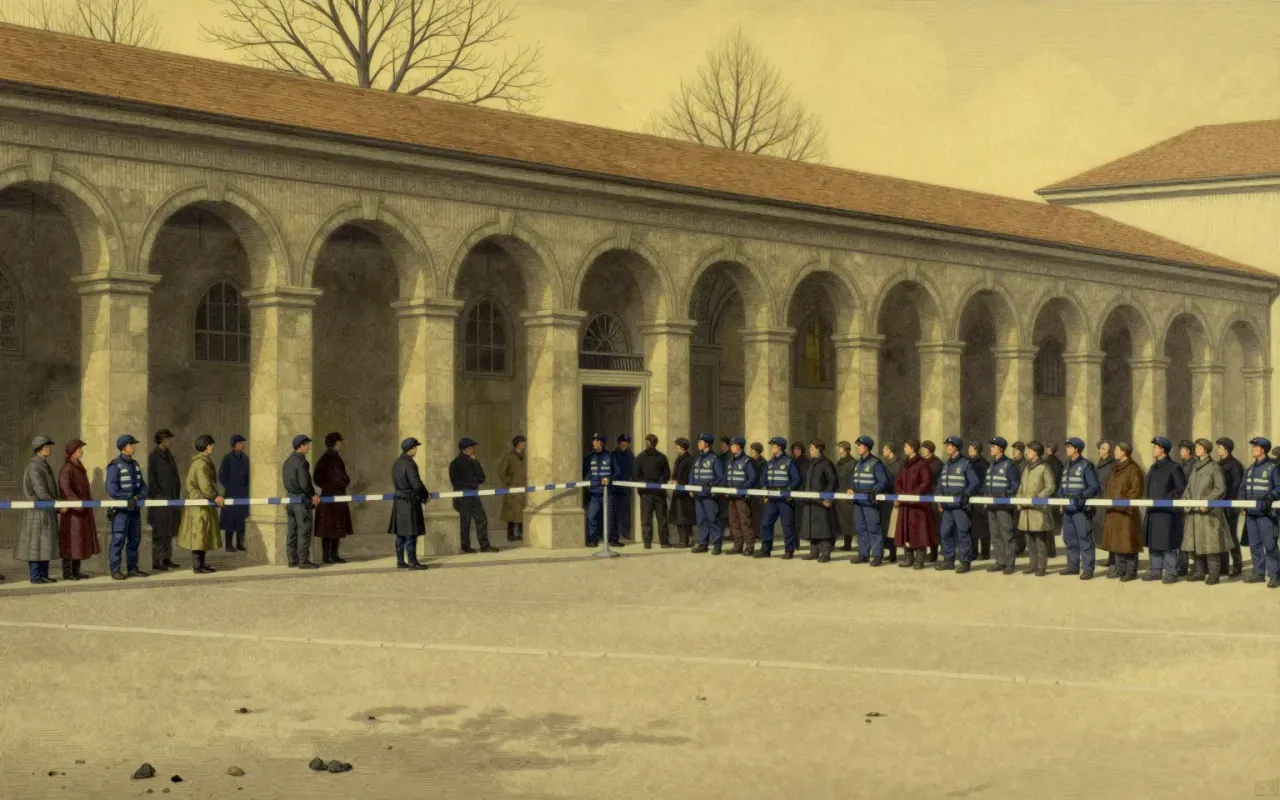
On the evening of 8 November 1923, Hitler led roughly six hundred armed supporters into Munich’s Bürgerbräukeller, where Bavarian leader Gustav von Kahr was addressing some three thousand people, fired a pistol shot into the ceiling, and declared that a national revolution had begun. He forced Kahr and two other officials into a side room at gunpoint to extract their support, but that support evaporated overnight, and the following morning roughly two thousand marchers, including Hitler and the retired general Erich Ludendorff, met a police cordon at the Feldherrnhalle; gunfire broke out, killing sixteen Nazis and four police officers before the march collapsed entirely within minutes.
A trial that made him famous
The failed putsch is unusually well documented because its aftermath played out in a public trial that began in February 1924 and drew international press coverage, generating the kind of nationwide attention Hitler had not previously received as a regional Bavarian agitator. Court records preserve his nearly four-hour opening statement, in which he claimed sole responsibility for the attempt and introduced the language of singular leadership he would later build his movement around, a rhetorical performance that survives in enough detail for historians to treat the trial itself as a deliberate publicity opportunity Hitler recognised and exploited in real time rather than simply endured.
A general’s convenient excuse
Ludendorff, whose participation lent the putsch a credibility Hitler alone could not have supplied, claimed at trial that he had attended the beer hall gathering by accident, an explanation historians note he had already used once before, during an earlier failed coup attempt known as the Kapp Putsch. That repeated excuse, combined with his acquittal at trial while his co-conspirators received prison sentences, illustrates how unevenly Bavarian justice treated the putsch’s participants, a disparity that mattered directly to how lightly Hitler himself was eventually punished by the same sympathetic judicial system.
How lenient was the sentence, really
Hitler, along with three co-defendants, received a five-year sentence to fortress confinement, the mildest category of imprisonment under German law, permitting regular visitors and excluding forced labour, a leniency historians attribute to a Bavarian judiciary broadly sympathetic to nationalist defendants rather than to any legal necessity. He served only about nine months of that sentence before his release in December 1924, a term historians treat as reflecting deliberate judicial favour rather than routine parole practice, since other defendants convicted alongside him received considerably less generous treatment for comparable involvement in the same failed coup.
Sixteen dead, one martyrology built
The Nazi Party subsequently built a commemorative mythology around its sixteen dead, described in later party literature as blood martyrs and honoured annually on 9 November, with the blood-stained flag from the march preserved as a quasi-sacred relic used at later party rallies. That transformation of a clear military failure into a foundational sacrifice narrative illustrates how directly the regime’s later propaganda depended on reshaping the putsch’s actual, embarrassing outcome into a story of noble struggle, a pattern historians treat as an early and instructive example of Nazi mythmaking well before the party held any national power.
A strategy rewritten in prison
During his imprisonment at Landsberg, Hitler dictated the first volume of Mein Kampf to fellow inmates Emil Maurice and Rudolf Hess, using the time not only to set out his ideology but to reconsider his entire strategic approach, concluding that armed insurrection against an established state apparatus was less effective than a patient, legal path to power built through propaganda and electoral participation. That recalibration, born directly from the putsch’s failure and refined during nine comparatively comfortable months in custody, is what historians credit with enabling his eventual, entirely legal appointment as chancellor in 1933, making the failed coup a formative rather than merely embarrassing episode in his rise.