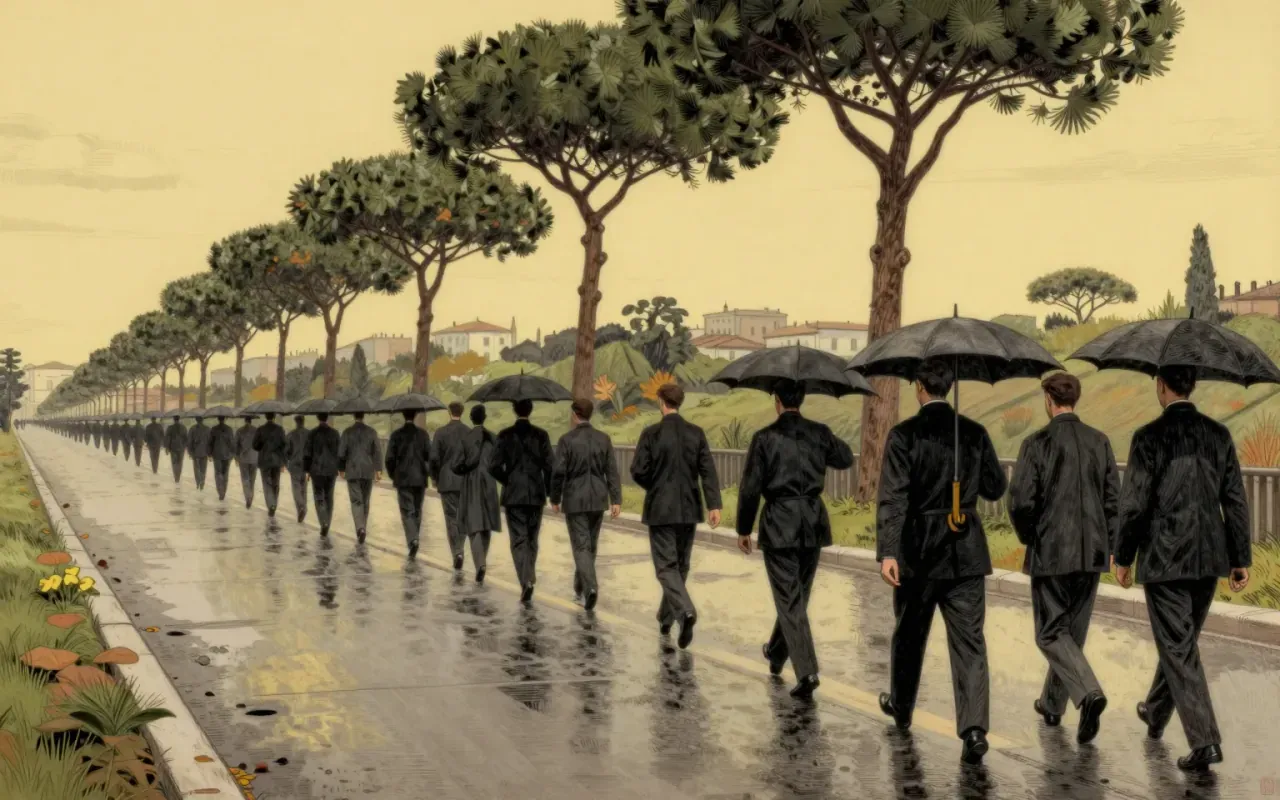
A leader who stayed home
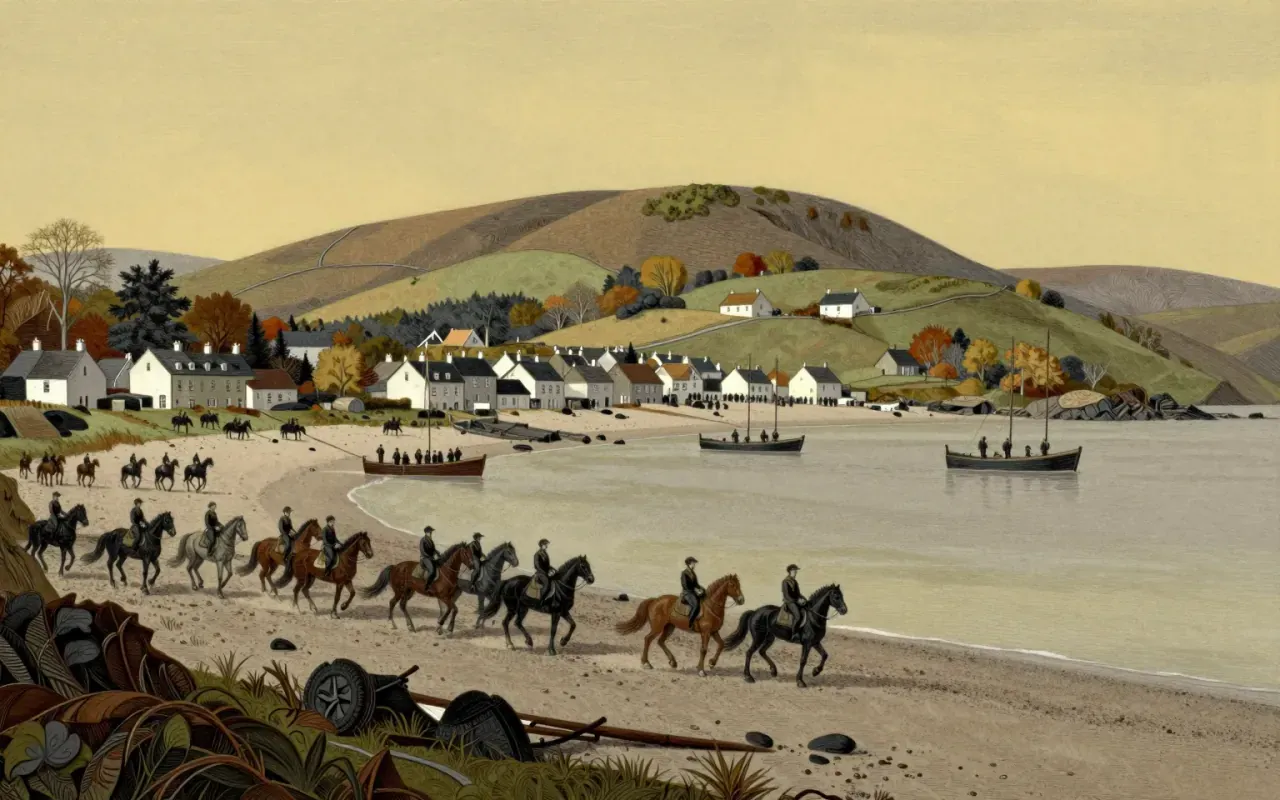
Between 28 and 31 October 1922, fascist paramilitary squads converged on Rome in an event later mythologised by the regime as a revolutionary seizure of power, but the man credited with leading it was not actually present for most of it: Benito Mussolini stayed in Milan while four lieutenants, known afterward as the Quadrumvirs, Emilio De Bono, Italo Balbo, Michele Bianchi, and Cesare Maria de Vecchi, directed the march itself. Fewer than thirty thousand men took part, a modest force against a functioning state apparatus, and propaganda photographs later depicting Mussolini marching among them were staged reconstructions rather than genuine documentation of his participation.
Photographs staged after the fact
The event followed two years of severe political instability in Italy, a period of strikes and factory occupations known as the Red Biennium during which fascist Blackshirt squads, backed by business owners and landowners alarmed by socialist organising, had already established de facto control over much of northern Italy by the summer of 1922. That prior consolidation of local power meant the march itself functioned less as the moment fascism actually seized control than as a public demonstration and negotiating lever applied to a government and monarchy already aware of how much armed strength fascist squads commanded outside the capital.
Fewer men than the myth suggests
The march’s outcome turned less on the marchers’ numbers than on the response of Italy’s constitutional authorities. Prime Minister Luigi Facta attempted to declare a state of siege that would have authorised military force against the fascist squads, but King Victor Emmanuel III refused to sign the order on 26 and 27 October, a decision historians attribute partly to genuine fear of triggering civil war and partly to concern that his own pro-fascist cousin, the Duke of Aosta, might exploit any resulting instability to advance his own ambitions. That single refusal removed the state’s most direct tool for stopping the march before it reached Rome.
A king’s refusal that decided everything
Two days later, on 30 October, the king appointed Mussolini prime minister, a transfer of power historians describe as following Italy’s existing constitutional framework, the Statuto Albertino, rather than overriding it through force. This is the central fact complicating fascism’s own later mythology of a revolutionary conquest of the state: Mussolini’s actual path to office ran through a legal royal appointment made under pressure and amid intimidation, not through the fascist squads defeating or displacing the existing government by armed confrontation, since no substantial fighting between the marchers and state forces is recorded as having taken place at all.
Legal power, not revolutionary seizure
Business leaders played a documented role in normalising Mussolini’s rise before the march itself: a delegation from Italy’s General Confederation of Industry met with him just two days beforehand, and industrialists broadly believed they could manage or direct his movement’s free-market rhetoric to their own advantage. That calculation proved badly mistaken once the Great Depression arrived in 1929, forcing the fascist state into extensive economic intervention rather than the hands-off approach industrialists had originally bet on, a miscalculation historians treat as a useful early illustration of how easily elite actors can misjudge a movement they think they are using for their own purposes.
Business leaders who misjudged their bet
The march’s status as myth versus reality is not a minor academic quibble but the central fact needed to understand how fascism actually came to power in Italy: a modest paramilitary demonstration, a leader who was not present for it, and a legal transfer of authority granted by a frightened monarch, repackaged afterward into the story of a triumphant revolutionary seizure that fascist propaganda needed for its own legitimacy. Readers interested in how founding political myths get constructed, and how thoroughly they can diverge from the documented sequence of events, will find this a particularly clean and well-evidenced case.