What happened
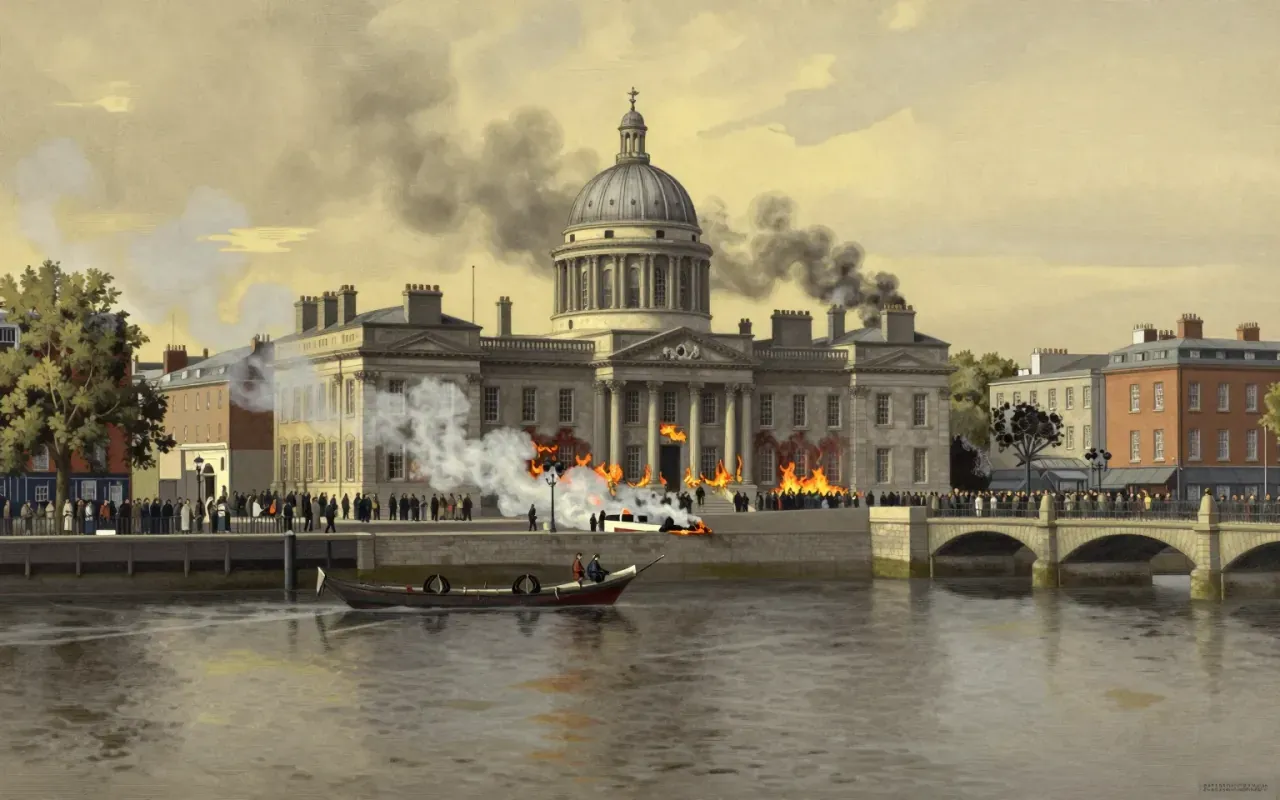
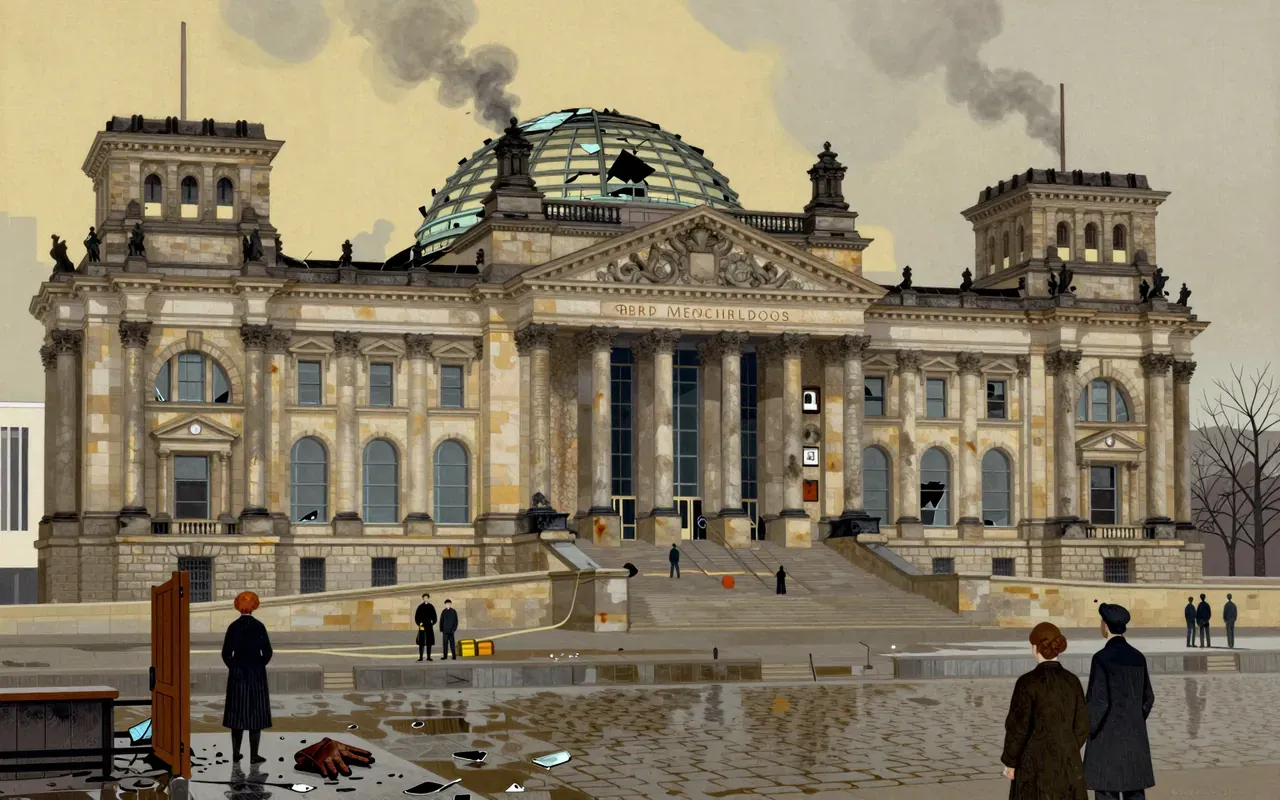
On 27 February 1933, an arson attack destroyed much of the Reichstag building in Berlin. Firefighters were dispatched after an alarm call. By arrival, the structure was engulfed in flames. Van der Lubbe was found and arrested inside. The fire was extinguished by 11:30 p.m. Most of the building was gutted. Twenty unburned bundles of firelighters were found in the ruins.
How we know it
The fire was reported via alarm call to a Berlin fire station shortly after 9:00 p.m. on 27 February 1933. Police and firefighters arrived to find the building engulfed in flames. They found Van der Lubbe inside during a thorough search and arrested him. Firefighters extinguished the fire by 11:30 p.m., but most of the building was gutted. In the ruins, responders found 20 unburned bundles of flammable material.
Why it went that way
The fire went that way because the Nazi-led government controlled the state apparatus — police, courts, press — and moved immediately to exploit the event. Within 24 hours, they issued emergency legislation. The speed and scope of the response show pre-existing plans, not improvisation. But the document gives no evidence of foreknowledge, coordination or prior intent — only the fact of rapid political use.
What is still contested
The document does not establish who set the fire, whether Van der Lubbe acted alone, or whether Nazis or Communists were involved. It states only that the event ‘involved the Nazis and Communists’ — but gives no evidence of their involvement, no names, no actions, no motive, no testimony. That phrasing reflects contemporary political framing, not verified agency.
What it changed
The fire enabled the Nazi government to issue the Reichstag Fire Decree the next day. That decree suspended key civil liberties in the Weimar Constitution, including habeas corpus, freedom of speech, freedom of assembly and privacy of communications. It permitted indefinite detention without charge and paved the way for mass arrests of Communists and other opponents.
Is it worth your time
Yes. The Reichstag fire is not a turning point because it happened — it is consequential because Hitler’s government used it immediately to suspend civil liberties, ban opposition parties and consolidate one-party rule. Its evidentiary record is narrow but decisive: arson, arrest, suppression, exploitation.