An edifice complex funded by debt
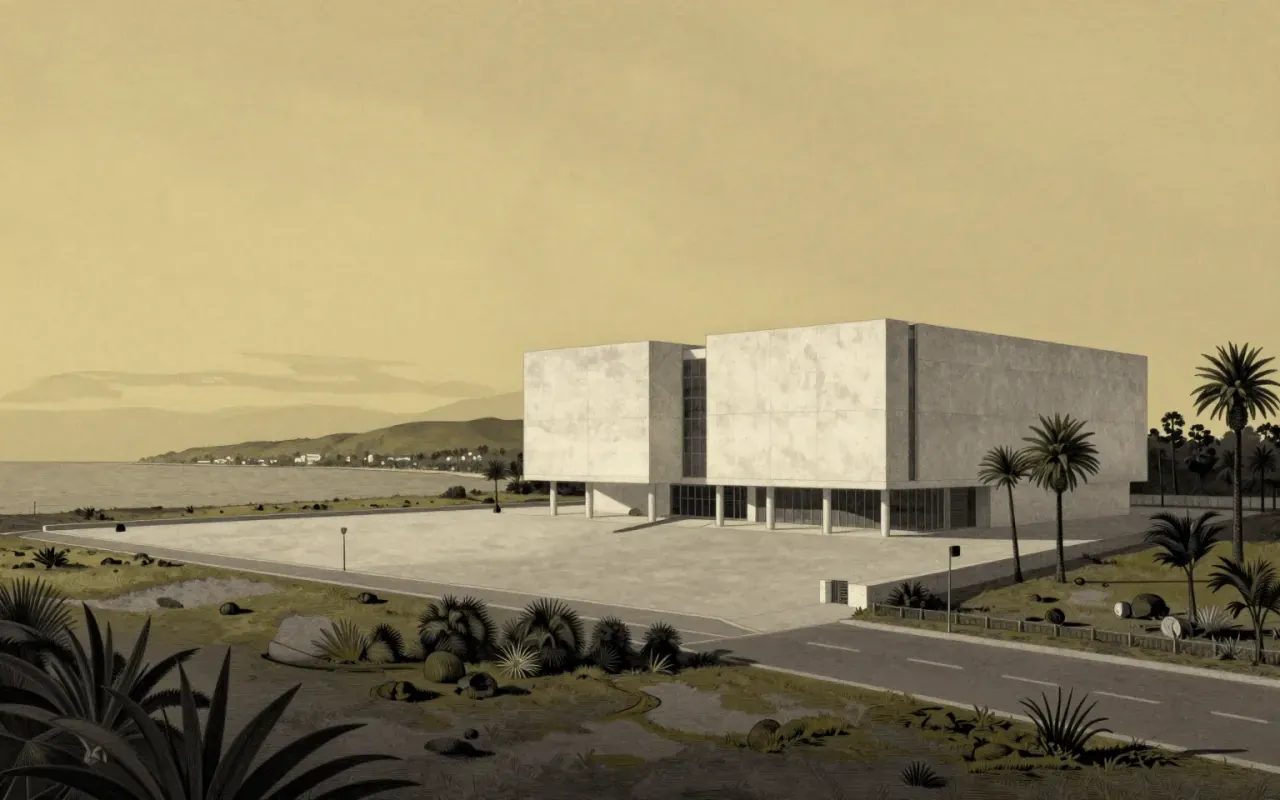
Ferdinand Marcos won the Philippine presidency in 1965 after building a political career through Congress and the Senate, and his first term emphasised aggressive infrastructure development, including the North Luzon Expressway and Maharlika Highway, funded through foreign borrowing that increased infrastructure spending by roughly seventy percent between 1966 and 1970. Critics later termed this approach an edifice complex, using visible construction projects to sustain public support while also elevating his wife Imelda’s political profile, and Marcos’s 1969 re-election campaign spending triggered a balance-of-payments crisis that fed into the economic turmoil and student protest movement, known as the First Quarter Storm, that characterised his early second term.
Martial law justified by a bombing historians now dispute
Marcos declared martial law on 21 September 1972, citing the Plaza Miranda bombing of the previous year and an alleged ambush of Defense Minister Juan Ponce Enrile that September, though the attribution of both events remains genuinely disputed among historians: declassified CIA documents have been read as implicating the government itself in the Plaza Miranda bombing rather than the communists Marcos publicly blamed, while Enrile himself later admitted the ambush had been staged before retracting that admission, leaving both founding justifications for martial law considerably less solid than Marcos’s official account claimed at the time. The resulting decade of rule by decree suspended constitutional rights, abolished Congress and arrested opposition leaders including Benigno Aquino Jr.
Three thousand killings, documented and estimated
Historian Alfred McCoy’s research into the martial law period documents approximately 3,257 extrajudicial killings, 35,000 people tortured and 70,000 illegally detained, alongside 737 recorded disappearances between 1975 and 1985, figures a contemporary journalist characterised as amounting to a comprehensive system of human rights abuse that suspended constitutional protections, due process and evidentiary standards across the board. Martial law was formally lifted in 1981, though Marcos retained extensive decree-making powers, and the 1983 assassination of returning exile Benigno Aquino Jr. reignited organised opposition that had been suppressed for much of the preceding decade.
A fortune nobody has fully traced
The scale of the Marcos family’s wealth accumulation is documented through World Bank estimates and other sources placing the total stolen at approximately ten billion dollars, extracted through government monopolies, crony loans, forced enterprise seizures, direct treasury raids and offshore money laundering across multiple countries. Economic data from the period presents a genuinely contested picture: the country’s GDP quadrupled from roughly eight billion dollars in 1972 to 32.45 billion by 1980, a figure some accounts cite as evidence of the era’s economic success, even as poverty incidence rose from 41 percent in the 1960s to 59 percent by the time Marcos was removed from power, and external debt climbed from 2.3 billion dollars in 1970 to 26.2 billion by 1985.
Growth on paper, poverty in practice
The fraudulent snap presidential election of February 1986 provided the immediate trigger for Marcos’s downfall, as Defense Minister Enrile and General Fidel Ramos defected to lead a coup attempt that Cardinal Jaime Sin’s radio appeal turned into the mass civilian mobilisation known as the People Power Revolution, protecting the rebel military faction from loyalist forces and ultimately forcing Marcos into exile in Hawaii, where he died in 1989 with his eventual Philippine burial remaining a contested political issue for decades afterward. The subsequent 1987 Constitution established the Fifth Republic, and the country’s debt-servicing burden from the Marcos era was projected by some accounts to extend well into the twenty-first century.
A golden age argument that still divides Philippine politics
The Marcos era is worth studying precisely because its documented record supports two genuinely conflicting narratives at once, and historians explicitly identify an ongoing effort by what one account calls historical distortionists to characterise the period as an economically successful golden age, a framing the underlying poverty and debt figures directly contradict even as the headline GDP growth numbers are accurately reported. Reading the period requires holding McCoy’s documented killings and detentions, the roughly ten billion dollars in alleged theft, and the genuine infrastructure expansion together, rather than allowing any single favourable statistic to stand in for the full and considerably darker picture the human rights and economic record together present.