An establishment insider takes over
Frederik Willem de Klerk was born in 1936 into an Afrikaner family with deep roots in the National Party, studied law at Potchefstroom University, and built a successful legal practice before entering parliament in 1972. He rose steadily through ministerial positions under President P.W. Botha, serving as Minister of Education from 1984 to 1989, before becoming State President later that year. Nothing in this career trajectory particularly predicted what followed: de Klerk was widely regarded within the party as a conventional establishment figure rather than a reformist, making his subsequent actions as president a genuine surprise to observers both inside and outside South Africa.
Reforms nobody predicted
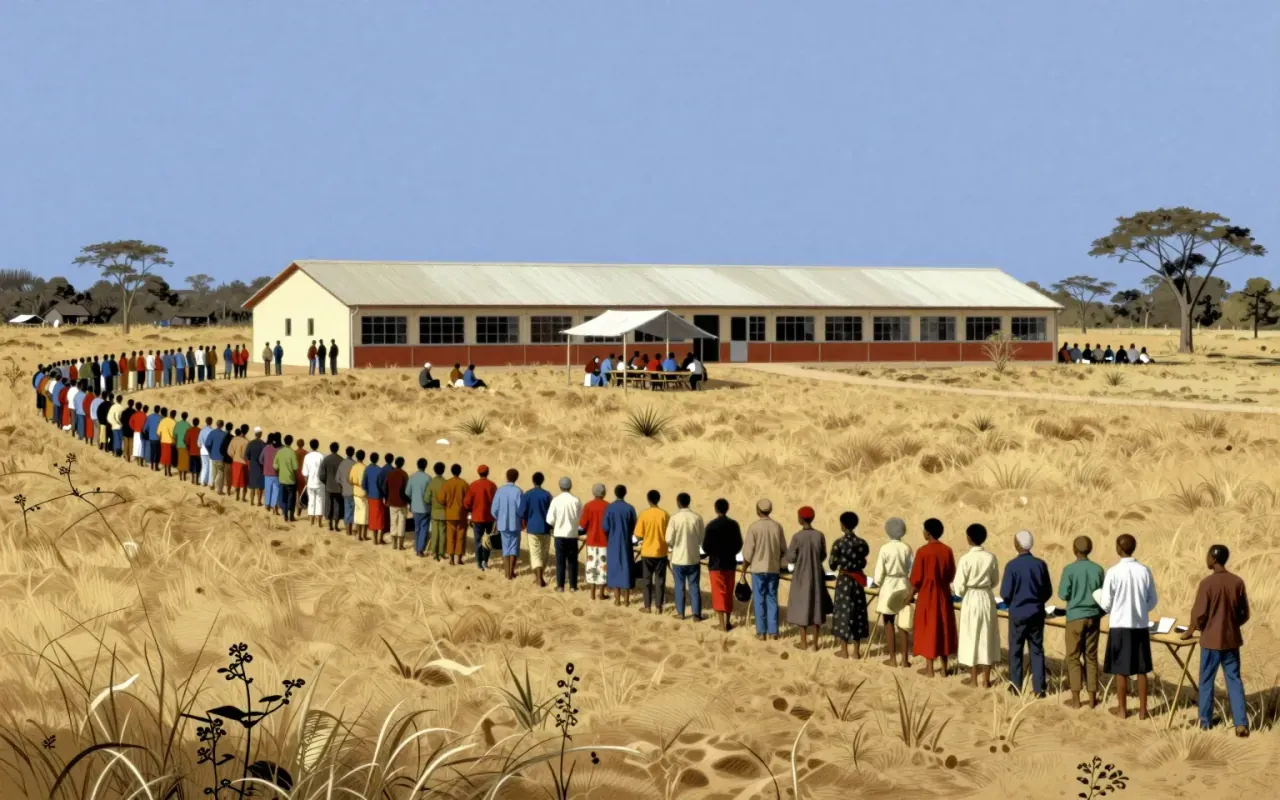
Within months of assuming office, de Klerk began releasing elderly anti-apartheid prisoners including Walter Sisulu in October 1989, before announcing on 2 February 1990 the legalisation of previously banned organisations including the African National Congress and the South African Communist Party, alongside the release of political prisoners. Nelson Mandela was freed on 11 February 1990, and de Klerk subsequently ordered the dismantling of South Africa’s nuclear weapons programme, decisions that together marked a dramatic reversal of decades of National Party policy. A whites-only referendum in March 1992 saw roughly two-thirds support continued negotiations toward ending apartheid, a democratic mandate obtained through an electorate that itself excluded the country’s Black majority.
A referendum only white South Africans could vote in
The negotiations de Klerk oversaw culminated in South Africa’s first universal elections in April 1994, in which the ANC won 62 percent of the vote against the National Party’s 20 percent, formally ending apartheid rule. De Klerk himself offered varying accounts of his own motivations over the years, at times describing his transformation as pragmatic evolution rather than any ideological conversion, and his brother similarly characterised the shift as built on pragmatism rather than any dramatic change of heart, a self-description that complicates any simple narrative crediting de Klerk with moral leadership rather than a calculated recognition that apartheid had become politically and economically unsustainable.
A commission’s uncomfortable finding
The Truth and Reconciliation Commission’s investigation into apartheid-era violence produced a significant and uncomfortable finding regarding de Klerk specifically: while he maintained that security forces’ actions never included authorised assassination, murder or torture, the commission concluded his denial that colleagues had authorised abuses, including the Khotso House bombing, was indefensible given the evidence available to it. De Klerk formally challenged this finding, and the commission adjusted its language somewhat in response, but its 2002 final report maintained substantive criticism of his account, leaving a documented gap between his public denials and the commission’s own assessment of what he must reasonably have known.
A prize shared with the man he’d imprisoned
De Klerk shared the 1993 Nobel Peace Prize with Mandela, an award recognising both men’s roles in negotiating apartheid’s end, and remained internationally active after leaving office in 1997, establishing the FW de Klerk Foundation in 2000 to promote his account of South Africa’s transition. His later reputation grew more complicated: a 2015 letter defending a controversial colonial-era statue drew criticism, and in 2020 he provoked international backlash by describing apartheid as having been characterised, in his view, in exaggerated terms amounting to Soviet-era propaganda, a claim so widely condemned that his own foundation retracted it within days, though the episode had already reopened questions about how genuinely he had reckoned with apartheid’s legacy.
A retraction his own foundation issued
De Klerk died in November 2021, having released, shortly before his death, a posthumously broadcast video apology for apartheid’s harm that was notably more unqualified than his more limited 1993 statements had been. His life is worth studying precisely for this persistent tension between genuine, consequential reform, the release of Mandela and the negotiated end of white minority rule stand as real historical achievements, and an incomplete personal reckoning with the system he had spent decades helping to administer before dismantling it. Reading his career in full, rather than through the Nobel Prize alone, gives a more accurate sense of how complicated a peaceful transition’s architects can remain even after the transition itself succeeds.