From Portuguese soldier to Spanish admiral
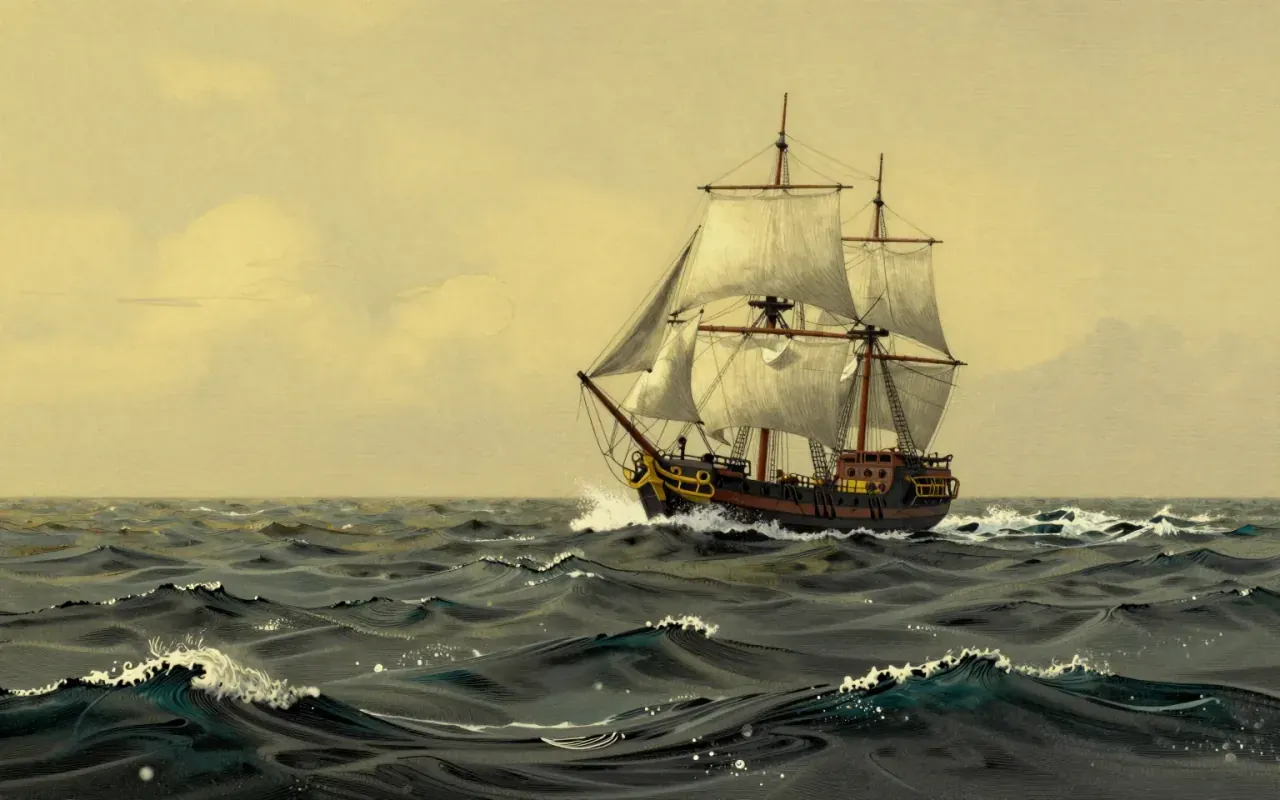
Ferdinand Magellan was born in Portugal around 1480 and spent nearly a decade in Portuguese service in Asia, including in the 1511 conquest of Malacca, before a permanent leg injury and accusations of improper trading soured his standing at home. In 1517 he moved to Spain and proposed to the Spanish crown a westward route to the Spice Islands that would avoid Portugal’s existing eastern route around Africa, and King Charles I approved the plan and gave him command of five ships and around two hundred and seventy men, which left Spain in September 1519. The fleet found a passage through South America, later named the Strait of Magellan, crossed the Pacific, and reached the Philippines in 1521, where Magellan was killed in a battle with a local ruler named Lapulapu that April, before the expedition’s remaining ship, the Victoria, completed the journey back to Spain under a different commander in September 1522.
A reliable journal against a mutineer’s story
The fullest and most trusted account of the voyage comes from Antonio Pigafetta, an Italian scholar who sailed with the expedition and kept a detailed journal, later published as an account of the first voyage around the world, which historians treat as considerably more reliable than testimony from crew members who deserted or mutinied during the voyage and had reason to shade events in their own favour once they returned to Spain. Surviving members of one ship that turned back early, in particular, gave an account of an earlier mutiny that portrayed Magellan unfavourably, a version that dominated initial Spanish perceptions of the voyage until Pigafetta’s more careful record circulated more widely and began to correct it.
A short crossing expected, a long ordeal delivered
Magellan’s proposed route depended on the idea, based on the incomplete geography of the time, that a westward passage to Asia would be reasonably short, and he reportedly expected the Pacific crossing specifically to take only a matter of days once the fleet had passed through the strait; it actually took nearly four months, during which food ran out and roughly thirty men died, mostly from scurvy. He drew on two personal sources of intelligence to make his case to the Spanish crown: a man he had once enslaved from Malacca, who he believed to be native to the Spice Islands, and letters from a friend stationed there, both used to argue the islands fell within the hemisphere the Treaty of Tordesillas had assigned to Spain rather than Portugal.
Whose circumnavigation was it really
Historians are careful to note that Magellan himself never completed a full circumnavigation of the globe: having earlier travelled eastward from Portugal to Asia years before the expedition, his death in the Philippines meant that only Juan Sebastian Elcano, who took over command of the Victoria, actually finished the westward voyage back to Spain, so that the achievement belongs properly to the expedition and to Elcano’s completion of it rather than to Magellan personally. His death itself is debated in its details, with historians disagreeing over how far his own tactical decisions, including pushing a local ally into a fight with a rival chief, contributed to the ambush that killed him, and Portuguese contemporaries at the time dismissed his entire expedition as motivated by personal spite against the Portuguese king rather than genuine ambition.
Disgraced at home, celebrated later
In the immediate aftermath, Magellan received little credit in either Spain or his native Portugal, and his widow was reportedly placed under a form of house arrest while officials disputed what was owed her, since Elcano rather than Magellan was initially treated as the voyage’s hero. His reputation recovered substantially over the following centuries once Pigafetta’s account became the standard record, and the voyage is now generally regarded as one of the most consequential in the history of navigation, having proven conclusively how vast the Pacific actually was and demonstrated that a ship could, in principle, sail all the way around the world. His name remains attached to the strait he found, a pair of nearby galaxies visible from the southern hemisphere, and a NASA spacecraft sent centuries later to map Venus.
A voyage bigger than any one man’s story
Magellan is worth attention for the gap between his historical reputation as the man who circumnavigated the globe and the more precise, less tidy fact that he died three-quarters of the way through the voyage, leaving its completion to a subordinate whose own account of events long overshadowed the more reliable record kept by Pigafetta. Readers interested in the actual mechanics and hardships of early global navigation, rather than a simplified hero’s journey, will find the detailed record genuinely rewarding to explore. Readers wanting a single uncomplicated discoverer to credit with the achievement should expect the story to insist, correctly, on shared and disputed credit instead.