Three ships, one route, heavy losses
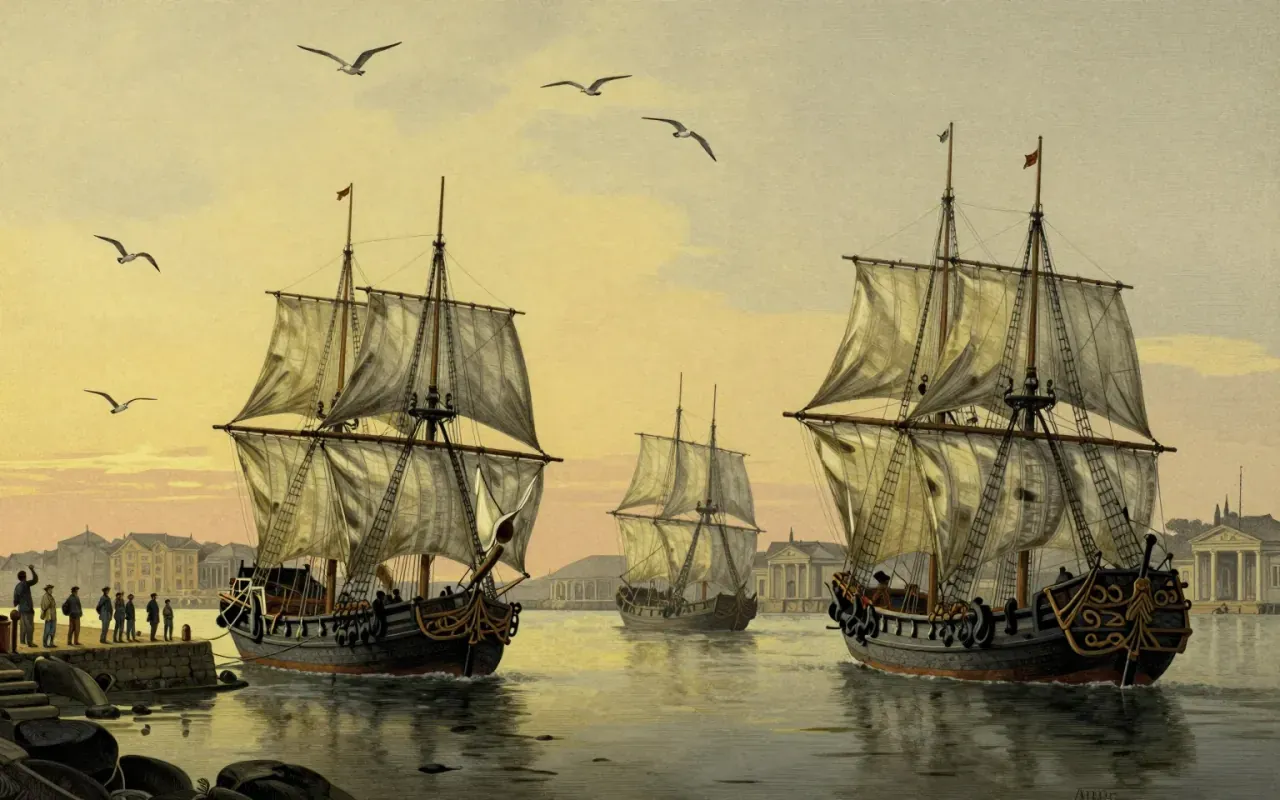
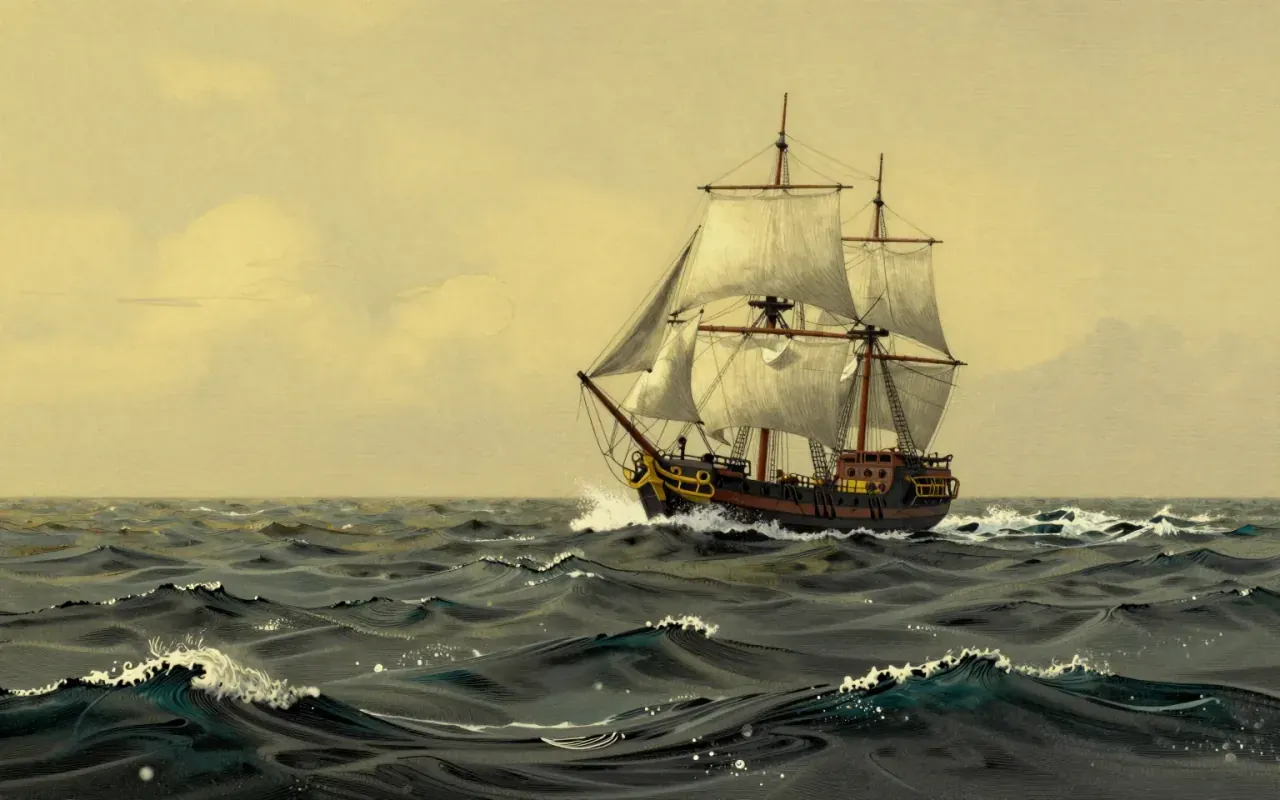
Vasco da Gama left Lisbon in July 1497 with three ships and roughly one hundred and seventy men, following a route around Africa’s southern tip that the Portuguese navigator Bartolomeu Dias had already shown was passable nearly a decade before. After rounding the Cape of Good Hope and sailing up the East African coast, da Gama picked up a pilot at Malindi to guide the fleet across the Indian Ocean, reaching the port of Calicut on India’s south-western coast in May 1498, the first known European sea voyage to India around Africa. The return proved far costlier than the outward leg: of roughly one hundred and forty-eight men who had set out on the leg that reached India, only fifty-five survived to see Portugal again, most lost to scurvy, and da Gama himself arrived home in 1499 after his own illness delayed the final stretch.
Told by the sailors, not by Calicut
The voyage is documented chiefly through the journal of a member of the crew, generally attributed to Alvaro Velho, along with later Portuguese chronicles compiled from participant accounts, which together recorded unusually detailed observations of the plants, animals and peoples encountered along the way. No comparable independent account survives from the Indian or East African side of these first encounters, so much of what is known about how da Gama’s arrival was actually received in Calicut comes filtered through Portuguese description of a negotiation in which, by their own account, an initial exchange of gifts was considered too modest by their hosts, a detail that hints at the scale of the cultural and diplomatic misunderstanding on both sides.
Built on an earlier navigator’s proof of concept
Portugal’s pursuit of a sea route to India was driven by the prospect of bypassing the expensive intermediaries along existing overland and Mediterranean trade routes and dealing directly in the lucrative spice trade instead. The groundwork had been laid by earlier voyages, particularly Dias’s rounding of the Cape of Good Hope in 1488, which proved the route was navigable, and by intelligence gathered independently through agents such as Pero da Covilha, sent overland years earlier to scout trading conditions in the Indian Ocean region. King John II initiated the planning for a renewed attempt to reach India by sea, and his successor Manuel I, after John’s death, appointed da Gama to lead the expedition that finally carried the plan through in 1497.
A tidy explanation that does not hold up
A once-common explanation for why Europeans sought a new route to Asia at all, that the Ottoman capture of Constantinople in 1453 had cut off or made prohibitively expensive the existing spice trade, was directly challenged by a 1915 study showing that spice prices in Europe did not actually rise in a way that supports that account, undermining a tidy single-cause explanation for Portugal’s search for an alternative route. Historians also emphasise that da Gama’s voyage did not secure an immediate or straightforward trading advantage: he left Calicut without any formal trade agreement, having managed only modest sales of goods and small purchases of spices, a far more limited commercial result than the voyage’s later historical reputation as a triumph might suggest.
A trade network built over decades, not overnight
The route da Gama opened let Portugal build a trading network across the Indian Ocean that bypassed the Mediterranean spice trade previously dominated by Venice, contributing over subsequent decades to a decline in that older monopoly and to falling spice prices in Europe more broadly. Portuguese ships erected a series of stone markers along the African coast to assert territorial claims as they went, of which only one, at Malindi, survives intact today. The voyage’s opening of direct sea contact between Europe and South Asia is generally treated as a foundational moment in the era of European maritime expansion, even though, as historians now stress, it entered an Indian Ocean trading world that was already extensive and long-established rather than empty territory awaiting discovery.
A famous arrival, a modest immediate result
The voyage is worth attention less for the single dramatic arrival at Calicut than for the gap between that moment’s later symbolic weight and its immediate, fairly unimpressive commercial results, a gap that says something useful about how historical reputations can outgrow their original circumstances. Readers interested in the mechanics of early modern maritime exploration, and in how earlier voyages and intelligence-gathering quietly made a famous one possible, will find the buildup genuinely informative to trace. Readers expecting the voyage to have opened trade on favourable terms immediately, or hoping for an Indian Ocean perspective on the encounter to balance the Portuguese account, will not find either in the sources that survive.