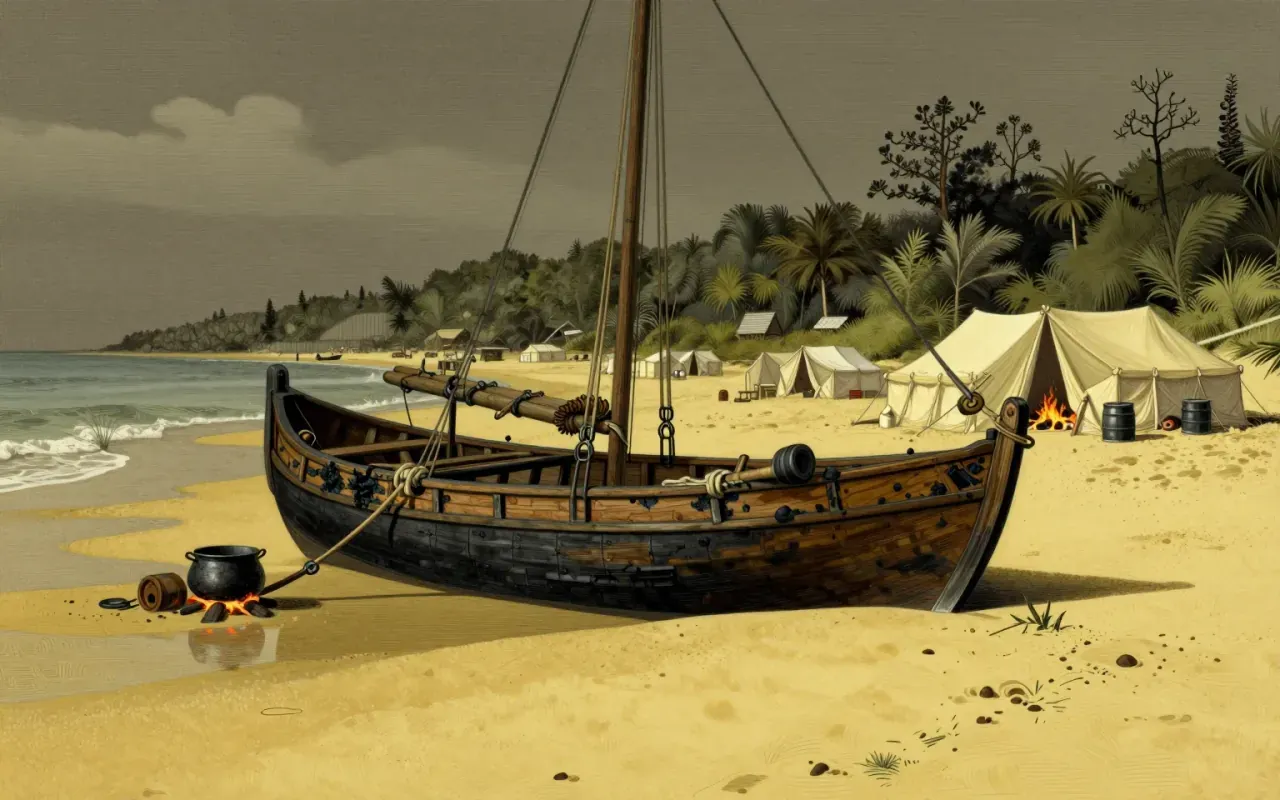
Rounding a continent no one had rounded before
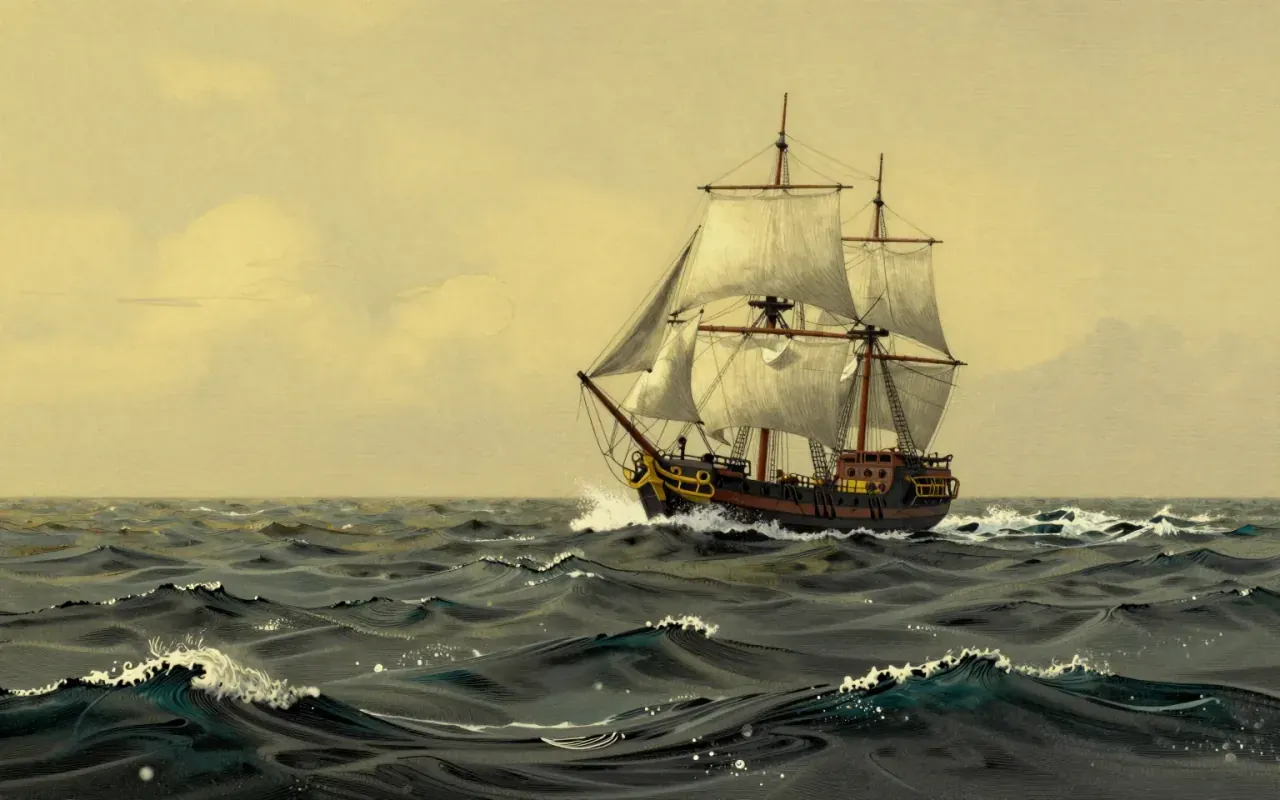
Bartolomeu Dias was a Portuguese navigator who left Lisbon around the middle of 1487 with three ships to push further along the African coast than any previous Portuguese expedition had managed. In February 1488, after weeks at sea, his fleet rounded the southern tip of Africa, reaching as far as a point on the coast where he raised a stone marker in March before turning back, having proved for the first time that a sea route around Africa toward the Indian Ocean existed. He returned to Lisbon in December 1488 after sixteen months away, and years later helped oversee the construction of ships for Vasco da Gama’s expedition, which used the route Dias had pioneered to reach India in 1498. Dias died in 1500 when his ship was lost in a storm near the same cape he had first rounded, while sailing as part of a separate expedition that had already reached Brazil.
A voyage documented sixty years after the fact
Remarkably little direct documentation of Dias’s voyage survives, since nearly all Portuguese maritime records from this period were destroyed in the Lisbon earthquake and its accompanying fires and flooding in 1755. Most of what is known instead comes from the Portuguese historian Joao de Barros, writing roughly sixty years after the voyage took place, which leaves real uncertainty about specific details that a contemporary account might have settled. Confusion is compounded by the existence of several other Portuguese sailors from the period who shared his name, making it genuinely difficult in places to be certain which recorded activities belong to this particular Dias rather than to a namesake.
Sailing away from land to get around it
Dias’s central achievement was demonstrating that ships could sail far out into the open Atlantic, well away from the African coastline, and use the resulting wind patterns to swing back toward land south of the continent’s tip, a technique that proved considerably more effective than hugging the coast directly. This approach let his expedition push roughly a thousand miles of coastline further than previous Portuguese voyages had reached and confirmed that the African coast trended back toward the northeast beyond the cape, evidence that a sea passage to the Indian Ocean genuinely existed rather than remaining a theoretical possibility. That proof of concept, more than any specific piece of navigational data, is what made Vasco da Gama’s later, more famous voyage to India possible at all.
A storm, a name, and no document to settle either
Historians debate why Dias’s fleet turned away from the coast for a period near what is now Walvis Bay, uncertain whether the move was forced by a storm or was a deliberate choice to seek more favourable winds further out to sea, since no surviving account settles the question definitively. The renaming of the cape itself is also uncertain in its details: tradition holds that Dias, discouraged by the difficulty of the voyage, called it the Cape of Storms, and that King John II later renamed it the Cape of Good Hope to emphasise the promise of a route to India, but this specific attribution rests on later tradition rather than a document from the time confirming it.
Little reward for a foundational achievement
Despite the scale of his achievement, Dias received strikingly little formal recognition or reward during his own lifetime, a detail historians note as a genuine surprise given how directly his voyage enabled the far more celebrated one that followed under Vasco da Gama. Rather than leading further exploration himself, he was assigned more limited roles afterward, overseeing ship construction for da Gama’s expedition and accompanying part of that fleet only partway before being reassigned elsewhere. Today his achievement is commemorated through monuments at the Cape of Good Hope and a museum in Mossel Bay housing a full-size replica of one of his ships, memorials that arrived centuries after the recognition he did not receive in his own time.
The man behind the more famous voyage
Dias is worth attention as the figure whose achievement quietly made possible a more famous one, since Vasco da Gama’s celebrated voyage to India depended entirely on a route Dias had proven viable a decade earlier, with far less reward or lasting fame to show for it in his own lifetime. Readers interested in how credit for connected achievements can be distributed unevenly across the people actually responsible will find this a genuinely instructive case. Readers wanting a richly documented personal account of the voyage itself should be aware that the destruction of Portugal’s maritime archives in 1755 leaves the record thinner than the achievement’s importance would suggest it ought to be.