A disputed count, then a highway full of people
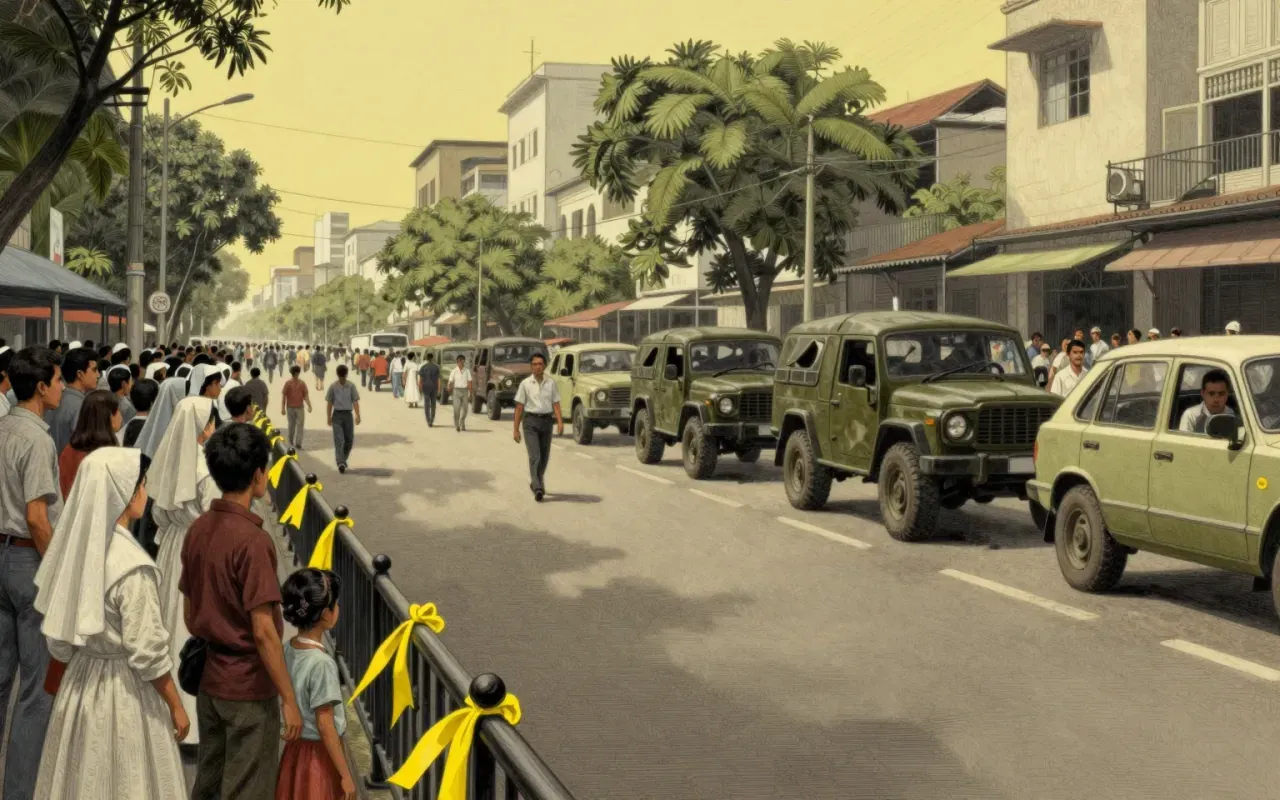
Ferdinand Marcos called a snap presidential election for 7 February 1986 against Corazon Aquino, the widow of assassinated opposition senator Benigno Aquino. The government’s Commission on Elections declared Marcos the winner with roughly 10.8 million votes to Aquino’s 9.3 million, while the independent monitoring group NAMFREL reported the reverse, around 7.8 million for Aquino against 7.1 million for Marcos. On 22 February, Defense Minister Juan Ponce Enrile and armed forces Vice Chief of Staff Fidel Ramos publicly broke with Marcos, and over the following three days an estimated two million civilians gathered along EDSA avenue in Manila to protect them, ending Marcos’s hold on power by 25 February.
The count that thirty of the government’s own technicians walked out on
Much of what is known about the disputed count comes from the government’s own election commission, whose thirty computer technicians walked out during the tabulation, stating publicly that the results were being deliberately manipulated. Cardinal Ricardo Vidal added an early public intervention, arguing that citizens held a moral basis to seek change when a government would not correct its own abuses. Later commemoration, including the 2003 inscription of Philippine radio broadcasts from the uprising in UNESCO’s Memory of the World register, has preserved contemporary recordings of the four days as primary evidence, giving historians access to real-time coverage rather than only after-the-fact recollection.
Two decades of martial law and an economy in crisis
Marcos had ruled the Philippines since 1965 and imposed martial law in 1972, governing for the following two decades under what is described as a form of constitutional authoritarianism, ratified through a 1973 plebiscite conducted under military oversight. By the mid-1980s his government faced a deepening economic crisis alongside investigative reporting into his family’s overseas financial holdings, pressures that led him to call the snap election in an attempt to renew his legitimacy. The election’s disputed outcome, rather than settling the question, instead precipitated the defections and mass demonstrations that followed within weeks.
How much was stolen, and how it is still being counted
The full scale of wealth the Marcos family allegedly removed from Philippine state institutions remains disputed, with estimates reaching as much as ten billion dollars taken from the central bank and other sources during his rule, a figure investigators have pursued for decades with only partial recovery. His government is also described as having used violence against political opponents, including Muslim separatists and suspected communists, though comprehensive casualty figures for that repression are not firmly established in the historical record. These unresolved totals, for both stolen wealth and repression, mean that even after the regime’s fall, its full costs have never been conclusively tallied.
An exile, a widow, and a restored democracy
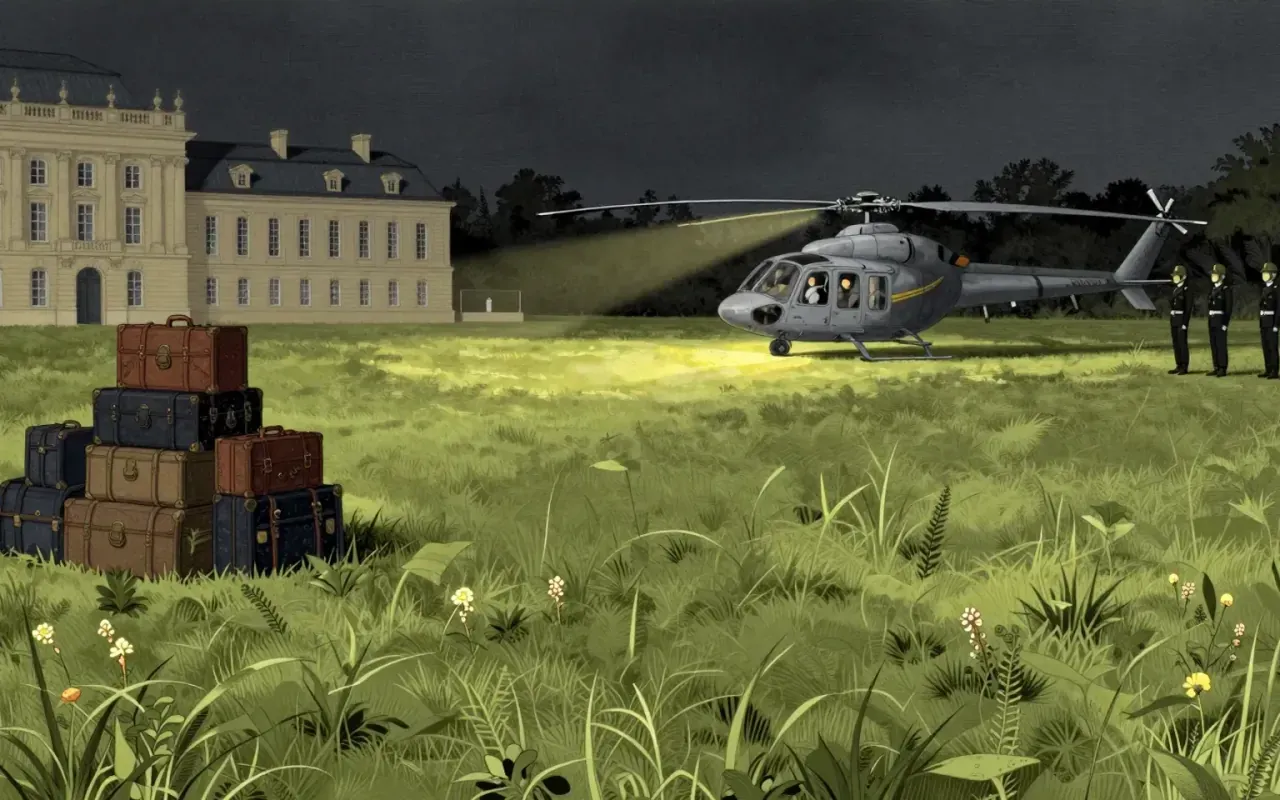
On the advice of the American government, the Marcos family fled to Hawaii, where Ferdinand Marcos died in 1989. Corazon Aquino was inaugurated as the eleventh president of the Philippines, restoring the civilian, multi-party governance that martial law had suspended since 1972. The transition is recorded as having cost thirteen to eighteen lives among Marcos opponents and two among government forces during the four days of confrontation, a relatively low toll given the scale of the mobilisation, and it marked one of the clearer instances in the period of a long-ruling government collapsing after a security establishment split rather than continued fighting for it.
Worth studying for how a dictatorship’s own numbers turned against it
What makes the episode worth returning to is not only the size of the crowds on EDSA but the earlier, quieter rupture inside the government’s own election machinery, workers processing Marcos’s tally who chose to say publicly that the numbers being reported did not match what they were seeing. That detail complicates any account that treats the fall of the regime as purely a story of popular courage in the streets, since the first visible crack appeared among the people counting votes for the government itself. Readers drawn to how authoritarian systems lose their own internal credibility before they lose the street will find that thread the most rewarding part of the story.