historybriefs
Topic

Italy

A unified state since 1861 and a collection of city-states in every other respect.

11
in history
13:00
average
143 min
in total
52
across the network
Italy across the network →
All briefs11
13:00

Benito Mussolini

1883–1945

Benito Mussolini built his early reputation as a socialist journalist before breaking with the party over the First World War, founding the fascist movement that took power in 1922 through a mostly legal transfer he later mythologised as a revolutionary march on Rome. His alliance with Hitler, sealed through Ethiopia's invasion, the Spanish Civil War, and the Pact of Steel, ended in his own removal by the king he had served, capture by partisans, and summary execution in April 1945.
13:00

Giuseppe Garibaldi

1807–1882

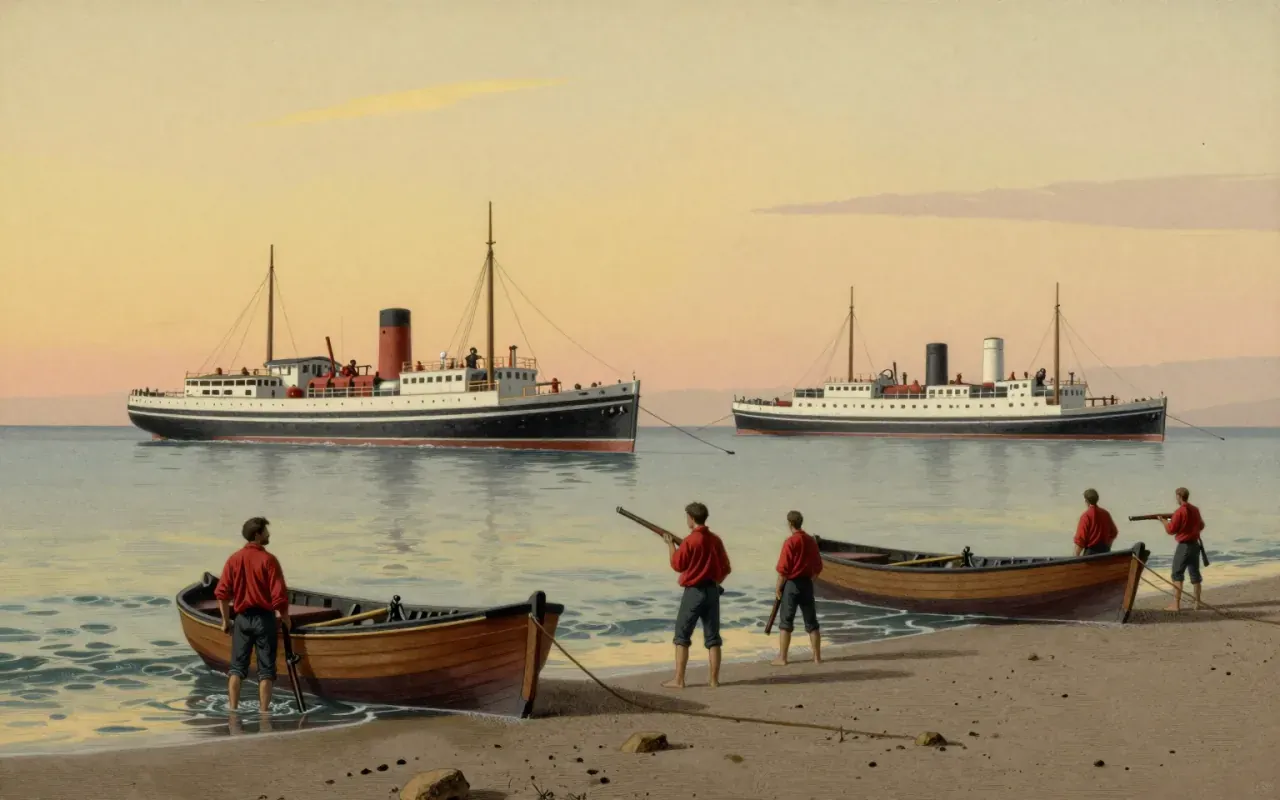
Giuseppe Garibaldi spent fourteen years fighting in South American civil wars before returning to Italy, where he led a volunteer force of roughly a thousand men to conquer Sicily and Naples in 1860 and then handed both to King Victor Emmanuel II rather than pursue the republic he actually believed in. Historians have increasingly complicated the heroic myth built around him, noting that the peasants who supported his cause in Sicily were driven by hatred of local landlords rather than nationalism, and that Garibaldi himself sided with those same landlords once uprisings threatened his campaign's order.

13:00

Leonardo da Vinci

1452–1519

Leonardo da Vinci trained as a painter's apprentice in Florence, worked for patrons including the Duke of Milan and the King of France, and produced a small surviving body of paintings, among them the Mona Lisa and the Last Supper, alongside extensive notebooks covering anatomy, engineering and natural philosophy that he never published in his lifetime. Much of the familiar personal narrative about him comes from Giorgio Vasari's biography, written decades after Leonardo's death in 1519, which modern historians treat as containing apocryphal or unverifiable episodes alongside genuine information.

13:00

Michelangelo

1475–1564

Michelangelo trained as a painter before becoming the era's defining sculptor, producing the Pieta, David and the Sistine Chapel ceiling for a series of Medici and papal patrons across nearly seven decades of work. His two earliest biographies were written by admirers, one with his own direct input, and both are now understood to have shaped his public image, including by obscuring the men to whom he addressed much of his surviving love poetry.

13:00

Petrarch

1304–1374

Petrarch abandoned law for scholarship and poetry, wrote lifelong verse addressed to a woman he called Laura, and helped launch the humanist recovery of classical texts after finding a cache of Cicero's letters in 1345. He is unusually well documented through his own vast correspondence, but that same abundance means historians read his most flattering self-portraits, including the Laura story itself, with real caution.

13:00

Raphael

1483–1520

Raphael trained under Perugino, absorbed elements of Leonardo's technique, and spent his final twelve years producing major works for two popes in Rome, including the Vatican frescoes, before dying in 1520 at thirty-seven. His workshop, reportedly numbering around fifty assistants, means many later paintings attributed to him were only partly his own work, and much of his biography still rests on a single, decades-later account by Giorgio Vasari.

13:00

March on Rome

27 October – 30 October 1922

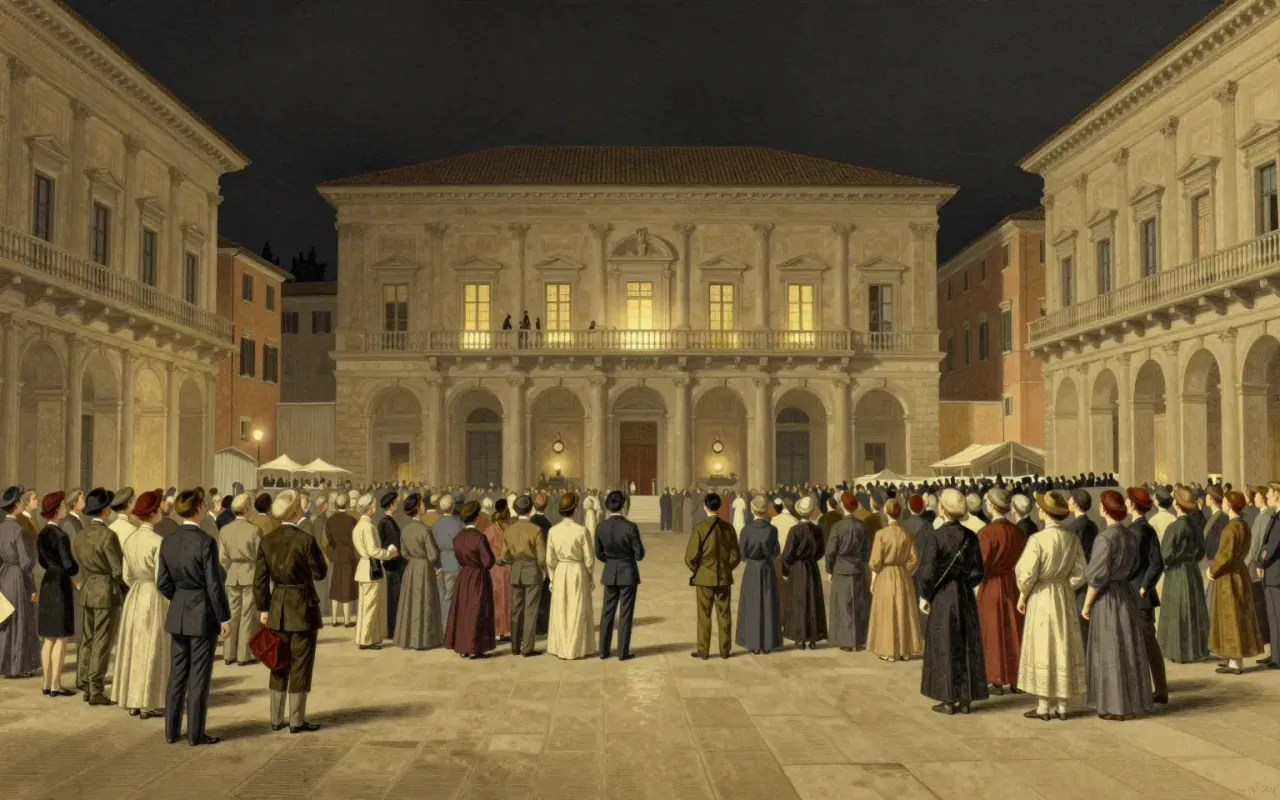
Fascism's founding myth of a revolutionary seizure of power in October 1922 describes an event that, on the documented record, was a fewer-than-thirty-thousand-strong show of force the king chose not to resist, followed by Mussolini's entirely constitutional appointment as prime minister under Italy's existing statute. Victor Emmanuel III's refusal to sign a state-of-siege order, made amid fears of civil war and of his own pro-fascist cousin's ambitions, did more to bring Mussolini to power than any fighting the march itself involved.

13:00

Medici Bank

1397–1499

Giovanni di Bicci de' Medici founded the bank in 1397 with 10,000 gold florins, building a holding-company structure of semi-independent branch partnerships and using bills of exchange to earn profit on currency conversion rather than charging interest banned under canon law. Wealth from the bank, later boosted by a papal monopoly on alum from Tolfa, let Cosimo de' Medici become Florence's unofficial ruler by 1434 without ever holding formal office. Bad loans to rulers including the English crown, mismanagement at the Bruges branch, and Lorenzo the Magnificent's neglect of the business left the bank unable to survive the political shock of the French invasion of 1494.

13:00

Renaissance

1400–1650

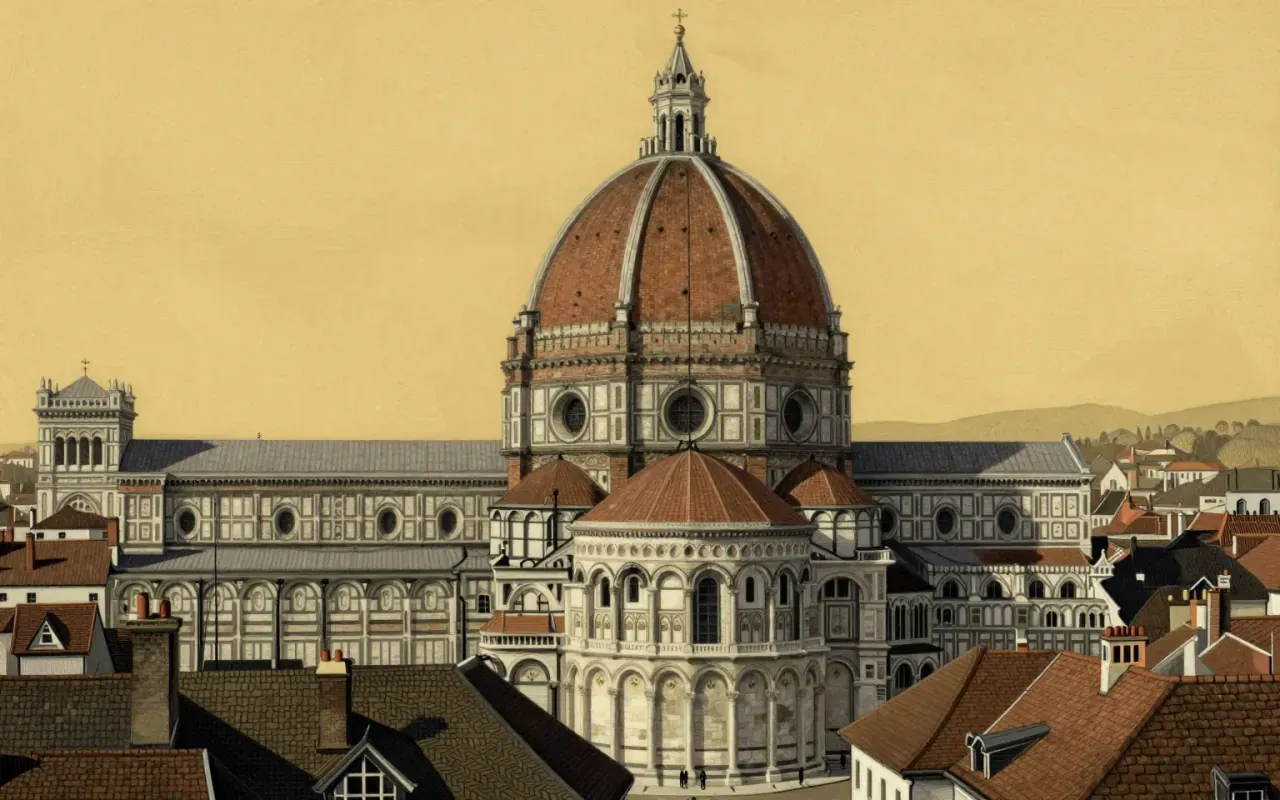
Conventionally dated from the fourteenth to the sixteenth or seventeenth century and beginning in the cities of northern Italy, the Renaissance combined a revival of interest in classical Greek and Roman texts with advances in art, printing, navigation and natural philosophy, spreading gradually across Europe from Florence and Venice outward. Modern historians dispute both what caused it, citing everything from Medici patronage to the aftermath of the Black Death, and whether it represents a genuine rupture with the medieval period or an extension of trends already under way before it.

13:00

Unification of Italy

1815–1871

The unification of Italy proceeded through a combination of diplomacy under Camillo Cavour, war against Austria, and Giuseppe Garibaldi's volunteer conquest of Sicily and Naples in 1860, culminating in the proclamation of the Kingdom of Italy in March 1861 and completed with the capture of Rome in 1870. Historians disagree about when the process should be considered finished, some extending it to 1871 or even 1920, and about how much popular support genuinely existed for a national project largely driven by elite diplomacy and military campaigns.

13:00

Venetian Arsenal

Founded c. 1104

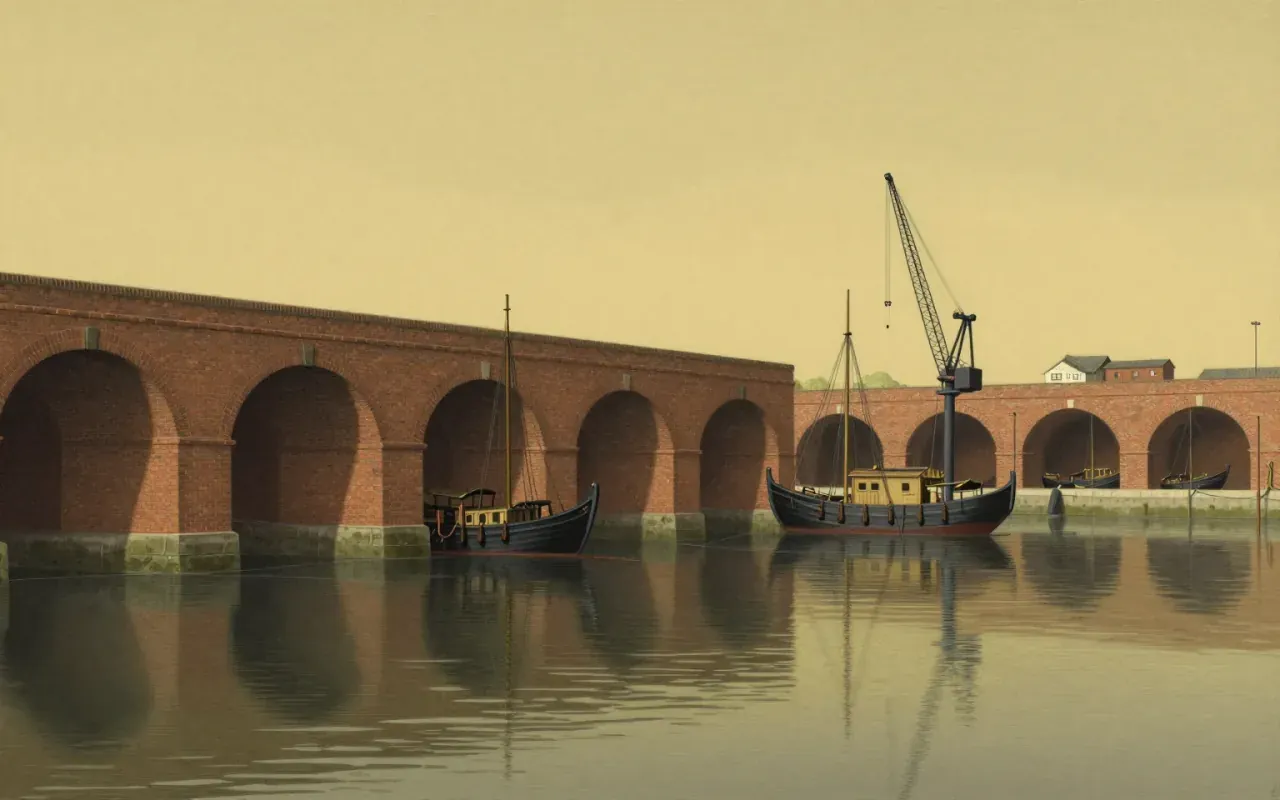
Venice began building its state shipyard around 1104, expanding it into the much larger Arsenale Nuovo in 1320, and by the early sixteenth century the complex employed roughly sixteen thousand workers using standardised parts, frame-first hull construction, and a canal-based assembly process capable of producing close to one ship a day. Dante described its labourers in the Inferno, and the state devoted close to a tenth of its revenue to keeping the fleet built there maintained and outfitted. The Arsenal declined alongside the Republic itself after Napoleon's conquest in 1797, and today it serves as a naval base, research site, and Biennale exhibition venue.