From apprentice to the Sistine ceiling
Michelangelo was born in 1475 near Florence and apprenticed at thirteen to the painter Domenico Ghirlandaio before spending time at the Medici-sponsored academy that exposed him to humanist philosophy. He carved the Pieta in Rome in his early twenties and the colossal David in Florence between 1501 and 1504, and from 1508 to 1512 he painted the ceiling of the Sistine Chapel for Pope Julius II, a scheme of several hundred figures across roughly five hundred square metres that he persuaded the pope to let him design himself rather than follow a simpler traditional plan. Decades later, between 1534 and 1541, he returned to the same chapel to paint The Last Judgment on its altar wall. He continued working, including on the design of St Peter’s dome, until his death in Rome in 1564 at eighty-eight.
A life told with his own hand on the pen
The two main early biographies come from people close to Michelangelo during his lifetime: Giorgio Vasari, whose Lives of the Artists was published in 1550 while its subject was still alive, and Ascanio Condivi, whose biography was written with Michelangelo’s own direct input and is generally treated as reflecting how the artist wanted to be remembered rather than as an independent account. Both carry clear biases, and Condivi’s version in particular is thought to have deliberately downplayed aspects of Michelangelo’s personal life, including his evident attraction to men, a subject his own grandnephew later obscured further by altering the pronouns in a published edition of his love poetry. Several hundred of Michelangelo’s own letters and poems survive independently, offering a more direct if incomplete record beneath the managed public image his biographers helped construct.
Finding the form already inside the stone
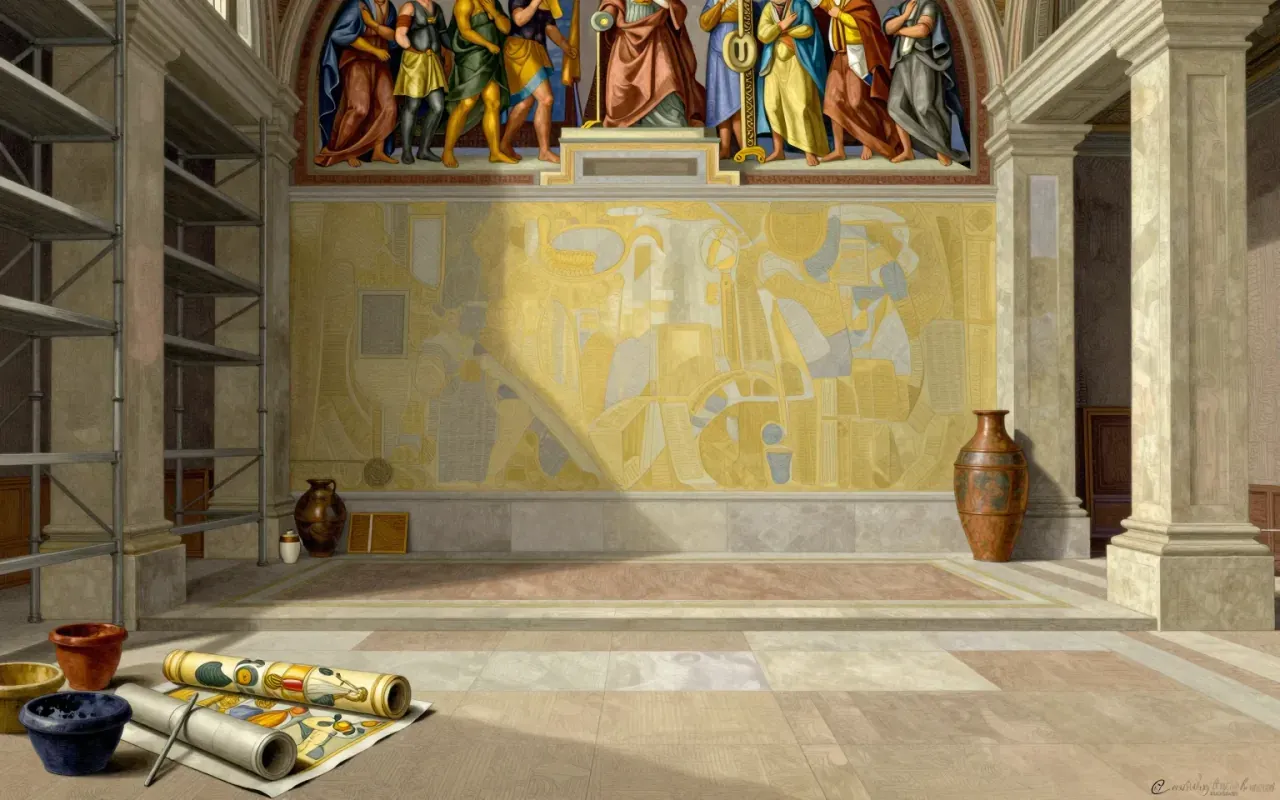
Michelangelo approached sculpture as a process of revealing a form he believed already existed within the block of stone, an idea reflected in his practice of studying human anatomy directly, including through the dissection of cadavers, to render the body with unusual precision. For the Sistine ceiling, rather than accept the more conventional scheme of apostles originally proposed, he persuaded Julius II to let him design an ambitious sequence of scenes from Genesis populated by prophets and sibyls, turning a fairly standard commission into a far more complex theological programme of his own devising. Across his work he cultivated an intensely physical, dramatic style, later writers used the term terribilita to describe the awe it was meant to instil, that set him apart from the more restrained compositions common among his contemporaries.
Poems rewritten by his own family
Historians read Michelangelo’s roughly sixty love poems addressed to men, including an extended sequence written for the younger nobleman Tommaso dei Cavalieri whom he met in his late fifties, in different ways: some treat them as straightforward evidence of romantic attraction, in what is sometimes called the first substantial body of one man’s love poetry addressed to another in the modern era, while others argue they should be read within a Renaissance convention of intense platonic friendship rather than as evidence of anything more. A nineteenth-century English translation that restored the original male pronouns, altered in an earlier published edition by Michelangelo’s own grandnephew, shifted how later scholars approached the question. Separately, questions remain about how much of his later architectural work, including sections of St Peter’s dome completed after his death, reflects his original design against later modification by others.
The first artist to read his own legend
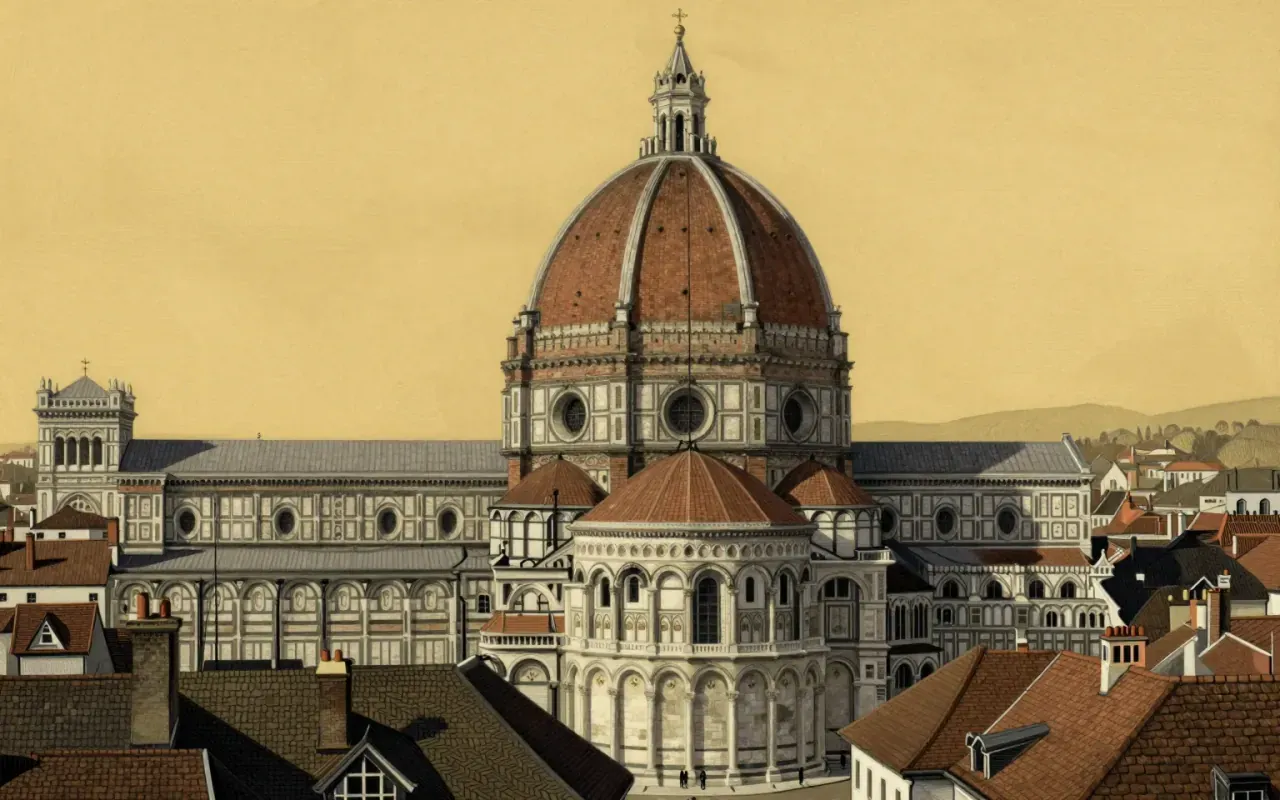
Vasari’s biography, published during Michelangelo’s own lifetime, made him the first Western artist to have his life story written and circulated while he was still alive to read it, and contemporaries went so far as to call him the divine one. His stylistic influence, particularly the dramatic, muscular physicality of his figures, shaped the generation of artists that followed and contributed to the shift toward the more exaggerated style later called Mannerism. Centuries later, sculptors including Auguste Rodin studied his unfinished slave figures directly, and architectural historians still rank his design for the dome of St Peter’s Basilica among the defining achievements of the period. A hidden chamber beneath the Medici chapels, containing charcoal drawings attributed to a period when Michelangelo was in hiding, was only discovered in 1975 and opened to visitors decades later still.
A public image worth reading against the grain
Michelangelo rewards attention for the gap between the carefully managed public image his own early biographers helped construct, with his cooperation, and the more private, complicated man visible in his surviving letters and poetry, particularly the poems whose original meaning was later obscured by his own family. Readers interested in Renaissance art, patronage and the mechanics of a major commission like the Sistine ceiling will find the material genuinely rich to explore. Readers wanting a settled answer on the nature of his personal relationships, or a fully independent biography free of his own shaping hand, should expect the evidence to support more than one reading rather than a single conclusive one.