A conference that never met
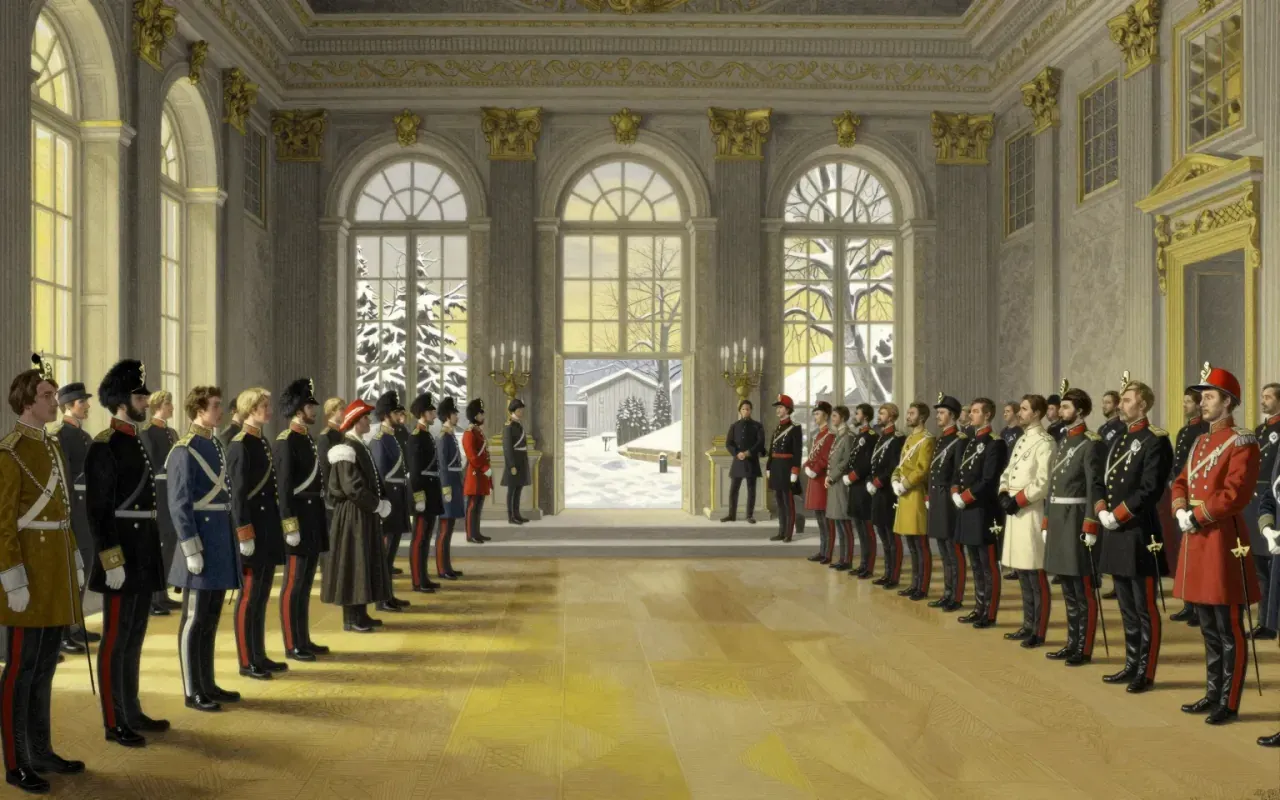
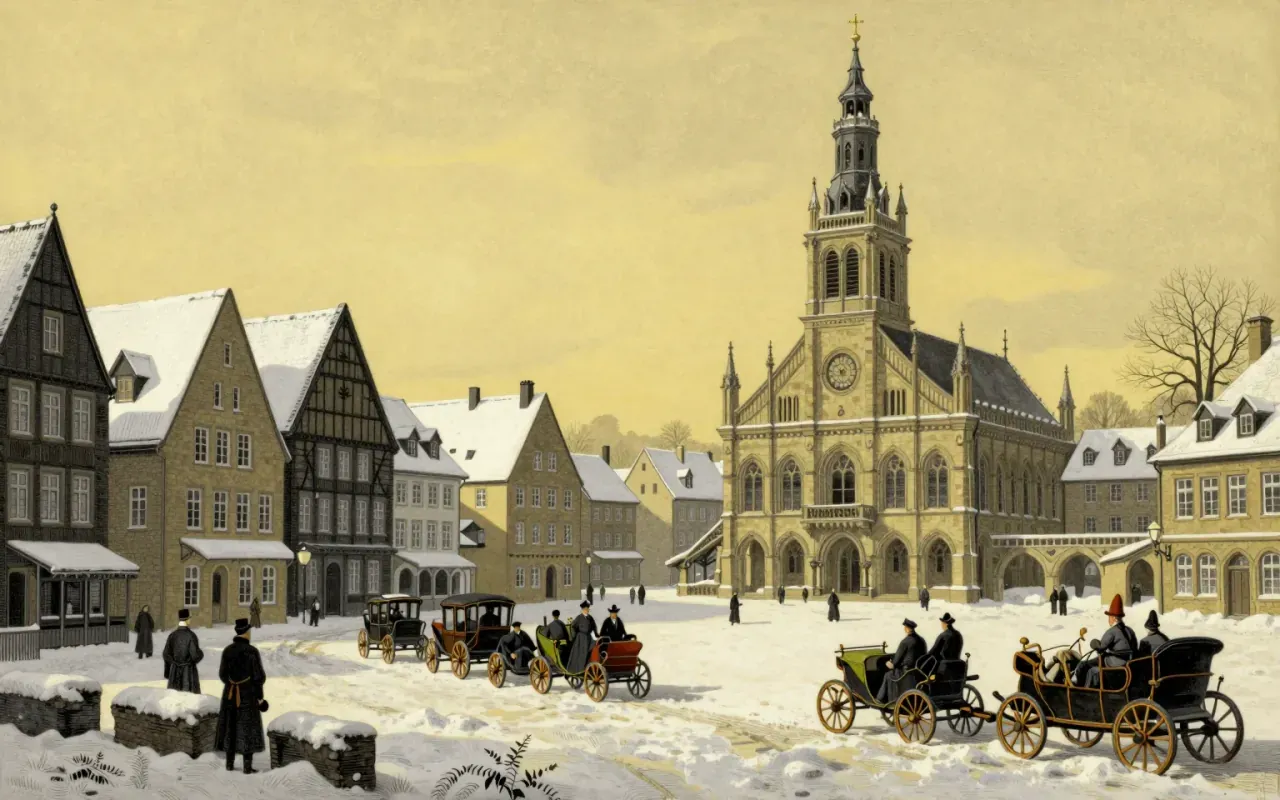
Negotiations to end the Thirty Years’ War began earlier than the eventual peace, with preliminary talks in Cologne from 1636 stalling over Cardinal Richelieu’s insistence that all French allies be included, and a preparatory agreement finally reached at Hamburg in December 1641. The main settlement then unfolded across two Westphalian towns simultaneously: Münster hosted negotiations between the Holy Roman Empire, France, the Dutch Republic and Spain, while Osnabrück handled talks between the Empire and Sweden. In total, 109 delegations arrived between 1643 and 1646 and departed between 1647 and 1649, an unusually drawn-out and decentralised process, and no single plenary session of all parties ever actually convened before the treaties were signed on 24 October 1648.
Two cities, two sets of talks
The two resulting instruments, the Treaty of Münster and the Treaty of Osnabrück, survive in their original Latin texts and remain the primary documentary basis for everything historians know about the settlement’s actual terms. Modern scholarly reassessment, drawing directly on close reading of this text, forms the basis for what is now the dominant historiographical position: that later claims about Westphalia establishing principles of state sovereignty and non-interference were retrofitted onto the treaties in the nineteenth and twentieth centuries by scholars addressing contemporary concerns about state power, rather than reflecting anything the 1648 negotiators actually wrote or intended. The treaties themselves, this scholarship stresses, address the internal constitutional arrangements of the Holy Roman Empire specifically, not a general theory of international relations.
Calvinism gets a seat
The settlement’s substantive achievements were narrower but still significant. It granted Calvinism formal legal recognition for the first time, extending beyond the 1555 Peace of Augsburg’s provision for Catholicism and Lutheranism alone, and reversed Augsburg’s principle that a ruler’s religion determined that of subjects, establishing instead that private religious practice was no longer subject to a prince’s sovereign authority in the same way. Territorial adjustments redistributed considerable land and influence: France gained the bishoprics of Metz, Toul and Verdun along with Alsatian territory, Sweden received a substantial indemnity and territory in northern Germany along with a seat in the Imperial Diet, and the Swiss Confederacy secured formal legal independence from the Holy Roman Empire altogether.
A pope’s furious rejection
Pope Innocent X responded to the settlement with open fury, denouncing it in the papal brief Zelo Domus Dei as null, void, invalid and damnable, a protest that had no practical effect on the treaties’ enforcement or acceptance across Europe. Historians also note that the treaty texts contained genuine ambiguities, particularly regarding Swedish claims in Bremen-Verden and the precise Pomeranian border with Brandenburg, wording problems significant enough to contribute to later regional conflicts rather than resolving territorial disputes cleanly. These practical loose ends sit alongside the larger interpretive dispute over sovereignty, together suggesting a settlement more improvised and locally contested in its details than the tidy landmark status later attributed to it might imply.
The myth built three centuries later
The Peace of Westphalia did not end European warfare as comprehensively as its reputation suggests. Fighting between France and Spain continued for another eleven years until the 1659 Treaty of the Pyrenees, and separately the Dutch-Portuguese War persisted until 1663, both conflicts running well past the point at which Westphalia is conventionally treated as closing an era of religious warfare. Within the Holy Roman Empire itself, however, the settlement did successfully reorganise the constitutional balance among its roughly three hundred constituent territories, providing a framework of religious coexistence and negotiated authority that held, with adjustments, for well over a century afterward, even as the broader European conflicts it left unresolved continued on their own separate timelines.
A peace that didn’t end the fighting
The Peace of Westphalia is worth studying precisely because its popular reputation and its documented content have drifted apart so substantially over the centuries since 1648. Reading the actual treaty texts against the sovereignty narrative built around them later shows how a historical event can accumulate significance retrospectively assigned by later interpreters with their own contemporary purposes, a pattern worth recognising whenever a settlement gets credited with founding an entire subsequent order. The genuine achievement, a religious and territorial reorganisation of central Europe negotiated across a fragmented, years-long process, remains substantial on its own terms without needing the additional, largely unsupported claim that it invented the modern state system.