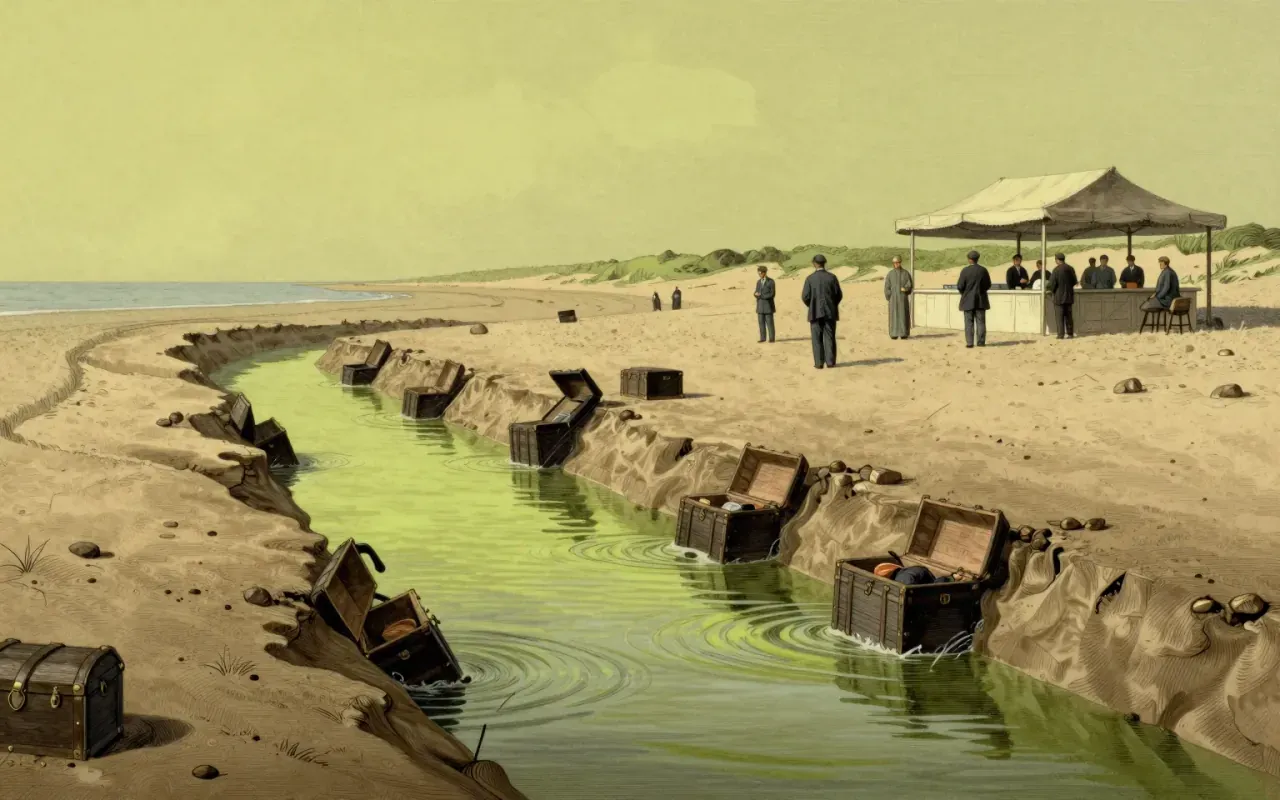
Twenty thousand chests burned, a war within months
In March 1839, Qing commissioner Lin Zexu seized 20,283 chests of opium from British merchants at Canton and destroyed them publicly at Humen on 3 June, having rejected proposals to simply legalise the trade instead. Tensions escalated through the Kowloon incident that July, when British authorities refused to hand over a sailor accused of killing a local villager, and the first naval clash came on 4 September 1839. Britain launched its formal military campaign in June 1840 with more than 19,000 troops and 37 ships, fighting along the Pearl and Yangtze rivers until Qing forces were defeated and the war ended on 29 August 1842.
A lopsided casualty count that itself tells the story
The casualty figures reveal the campaign’s stark imbalance: British forces recorded 87 killed in action, 455 wounded and three missing, alongside 284 Indian sailors from a separate incident who were executed or died in Chinese captivity, while Chinese forces suffered an estimated 3,100 killed and 4,536 wounded. This disparity reflected a decisive gap in naval technology and firepower between the two sides, one significant enough that early individual engagements, including the Battle of Chuenpi in November 1839, saw a handful of British warships destroy several Chinese war junks with comparatively little risk to themselves.
A trade deficit that opium was built to reverse
Britain’s reliance on opium exports grew directly from a persistent trade imbalance: Chinese tea, silk and porcelain commanded strong European demand while Chinese buyers showed little interest in British manufactured goods, and Britain’s 1821 adoption of the gold standard reduced the silver available to fund Asian trade generally. Opium, grown under East India Company control in Bengal, offered a solution, with annual imports rising from around 4,000 chests in the early part of the century to 20,000 by 1831 and roughly double that by the decade’s end, reversing Britain’s silver drain at the direct cost of a rapidly growing addiction crisis inside China that Lin Zexu’s crackdown was meant to address.
Prohibition, or market access dressed as a drug war
Historians remain divided over how to characterise the war’s fundamental cause. Some treat the structural economic incompatibility between the two trading systems as having made conflict essentially inevitable once China moved seriously to restrict opium, while others argue individual decisions, including the aggressive stance of British superintendent Charles Elliot and Lin Zexu’s own uncompromising approach, left room for a negotiated resolution that never materialised. A related and unresolved dispute concerns whether opium prohibition was the war’s real cause at all, or whether it functioned mainly as the convenient trigger for a broader British campaign to force open Chinese markets that had been developing independent of the drug trade specifically.
One treaty, a century of grievance
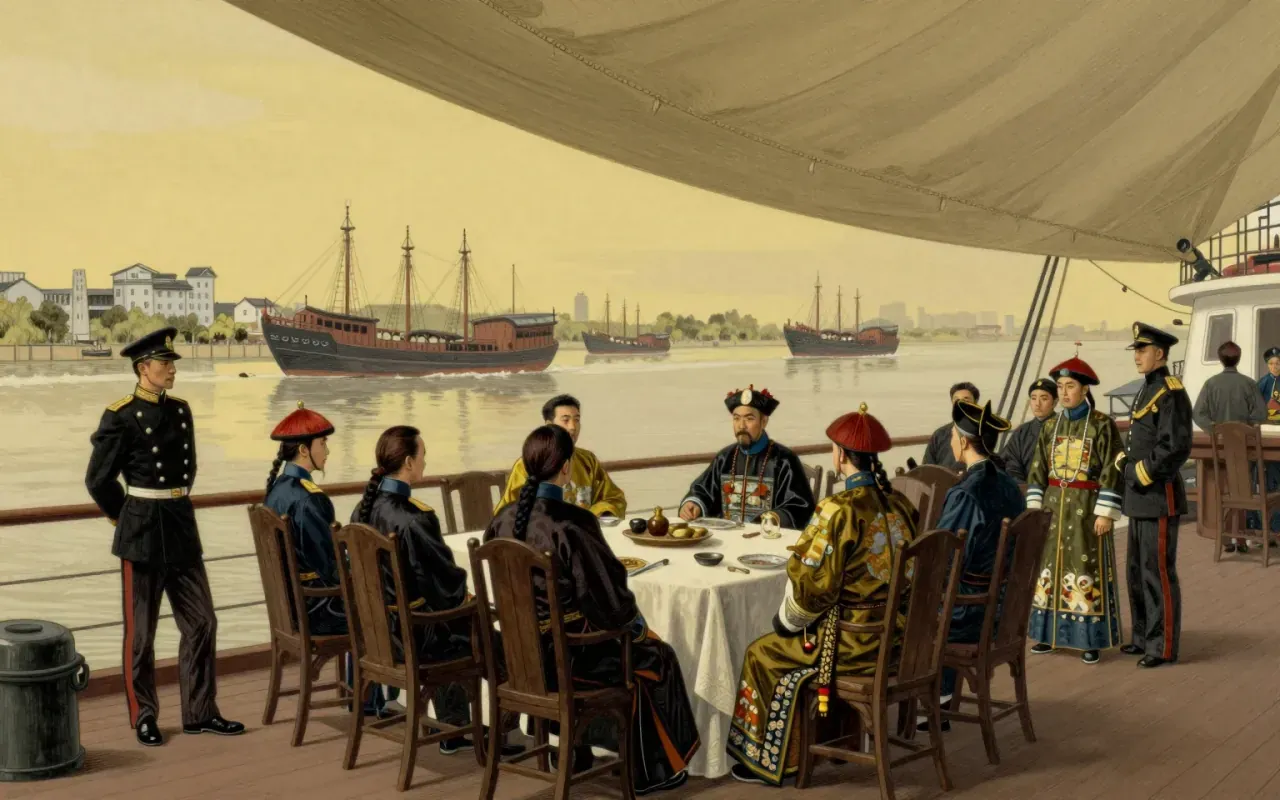
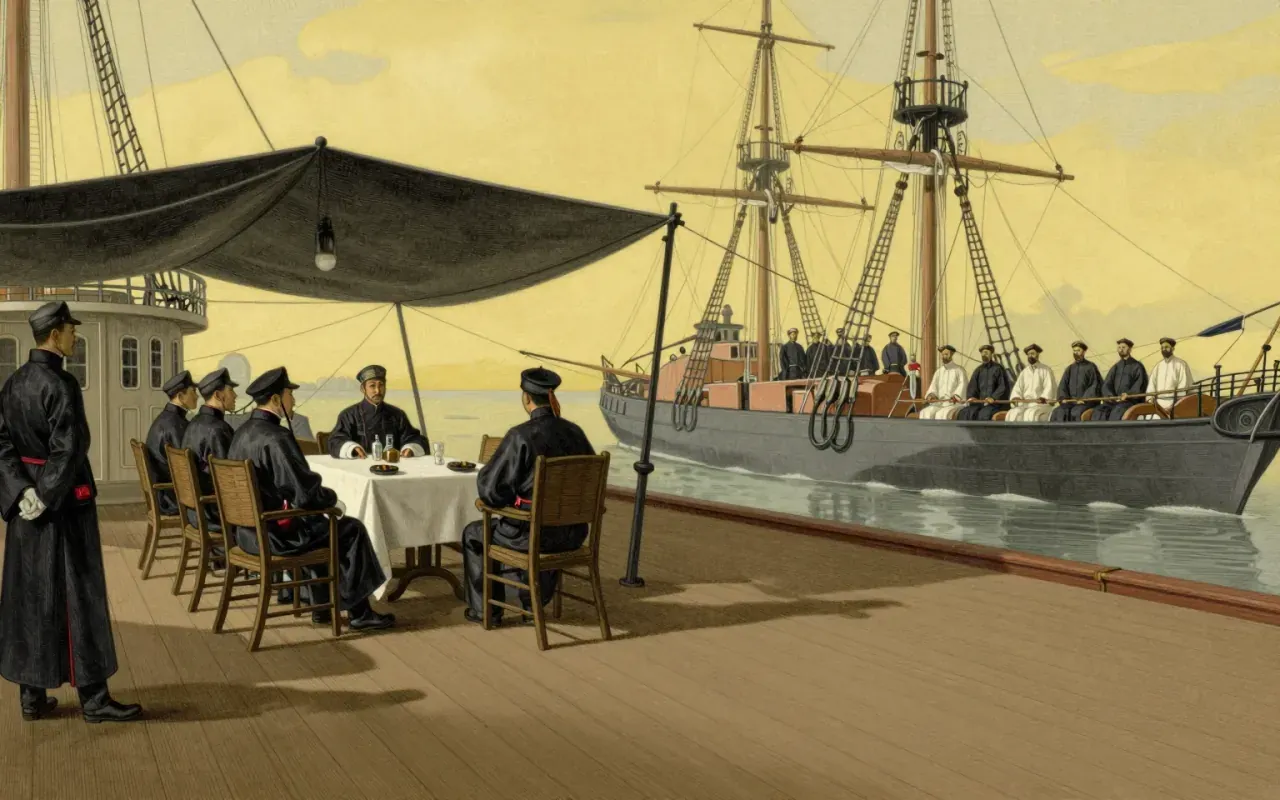
The Treaty of Nanking, signed 29 August 1842 aboard HMS Cornwallis, required China to cede Hong Kong Island to Britain in perpetuity, open five ports including Canton and Shanghai to foreign trade, abolish the existing merchant monopoly system, and pay an indemnity variously reported as 21 to 27 million silver dollars, covering the destroyed opium, prior merchant debts and war reparations, while granting British subjects extraterritorial legal protection that persisted until 1943. Chinese nationalist historiography in the twentieth century designated this settlement the first of a series of unequal treaties, marking 1839 as the beginning of what became known as the Century of Humiliation.
Worth reading for how differently each side still tells it
The war is worth engaging closely because British and Chinese accounts of it have diverged so sharply and for so long: British sources historically emphasised free-trade principles, diplomatic grievance and Lin Zexu’s confiscation as unjust, while Chinese accounts stress a violation of sovereignty and a population deliberately poisoned for commercial gain. Readers already familiar with the war’s basic outline, opium, gunboats, an unequal treaty, gain the most from sitting with this genuine and lasting historiographical divide, since how a nation still chooses to narrate this particular conflict says as much about its later national identity as the war’s battles themselves.